❌

Lese-Ansicht

Why generations swear by hot caldo – ‘a Mexican Gatorade’ – in summer

Across Latin American households in the US, the steaming broth nourishes while keeping family traditions alive

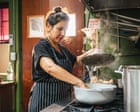
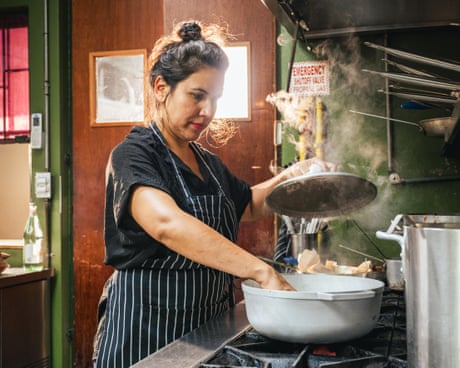
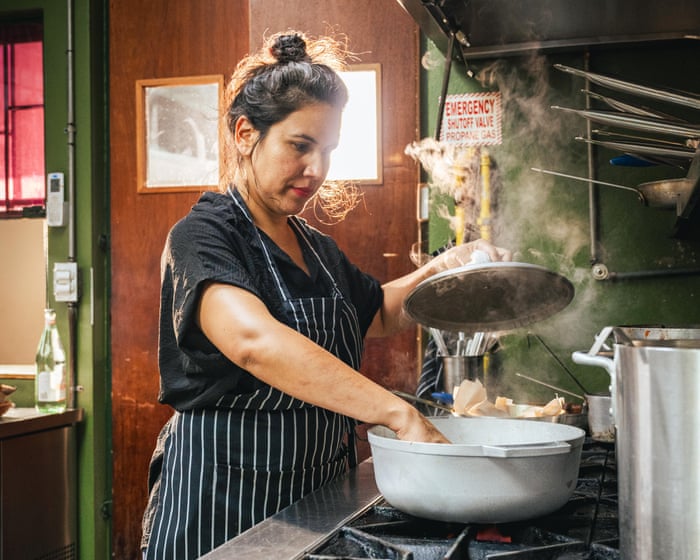
When Patty Rodriguez hears the word caldo now, she thinks fondly of home. But as a child growing up in southern California, she despised eating the piping-hot soup-like meal during the summers. Rodriguez would swirl around the chunks of fish with her spoon and imagine that she was performing a magic trick where the dish disappeared. She would roll her eyes as she asked her family why they served the dish more often when it was hot outside. “This is not a hotel,” Rodriguez recalled her mother and aunts saying. “You don’t choose what you want to eat. You’re going to eat what we make.”

As an adult, Rodriguez realizes that caldo, which translates to broth in Spanish, was an inexpensive meal that could feed her Mexican American household for several days. It provided the nourishment and hydration needed during the hot summer months.

Continue reading...
© Photograph: Rafael Ruiz Medero/Discover Puerto Rico
© Photograph: Rafael Ruiz Medero/Discover Puerto Rico
© Photograph: Rafael Ruiz Medero/Discover Puerto Rico
  •  

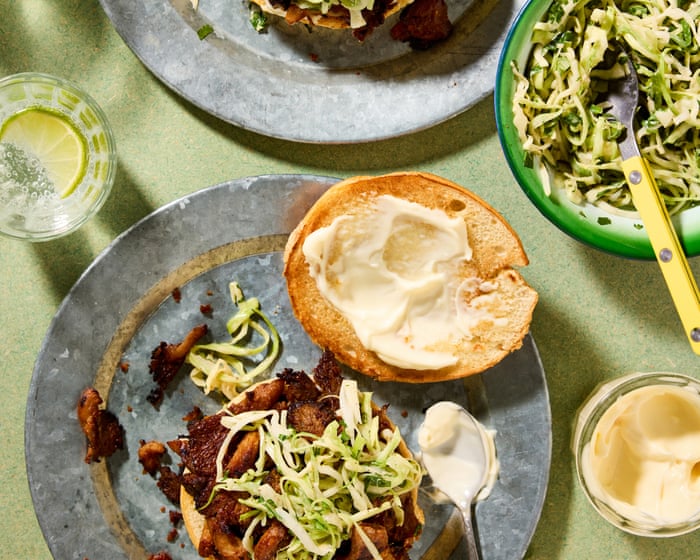
Meera Sodha’s vegetarian recipe for oyster mushroom burgers with five-spice cabbage | Meera Sodha recipes

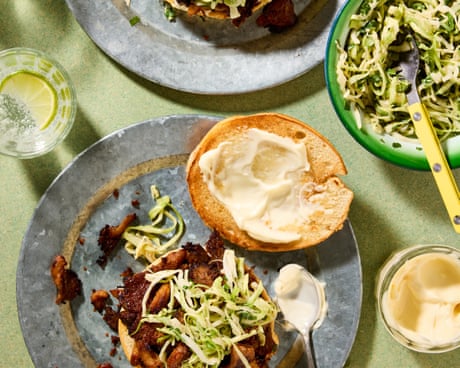
These roasted oyster mushrooms are meaty, savoury and chewy, made even more satisfying in a south-east Asian-style dressing

Not every plant makes a great burger filling. You might think pulses or potatoes for heft, but the lack of texture and propensity to mush can be unsatisfying. This is where mushrooms excel; they trade in satisfaction. Roasting them brings out their natural umami and removes water content, leaving them chewy, caramelised and occasionally crisp. They can also make friends with the most unlikely of ingredients, like they have here with peanut butter, soy, agave and sesame.

Continue reading...

© Photograph: Louise Hagger/The Guardian/Photography: Louise Hagger Food Styling: Emily Kydd Prop Styling: Jennifer Kay Food Styling Assistant: Laura Lawrence Photo Assistant: Sophie Bronze

© Photograph: Louise Hagger/The Guardian/Photography: Louise Hagger Food Styling: Emily Kydd Prop Styling: Jennifer Kay Food Styling Assistant: Laura Lawrence Photo Assistant: Sophie Bronze

© Photograph: Louise Hagger/The Guardian/Photography: Louise Hagger Food Styling: Emily Kydd Prop Styling: Jennifer Kay Food Styling Assistant: Laura Lawrence Photo Assistant: Sophie Bronze

  •  

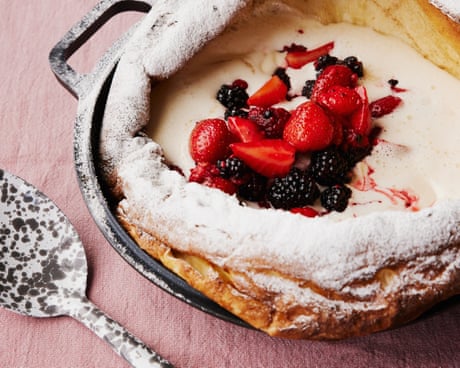
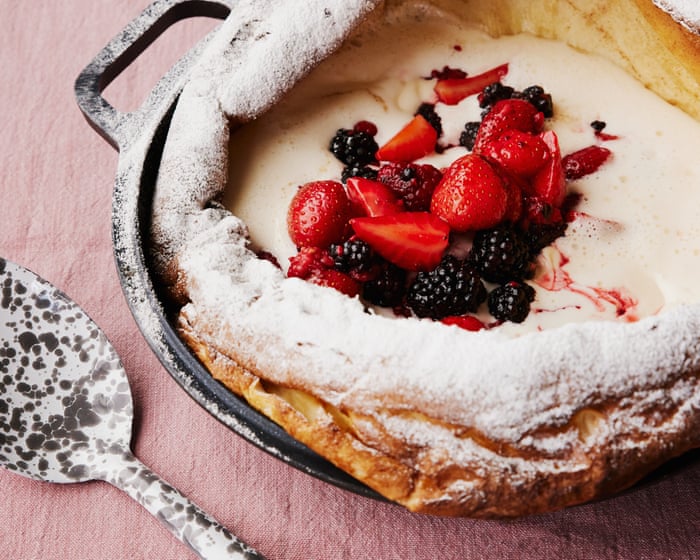
Benjamina Ebuehi’s summer berry dutch baby recipe

Think giant sweet yorkshire pud filled with a lake of summer berry compote … that’s some brunch!

This pancake/yorkshire pudding hybrid is nothing if not fun. The edges crisp and puff up in the most dramatic way, making for a very impressive brunch centrepiece that makes a change from regular pancakes. Although delicious just with some icing sugar, I’ve filled this one with a quick fruit compote to make the most of summer berries. The juices soak into the base, making way for my favourite part of a yorkshire: the slightly soggy bottom.

Continue reading...

© Photograph: Matthew Hague/The Guardian. Food styling: Katie Smith. Prop styling: Lucy Turnbull. Food styling assistant: Phoebe Altman.

© Photograph: Matthew Hague/The Guardian. Food styling: Katie Smith. Prop styling: Lucy Turnbull. Food styling assistant: Phoebe Altman.

© Photograph: Matthew Hague/The Guardian. Food styling: Katie Smith. Prop styling: Lucy Turnbull. Food styling assistant: Phoebe Altman.

  •  

Flavour fusion in London's buzziest bakeries – video

Restaurant critic and award-winning author Jimi Famurewa visits the best London bakeries where family food traditions  meet contemporary British baking. First stop: Panadera in Soho, for a Filipino-inspired leche flan Danish. Then it’s south-east London and Bunhead, where the owner folds together the flavours of her Palestinian and British heritage into a chocolate, date and smoked salt bun. Finally, Farha in east London, a Middle Eastern-inspired cafe selling out of its banana brûlée.

Episode 1 of Feed with Jimi Famurewa — sampling the UK’s tastiest food trends

Continue reading...

© Photograph: The Guardian

© Photograph: The Guardian

© Photograph: The Guardian

  •  

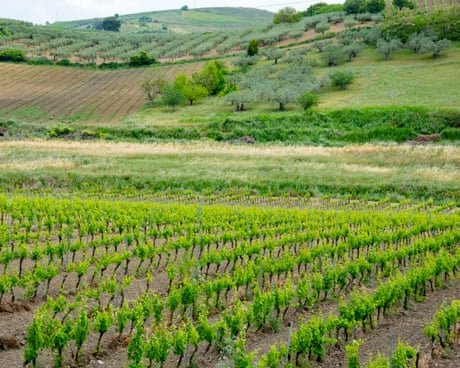
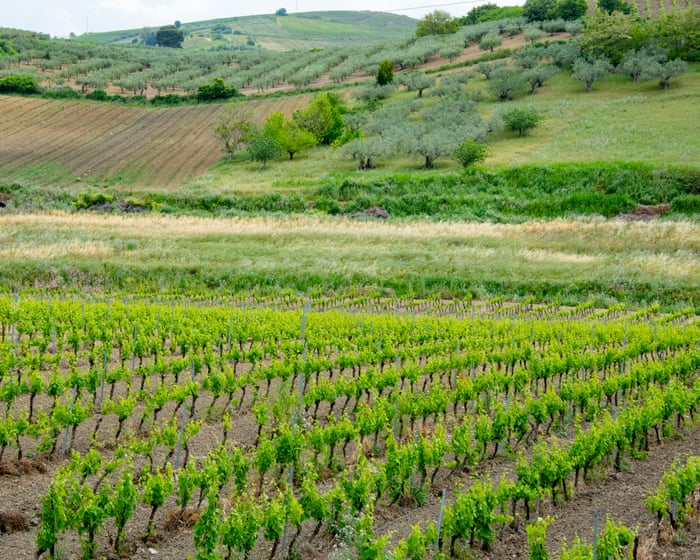
Why catarratto is the Quincy Jones of white wine grapes

It is often the key secret ingredient in a lot of white wines, but the unsung hero of Sicily’s vineyards is taking its place in the sun

Depending on where you buy and drink wine, catarratto will be very familiar or very obscure. There was a time in the 2010s when I’d have put good money on it being the house white in half of Hackney’s restaurants, and if you’ve ever picked up a sub-£15 natural white wine at an independent bottle shop, catarratto will probably have featured. If, however, you buy wine from bigger retailers and have a taste for fruity, sun-soaked whites, chances are you’ve been drinking catarratto without even knowing it.

This is bonkers, given its prevalence. Catarratto is Sicily’s most widely planted white grape, accounting for roughly a third of the island’s vineyards; and, after sangiovese, it’s the second most planted grape in all of Italy. For decades, though, it was either destined for bulk wine, disappearing into tanks of anonymous, juicy table wines, or for use as a component of better-known Sicilian denominations such as fortified marsala or Etna bianco, where it plays a supporting role to other indigenous Sicilian grapes, such as grillo or carricante, respectively. It has about it a bit of a Quincy Jones quality: integral to the success of others before being recognised in its own right. Which it now really is, as modern producers make more complex catarrattos that really express their terroirs, be that volcanic, maritime or the rolling hills around Alcamo in the Sicilian north-west.

Continue reading...

© Photograph: Photon-Photos/Getty Images

© Photograph: Photon-Photos/Getty Images

© Photograph: Photon-Photos/Getty Images

  •  

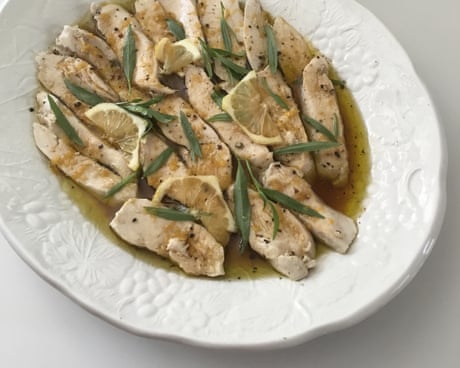
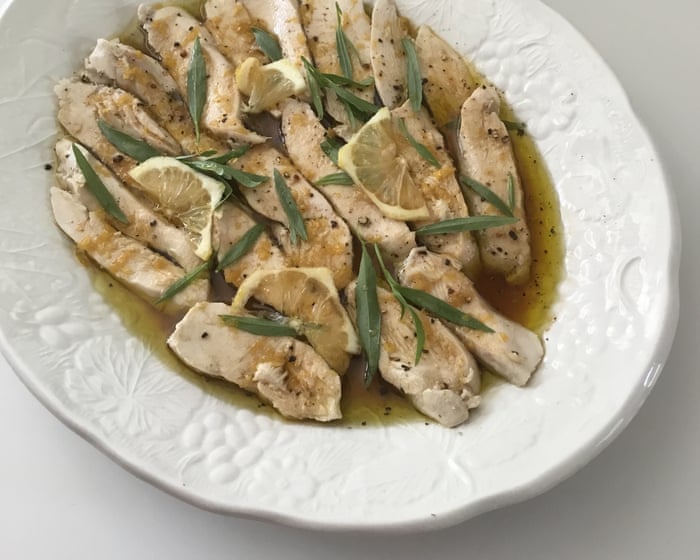
Rachel Roddy’s chicken with sweet and sour lemon and tarragon sauce – recipe

If it’s good enough for Prince Ottavio Gonzaga and Anna del Conte, then dare you pass up the opportunity to try this wonderfully sweet and sour way with chicken?

While I look at my copies of Jane Grigson’s Fruit Book, Anna del Conte’s Amaretto, Apple Cake and Artichokes, and Francis Bissell’s The Scented Kitchen at home, they seem different from when they are pulled from the shelves in my parent’s kitchen in Dorset. Also, on the first morning of any stay, looking at these three with a cup of tea before anyone else is up has become a habit that may be superstitious.

On the second day, I made a recipe from the inimitable Anna, who also lives in Dorset and is now 100. For her recipe of chicken breasts in a 17th-century sweet and sour sauce, Anna was inspired by Bartolomeo Stefani, chef to Prince Ottavio Gonzaga (one of the numerous members of The House of Gonzaga who ruled Mantua from 1328 to 1708) and author of the 1662 manual, L’arte di Ben Cucinare (The Art of Fine Cooking). Anna notes that Stefani was a chef of great inventiveness, and one of the first to move away from the heavily spiced recipes of the Middle Ages towards a style of cooking with a lighter touch, flavoured with herbs, citrus and flowers. And this recipe is a good example of his approach to ingredients: poached chicken (originally capon) served in thick slices with a sweet-and-sour sauce of wine, sugar, vinegar, olive oil and lemon. Once assembled, the dish is left to sit in order for the chicken slices to soak up the sauce’s flavours, and then served at room temperature. It is a lovely dish for a hot day (or evening).

Continue reading...

© Photograph: Rachel Roddy/The Guardian

© Photograph: Rachel Roddy/The Guardian

© Photograph: Rachel Roddy/The Guardian

  •  

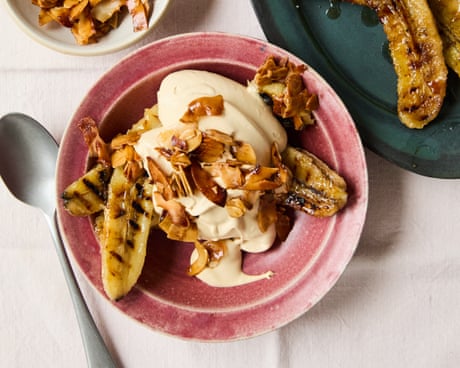
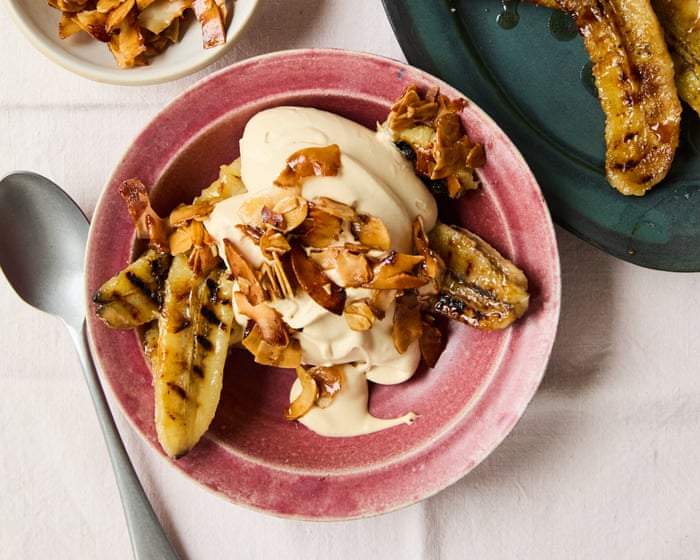
Cherry sundaes and banana splits: Helen Graves’ recipes for barbecued fruit

These new spins on nostalgic desserts will elevate your summer barbecues, while their prep-ahead nature will keep the day stress free

When it comes to barbecued desserts, a few squares of chocolate melted inside a banana will no longer cut it. Get ahead with some easy-to-prep elements, then add a final flourish of smoke-licked fruit to bring new energy to classic desserts, such as banana splits and layered fruit sundaes. They need not be complex, and will interest your guests far more than the same old stale ideas. I’ve had some fun with these nostalgic favourites, and hope you will, too.

Continue reading...

© Photograph: Ola O Smit/The Guardian. Food styling: Aya Nishimura. Prop styling: Polly Webb-Wilson. Food styling assistant: Laura Lawrence.

© Photograph: Ola O Smit/The Guardian. Food styling: Aya Nishimura. Prop styling: Polly Webb-Wilson. Food styling assistant: Laura Lawrence.

© Photograph: Ola O Smit/The Guardian. Food styling: Aya Nishimura. Prop styling: Polly Webb-Wilson. Food styling assistant: Laura Lawrence.

  •  

There’s a science to rolling out fresh pasta | Kitchen aide

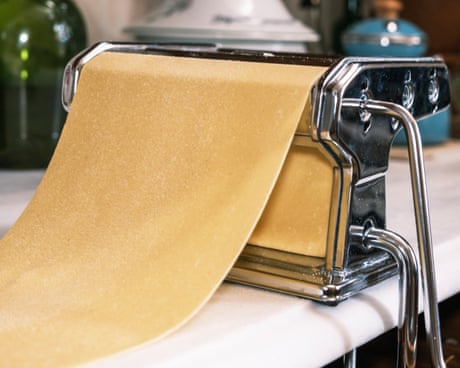
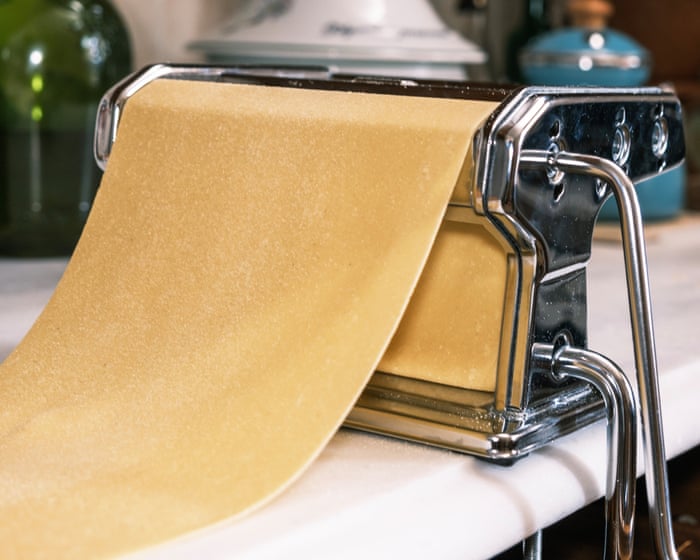
Tearing is a common problem with pasta dough say our experts. Culprits include the wrong type of flour, cold dough – or it could even boil down to the size of your egg

When making fresh pasta, why does the dough sometimes tear when rolling, and other times not?
Thomas, by email
“I’m sorry to hear your pasta is rippy,” sympathises Jacob Kenedy, chef-patron of Bocca di Lupo in London, who is teaming up with fellow chef Merlin Labron-Johnson to celebrate the Italian midsummer holiday ferragosto with two feasts in Somerset next month. Assuming Thomas is rolling an egg pasta dough in a pasta machine, there are a number of possible explanations. First, Kenedy says, he might be using the wrong type of flour (“use 00 flour”), the dough might be too cold (“use it at room temperature”) or too dry (“it should be supple, like Play-Doh”). Naz Hassan, head chef of Ornella and Lupa, both in London, adds that the latter might be down to the size of the egg(s) Thomas is using: “One egg to 100g of 00 flour is the basic pasta dough recipe, but that will vary depending on the size of your egg,” he says. Of course, some people prefer to use just the yolk, and if that applies to Thomas, Hassan suggests thinking about maybe adding the egg white, too: “It has the structure that allows pasta to have the stretchiness it deserves.”

But, in true Goldilocks style, a dough that is too wet might also spell trouble, Kenedy says: “I like my pasta dough wet enough to roll by hand – it gives a more elastic mouthfeel – which means, if I roll it in a machine, it sticks slightly to the roller and may rip.” The fix? Laminate the dough thoroughly and perhaps use “the finest dusting” of flour until the dough passes smoothly through the pasta machine. “Then make sure to roll that flour in, so the outside of the pasta isn’t dusty,” Kenedy adds.

Continue reading...

© Photograph: Yasin Caglayan/Getty Images

© Photograph: Yasin Caglayan/Getty Images

© Photograph: Yasin Caglayan/Getty Images

  •  

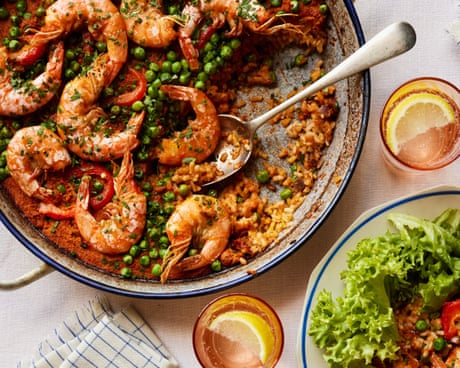
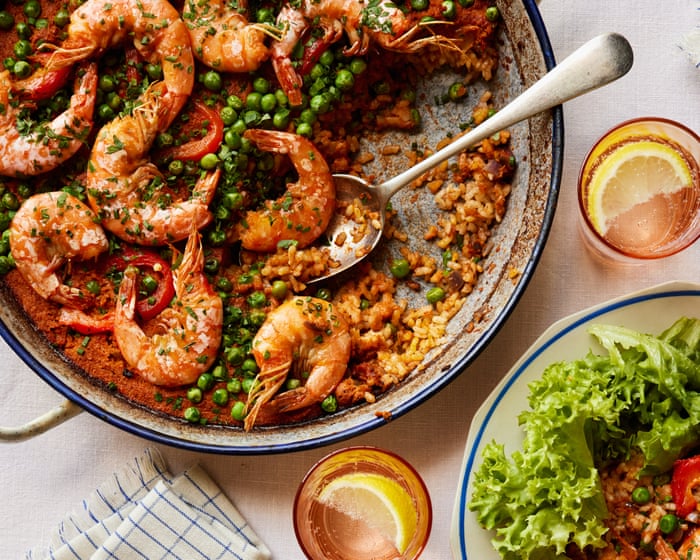
Grilled prawns, red rice, boozy baked peaches: Thomasina Miers’ Spanish-style summer lunch recipes | Sunday Best

An indulgent and satisfying summer lunch: grilled prawns with red rice and allioli; and boozy baked peaches, amaretti biscuits and cold custard for dessert

Large, scented tomatoes are beginning to flood the markets near me, and their presence brings back memories of Mexico. On a trip up north to Ensenada, a famous fishing port, I became obsessed with the Spanish-style arroz dishes studded with fresh shellfish and seafood of every shape and size. The clams! The crab! On another trip, we sat by the sea for a birthday lunch with the waves crashing on to the sand, while we were presented with a grilled prawn arroz, where the grains were steeped in rich tomato and grilled prawn umami that it was giddying. A cold custard with roast peaches will prolong the fantasy – a lunch that conjures up far away places that you can dream about from home.

Continue reading...

© Photograph: Matthew Hague/The Guardian. Food and prop styling: Florence Blair. Food styling assistant: Phoebe Altman.

© Photograph: Matthew Hague/The Guardian. Food and prop styling: Florence Blair. Food styling assistant: Phoebe Altman.

© Photograph: Matthew Hague/The Guardian. Food and prop styling: Florence Blair. Food styling assistant: Phoebe Altman.

  •  

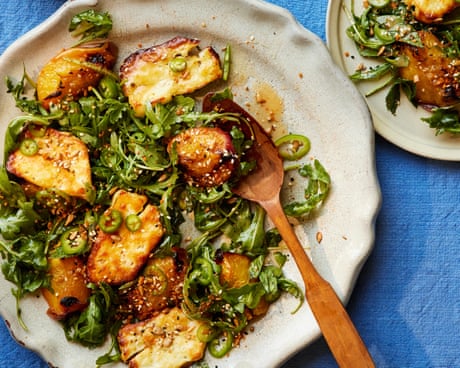
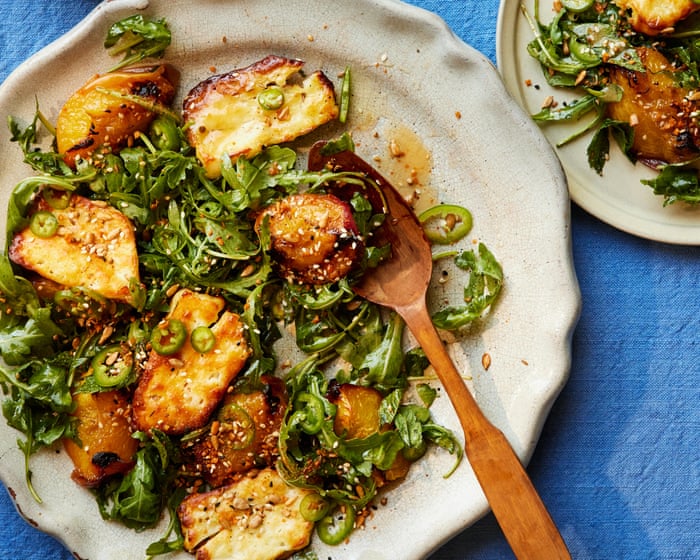
Georgina Hayden’s quick and easy recipe for grilled peach, halloumi and dukkah salad | Quick and easy

Sweetness and spice abound in this refreshing summer salad

When the weather is glorious, I have very little desire to do any “proper cooking”. Turning the grill on for about 15 minutes is the maximum amount of heat I want to subject my home to, which is why, in the summer months, I eat this sort of salad on repeat: stone fruit with golden slices of halloumi is my favourite pairing. Add a little freshness with some sweetness and spice, and it is a glorious thing. You could even spoon it on to slices of toasted ciabatta for an open sandwich or elegant crostini.

Continue reading...

© Photograph: Matthew Hague/The Guardian. Food and prop styling: Florence Blair. Food styling assistant: Phoebe Altman.

© Photograph: Matthew Hague/The Guardian. Food and prop styling: Florence Blair. Food styling assistant: Phoebe Altman.

© Photograph: Matthew Hague/The Guardian. Food and prop styling: Florence Blair. Food styling assistant: Phoebe Altman.

  •  

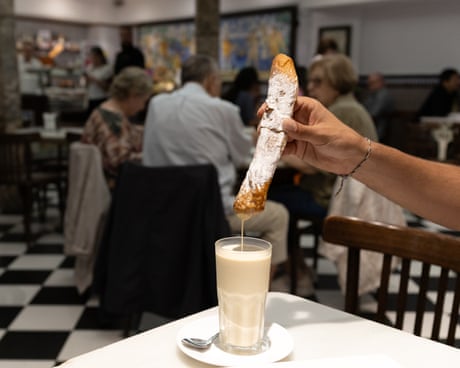
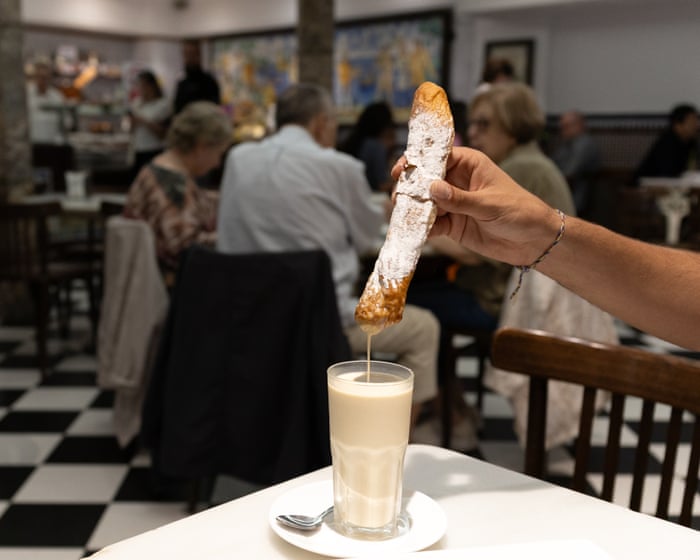
In search of Valencia’s ‘white gold’: my hunt for the perfect horchatería

Horchata, the revered creamy drink made from tiger nuts, is still served in grand Valencian parlours – always accompanied by sugar-glazed pastries

It was a glimpse of an old couple sharing a tender moment in the bustling horchatería that drew me into one of Valencia’s most storied culinary traditions. As he sipped his milky horchata de chufa and a white crescent moon appeared on his coiffed moustache, they shared a soft laugh and she dabbed it away from his upper lip.

“There’s no fixed time to drink horchata,” the lady said. “As long we have at least one every day.”

Continue reading...

© Photograph: Mirja Vogel

© Photograph: Mirja Vogel

© Photograph: Mirja Vogel

  •  

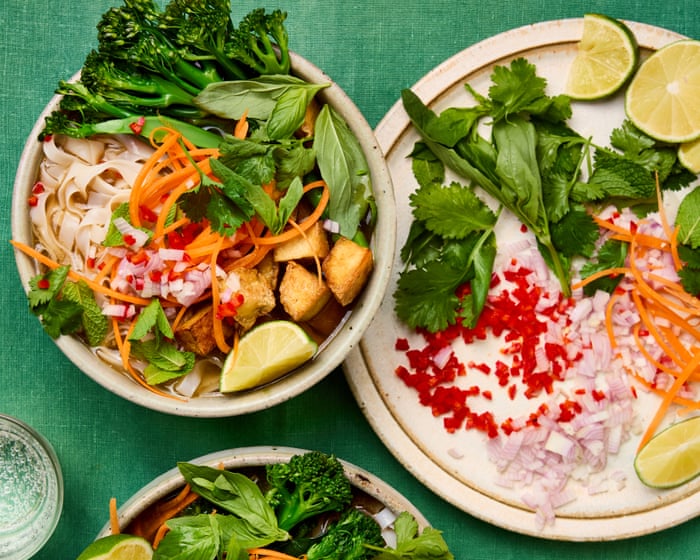
Vegan pho and Thai fishless cakes: Richard Makin’s southeast Asian-style tofu recipes

Fragrant, punchy vegan dishes that can be kept in the kept in the fridge or freezer for an easy midweek dinner

Whether you love it or loathe it, tofu is one of the most versatile ingredients in any kitchen. For me, it’s the saviour of stressful dinner times, because it cooks in minutes, absorbs flavour like no other and packs a real nutritional punch. Here, it plays two very different roles: crisped until golden in a fragrant, spice-infused Vietnamese-style pho, and mashed to give body and bite to bold, punchy Thai-ish fishless cakes.

Continue reading...

© Photograph: Louise Hagger/The Guardian. Food styling: Emily Kydd. Prop styling: Jennifer Kay. Food styling assistant: Isobel Clarke.

© Photograph: Louise Hagger/The Guardian. Food styling: Emily Kydd. Prop styling: Jennifer Kay. Food styling assistant: Isobel Clarke.

© Photograph: Louise Hagger/The Guardian. Food styling: Emily Kydd. Prop styling: Jennifer Kay. Food styling assistant: Isobel Clarke.

  •  

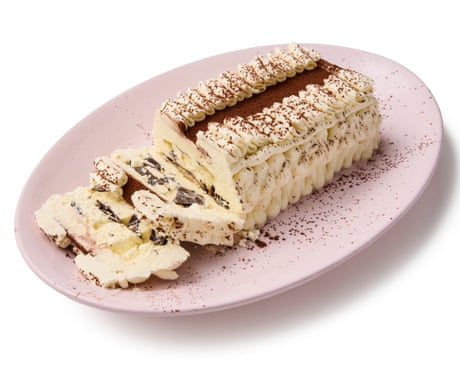
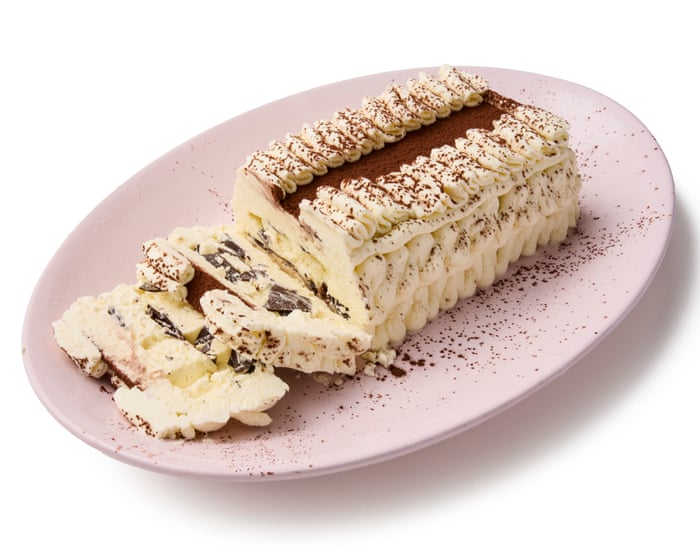
How to make the perfect homemade viennetta – recipe | Felicity Cloake's How to make the perfect …

Your rosy memories of the classic ice-cream dessert may not hold up to scrutiny today, but thanks to our resident perfectionist, you can make a delicious version of your own

When I was growing up, viennetta was something I had in other people’s houses – for some reason, my mum regarded these frilly blocks of ice-cream as a waste of money, which made them all the bigger treat on the rare occasion I did get a front-row seat at the cracking of the chocolate. Launched, like me, in 1982, when developers at Wall’s realised that pumping ice-cream on to the production line slightly faster than the speed of the conveyor belt created a concertina effect that, I think we can now, with the wisdom of age, agree, is more impressive to behold than to consume. No doubt diehard devotees will beg to differ, but even as a child I couldn’t help but notice that all that air made the viennetta distinctly light on flavour (no wonder one slice is never enough, as the old advertising campaign had it). Happily, you can recreate the magic at home with something that looks good and tastes great – and you don’t even need your own conveyor belt!

Continue reading...

© Photograph: Robert Billington/The Guardian. Food styling: Loïc Parisot.

© Photograph: Robert Billington/The Guardian. Food styling: Loïc Parisot.

© Photograph: Robert Billington/The Guardian. Food styling: Loïc Parisot.

  •  

‘It’s like bringing the kitchen into the piazza’: seven of the best Italian village food festivals

Sagre – the historic local events that pop up in villages across the country in summer – are the perfect way to get a taste of regional cuisine and culture

I cannot remember a summer when at least one evening hasn’t been spent following signs to a local sagra. Not quite a food market and not quite a village fete, a sagra is like a village moving its kitchen outdoors for a few nights.

When I think back to those nights from childhood, the first image that comes to mind is of a woman’s hand closed into a fist above a pan of hot oil. Through a tight circle formed between her thumb and forefinger, she would squeeze soft lumps of batter, one small ball at a time, into the oil. In a few seconds, each soft mass would become a pittula, a small Salento fritter: swollen, uneven, golden, too hot to eat straight away but too good to wait for.

Continue reading...

© Photograph: Vipiteno Tourist Cooperative

© Photograph: Vipiteno Tourist Cooperative

© Photograph: Vipiteno Tourist Cooperative

  •  

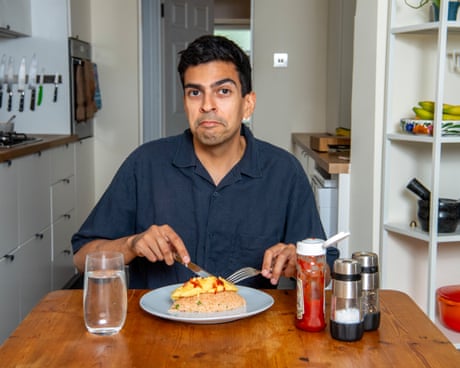
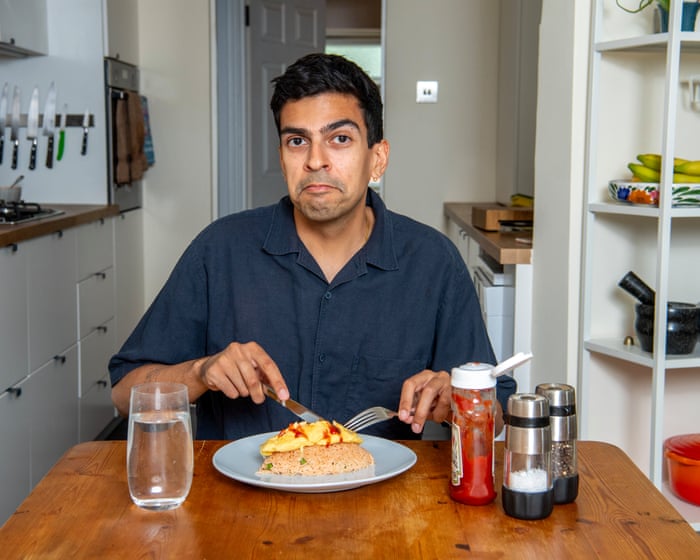
‘I panic. It turns to rubber’: could I learn to make omurice, the ‘world’s hardest omelette’?

These unctuous rice-filled Japanese egg dishes are all over social media. But what does it cost to make them? A lot of eggs and a whole lot of pans ...

Among the endless videos of cute animals, influencer vlogs and celebrity content, something unusual has been going viral across social media recently: omelettes. A far cry from the usual solid egg slabs served in cafes, these bright yellow omelettes are a fluffy, oval-shaped treat filled with unctuous liquid curds, which are typically sliced open to unfurl across a mound of rice. Called omurice, the Japanese dish has been called “the world’s hardest omelette to make”.

London-based software engineer Jeremy Ocampo, who goes by the social media tag OmuricePapi, has spent the past six months documenting his journey to perfect the art of the omurice online. In the process he has amassed 110,000 followers on YouTube and more than 68,000 on Instagram. “I’m Filipino, so I grew up eating rice and eggs every day, but it took going to Japan for the first time in 2025 to have my mind blown by omurice,” he says. “I was hooked: the presentation of slicing it open over your rice makes it so alluring, while you can’t replicate that texture of egg in any other dish. It’s so unique that when I got home, I decided to teach myself how to do it.”

Continue reading...

© Photograph: Jill Mead/The Guardian

© Photograph: Jill Mead/The Guardian

© Photograph: Jill Mead/The Guardian

  •  

Meera Sodha’s vegan recipe for cold tomato and tahini noodles with peanut, coriander and lime | The new vegan

This globetrotting cold fusion dish boasts south-east Asian, Middle-Eastern and even Italian influences, producing sweet and sour notes and a chilli kick

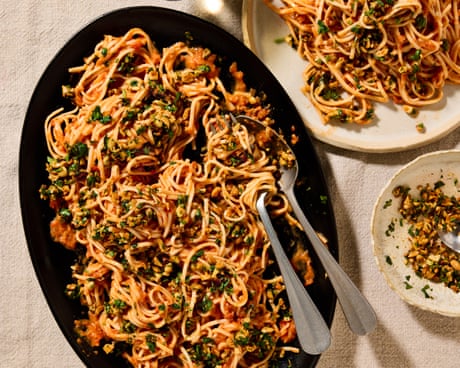
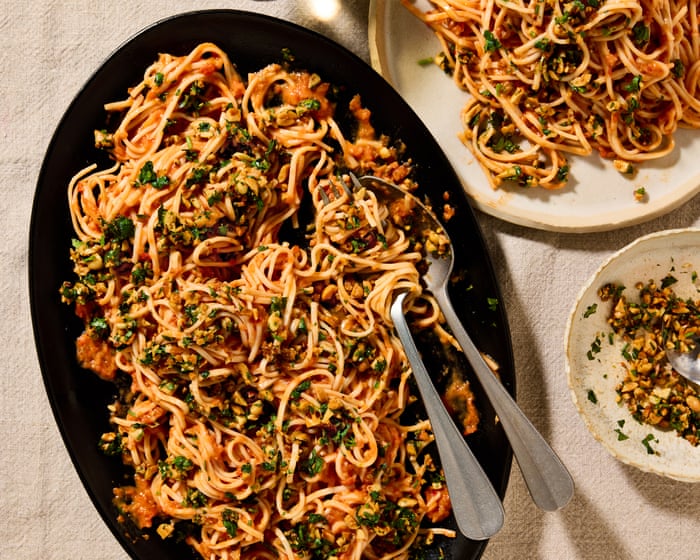
Can a person in a heatwave ever have too many cold noodle dishes? I’d wager no – hence today’s recipe. It started life as one of my favourite meals, the mighty spaghetti pomodoro, but then packed its bags and travelled through the Middle East, picking up some tahini along the way, then on to Indonesia for some heat (sambal oelek), and then hopped over to Vietnam for a final hurrah of fresh lime, coriander and peanuts. The result is a creamy but perky tomato sauce that can live in the fridge for up to a week for the too-hot-to-cook days.

Continue reading...

© Photograph: Louise Hagger/The Guardian/Photography: Louise Hagger Food Styling: Emily Kydd Prop Styling: Jennifer Kay Food Styling Assistant: Laura Lawrence Photo Assistant: Sophie Bronze

© Photograph: Louise Hagger/The Guardian/Photography: Louise Hagger Food Styling: Emily Kydd Prop Styling: Jennifer Kay Food Styling Assistant: Laura Lawrence Photo Assistant: Sophie Bronze

© Photograph: Louise Hagger/The Guardian/Photography: Louise Hagger Food Styling: Emily Kydd Prop Styling: Jennifer Kay Food Styling Assistant: Laura Lawrence Photo Assistant: Sophie Bronze

  •  

‘We can see the boats that supply the restaurant’s lobsters from our seats’: a culinary tour of Gower, Wales

On a coastline brimming with seafood shacks, crab sandwiches and hyperlocal flavour, our food writer is happy to be distracted from the stunning scenery

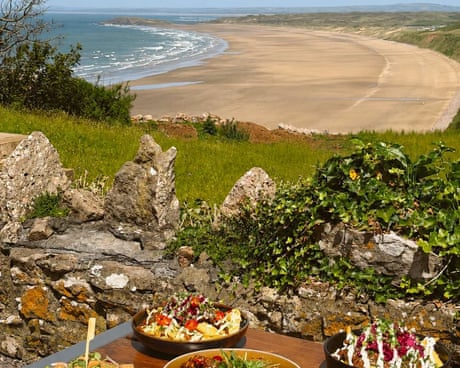
If we take it as read that the better the view, the worse the cooking, then by rights south Wales’s Gower peninsula should be a culinary desert. The first time I visited almost 15 years ago, I was unprepared for its loveliness – back in 1956, Gower (never the Gower, as locals were quick to correct me) was the first place in the UK to be designated an area of outstanding natural beauty, and though the peninsula abuts the country’s second city, Swansea, it still feels profoundly rural. Crisscrossed by narrow lanes flanked by towering hedges and ancient churches, it’s a great place to cycle, to drive, and above all to walk up an appetite.

Indeed, it’s been a long-held ambition of mine to hike the 43 miles of the Welsh Coast Path from Mumbles to Loughor. Sadly, it remains just that because on this latest trip I spent considerably more time chomping than yomping … though in fairness I was on a research mission for a walking trip with a friend here later in the summer, because as a food writer and semi-professional glutton, I never like to head anywhere unprepared.

Continue reading...

© Photograph: PR

© Photograph: PR

© Photograph: PR

  •  

Cocktail of the week: DakaDaka’s qvevri – recipe | The good mixer

Orange wine and mezcal mingle in this smoky, Georgian-inspired drink

A smoky, refreshing highball inspired by Georgia’s amber wines and qvevri winemaking tradition (large clay vessels buried underground for fermentation). The mezcal works beautifully with the wine, which traditionally has structure and tannin from extended skin contact in those qvevri, and with the hint of citrus. The result is a cocktail that feels ancient and modern at the same time.

Jack Porter, DakaDaka, London W1

Continue reading...

© Photograph: Rob Lawson/The Guardian. Drink styling: Seb Davis.

© Photograph: Rob Lawson/The Guardian. Drink styling: Seb Davis.

© Photograph: Rob Lawson/The Guardian. Drink styling: Seb Davis.

  •  

‘Full of zesty colour and flavour’: readers’ favourite food festivals in Europe

From the Tiramisù World Cup in Italy to street food ‘battles’ in Newcastle, your culinary highlights range from the sublime to the delicious
• Tell us about a book that inspired you to travel – the best tip wins £200 towards a Coolstays break

The town of Menton on the French Riviera is beautiful at any time of the year but becomes even more of a treat during the annual Lemon festival (Fête du Citron, 10-28 February 2027). Its microclimate, courtesy of the Alps to the north blocking colder winds, gives Menton lemons a distinct fragrance, flavour and quality that set them apart. For me, the event transformed a damp cold UK winter into a fortnight of colour, taste and light. There were food tastings, salads made with lemons, tarts, cakes and pies all full of zesty colour and flavour at stalls and markets in the town. There are sculptures made from citrus fruit, parades and exhibitions in the Golden Garden of Light (Jardins Biovès). More than a food festival, it’s a celebration of what nature can give to the world.
April

Continue reading...

© Photograph: Sébastien Nogier/EPA

© Photograph: Sébastien Nogier/EPA

© Photograph: Sébastien Nogier/EPA

  •  

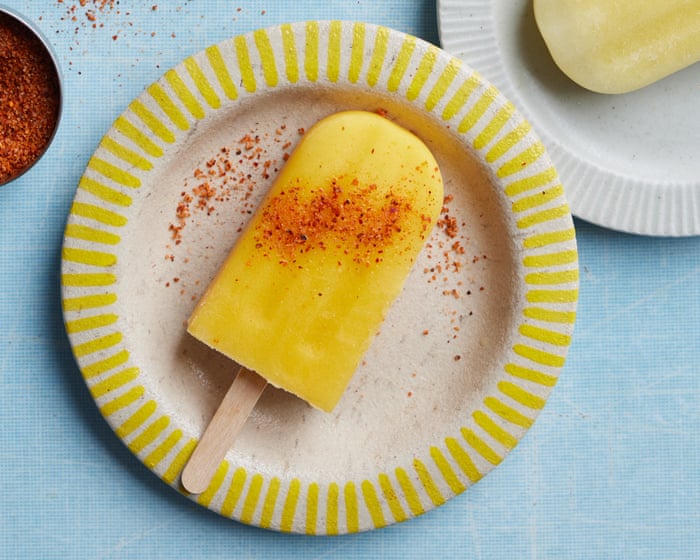
Helen Goh’s recipe for pineapple and mango paletas | The sweet spot

These bright, sharp Mexican iced treats are the perfect summer cooler – with a spiky kick

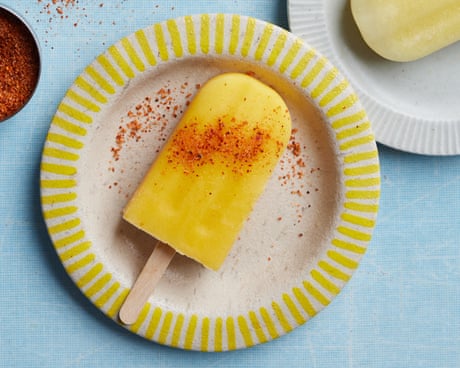
The first time I encountered paletas in Mexico, they felt strangely familiar. They reminded me of the iced treats of my Malaysian childhood: fruit-driven, brightly coloured and made less to indulge than to relieve the heat. What struck me most was the flavour logic shared by both countries, where sweetness is often enlivened with salt, chilli, tamarind or citrus, each sharpening the fruit in its own way and making it seem brighter, cooler and somehow more vivid. Paletas are rarely perfectly smooth; little pieces of fruit suspended in the ice give them texture and interest. These two paletas take different paths from the same base: pineapple – sharp, clean and bright with lime and ginger – and mango – sweeter, rounder and more indulgent, which I’ve spiked with chilli, lime and salt.

Continue reading...

© Photograph: Rita Platts/The Guardian. Food and prop styling: Lucy Turnbull.

© Photograph: Rita Platts/The Guardian. Food and prop styling: Lucy Turnbull.

© Photograph: Rita Platts/The Guardian. Food and prop styling: Lucy Turnbull.

  •  
❌