Elon Musk, a year after a huge blowup with President Trump and the Republican Party, is said to be planning to spend in at least eight states to help them in November.
The peculiar dynamic is playing out in Texas, where the fate of the Republican nominee, Ken Paxton, will help decide which party controls the U.S. Senate.
At the final debate before next week’s Democratic primary for Senate, Dr. Abdul El-Sayed and Representative Haley Stevens showcased their wildly different ideological stances and political styles.
Dr. Abdul El-Sayed and Representative Haley Stevens are competing in one of this year’s most contentious and expensive Democratic primary races for the Senate, in a state that will be a November battleground.
Exclusive: Foreign secretary to take up World Bank seat and play active role in shaping changes to global lender
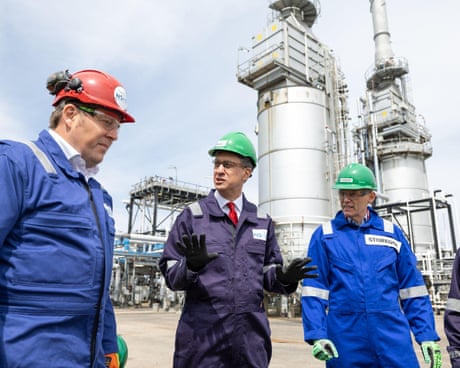
Britain’s foreign secretary, Ed Miliband, is to indicate he will put the climate crisis and overseas development at the heart of UK international relations by taking up the country’s seat on the board at the World Bank.
The position, which is usually delegated to a junior minister, means Miliband will play an active role in shaping the changes to the World Bank that developing countries have called for, and ensuring the climate remains a core focus for overseas aid.
The Democrats should be well positioned to make gains in this year’s midterms. But inside party headquarters, every week brings paranoia, worries about money and, on occasion, emotional eruptions.
Republicans are pouring huge sums behind the Maine senator through a web of billionaire-funded super PACs. Troy Jackson, picked as the new Democratic nominee, has a lot of catching up to do.
Of the 103 Democrats who voted to eliminate aid to Israel, more than a dozen had been endorsed by the pro-Israel lobbying group. AIPAC quickly closed off online donations for them.
The pro-Israel lobbying group appeared to be punishing Democrats it had endorsed for re-election after they voted in favor of an amendment that would have cut off U.S. aid to Israel.
In AIPAC’s web portal, the option of donating to House Democrats who voted to end U.S. aid to Israel was unavailable. That included Representative Katherine Clark of Massachusetts, left.
Supporters of Ken Paxton last month at the 2026 Republican Party of Texas convention in Houston. Mr. Paxton, the party’s nominee for Senate, has been drastically out-raised by his Democratic rival, James Talarico.
Supporters of Ken Paxton last month at the 2026 Republican Party of Texas convention in Houston. Mr. Paxton, the party’s nominee for Senate, has been drastically out-raised by his Democratic rival, James Talarico.
Elon Musk gave $5 million to back Vivek Ramaswamy’s campaign for Ohio governor, seemingly moving past tensions around the effort to downsize the federal work force.
Elon Musk and Vivek Ramaswamy developed a frosty relationship after President Trump named them as the leaders of the so-called Department of Government Efficiency.
The Arizona Democrat said he had raised and given away $10 million to fellow members of his party and committees as he mulls a presidential run in 2028.
Senator Mark Kelly’s fund-raising jumped last year after President Trump accused him and five other Democrats of “sedition” over a video in which they told service members they could ignore illegal orders.
Xavier Niel buys 16% through investment vehicle Vega after Emirati telecoms group sells shareholding
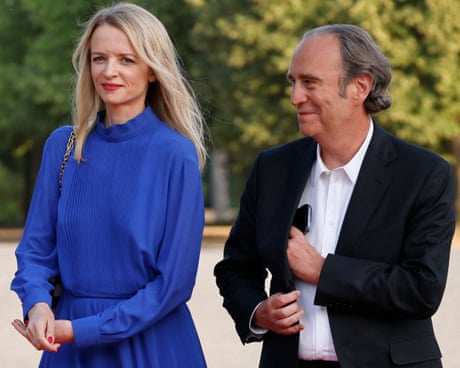
The French telecoms billionaire Xavier Niel has become Vodafone’s largest shareholder after buying a 16% stake for £4.4bn.
On Friday, the Emirati telecoms group e&, which first took a stake worth £3.3bn in Vodafone in 2022, announced the sale of its entire shareholding for 112.5p a share.
Senate Majority PAC says it entered July with $126 million, a new midyear high, after raising $147 million with an affiliated nonprofit from April through June. But can it keep pace with the G.O.P.?
Senate Majority PAC says it entered July with $126 million, a new midyear high, after raising $147 million with an affiliated nonprofit from April through June. But can it keep pace with the G.O.P.?
The High Pay Centre revealed the excesses of CEO wages. But then anti-diversity winds blew in from across the Atlantic
Shock ricocheted around the world of social research this week with the sudden news of the imminent closure of the High Pay Centre (HPC). Founded in 2011 by the former Guardian business editor Deborah Hargreaves to focus on analysis of extreme pay at the top and the widening pay gap between CEOs and their average employees, its closure feels like the death of an idea.
Others campaign on tax and redistribution but the HPC was concerned with “predistribution”. It was unique in looking at the origins of inequality in pay and control over pay rates. Its annual report is always covered, even by rightwing media, because each year it reawakens a sense of disbelief at the way we live now. Why would the median FTSE 100 CEO need £4.4m this year to do his (yes, mostly still his) gratifyingly high-status job? Why?
Refuge reports ‘staggering’ 78% annual increase in referrals for cases of technology-facilitated or economic abuse
Domestic abuse charities have reported a “staggering” increase in perpetrators using technology and finances to control their victims, with a “concerning” rise in people being coerced into car finance agreements.
Data from Refuge, the UK’s largest specialist domestic abuse charity, reveals a 78% rise in referrals for cases of technology-facilitated or economic abuse in the past year.
 Anmelden