❌

Lese-Ansicht

‘Reaching 50 is a success story’: how one trans woman survived HIV and stigma in Latin America

Erika Castellanos has beaten the life expectancy of 35 for a transgender woman in the region, but warns aid cuts and a rollback in human rights risk reversing efforts to end Aids

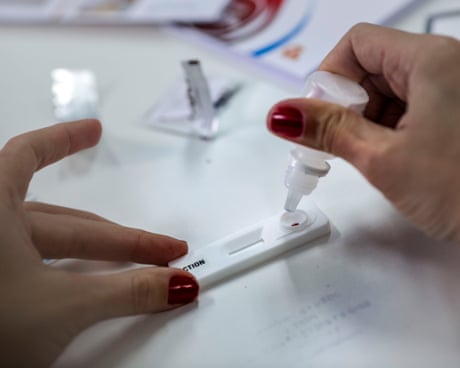
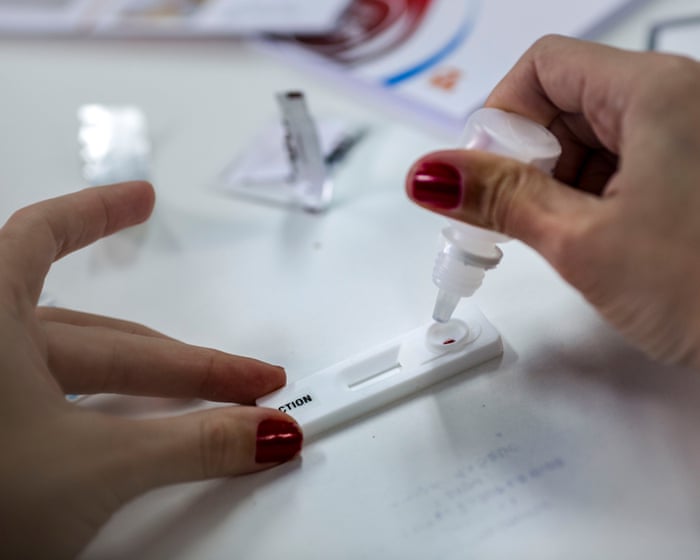
Erika Castellanos has outlived what she describes as one of the cruellest statistics in Latin America. The life expectancy of a transgender woman in the region is estimated to be 35 years. “I am 50 years old. A lot of trans women are killed very early in life, either because of HIV or because of transphobia, so reaching 50 is a success story,” she says.

When Castellanos was diagnosed with HIV in 1995, doctors gave her six months to live. She had already spent years watching Aids devastate her community, with effective treatment beyond the reach of most people in low-income countries.

Continue reading...

© Photograph: Courtesy

© Photograph: Courtesy

© Photograph: Courtesy

  •  

Brazil’s HIV advocates say they predicted USAID funding cuts: ‘We would see the trends’

At the Aids 2026 conference, Brazilian advocates said health systems need to be more independent from foreign funding

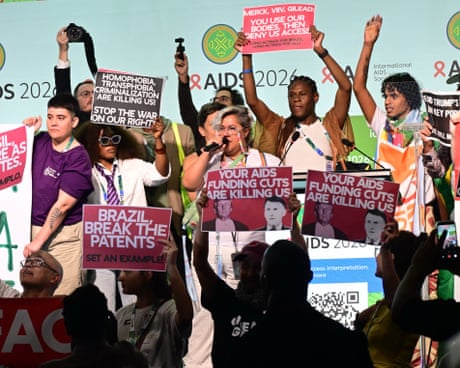
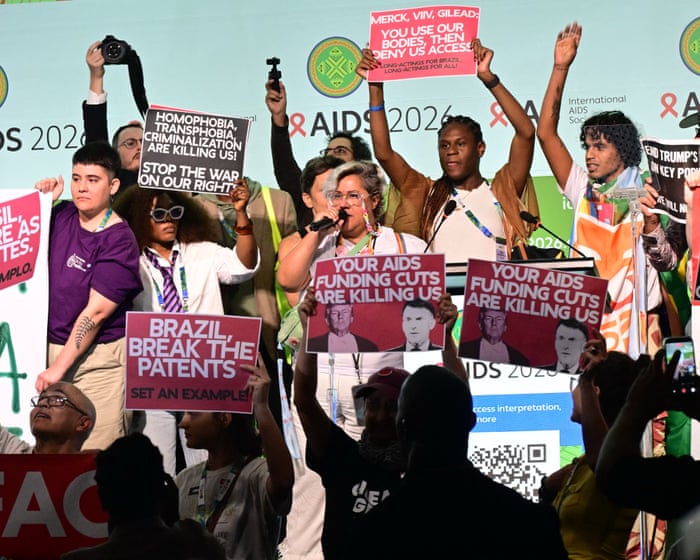
HIV advocates from Brazil, whose health system operates independently from foreign aid, say they predicted a dramatic reduction in donor funding for HIV and wish other countries had prioritized independence sooner.

While the dissolution of USAID might “feel like a rupture”, it’s something advocates at the Brazilian HIV NGO Gestos have seen coming for a long time, Juliana Cesar, Gestos’s political liaison coordinator, said during a session at the Aids 2026 conference in Rio de Janeiro.

Continue reading...

© Photograph: AFP/Getty Images

© Photograph: AFP/Getty Images

© Photograph: AFP/Getty Images

  •  

HIV prevention drug could reduce cases globally but USAID cuts prevent access, say experts

Injectable PrEP drug holds promise but investment in HIV prevention has declined dramatically worldwide

New innovations in HIV prevention could dramatically reduce the number of new HIV cases around the globe, but US foreign aid cuts will mean that those that most need the new medication will be unable to access it, according to experts at the Aids 2026 Conference in Rio de Janeiro, Brazil.

One year ago, the World Health Organization recommended that governments around the world prioritize expanded access to lenacapavir, an injectable version of the HIV prevention medication PrEP that requires only two injections annually. PrEP, which also comes in the form of daily oral medications and bimonthly injections, is 99% effective in preventing sexually transmitted HIV for people who take it consistently.

Continue reading...

© Photograph: Pablo Porciúncula/AFP/Getty Images

© Photograph: Pablo Porciúncula/AFP/Getty Images

© Photograph: Pablo Porciúncula/AFP/Getty Images

  •  

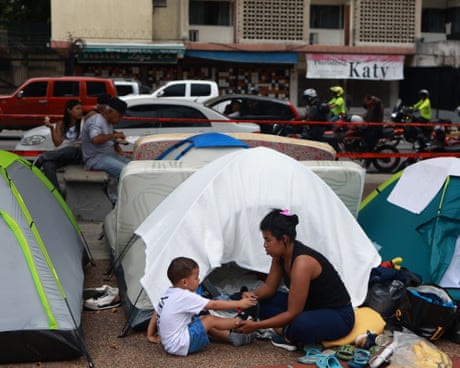
Mortuary in Caracas ‘overwhelmed’ as Venezuela struggles to respond after earthquakes

Volunteers provide counselling and funeral directors donate coffins after loss of at least 1,430 lives

The bodies turn up on motorcycles, in the backs of cars or the load beds of pickup trucks: victims of a natural disaster that has shaken an already fragile nation to its core.

“[Yesterday], the entire street was packed with people arriving with deceased relatives,” said Camila Rodríguez, a psychology student who is offering emotional support to grieving families at the Bello Monte mortuary in Venezuela’s capital, Caracas.

Continue reading...

© Photograph: Javier Campos/AP

© Photograph: Javier Campos/AP

© Photograph: Javier Campos/AP

  •  

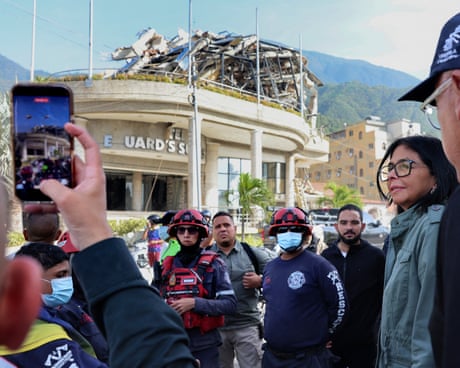
Venezuela quake death toll reaches 920 as interim president vows to save ‘as many as possible’

Delcy Rodríguez says foreign rescue teams are arriving as anger grows at official response and limited resources

Venezuela’s interim president, Delcy Rodríguez, has vowed to fight to save “as many people as possible” as the official death toll from the country’s worst earthquake in more than a century almost doubled, but frustration was growing at the perceived sluggishness of the government’s response.

Rodríguez’s brother, Jorge, the president of the national assembly, said on Friday that the official number of dead had risen to 920. Delcy Rodríguez had earlier said almost 3,000 people were injured. Speaking during a tour of La Guaira, the most devastated region, she said foreign search and rescue groups were starting to arrive.

Continue reading...

© Photograph: Venezuelan presidency/AFP/Getty

© Photograph: Venezuelan presidency/AFP/Getty

© Photograph: Venezuelan presidency/AFP/Getty

  •  

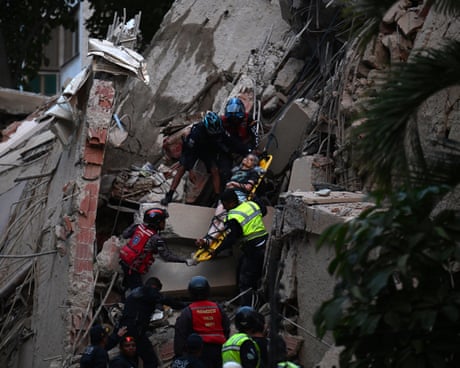
Rescue teams race to Venezuela amid fears thousands killed in earthquakes

US among countries sending help to search for survivors on north coast, where dozens of buildings flattened, as official death toll reaches 235

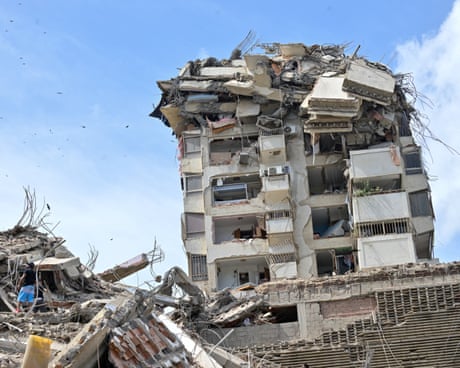
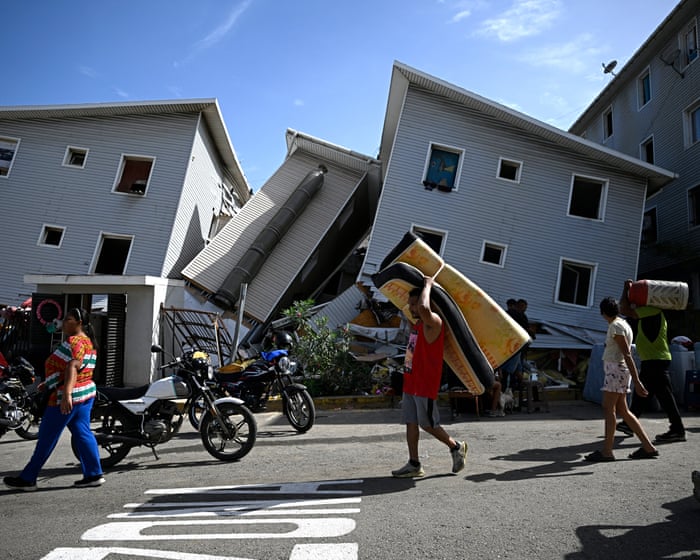
Rescue teams are racing to Venezuela’s shattered northern coast after almost simultaneous earthquakes reduced dozens of buildings to rubble, killing at least 235 people but with thousands more fatalities feared. Officials said at least 4,300 people were injured as rescue missions continue.

The US secretary of state, Marco Rubio, said the defence department would help search and rescue teams deploy to the affected region after Venezuela’s main gateway, the Simón Bolívar international airport, near the capital, Caracas, was badly damaged by 7.2 and 7.5 magnitude quakes less than 40 seconds apart, late on Wednesday afternoon.

Continue reading...

© Photograph: Maxwell Briceno/Reuters

© Photograph: Maxwell Briceno/Reuters

© Photograph: Maxwell Briceno/Reuters

  •  

‘Paralysed by fear’: Venezuelans tell of escape and loss after huge earthquakes

People in Caracas and coastal towns describe powerful quakes that collapsed buildings and killed at least 164

As a double whammy of powerful earthquakes rattled Venezuela’s northern coast on Wednesday, residents of the capital, Caracas, scrambled out on to the streets from shuddering, fractured buildings.

“It was horrible. I felt like the house was moving to a different rhythm to the earth. I had to carry my mum out. She was paralysed by fear,” said 18-year-old Sebastian Rodríguez, whose family runs a shop in Centro Plaza, a brutalist commercial centre in the affluent neighbourhood of Los Palos Grandes.

Continue reading...

© Photograph: Federico Parra/AFP/Getty Images

© Photograph: Federico Parra/AFP/Getty Images

© Photograph: Federico Parra/AFP/Getty Images

  •  

Venezuela capital hit by double earthquake as experts warn of high death toll

Delcy Rodríguez declares state of emergency after buildings collapse across Caracas, with tremors felt in Colombia

Venezuela’s interim leader, Delcy Rodríguez, has declared a state of emergency after the country was struck by two powerful earthquakes that collapsed dozens of buildings and killed at least 32 people, with experts warning the death toll could rise significantly.

Rodríguez said hundreds were injured and more casualties were expected. The two strong earthquakes hit within a minute of each other; the first had a magnitude of 7.2 and the second 7.5, making it the most powerful to strike the country since 1900, according to the US Geological Survey (USGS).

Continue reading...

© Photograph: Juan Barreto/AFP/Getty Images

© Photograph: Juan Barreto/AFP/Getty Images

© Photograph: Juan Barreto/AFP/Getty Images

  •  

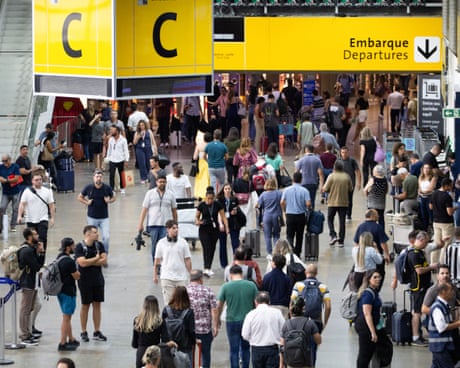
Brazilian federal police arrest Spanish citizen at São Paulo airport for racism

Woman detained at airport after allegedly making racist remarks directed at workers unloading baggage, police say

Brazil’s federal police have detained a Spanish citizen in São Paulo’s international Guarulhos airport for racism, in the latest of a series of high-profile arrests of foreign tourists on similar grounds.

Brazil has some of the strictest anti-racism laws in Latin America. Insulting a person on the basis of race carries a penalty of imprisonment from two to five years and a fine.

Continue reading...

© Photograph: Bruno Escolastico Sousa Silva/NurPhoto via Getty Images

© Photograph: Bruno Escolastico Sousa Silva/NurPhoto via Getty Images

© Photograph: Bruno Escolastico Sousa Silva/NurPhoto via Getty Images

  •  

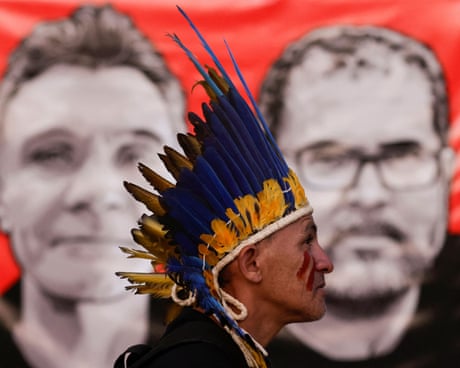
Alleged mastermind in murders of Dom Phillips and Bruno Pereira to stand trial

Brazilian judge rules there is enough evidence to try Ruben Dario da Silva Villar over killings of journalist and activist

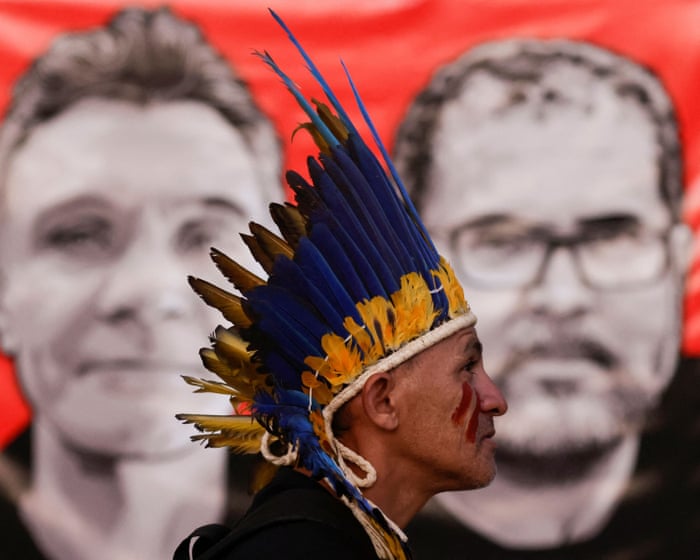
The alleged mastermind and financial backer of the murders of the British journalist Dom Phillips and the Brazilian activist Bruno Pereira in the Amazon four years ago will stand trial before a jury, a federal judge in the state of Amazonas has ruled.

Judge Cristina Lazzari Souza found that, based on the charges brought by federal prosecutors, there were “sufficient indications of authorship” to try Ruben Dario da Silva Villar, known by his nickname “Colômbia”.

Continue reading...

© Photograph: Ueslei Marcelino/Reuters

© Photograph: Ueslei Marcelino/Reuters

© Photograph: Ueslei Marcelino/Reuters

  •  

Air passengers ‘risking lives by grabbing bags and filming in emergencies’

Fines may be needed to deter travellers from retrieving hand luggage, says official from airlines body Iata

Air passengers are increasingly putting lives at risk by filming emergencies and retrieving bags instead of evacuating planes, industry experts have said, with some suggesting fines could be needed.

Passenger aircraft are designed to be fully evacuated in 90 seconds in an emergency – but people reaching for hand luggage can significantly increase that time, blocking exits and aisles as well as damaging slides or causing injury.

Continue reading...

© Photograph: The Photolibrary Wales/Alamy

© Photograph: The Photolibrary Wales/Alamy

© Photograph: The Photolibrary Wales/Alamy

  •  

Airline industry chiefs say 2050 net zero goal now unlikely

Iata boss Willie Walsh blames fuel suppliers, governments and aircraft makers, saying new ‘realistic timeline’ now needed

The aviation industry’s landmark pledges to be net zero by 2050 will probably not now be achieved, airline leaders have admitted.

The collective goal to eliminate net carbon emissions was declared by global airlines only five years ago in 2021, with similar pledges made by national aviation industry leaders and governments, including in the UK, in 2020.

Continue reading...

© Photograph: Nicolas Economou/NurPhoto/REX/Shutterstock

© Photograph: Nicolas Economou/NurPhoto/REX/Shutterstock

© Photograph: Nicolas Economou/NurPhoto/REX/Shutterstock

  •  

BA boss warns costly aviation taxes and rail tickets are stunting UK growth

UK lagging behind rivals on tourism growth because of travel costs and lack of joined-up planning, says CEO Sean Doyle

The cost of travel to and around the UK is keeping millions of tourists away and slowing economic growth, the boss of British Airways said, as he urged a rethink of aviation taxes.

The airline’s chief executive, Sean Doyle, said the UK had some of the highest aviation taxes in the world and was falling behind countries such as Japan, France and Germany in boosting its inbound tourism.

Continue reading...

© Photograph: Jui-Chi Chan/Alamy

© Photograph: Jui-Chi Chan/Alamy

© Photograph: Jui-Chi Chan/Alamy

  •  

Romário: ‘I consider myself one of the greatest players ever. An 11 out of 10’

Brazil’s 1994 World Cup winner on being good without training, his political legacy and why he loves social media

Few people’s interview list over the past year features Neymar, Robert Lewandowski, Xavi Hernández and Iker Casillas. But then not many interviewers have the pulling power of Romário. Thirty-two years after the former Brazil striker was crowned world champion and best player at the 1994 World Cup, he is travelling far and wide to speak with football greats for his YouTube channel.

Romário began his “face to face with the man” project a year ago. “This whole Romário TV thing is a brand-new situation in my life,” he says. “I’m really happy, enjoying it. It’s so cool.

Continue reading...

© Photograph: Lucas Figueiredo/The Guardian

© Photograph: Lucas Figueiredo/The Guardian

© Photograph: Lucas Figueiredo/The Guardian

  •  

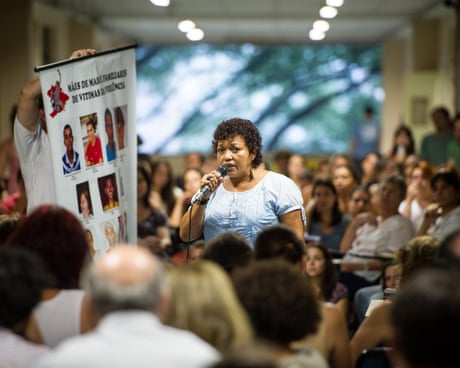
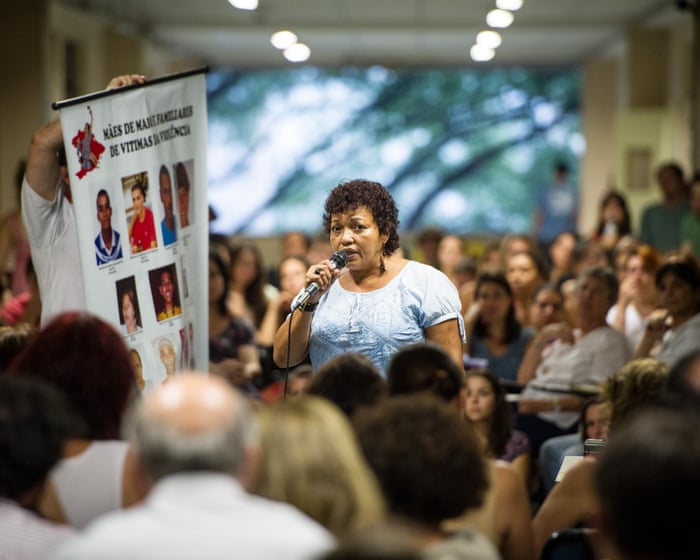
The Mothers of May’s 20-year struggle for justice after Brazil police rampage

In 2006 police took revenge for deadly prison riots by killing more than 500 people in alleged shootouts that others call executions. A court is to rule on compensation for victims

When authorities in the Brazilian state of São Paulo transferred nearly 800 suspected gang members to maximum-security prisons in May 2006, the crime group launched a wave of prison riots and attacks on law enforcement officers. Fifty-nine police and prison officers were killed.

In the following nine days, police officers took their revenge, killing more than 500 people in what were described as shootouts with “criminals”, but which human rights organisations and forensic studies attribute, at least in large part, to executions, including of innocent people.

Continue reading...

© Photograph: AFP/Getty Images

© Photograph: AFP/Getty Images

© Photograph: AFP/Getty Images

  •  

Lula says Brazil will not be treated like ‘tinpot country’ after US designates gangs as terrorists

Marco Rubio made announcement after meeting president’s far-right challenger Flávio Bolsonaro

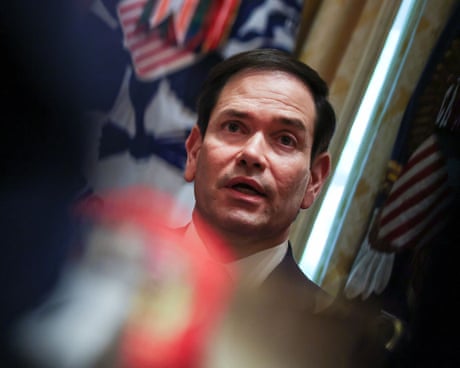
Brazil will not be treated as a “tinpot country,” the country’s president, Luiz Inácio da Silva, said on Friday after the United States designated Brazil’s two largest criminal gangs, the First Capital Command (PCC) and the Red Command, as foreign terrorist organisations.

The announcement, made by Marco Rubio, the secretary of state, on Thursday, is being widely seen in Brazil as a setback for Luiz Inácio Lula da Silva, the president who had strongly opposed the designation – and a boost for Lula’s main challenger in October’s presidential election, the far-right senator Flávio Bolsonaro.

Continue reading...

© Photograph: Samuel Corum/Pool/Samuel Corum - Pool/CNP/Shutterstock

© Photograph: Samuel Corum/Pool/Samuel Corum - Pool/CNP/Shutterstock

© Photograph: Samuel Corum/Pool/Samuel Corum - Pool/CNP/Shutterstock

  •  

Argentina’s ‘European’ self-image under renewed scrutiny after racist incidents in Brazil

Case involving seven-year-old boy is latest flashpoint in debate over race relations in Latin America

‘Argentina needs to end its fantasy of being a European country’: Lucrecia Martel on the story of a killing

A woman celebrating her 32nd birthday on a train journey in the Brazilian state of Minas Gerais was horrified when a fellow passenger alerted her that an unknown man had been secretly filming her seven-year-old son.

When confronted, the man – an Argentinian tourist – initially refused to show his phone. But after being pressed by other travellers, the man admitted he had sent the images to a WhatsApp contact.

Continue reading...

© Photograph: TRV/imagerover.com/Alamy

© Photograph: TRV/imagerover.com/Alamy

© Photograph: TRV/imagerover.com/Alamy

  •  

The mural project honouring the Black cultural heritage of Rio de Janeiro – photo essay

Despite its majority Afro-descendant population, fewer than 10% of public monuments across Rio commemorate Black people. Photographer María Magdalena Arréllaga chronicles the project seeking to redress the balance

Once home to the world’s largest port of arrival for enslaved Africans, Rio de Janeiro has, like the rest of Brazil, a majority Afro-descendant population.

Many of the country’s most prominent Black figures – scientists, lawyers, athletes, politicians, writers, musicians, activists and intellectuals – were either born or lived in the country’s second-largest city, which served as the capital for nearly 200 years.

A mural of the Brazilian singer-songwriter and composer Luiz Melodia, painted on a wall in Estácio, the Rio de Janeiro neighbourhood where he lived

Continue reading...

© Photograph: María Magdalena Arréllaga/The Guardian

© Photograph: María Magdalena Arréllaga/The Guardian

© Photograph: María Magdalena Arréllaga/The Guardian

  •  

Just what the doctor ordered: Brazil’s drive to ditch UPFs from hospital menus

Following the successful reduction of ultra-processed foods in schools, scientists and politicians hope to improve patient health with locally grown and freshly prepared meals

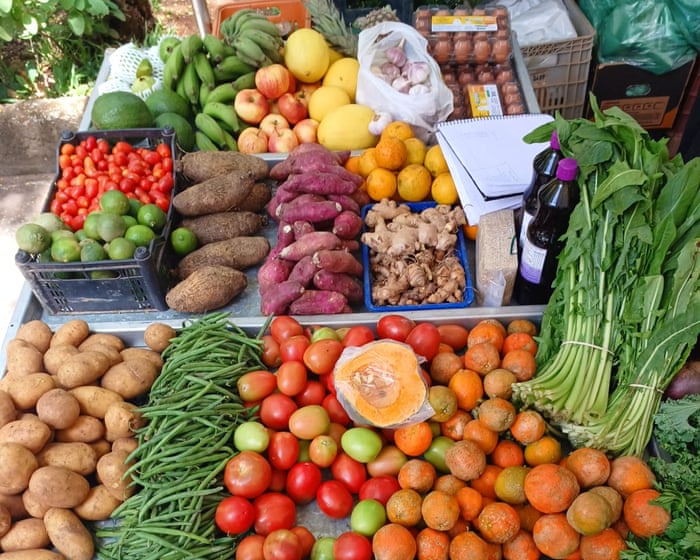
Every month a few dozen staff from some of São Paulo’s leading hospitals take time out of their busy schedules to visit food fairs where stallholders from more than 50 local farms display their produce. The aim is to strike deals that will supply the hospitals with organic vegetables, homemade bread and other locally made foods.

Started in October 2023, the fairs are part of a revolutionary scheme in São Paulo state to phase out ultra-processed foods (UPFs) from hospital menus in favour of healthier alternatives. “It’s not only cooks, nutritionists, meal planners and hospital management who attend the fairs but also nurses and doctors,” says Weruska Davi Barrios, a specialist in hospital nutrition at the University of São Paulo, the institution that has initiated the project.

Continue reading...

© Photograph: ECCCoUSP

© Photograph: ECCCoUSP

© Photograph: ECCCoUSP

  •  
❌