❌

Lese-Ansicht

Emiko Davies’ Japanese curry rice (kare raisu) – recipe

The Australian-born cook and author shares her recipe for a thick, fragrant Japanese curry – with one secret ingredient

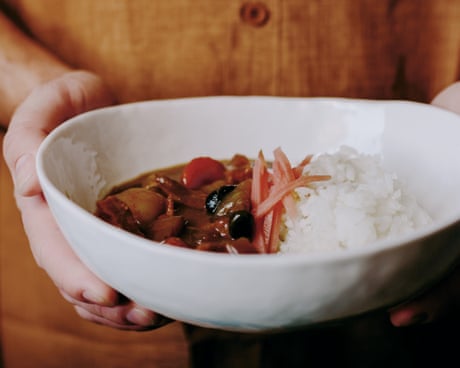
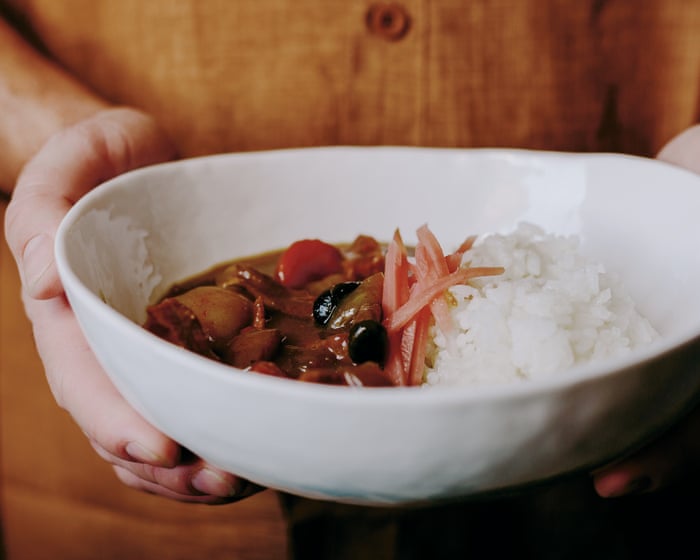
Japanese curry – kare raisu in Japanese – is unlike any “curry” you might know from south Asian countries. That is partly because of the nature of yoshoku (western-influenced) cuisine but also because it made a roundabout route to Japan, via the British Royal Navy during the Meiji Restoration, a period when India was under British colonial rule. It arrived in the form of British “C&B” curry powder, so it was considered western food, not Indian. Curry became a staple in the Japanese naval and army kitchens at the turn of the century and this in turn brought curry into homes and even into school lunches. Today, it is considered a national dish.

Japanese curry needed to be thick enough so that it could be easily eaten with rice, with the help of a spoon. This can be achieved with a French-style roux base of butter, flour and liquid, or it can be thickened in a more Japanese style using a potato starchy slurry right at the end of cooking, which is my preference. Then there is the spice mix. Today, Japanese S&B curry powder is one of the best known, which contains 17 spices such as turmeric, coriander, fenugreek, cumin, cinnamon, fennel, ginger and star anise.

Continue reading...
© Photograph: Emiko Davies, Hana Davies and Yuki Sugiura
© Photograph: Emiko Davies, Hana Davies and Yuki Sugiura
© Photograph: Emiko Davies, Hana Davies and Yuki Sugiura
  •  

How to use up parmesan rind to make pesto – recipe | Waste not

Why waste the tastiest bit of the cheese?

Although parmesan rind is tough, it has just as much, if not more flavour than the cheese from inside the wheel itself. It can be used just as it is to flavour stock or risi e bisi (Venetian pea risotto), but grating it opens up a whole range of other uses, such as in my mac and cheese “rinds” and today’s parmesan rind pesto. The flavour is very powerful, though, so add it to taste: you may find that you need a lot less than you think you do.

Continue reading...

© Photograph: Tom Hunt/Guardian

© Photograph: Tom Hunt/Guardian

© Photograph: Tom Hunt/Guardian

  •  

Tarte tatin, spicy pork chops and crumble: Ravinder Bhogal’s gooseberry recipes

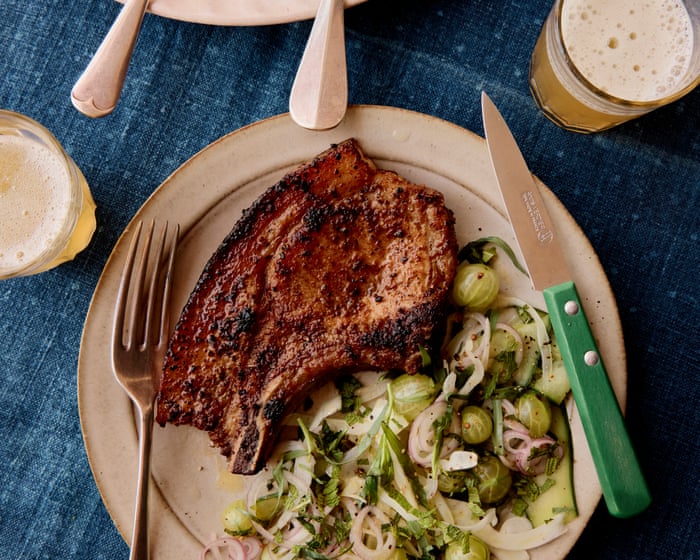
The gooseberry makes itself welcome in both sweet and savoury settings: in a tarte tatin, in a lively salad for spicy, herby pork chops and in a crumble custard cake

In the summer glut of saccharine fruits such as strawberries and peaches, gooseberries may not be the ones you reach for first. But behind their strange burr of fine fuzz, these translucent, marble-like fruits offer a complex, defiant flavour. They are juicy, fragrant, a little sweet (especially the red ones that come along later in the season), but, overall, they are raspishly sour. Like rhubarb, they need sweetening if you’re using them in compotes or desserts, but their natural tartness offers a wonderful contrast and cuts through cheese, fatty meat such as pork or oily fish such as mackerel.

Continue reading...

© Photograph: Beca B Jones/The Guardian

© Photograph: Beca B Jones/The Guardian

© Photograph: Beca B Jones/The Guardian

  •  

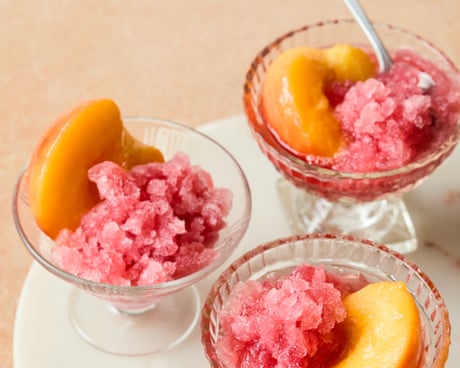
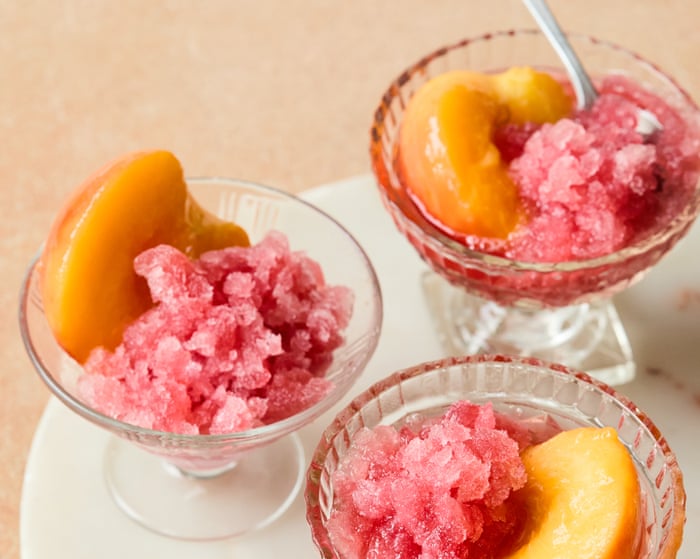
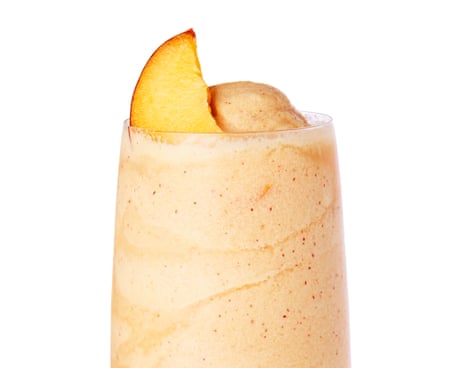
José Pizarro’s recipe for peach and moscatel granita

Something light, cooling and refreshing to finish a big summer meal

For me, the best desserts are often the simplest. In Spain, we often finish a meal with something light, something that refreshes rather than fills you up. This is exactly that. It has a lovely texture that sits somewhere between a drink and something you eat, and is perfect at the end of a long meal. It feels relaxed but still special, the kind of thing you enjoy on a warm day, when all you want is something fresh and uplifting.

Continue reading...

© Photograph: Ola O Smit/The Guardian. Food styling: Aya Nishimura. Prop styling: Polly Webb-Wilson. Food styling assistant: Laura Lawrence.
© Photograph: Ola O Smit/The Guardian. Food styling: Aya Nishimura. Prop styling: Polly Webb-Wilson. Food styling assistant: Laura Lawrence.
© Photograph: Ola O Smit/The Guardian. Food styling: Aya Nishimura. Prop styling: Polly Webb-Wilson. Food styling assistant: Laura Lawrence.
  •  

A slow, boozy bus tour of Hungary’s secret vineyards

The spa town of Balatonfüred is a bucolic gem for sailors, hikers … and wine lovers. A new hop-on, hop-off bus tour offers a chance to get a taste of its little-known wineries

The 90-minute train journey south-west from Budapest to the spa town of Balatonfüred unveils a landscape that segues from gritty industrial compounds to long sweeps of golden sunflowers and fields of pale grain. The carriage is pleasingly retro, with thick velour upholstery; windows that open, awkwardly, with a stiff metal lever; and a bushy eyebrowed conductor replete with ticket machine slung over his shoulder.

But the real retromania is yet to come. Arriving at Balatonfüred station, I board a 1984 DAF bus, painted an almost audacious shade of green. From the open-air rear, I take in the view over Lake Balaton, central Europe’s largest freshwater lake, often referred to as the “Hungarian Sea”.

Continue reading...

© Photograph: Buruzs Petra

© Photograph: Buruzs Petra

© Photograph: Buruzs Petra

  •  

Riffing on classic British comfort food

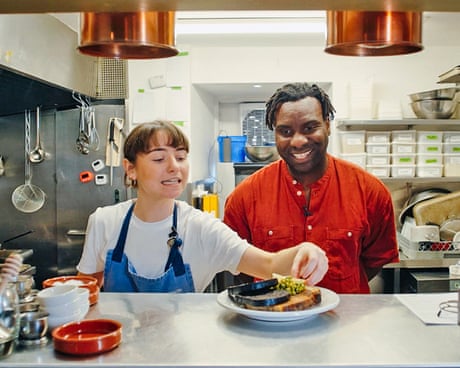
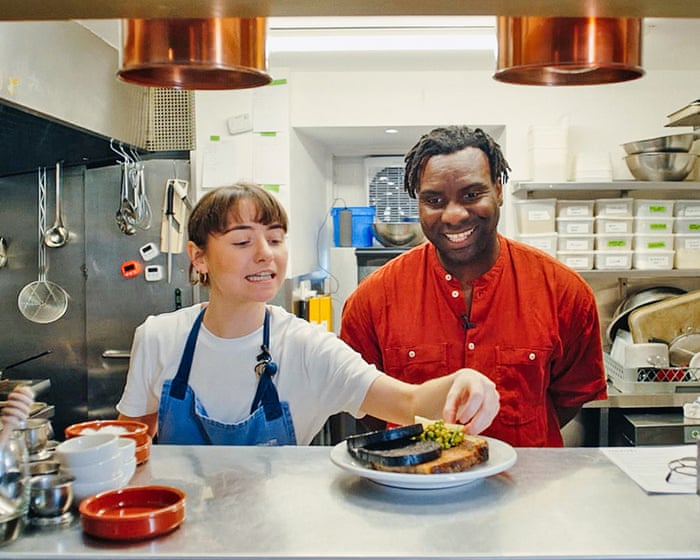
Jimi Famurewa, restaurant critic and food journalist, travels to Edinburgh, London and Manchester eating at the female-fronted cafes and bistros reviving regional comfort food favourites, passed down through generations. Starting with soda bread and a fry-up cooked by Irish-born owner Claire Hanrahan at her bistro Norah, named after her late grandmother. Onwards to Bara, where Cecily Dalladay and Zoë Heimann are celebrating the Welsh ingredients they grew up with and feed Jimi a hearty Caerphilly cheesesteak. Finally he visits Auntie Lou’s, where Emily Witts recreates her grandmother’s recipe for scones with apricot jam and cheese.

Continue reading...

© Photograph: The Guardian

© Photograph: The Guardian

© Photograph: The Guardian

  •  

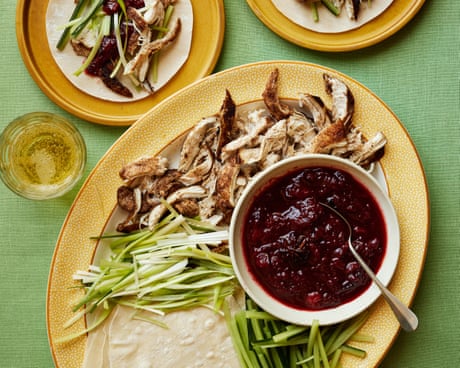
Georgina Hayden’s quick and easy recipe for spiced sticky chicken with plums and pancakes

A quick, takeaway-style chicken dish full of spice and flavour, with a homemade plum sauce, to serve with pancakes or rice

I have a real aversion to the term “fakeaway”. I don’t know why. But as much as I resist the terminology, I guess it’s exactly what this dish is – it’s 100% based on and inspired by a Chinese takeaway classic: crispy duck pancakes. A real people pleaser, and something my girls adore. Making this with pan-fried chicken takes next to no time and is the perfect after-school/work quick dinner. And for a different ending, I sometimes serve the chicken and plum sauce over jasmine rice instead. With the same accompaniments, of course.

Continue reading...

© Photograph: Matthew Hague/The Guardian. Food and prop styling: Florence Blair. Food styling assistant: Phoebe Altman.

© Photograph: Matthew Hague/The Guardian. Food and prop styling: Florence Blair. Food styling assistant: Phoebe Altman.

© Photograph: Matthew Hague/The Guardian. Food and prop styling: Florence Blair. Food styling assistant: Phoebe Altman.

  •  

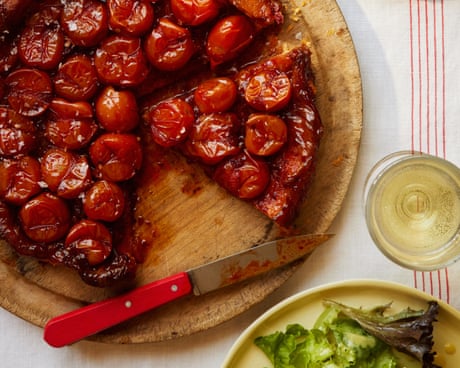
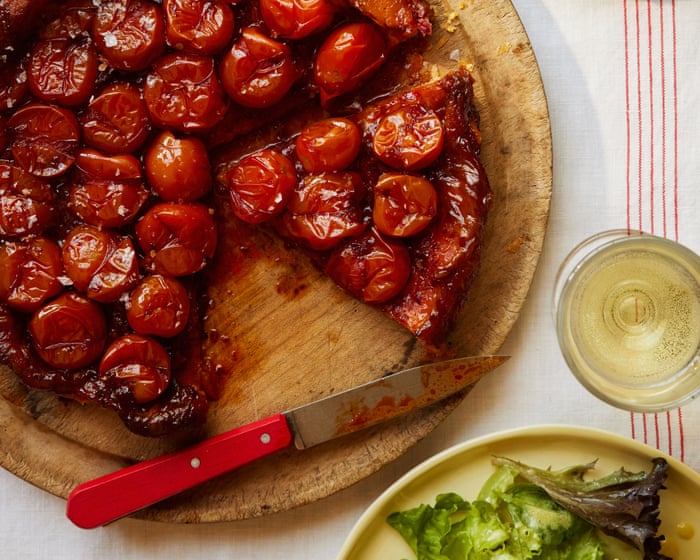
Broth, tart and salad: Kirk Haworth’s vegan tomato recipes for summer

A smoky tomato broth, a grilled peach, tomato and almond ‘ricotta’ salad scattered with roast almonds, and a sparky tomato tarte tatin

August is peak tomato season. This most versatile of fruits can be put to just about any use, from raw to slow-cooked and from oven- or sun-dried to desserts (believe it or not, they go incredibly well with summer berries, especially strawberries and raspberries). Not only that, but tomatoes have high glutamate levels that rise even further as they ripen, which gives them an umami kick. However you prepare them, though, the key thing is never to keep tomatoes in the fridge: the chill breaks down their cell structure and, even more importantly, affects their flavour in an alarming way.

Continue reading...

© Photograph: Matthew Hague/The Guardian. Food and prop styling: Florence Blair. Food styling assistant: Phoebe Altman.

© Photograph: Matthew Hague/The Guardian. Food and prop styling: Florence Blair. Food styling assistant: Phoebe Altman.

© Photograph: Matthew Hague/The Guardian. Food and prop styling: Florence Blair. Food styling assistant: Phoebe Altman.

  •  

Bullgogi, Manchester M1: ‘Highly decent, amenable, human-free dining’ – restaurant review

Bullgogi’s largely automated hospitality will either delight or horrify you, but the food is serious

Bullgogi, a whopping new interactive multiscreen Korean restaurant in Manchester’s Piccadilly Plaza, has arrived, heralding the end of traditional hospitality – again. It’s the UK’s largest Korean barbecue restaurant – 165 covers, traditional tabletop grills at every booth – but has no servers with notepads, just screens. Your gyeran jjim, your dolsot bibimbap, your bulgogi: jab the at-table screen and it will arrive, ferried by human hand. Think McDonald’s, but as a gargantuan restaurant. Jae Cho and his Maguro Group have built an empire of 21 locations across London and Manchester, but this is their biggest venture to date. We arrive without reservation, which is no problem, because Bullgogi is the size of a small planet. We order pots of barley tea and pints of Asahi at £6.90, and sit back to enjoy the Blade Runner vibes.

Bullgogi’s largely human-free hospitality will either delight or horrify you. Personally, I greet our new robot hospitality overlords with calm scepticism. Over the past few decades, I have staggered through the Covid QR menu wilderness, prised my dinner from the temperamental jaws of robot fridges in rural farm shops, and watched with mirth as the robot chef at a recent Soho yakitori joint still required a human to load every skewer into it before performing. For these reasons, I greet Bullgogi with a raised eyebrow. In fact, the moment we flag, via the screen, a food intolerance at our table, a bright, chipper human appears immediately to check through the menu for said offending item.

Continue reading...

© Photograph: Shaw & Shaw/The Guardian

© Photograph: Shaw & Shaw/The Guardian

© Photograph: Shaw & Shaw/The Guardian

  •  

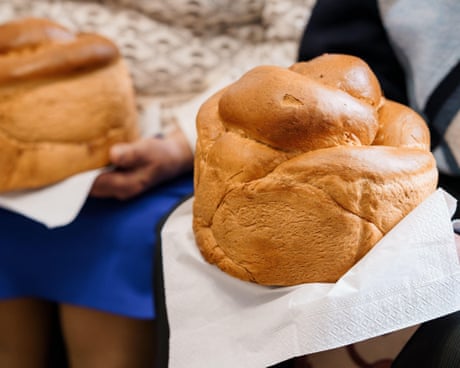
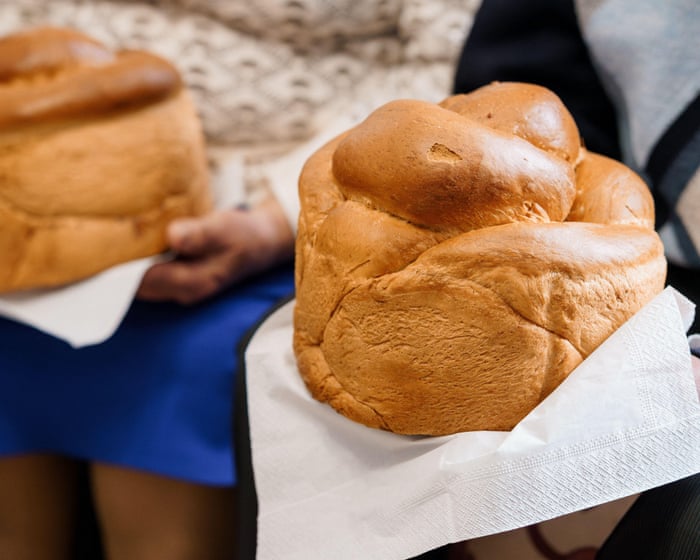
Sweet, soft and playful: TikTok turns Japanese milk bread into UK’s latest food craze

Shokupan, fresh fruit sandwiches and soufflé pancakes are part of a growing interest in east Asian cuisine

Golden brown and glistening with melted butter, a tray of freshly baked bread fills the screen in a TikTok video. The camera lingers on the glossy tops before one bun is gently pulled apart, revealing a cloud-soft interior.

The clip is one of countless videos of Japanese milk buns that have racked up millions of views and thousands of comments and shares, helping to propel the pillowy rolls into UK supermarkets.

Continue reading...

© Photograph: Halyna Kubei/Alamy

© Photograph: Halyna Kubei/Alamy

© Photograph: Halyna Kubei/Alamy

  •  

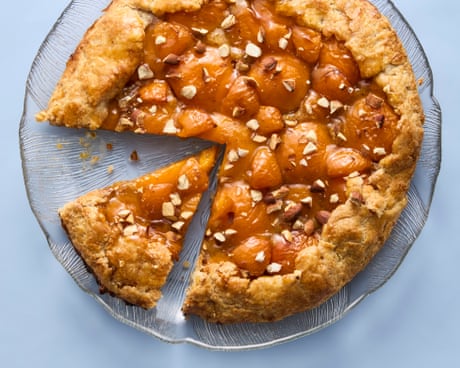
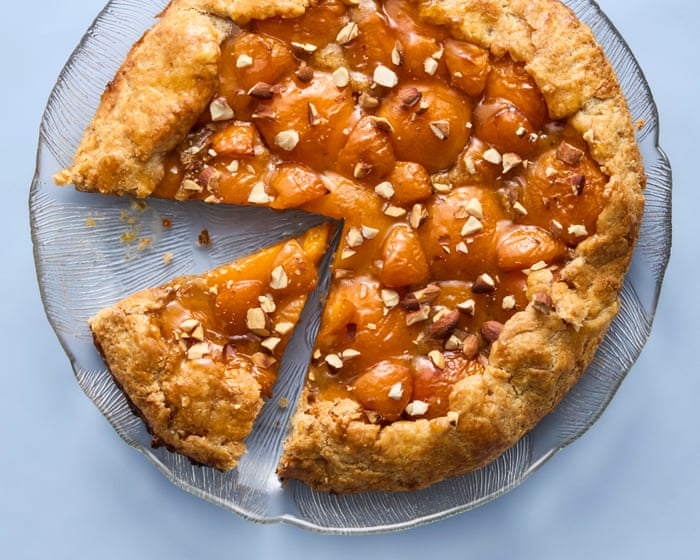
How to cook the perfect apricot galette – recipe | Felicity Cloake's how to make the perfect …

A free-form fruit tart that’s easy to throw together with whatever seasonal fruit you have to hand

The galette takes its name from the pebble it’s said to resemble – as Elizabeth David observes, it takes many forms, all of them round and flat. For me the word conjures the buckwheat pancakes of Brittany while French friends, in a quick straw poll, tend to think first of the frangipane-stuffed puff pastry galette de rois served at Epiphany, with one vote for a buttery Breton biscuit.

Ask the English-language internet, however, and you’ll be served what is more commonly known as a tart(e), more specifically a charmingly rustic, free-form version which doesn’t require a tin. Though Anne Willan references prune and apple three-tier galette pies from the Pyrenees in her 1981 classic French Regional Cooking, and David includes a yeasted version that sounds more like a cobbler in French Provincial Cooking, most fruit galette recipes I find seem to be American. My hunch is that Alice Waters’ tradition of a daily seasonal galette at Chez Panisse may have popularised the name across the pond, but the general idea never needed upselling. As a quick and easy way to turn a punnet of fruit into a dessert, it’s hard to beat, whatever you call it.

Continue reading...

© Photograph: Robert Billington/The Guardian. Food styling: Johnny Bentham.

© Photograph: Robert Billington/The Guardian. Food styling: Johnny Bentham.

© Photograph: Robert Billington/The Guardian. Food styling: Johnny Bentham.

  •  

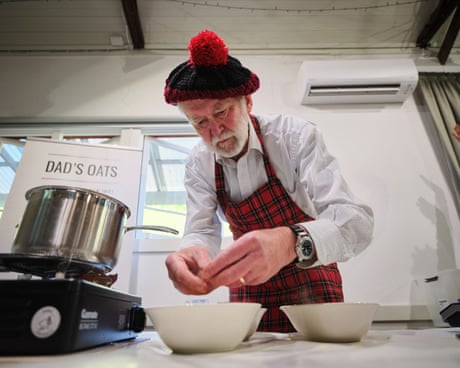
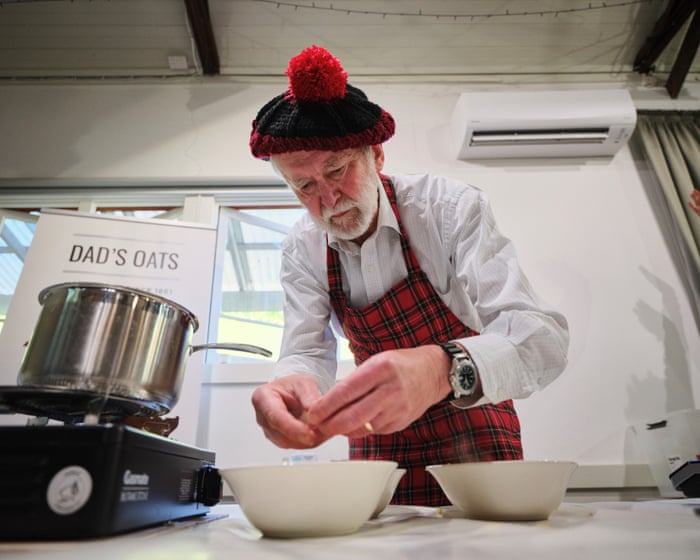
Breakfast of champions: Australia’s best porridge makers cause a stir at inaugural national competition

On Saturday, a sold-out crowd cheered on as 15 contestants battled it out to claim the championship spurtle – with a pinch of Celtic salt the deciding factor

Oatmeal sloshes out of pots and into stovetop flames as contestants frantically fumble with their finishing touches. The timer is ticking down but spectators clap and cheer, their whoops ringing through the rafters of Pearl Beach memorial community hall before a voice cuts through the chaos: “please make way for the porridge carriers”.

The five cooks step back, glance at each other’s mess, and hope they’ve done enough.

Sign up for a weekly email featuring our best reads

Continue reading...

© Photograph: Rémi Chauvin/The Guardian

© Photograph: Rémi Chauvin/The Guardian

© Photograph: Rémi Chauvin/The Guardian

  •  

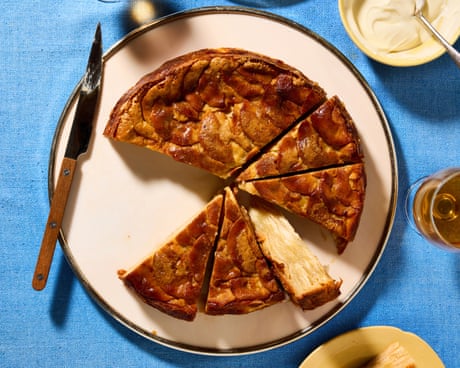
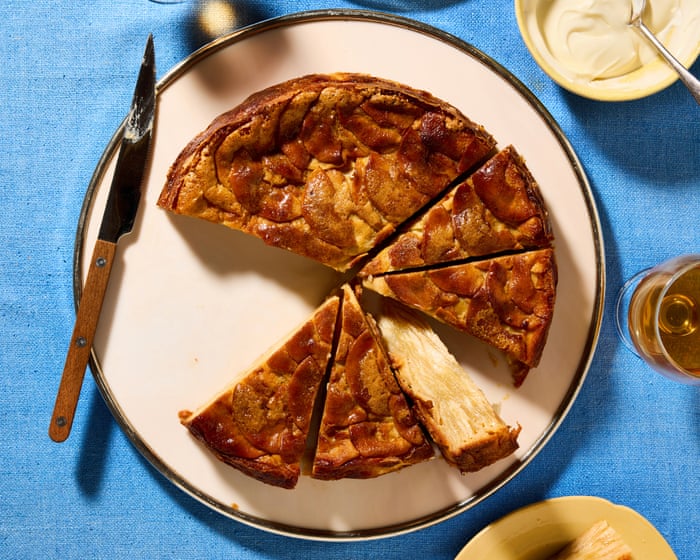
Meera Sodha’s recipe for Limmat’s apple cake | Meera Sodha recipes

With its sweet, caramelised edge and soft, creamy apple centre, you’ll be thinking about this cake for months after the first bite

For better or for worse (definitely for worse), this column is one-way. If we could talk, I’d ask you about the most mindblowing things you’ve eaten in your wild and precious life (feel free to use the comments). This year, for me, it was chef Lili’s apple cake at her restaurant, Limmat in Marseille. I’ve never had anything like it: a cake of pure apple – one and a half kilos – sliced and bound together with a breath of flour, a trickle of cream, a spoonful of sugar, a couple of eggs and a lot of time (in the oven). The result is a caramelised edge and a heavenly, scoopable, custard-like apple centre. Heavenly.

Continue reading...

© Photograph: Louise Hagger/The Guardian/Photography: Louise Hagger Food Styling: Emily Kydd Prop Styling: Jennifer Kay Food Styling Assistant: Laura Lawrence Photo Assistant: Sophie Bronze

© Photograph: Louise Hagger/The Guardian/Photography: Louise Hagger Food Styling: Emily Kydd Prop Styling: Jennifer Kay Food Styling Assistant: Laura Lawrence Photo Assistant: Sophie Bronze

© Photograph: Louise Hagger/The Guardian/Photography: Louise Hagger Food Styling: Emily Kydd Prop Styling: Jennifer Kay Food Styling Assistant: Laura Lawrence Photo Assistant: Sophie Bronze

  •  

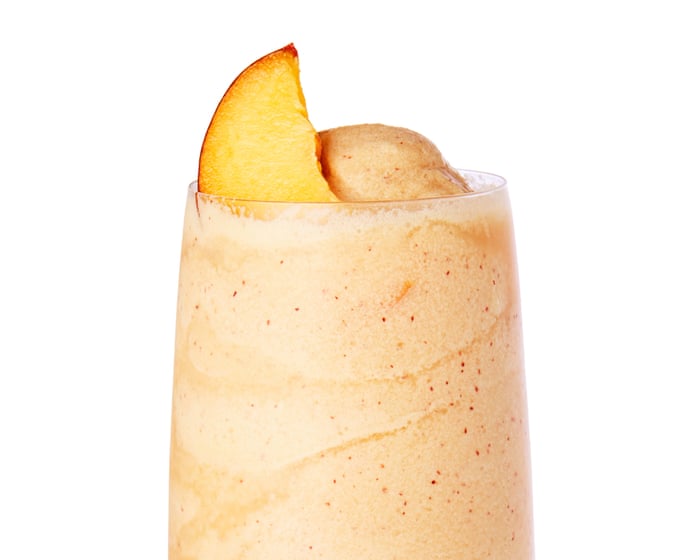
Cocktail of the week: Half Cut Market’s peaches & cream – recipe | The good mixer

A frozen piña colada-style boozy drink/dessert

A frozen drink and a classic dessert all rolled into one. Instead of piña coladas and getting caught in the rain, we’re whipping up these and manifesting a sunny summer.

Jayma Voorheis, general manager, Half Cut Market, London N7

Continue reading...

© Photograph: Rob Lawson/The Guardian. Drink styling: Seb Davis.

© Photograph: Rob Lawson/The Guardian. Drink styling: Seb Davis.

© Photograph: Rob Lawson/The Guardian. Drink styling: Seb Davis.

  •  

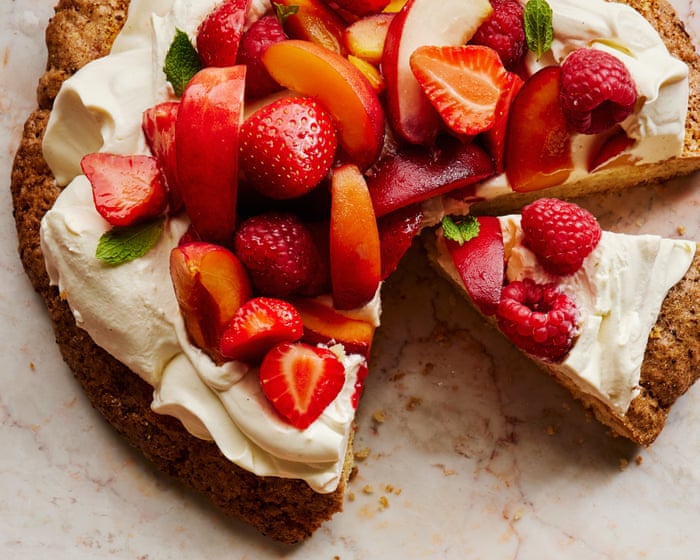
Helen Goh’s giant shortcake with summer fruits and vanilla cream – recipe | The sweet spot

A jamboree of juicy stone fruit and summer berries with a crusty, sugary top brings a riot of textures and colour to your dessert table

A giant American-style shortcake is one of summer’s great celebrations: tender, buttery shortcake, softly whipped cream and an extravagant tumble of fruit. Rather than prescribing a single combination, I like to let the market decide. Choose whatever looks and smells best: strawberries, raspberries, blackberries, blueberries, greengages, apricots, cherries, nectarines or peaches all work beautifully. Aim for a mix of juicy stone fruit and berries – it will bring different colours, textures and levels of sweetness to every bite. This is a dessert that embraces the glorious abundance of the season – a proper summer bonanza.

Continue reading...

© Photograph: Matthew Hague/The Guardian. Food styling: Katie Smith. Prop styling: Lucy Turnbull. Food styling assistant: Phoebe Altman.

© Photograph: Matthew Hague/The Guardian. Food styling: Katie Smith. Prop styling: Lucy Turnbull. Food styling assistant: Phoebe Altman.

© Photograph: Matthew Hague/The Guardian. Food styling: Katie Smith. Prop styling: Lucy Turnbull. Food styling assistant: Phoebe Altman.

  •  

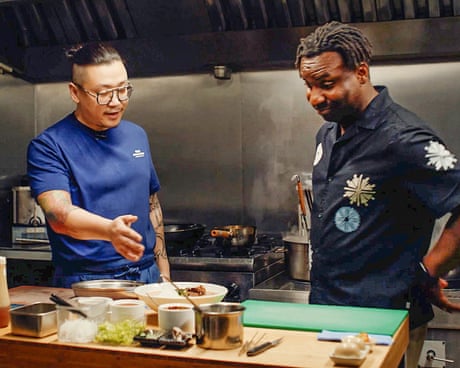
Renegade ramen: ​from Colchester to Cardiff, the cooks remixing Japanese flavours

Restaurant critic and award-winning author Jimi Famurewa meets broth obsessives in unlikely parts of Britain who fell in with the ancient ramen tradition - and found a hungry audience for their new noodle bowls.

Continue reading...

© Photograph: The Guardian

© Photograph: The Guardian

© Photograph: The Guardian

  •  

Côtes Catalanes: the wine with the renegade spirit

From a wild corner of southern France, these crisp, minerally whites and silky red blends are unforgettable wines

We all have our coming-of-age story: a transition to adulthood defined by emotional growth. I’ll let my friends be the judge of whether mine’s happened, but in wine terms, I can pinpoint my coming of age to the day I first tasted a white from Côtes Catalanes IGP. What was this nectar? I’d spent a lifetime chugging things I liked (from Um Bongo to supermarket Macon), but this was not a chugger. The bottle was Domaine Gauby’s Les Calcinaires Blanc 2010, a blend of muscat, chardonnay, macabeu and vermentino from the eastern foothills of the Pyrenees in French Catalonia. I had to take my time over something this good, and that felt very grown up indeed.

The Côtes Catalanes IGP (Indication Géographique Protégée) sits within a nook of Languedoc-Roussillon in the very south of France. As an IGP, it is a less prestigious designation than AOP (Appellation d’Origine Protégée), but one that gives winemakers greater freedom to flex their muscles. Where wines from Côtes de Roussillon AOC have to be particular blends with particular proportions, winemakers in the Côtes Catalanes can produce single-varietal wines with a greater range of grapes; many are organic or biodynamic. They have a renegade spirit I’m sure you can taste in wines that are mineral, full of complex fruit and often have notes of garrigue – Mediterranean scrubby herbs such as thyme and rosemary.

Continue reading...

© Photograph: Yana Iskayeva/Getty Images

© Photograph: Yana Iskayeva/Getty Images

© Photograph: Yana Iskayeva/Getty Images

  •  

Light, sweet and easy to eat – why melons and other cool fruits rule August

The Mediterranean’s best beach ritual, plus melons, cucumbers and cold soups to keep us cool this summer

Sign up here for our weekly food newsletter, Feast

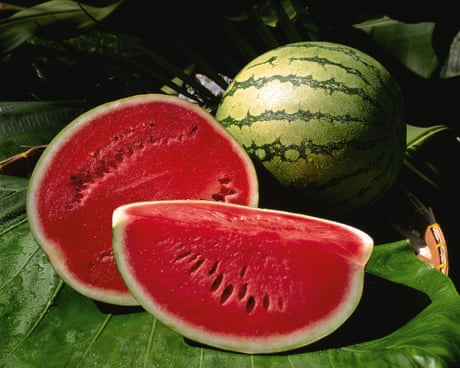
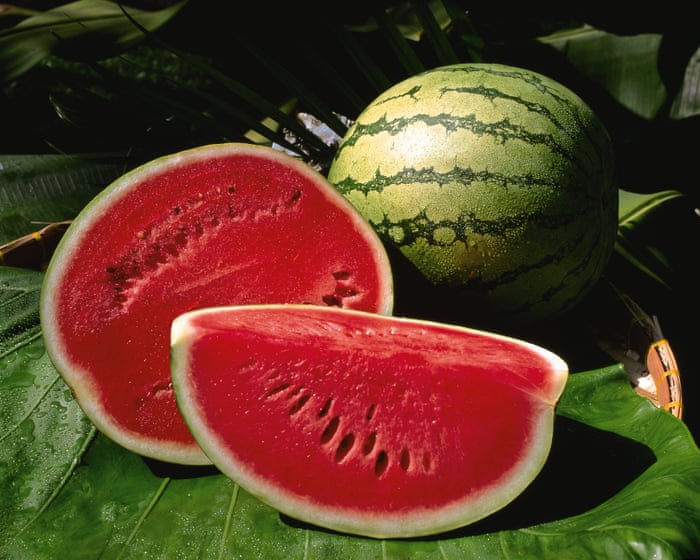
Everyone who grew up by the Mediterranean Sea knows that a lazy day on the beach requires a certain level of planning. You should pack everything you’ll need, or may need, and get there early to secure a good spot. But the first thing you need to do when you get there – even before you spread out your blankets and put that sunscreen on – is to drop a watermelon in the sea, so that, by noon, when it’s so hot your skin feels as if it’s about to blister, it is ready for you, all cool and sweet. It’s just about the only thing capable of quenching your thirst and your hunger, while also cooling you down and giving you the sugar you need.

The other important bit about the watermelon – the part that separates wisdom from wishful thinking – is that you also need to tie a piece of string around it, complete with an empty plastic bottle at the other end, so that it bobs above the waves and marks the spot. This is something you learn the hard way – or at least we did. There is a very particular kind of disappointment that comes from standing waist-deep in the sea, staring into the blue, convinced that a whole watermelon cannot simply disappear. We searched. We dived. We accused passing currents. We briefly entertained the idea that another family had found it and were, at that very moment, enjoying our perfectly chilled watermelon. Then again, perhaps it is still out there somewhere, floating towards Sicily …

Continue reading...

© Photograph: Pictor International/Alamy

© Photograph: Pictor International/Alamy

© Photograph: Pictor International/Alamy

  •  

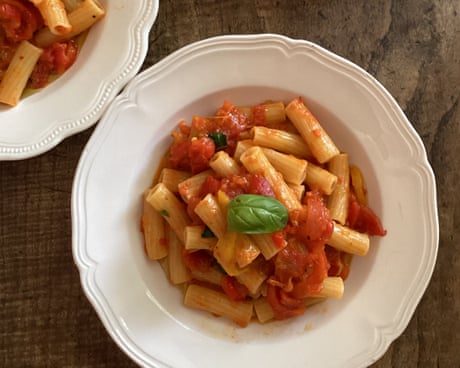
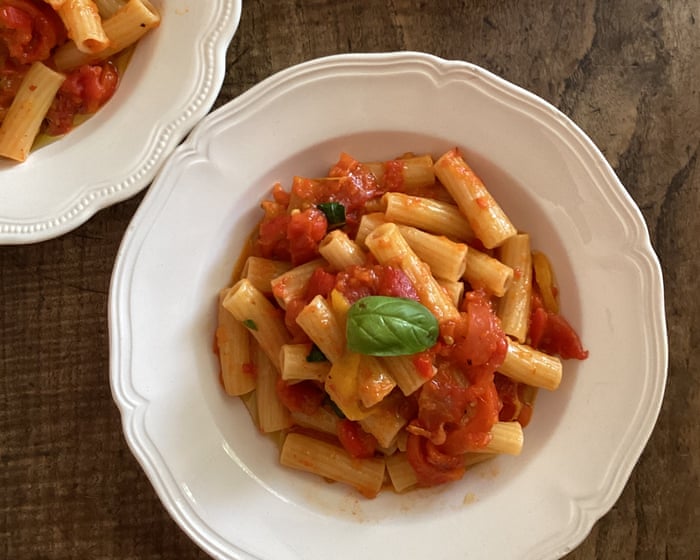
Rachel Roddy’s recipe for pasta with red peppers and anchovies or goat’s cheese

The skins may be pesky to peel away, but the result is this velvety and vibrant, flavourful pasta dish

There’s no two ways about it: charring and then peeling red, yellow or orange peppers is a messy business. Just out of the oven (if they haven’t burst while baking), roasted and blackened peppers are not unlike mini balloons; the hot juices, which have collected in the cavity, gushing out as the collapsed pepper is manoeuvred from the baking tray to the bowl. Once they have steamed under a plate, and cooled a little, the peppers might be easier to handle, but the thin scales of charred skin are still pesky to peel away, and however hard you try to flick them into the bin, they will stick to forearms and foreheads, as do the slippery white seeds. Having peeled peppers, it is not unusual to find a seed stuck to the back of my upper arm six hours later. Messy and annoying, but also worthwhile, because a strip of peeled pepper freed from its cellophane skin is a wonderful thing: fleshy with velvet texture and a deep, sweet, smoky flavour.

I was taught to char peppers on the stovetop by a friend’s Greek mum, balancing them on the gas ring directly over the naked flame and turning regularly. It is sometimes hard to get them to balance and they often wobble off, but if you use a barbecue regularly, that is another option, as is the oven, and apparently the air fryer, too. Whichever method you use, the aim is flesh that is almost completely or well-patched black, and cracked like bark – a bit shocking the first time, but rest assured that the more charred they are, the redder the flesh underneath.

Continue reading...

© Photograph: Rachel Roddy/The Guardian

© Photograph: Rachel Roddy/The Guardian

© Photograph: Rachel Roddy/The Guardian

  •  

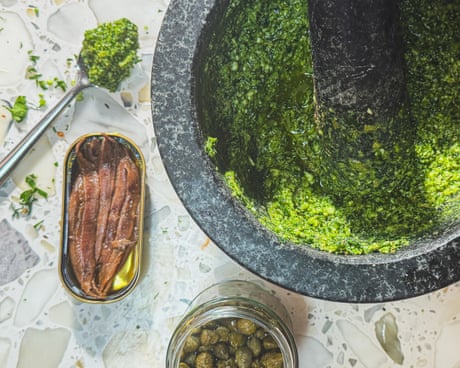
How to turn unwanted anchovy tin oil into salsa verde – recipe

This powerhouse ingredient injects umami and depth of flavour into a simple green sauce. Come on, chop-chop!

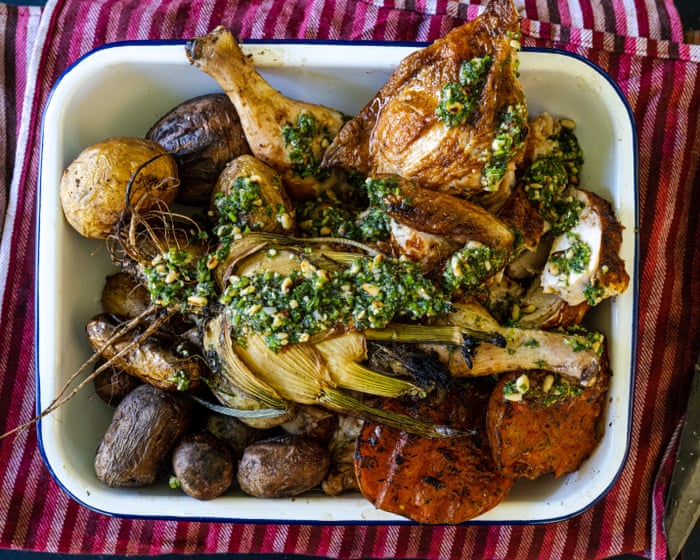
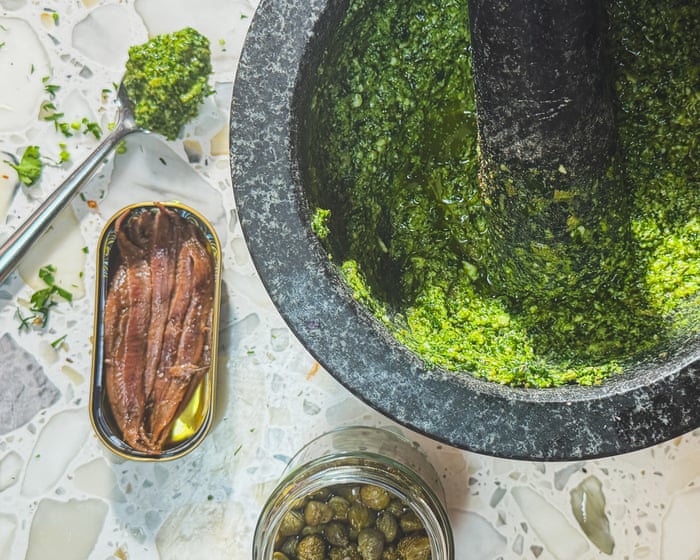
The oil from a tin of anchovies is a powerhouse larder ingredient that you possibly never knew existed. It’s a flavour bomb that carries all the delicious flavour compounds of the fish themselves, especially if you want to add their wonderful flavour to a dish but want to save the anchovies to serve separately or as a garnish.

This salsa verde is based on Giorgio Locatelli’s in his book Made in Italy, and it’s made with a knife rather than a blender. Chopping by hand gives it a much better texture, especially when you’re also using the stalks, which a blender can turn fibrous. The boiled egg is optional but traditional, and helps emulsify the sauce. Locatelli uses just the yolk, but I’ve used the whole egg, not least to avoid the faff of finding a use for the spare white. This sauce is incredible with lamb or mutton and very good with grilled fish.

Continue reading...

© Photograph: Tom Hunt/Guardian

© Photograph: Tom Hunt/Guardian

© Photograph: Tom Hunt/Guardian

  •  
❌