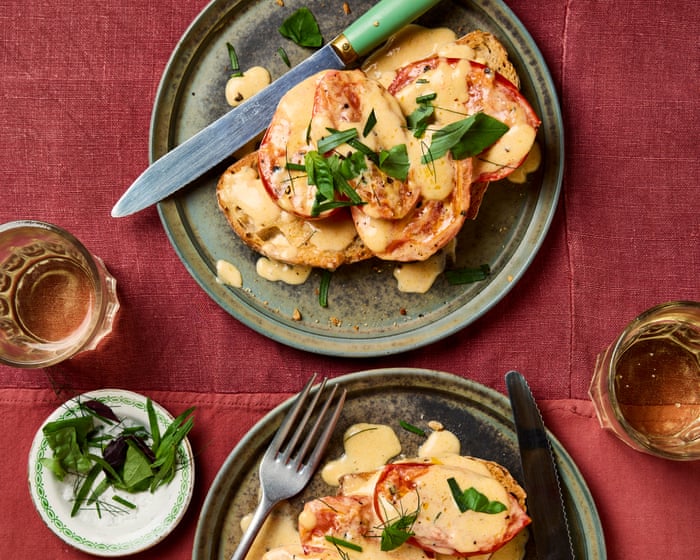
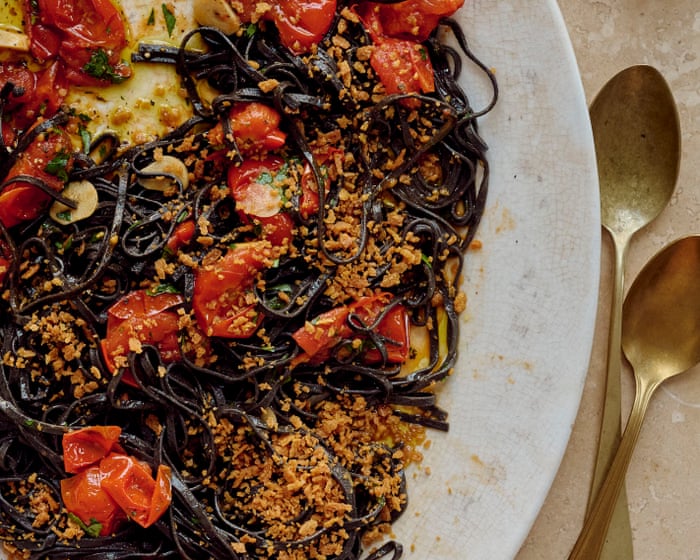
Sumptuous, late-summer tomatoes cooked with cream and served on toast? Supper is served in 10 … OK, maybe 15 minutes
Forty years ago, an antiquarian bookseller recommended to me Edouard de Pomiane’s La cuisine en dix minutes, a selection of recipes that could be cooked at home in less than 10 minutes. A scientist and food lover, de Pomiane stripped back what was then viewed as a very complicated craft, and also gave the time-poor an opportunity to cook and enjoy a good meal made from good ingredients. This was the first recipe I cooked from that book, and it is still a great favourite that has punctuated my menus ever since.
Henry Harris is chef/co-owner of Bouchon Racine, London EC1. His book, The Racine Effect, is published by Quadrille at £40. To order a copy for £36, go to guardianbookshop.com
Punch isn’t just for summer parties, and this Caribbean-inflected one, featuring rum, brandy, stout, lemon and nutmeg, will warm the cockles of a crowd on any autumn evening. It’s named after Prince Buster, the Jamaican ska legend and inspiration for our bar’s name.
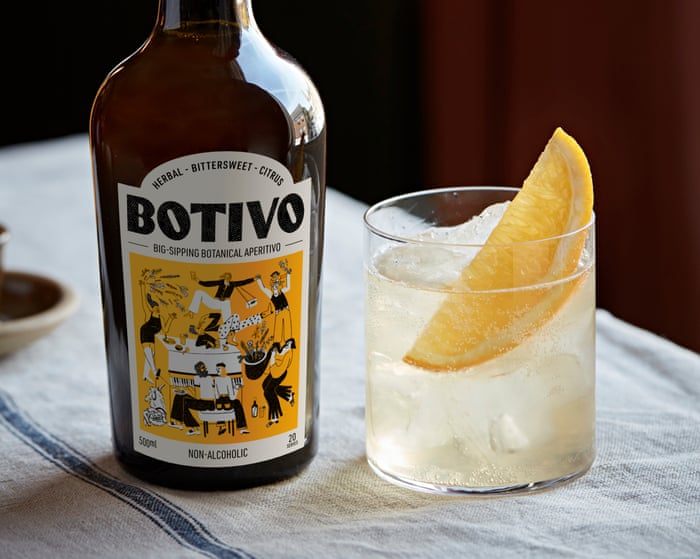
There is now a wealth of less sugary, more sophisticated nonalcoholic options out there, with flavours clearly aimed at an adult market
I have written recently about several families of nonalcoholic drinks that are having a moment: tonic water, flavoured sparkling water and wine substitutes. It stands to reason that soft drinks are enjoying their time in the sun. Quite literally, too: the heat of 2026 has demanded some serious refreshments and UK booze consumption is at a record low. But it has dawned on me that there is a broader trend in alcohol-free beverages beyond individual categories, namely that we are living in the age of the grown-up soft drink.
By that I mean those with less sugar and more complexity than post-mix drinks, or “soda pop” (as my daughter now calls them, thanks to the KPop Demon Hunters song of the same name), which are clearly aimed at adults. One example is the tribe of “functional” drinks that have hit the market in the past year or so and that have supposed health benefits or performance-enhancing qualities, such as improving focus or helping you to slow down. Sonic Tonics’ CBD-infused 0% drink, for example, promises to shift your mood, and it certainly quenches thirst with a really original flavour profile of bitter hemp root with sweet and floral fig and violet. And while usually sceptical of celebrity-backed products with wellness claims, Gillian Anderson’s G Spot drinks are genuinely delicious. The passion fruit and habanero chilli is my favourite; I can’t support its aphrodisiac claims (allegedly due to its ingredients including butterfly pea and L-arginine, both of which are said to increase blood flow to the sexual organs), but, at £6.50 for four from Ocado, it’s cheaper than trying Gwyneth Paltrow’s sex oil.
A 1950s cookbook classic – eat it hot and stringy or firm and flavoursome
Yesterday’s lunch and this week’s recipe is thanks to my friend, the designer Jake Tilson, who gave me a pristine 1977 edition of The Talisman Italian Cook Book. With a cover of red, white and green stripes cover that makes me think as much of seaside rock as Italy’s national colours, the edition was part of the 24th printing of the US translation of Il Talismano della Felicità (The Talisman of Happiness), by Ada Boni. First published in 1950, the abridged translation was sold as a complete guide to Italian cookery, covering all notable dishes. Well, on the cover at least; inside, the introduction is more realistic, warning the reader that, “to criticise the writer [Boni] or translator [Mrs Matilde La Rosa] for failing to include certain dishes is useless”, because no living man or woman can be acquainted with all the variety of dishes of a such variegated country.
The introduction, by a man called Mario A Pei, goes on to explain that the variety of dishes mirrors the wide dialectical array in Italy at the time (1950); its diversity of speech, customs, costumes, psychology and general world outlook. In the next sentence, he notes that this variety was undoubtedly a very bad thing from the standpoint of national unity and progress (the professor and polyglot was an ardent supporter of European fascism and uniting humans under one language). Not that you would guess that from his following sentence: “Variety is the spice of life.” I regretted reading his introduction, and also telling an Italian friend, who said, laughing: “You don’t know the half of it”, in reference to my romanticism about the original Talismano, which may be great, but also (in her opinion) endorses a Stepford Wives fantasy of womanhood; a journey with Boni as patient guide.
Since 2023, a slew of fast food and quick service restaurants from east and south-east Asia have debuted in Australia, capturing the youth market and ‘little treat’ culture
On a Thursday night along Sydney’s George Street, teenagers Sasha Luangrungvilai and Livinia Boyden are looking for a “little treat” after a big day of window shopping. Although it’s Luangrungvilai’s first time at Mixue, it’s been a long-awaited visit – Boyden has been hyping up the Chinese bubble-tea juggernaut for weeks. “I love having so many dessert options for treats,” says Luangrungvilai. “It gives me a chance to try new foods which is always great.”
The first Australian outpost of Mixue opened in 2023 in Sydney and now they have more than 10 locations across the country. The brand is part of a wave of fast food and quick service restaurant chains originating from east and south-east Asia that have set up shop in Australia in recent years.
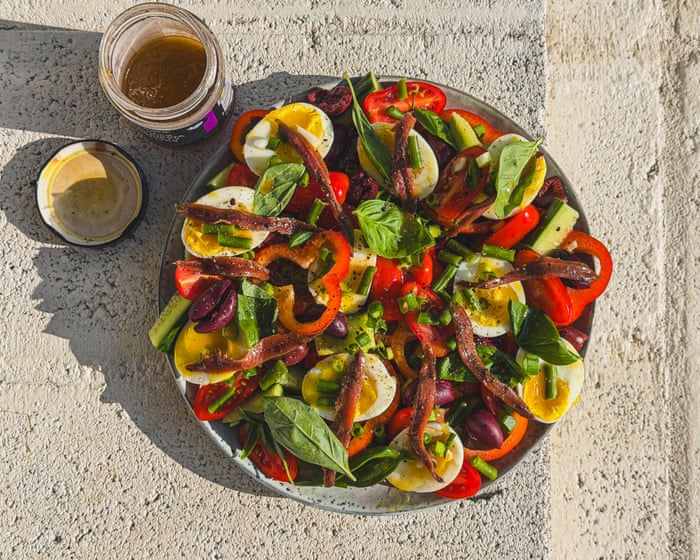
The liquid from a jar of olives is naturally chock-full of savoury flavour, so why should it go to waste? It’s perfect for sprucing up a salad
Olive brine is a simple byproduct that has so much flavour, and it elevates a classic salade nicoise dressing while keeping things colourful, elegant and relatively simple.
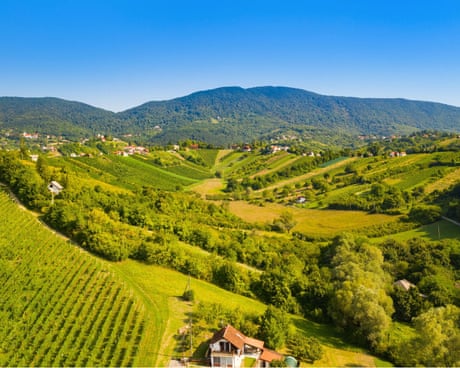
Weekenders from Zagreb head to the rolling green Samobor Hills for nature, vineyards, delicious local food and Habsburg-era architecture
‘You’re going to Samobor? You must try kremšnita,” my Dubrovnik friends told me before I set off on my trip north. “But I’ve already had kremšnita in Zagreb,” I told them. They do it better in Samobor, they insisted. I wasn’t about to get embroiled in a battle of the cream cakes in a region where Croatians, Slovenes and Austrians all like to celebrate their own versions of this decadently thick, fat custard slice topped with puff pastry and icing sugar. But I was more than willing – happy, even – to follow everyone’s suggestions to try kremšnita in Hotel Livadić’s Kavana Livadić, in Samobor’s main King Tomislav Square, a mere half-hour drive west of Zagreb.
It lived up to the hype – delicately rich, creamy and with a light touch. After spending a few weeks in sun-bleached Venetian Dalmatia, amid the scrubby, limestone Dinaric Alps, I had swapped empires and was firmly in Habsburg Croatia. Here, in Zagreb County’s prettiest town, handsome baroque houses in pastel shades of buttery yellow, apricot and pistachio, festooned with stucco, line narrow King Tomislav Square, whose umbrella-shaded cafe terraces were filled with Croatians getting their morning fix of coffee and chatter.
Prosecutors sought jail term for chief executive of Evett after insects not approved for consumption were on menu
A South Korean court has fined the operator of one of Seoul’s most celebrated restaurants and its chief executive for serving a dessert topped with ants, an insect not approved for consumption under local food safety law.
The operator of Evett, a two-Michelin-star restaurant in the affluent Gangnam district, was fined 10m won (£5,400) and its chief executive 15m won, Newsis reported.
Cooking at this time of year is all about low-effort, maximum-impact options. This savoury dish comes together quickly but looks striking, while the dessert showcases figs at their most flavoursome
The secret to late-summer/early autumn cooking is to keep things relatively low-effort, not least to assuage those back-to-work/school blues. And that rule applies across the board, whether you’re making a midweek meal, entertaining or serving up a long, slow Sunday lunch. The sauce for this pasta dish, for example, comes together while the pasta is cooking, while the semifreddo pudding makes the most of ripe figs when they are at their absolute best.
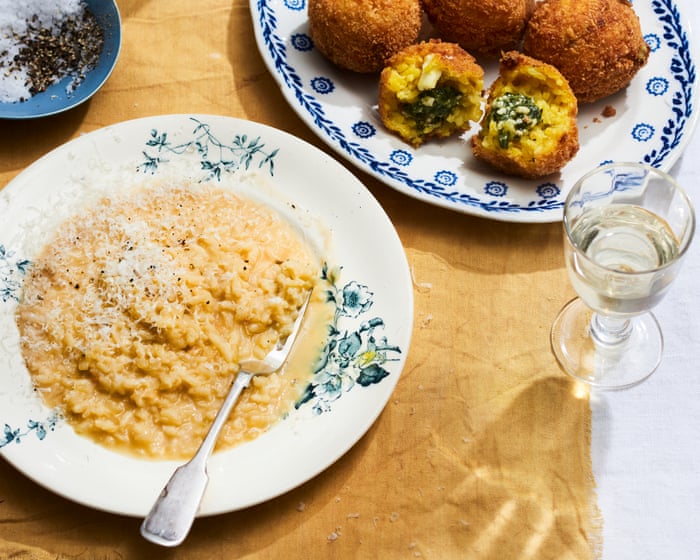
It’s probably not a good idea to freeze cooked risotto rice, but if you must, we have three experts who can tell you how to minimise the mush
I have tried various ways to reheat risotto after freezing, but it always turns into a gloopy, starchy, unappetising mess. What am I doing wrong? Jill, by email “Freezing risotto will be a bit of a disaster,” says Theo Randall, chef/patron at Theo Randall Cucina Italiana at the Intercontinental in London, “and it doesn’t really work.” The reason for this is that the cooked rice absorbs all the moisture while it’s defrosting, resulting in, well, Jill’s gloopy mess.
It’s also possible her risotto was overcooked to begin with, says Sue Quinn, author of Cheese Please. “Softer grains mean more leached starch, which leaves less leeway for further cooking without it going sticky and pasty.” Then there’s the question of reheating that defrosted rice for too long: “That can over-soften the already-cooked rice,” adds Quinn, so you have to do it “quickly and only until it’s piping hot”.
The reality, however, is that “freezing, thawing and reheating rice will make it squishier whatever you do”, Quinn says, but “if that’s the way Jill rolls”, her best bet is to get that defrosted risotto in the microwave, sprinkle it with a little water or stock, cover loosely, then reheat on high in one-minute intervals, stirring in between, until it’s hot all the way through. “To do this on the hob, put the defrosted risotto in a pan with a splash of hot stock or water, and stir gently over a medium heat for just long enough to distribute the heat.”
The love child of a cheese toastie and eggy bread, this fried sandwich makes for an elevated snack or kids’ tea – and the leftover crusts give you ‘bread rosti’ the next day
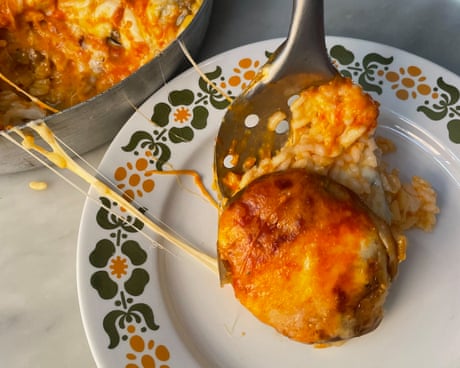
For an exceptionally luxe snack or kids’ tea, mozzarella in carrozza is your girl. It’s the love child of a cheese toastie and eggy bread – instead of toasting it, you dip the cheese sandwich in egg and fry it. In other words, it’s mozzarella in a fancy carriage. I like to use a combination of mozzarella and mature cheddar for flavour, and while it’s best eaten piping hot from the pan, it’s a good (and filling) lunchbox option for children, too.
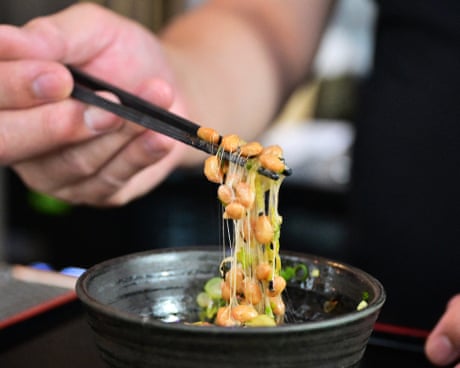
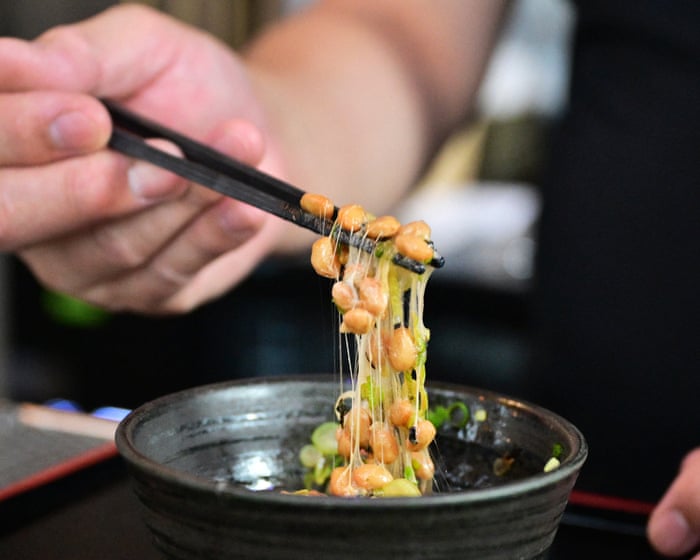
Comprised of smelly soya beans held together by strands of mucus, the ancient dish is appearing in health food shops across the world
It is smelly, slimy and contains bacteria – and a sizeable number of Japanese wouldn’t touch it with a pair of barge pole-length chopsticks. But after centuries as a breakfast food for Japanese diners with nerves of steel, natto is emerging as a global superfood to rival kimchi, kombucha and kefir.
Its exact origins are unknown. Some believe it was introduced to Japan from China by Buddhist monks during the Yayoi period (300BC-AD300), before becoming a staple among rural communities during the Edo period (1603-1868).
It’s the birthplace of the popular cheese, but the Barletta-Andria-Trani province in southern Italy has an array of local delicacies – from olive oil and yellow tomatoes to goat prosciutto
‘I don’t eat mozzarella outside Puglia,” says our friend Savio. “It’s not the same.” Savio is a very opinionated foodie, so I take his words with a pinch of good Puglian sea salt (see below). He was adamant about the superiority of the stretched-curd cheese from his home turf.
Puglia is also the birthplace of ingredient du jour burrata, which originated in Andria, a few miles from Savio’s home town of Barletta. Andria forms one part of the triangular Barletta-Andria-Trani (BAT) province, but despite the cheese connection and Barletta having miles of palm-backed, sandy beaches, it is often passed over for better-known parts of Puglia. So I asked Savio’s company, Unexpected Italy, an app that calls itself the antidote to overtourism, to organise a trip to the area.
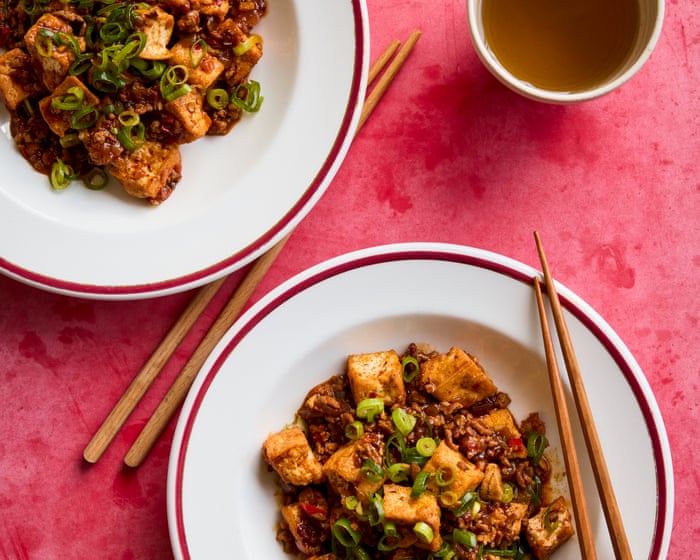
Wobblesome, firm or silken, tofu is a star ingredient in Chinese cooking. These dishes show why
In the west, tofu is often viewed as a substitute for meat, which may explain why firmer types that can be cut into chunks and fried or grilled like meat have become so ubiquitous. In China, however, where tofu has been eaten for at least 1,000 years, it isn’t a substitute for anything; it’s simply a protein-rich ingredient that forms part of most people’s diets, can be cooked with meat and fish, and comes in myriad forms, from the tender, wobbly tofu used to make Sichuanese mapo tofu to firm smoked tofu, sheets of tofu “skin” and the silken tofu that can be as soft as creme caramel. Many Chinese tofu recipes are so delicious that habitual meat-eaters will devour them as keenly as vegetarians.
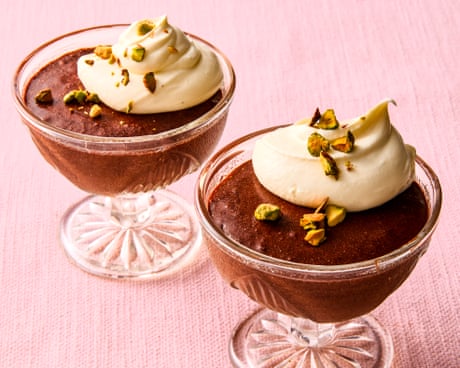
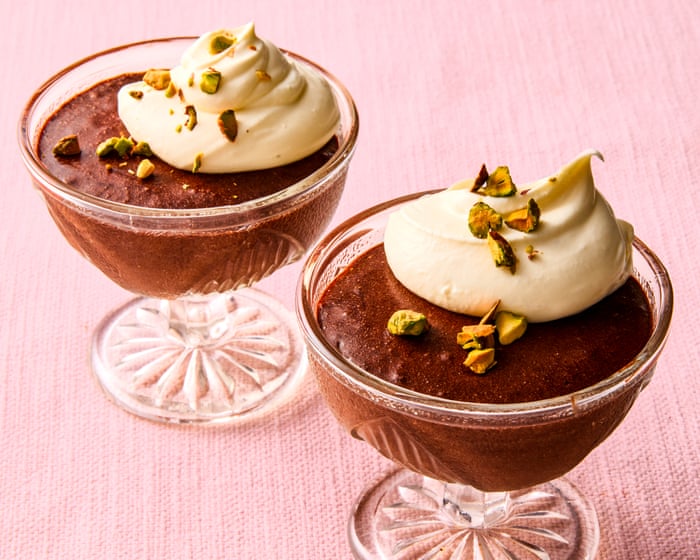
The little black dress of desserts, this French staple is quick and easy to make, and almost always delivers. Experiment with flavours and toppings to put your own spin on a classic
Years ago, a group of us cycled from Brittany to the Mediterranean, and along the way we ate a lot of chocolate mousse. Popular, easy to make and happy to sit in the fridge until required, it’s a mainstay of the modest French provincial restaurant and, as we discovered, it’s almost always good. Here’s my favourite version of the little black dress of the dessert trolley.
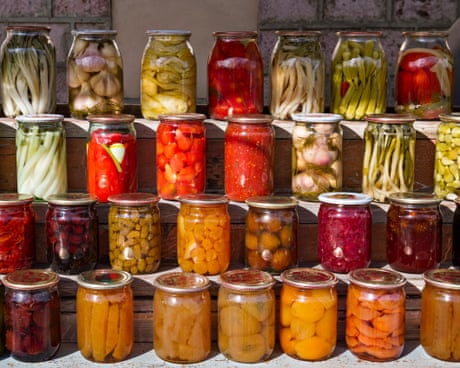
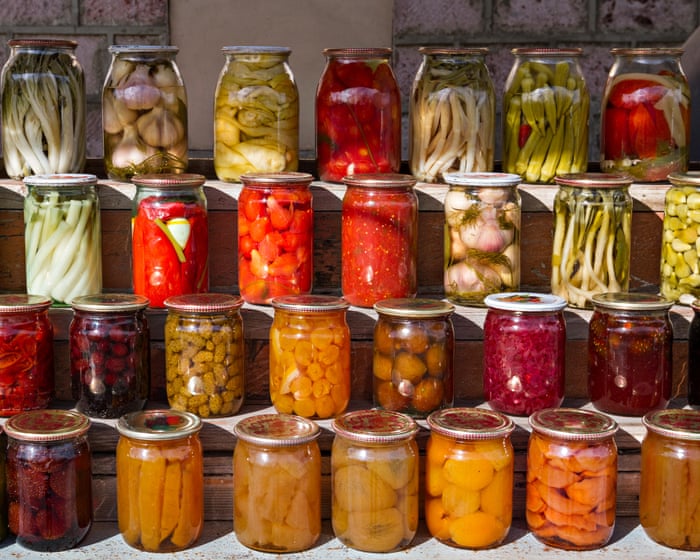
With sales up 12%, pickles are moving beyond traditional role as a side to become an ingredient in their own right
The humble pickled onion, long associated with classic pub culture, the ploughman’s lunch and cold festive buffets, is enjoying a revival as Britain’s appetite for pickles grows.
About 8.5m UK households bought pickled onions over the past year, according to the consumer data firm Worldpanel by Numerator, with particularly strong momentum in recent months.
Chefs in the east of the country are shunning imported produce for local ingredients, reinforcing how food is intertwined with a region and its people
‘It’s a magical place, and not just because of the hotel.” Standing outside the greenhouses at Högbo Brukshotell, two hours north of Stockholm, Stefan Johansson is talking about far more than hospitality. The former head chef, now responsible for sustainability at Högbo, has spent much of the past decade helping reshape the way this corner of Sweden grows, cooks and thinks about food.
The catalyst was disarmingly simple. Years ago, a journalist asked Johansson why he was cooking the food he was cooking. Like many ambitious Swedish chefs, Stefan trained in Stockholm’s top restaurants, where ingredients from around the world were only a phone call away. The question lingered long after the interview ended.
Once central to rural life, cafe-bistros are closing in the face of depopulation and falling alcohol consumption, but campaigners are seeking new ways forward
It is just past noon on a midweek day, and already every table at Au Bon Accueil cafe-bistro in the northern Burgundy village of Saint-Martin-sur-Ouanne is taken.
The three-course lunch menu today – including a choice of a hefty chunk of steak with chips or a meaty lasagne – is just €18, but villagers are not only here for the food.
French champagne house Taittinger is helping produce a premium fizz in the Garden of England – and now visitors can visit the beautiful winery and sample it
The grapes are turning purple on tall green vines, which stretch down towards the distant flint-and-limestone tower of Chilham church. These rows of Pinot Meunier, destined for English sparkling wine, are 51% owned by French champagne house Taittinger. “England is now the most exciting wine region,” says host and sales executive Hilary Sharp as she leads me around Domaine Evremond vineyard, which opened its visitor centre last year to coincide with the launch of its first wine.
In his 2023 book Vines in a Cold Climate, drinks writer Henry Jeffreys charts the rise of English wine “from a joke to world-class in 30 years”. The book opens with an alcohol-fuelled scene of vine-planting at Domaine Evremond in May 2017: unseasonably cold, rainy, muddy, with rambling anecdotes from anglophile Pierre-Emmanuel Taittinger about “English women encountered in his misspent youth”. The vineyard is named for the exiled French aristocrat Charles de Saint-Évremond, a symbol of hedonistic Anglo-French cooperation. The bon vivant introduced champagne to England and party-loving Charles II made him governor of Duck Island in St James’s Park.
I’m taking a break to replenish my creative reserves. Until then, I leave you with this champion champignon number
In the nine years that I’ve been writing this column, I’ve had two babies, a breakdown and very little time away from writing a weekly recipe. I love this column, and creating recipes for you makes me feel like the luckiest duck alive, but I don’t believe that anyone can be endlessly creative without occasionally filling up their own cup. So, I’m taking six months out to travel, replenish and see what treasures I can find for us out there in the big wide world. Treasures such as this gentle claypot rice, which is based on the magical one at Dongnae in Bristol. Until then, so long.

 Anmelden