The plan to begin work transforming the course in four weeks injected fresh urgency into a federal lawsuit opposing changes to East Potomac Golf Links.
A new Washington DC exhibition examines how Toni Morrison, Maya Angelou and more used the Bard’s work to help tell their own stories
“William Shakespeare was a black woman.” In 1985, Maya Angelou spoke these words as part of a keynote speech at a convention in Cedar Rapids, Iowa.
There, she spoke of the role poetry played in her transition from muteness as a child and how she fantasized herself triumphantly delivering Portia’s speech from William Shakespeare’s The Merchant of Venice in front of her entire community at church. Though she never got the chance to perform that rendition, Angelou acknowledged her desire to deliver that rendition as part of a lifelong kinship with Shakespeare, a connection she continued to seek out throughout her life whenever she needed heartening or solace. In her eyes, Shakespeare wrote his emotionally desolate Sonnet 29 “for” her; how else could he have so aptly described the harsh realities of the Black feminine condition?
British father would like to take his family to Lancashire to see ill relative but officials refused visa for his partner, a refugee from Myanmar
The Home Office has denied a great-grandfather from Lancashire the chance of meeting his five-month-old British great-grandson, who lives abroad.
William Cross was born in Thailand on 30 April to parents Matthew Cross, 31, who is from Burnley in Lancashire, and Khin Thant Zin, known as Jue Jue, also 31, a refugee who fled persecution in Myanmar to Thailand.
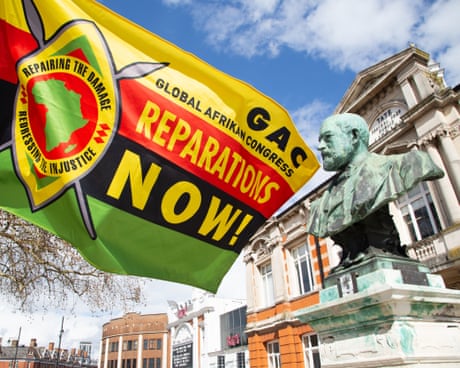
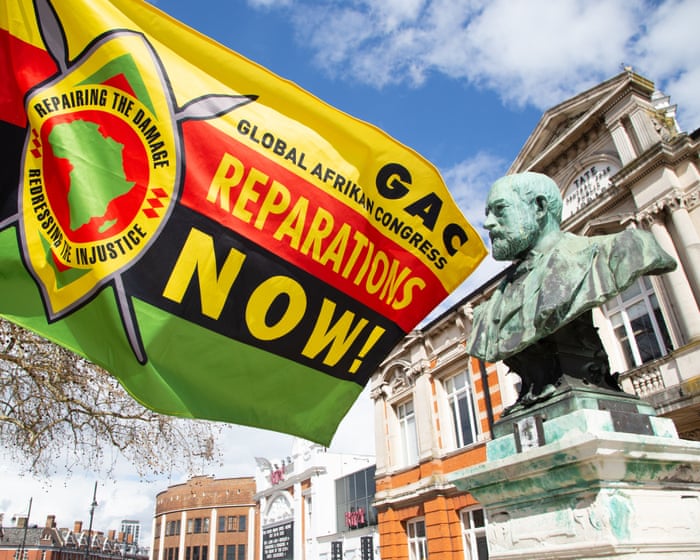
Modern politicians play on tales of empire to exaggerate what Britain left behind, but the monarch should consider a historical speech on the vast wealth taken away
For us in the Caribbean, there is something surreal about Britain’s renewed nostalgia over empire. As Britain’s monarch prepares to visit the Caribbean, and at a time when we in the former colonies are demanding to have a serious reckoning with slavery and reparations, UK politicians are invoking a dumbed-down distortion of history.
Rewriting the facts: the Reform MP Robert Jenrick has argued that colonies owed Britain a “debt of gratitude” for the institutions empire bequeathed them. Jacob Rees-Mogg, a former minister in a Conservative government, has described British colonialism as “one of the greatest civilising, prosperity-creating forces the world has ever seen”. The opposition leader, Kemi Badenoch, has disputed colonialism’s contribution to Britain’s prosperity. Then there is Suella Braverman. The Reform MP suggested in July that rather than Britain paying reparations, former colonies should repay Britain for the investment and infrastructure provided under empire. This prompted Mia Mottley, the prime minister of Barbados, to call that proposition “asinine”. At best it is historical amnesia. At its worse it is an insidious misrepresentation of facts.
Escalating a standoff with Judge Ana C. Reyes, the Justice Department demanded that she recuse herself from a case in which she had ordered several Trump officials to testify.
As violent spirits are unleashed in Sky’s Possession, observers see confident creatives reclaiming the island’s narratives in a form of ‘cultural reparation’
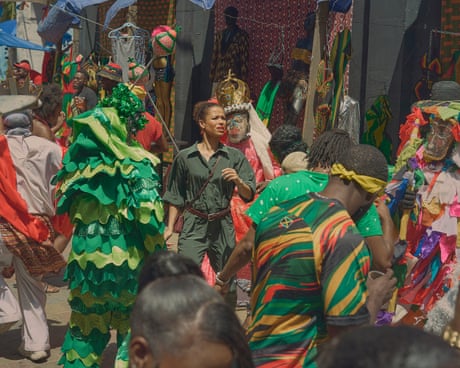
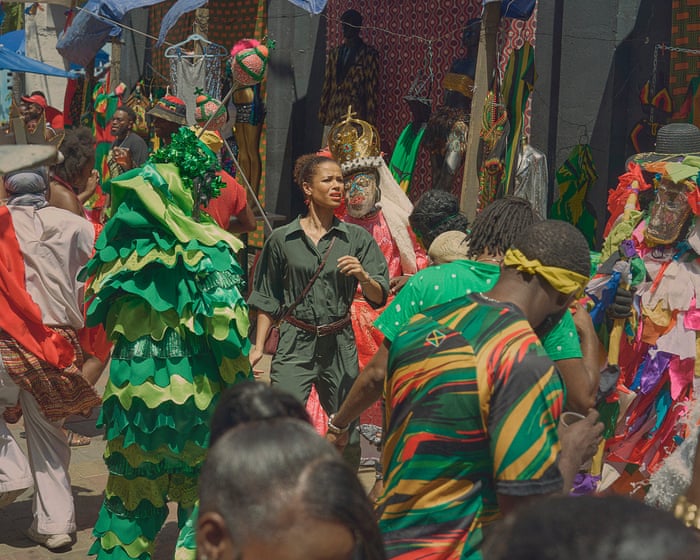
A woman opens a 300‑year‑old box, unleashing a violent spirit – it is the spirit of colonialism and oppression roaring back to life. It is a pivotal scene in Sky’s supernatural series Possession and symbolises a wider shift in Jamaica’s film industry, where directors are increasingly using the landscape to tell Jamaican stories – including those that confront enslavement, trauma and historical memory.
The series is about a biracial British lawyer who travels to Jamaica to investigate a multimillion-pound inheritance dispute, only to uncover a dark, vengeful spirit tied to the plantation’s brutal colonial past.
Here is everything I’ve learned from my container gardener days – from the best plants to choose for low-maintenance gardening to why it pays to go big
When I was a container gardener, this was the time of year I’d start to think about sprucing up my pots. It’s similar to a seasonal wardrobe switcheroo: putting shorts and summer dresses away until next year; getting jumpers out from under the bed and inspecting for moth holes. The pots, which usually had some late summer goodies in them, would be looking a bit worse for wear and I’d heave them all up, replace the compost and put in new things to perk up the balcony for the cooler months.
The more I gardened, the more I left the pots alone. They became their own annual microgardens, with bulbs and perennials that rose and died back like little symphonies. Far less hard work, aside from a heavy mulch now and another in the spring, occasionally removing a bit of dead foliage and watering in the summer.
A groundbreaking book about the UN’s tribunal in The Hague shifts the focus from war criminals on trial to the hidden workforce that powered the court.
The current system is unable to quench the public thirst for locking people up – and certainly doesn’t ensure proper care once they are released
Public services need more investment across the board. Every day, another wretched story. Look at the Institute for Government’s (IFG) Public Services Performance Tracker for a plain assessment of A&E corridor care, councils struggling to meet the demands of social care and the Send system, the courts backlog, GP caseloads or families lost in temporary accommodation. A chancellor approaching a budget is besieged by need. It’s easy for us journalists to pick out shock stories and claim each one is an absolute priority, but how should a chancellor choose?
Today it’s the probation officers, whose conference in Newcastle is launching a ballot for industrial action. Their caseloads overflowed long ago, but now thousands of prisoners released early – 2,000 this month – have been thrust upon them. The responsibility is overwhelming, with officers blamed for crimes their clients commit.
‘Unfair’ immigration and asylum bill could fail to support sexual violence survivors, anti-slavery commissioner says
Survivors of sexual violence could wrongly be denied recognition as victims of human trafficking under credibility tests in a new UK law, the independent anti-slavery commissioner has warned.
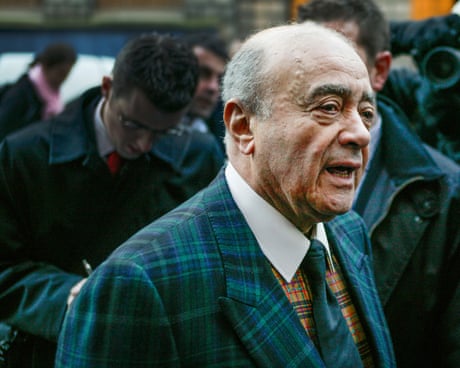
Eleanor Lyons said the measures in the immigration and asylum bill were fundamentally unfair and could lead to many more victims of slavery and trafficking, including those allegedly abused by Mohamed Al Fayed, being denied support.
Rights group says Youssef al-Manasif was tortured and first met his lawyer five years after arrest for non-violent crimes
A young man faces imminent execution in Saudi Arabia for attending protests and funerals when he was aged 15 to 17, say human rights groups, in the latest example of the kingdom’s surging use of the death penalty for non-violent crimes.
Paolo Zampolli, a longtime Trump associate, gained attention earlier this year with a report that his ex-wife had been detained by ICE after his request.
After a summer spent travelling here, there and everywhere, I am welcoming more time at home and bingeable telly with open arms. And, like a lot of the nation, I am obsessed with this season’s Celebrity Traitors. It is my achilles heel; so much so that, earlier this year, I politely declined an invite to a hot industry party because it clashed with the final, and there is no amount of free champagne or hobnobbing that would’ve got me off my sofa. The beauty of such shows is that they are on early enough to make an evening of it. Strictly has become our Saturday night family ritual, while my eldest will usually join us for Tuesday nights watching Bake Off. There are bowls of food, eaten by the spoonful, mugs of tea and endless biscuits. It’s a small, cosy ritual that makes the passing of summer feel a little less bleak.
For ease, I try to live by the rule of one meal for everyone. On nights when we eat on the sofa, I like to make something in advance that the girls can eat after school and that we can return to later on. Nigella Lawson’s chicken barley, for instance, is a firm favourite and, importantly, if a little less glamorously, it reheats well. The same goes for Laura Goodman’s mac’n’cheese, a surefire hit and a fixture in our house.
Federal law enforcement officials said they were investigating a series of letters mailed to members of Congress and secretaries of state in recent days.
(RCA) Massive in her home nation but less so outside, Angèle is aided by Justice, Soulwax and Caroline Polachek in a bold bid for broader appeal – but her resultant album can be generic as well as daring
As has often been pointed out, we live in an era where the traditional Anglo-American stranglehold over pop has been broken. Partly because streaming has presented listeners with a far broader choice of music than would once have been imaginable, and partly as a result of social media accounts doing the promotional departments’ job for them, the charts are now as likely to include music made in Seoul or Lagos as London or LA. Spurs’ 62,000-capacity stadium has recently hosted not just Jay-Z, Gorillaz and System of a Down, but India’s Arijit Singh, South Korea’s BTS, BigBang and Stray Kids, and Puerto Rico’s Bad Bunny, who addressed the crowd almost exclusively in Spanish.
Clearly, British audiences’ disinclination to be welded to English-speaking artists is a cheering thing. Equally clearly, there seem to be limits: the same interest hasn’t been afforded Francophone pop. The biggest French-speaking stars in recent memory have either dealt in dance music or acquiesced to recording in English. Belgian rapper Stromae has attracted media interest and co-signs from Kanye West and Lorde without ever progressing beyond cult status in the UK.
When social media posts denouncing the police surfaced, they were supposed to harm a socialist’s re-election. But the democratic socialists of Portland, and other cities, are showing their strength.

 Anmelden