❌

Lese-Ansicht

​My love letter to Brittany’s best exports

Along with its crisp, earthy galettes – suitable for Pancake Day and, really, any time of the year – this French region has so many delicious things to eat

• Sign up here for our weekly food newsletter, Feast

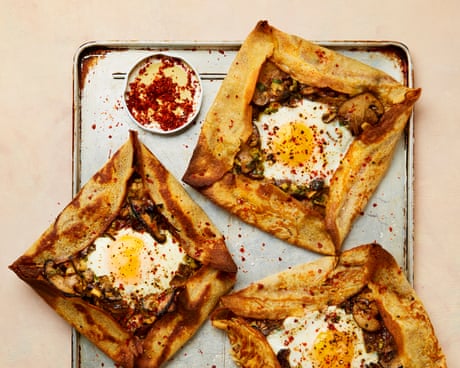
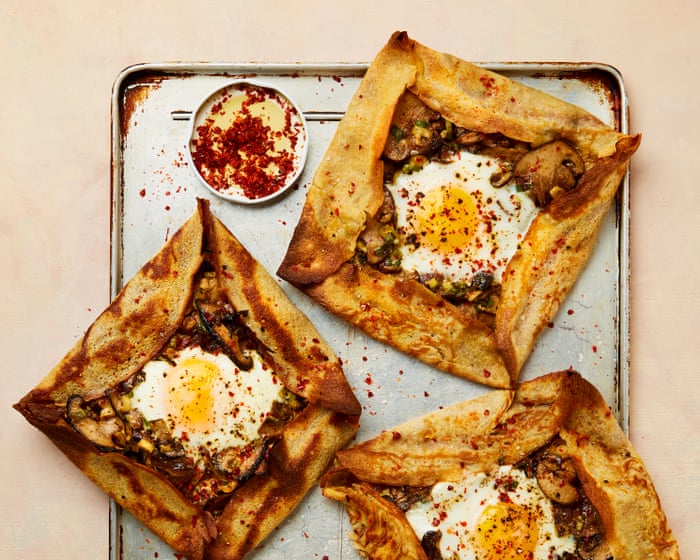
Every February – or occasionally March – I get together with two friends to gorge on pancakes; I provide the pan, Caro does the cocktails and poor old Harry is invariably the chef because she never fails, even three ciders in. With two half-Frenchies in the room, we always start with buckwheat galettes, usually served complète with gruyère, ham and a fried egg (though the more we eat, the more adventurous the combinations become). Then we move on to softer, thicker British sweet pancakes with lemon juice and crunchy demerara sugar to finish. We rarely manage to meet on Shrove Tuesday itself, but apart from the year I went vegan for Lent, that’s no problem. After all, any cold, dark evening is improved by a pancake party.

I suspect we’re not alone in sticking with the classics, so I’m not going to suggest too many alternatives, but, given that pancakes are not just for the 47th day before Easter, I do like the sound of Nigel Slater’s ones stuffed with cheese and caramelised onion, I know I’d love Yotam Ottolenghi’s Austrian kaiserschmarrn and, though they’re as flat as they sound, Jimi Famurewa’s Nigerian-Dutch puff puff pancakes look incredible. Oh, and there’s Meera Sodha’s Indonesian-style salted peanut and chocolate pancakes, while Claire Ptak’s fluffy cardamom pancakes with thyme-spiked figs certainly aren’t just for Christmas.

Continue reading...
© Photograph: Louise Hagger/The Guardian. Food styling: Emily Kydd. Prop styling: Jennifer Kay. Food styling assistant: Valeria Russo.
© Photograph: Louise Hagger/The Guardian. Food styling: Emily Kydd. Prop styling: Jennifer Kay. Food styling assistant: Valeria Russo.
© Photograph: Louise Hagger/The Guardian. Food styling: Emily Kydd. Prop styling: Jennifer Kay. Food styling assistant: Valeria Russo.
  •  

Heard it on the grapevine: Polish wine’s quiet renaissance

Once thought of only for vodka and lager, Poland is in the midst of a wine-making revival that’s infiltrating restaurant lists, bars and independent suppliers

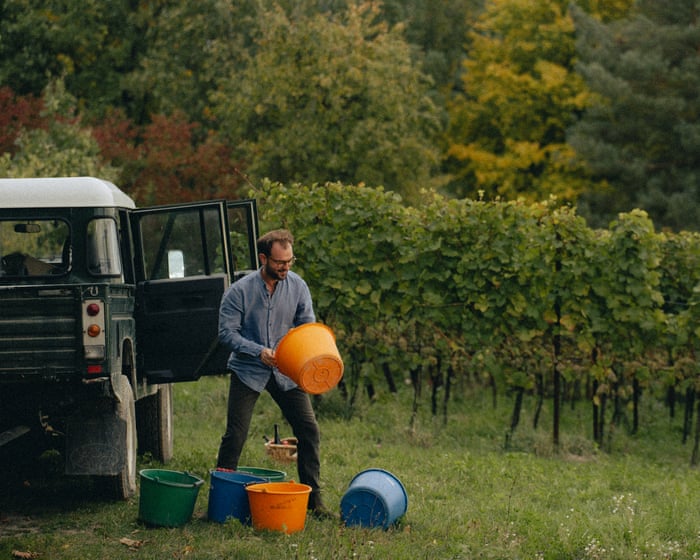
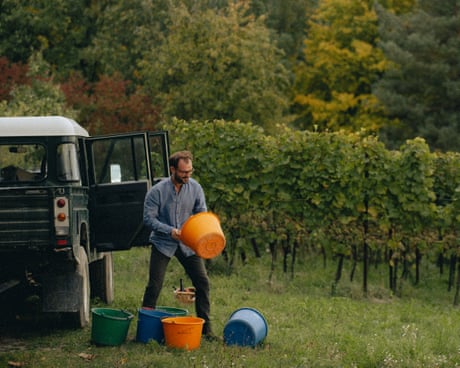
Swap the staid stereotypes of Żubrówka vodka and Żywiec lager for vineyards and vintages, because Poland is in the throes of a viticultural renaissance, the likes of which hasn’t been seen for centuries. On a road trip tracing Poland’s best terroirs back in the summer of 2023, I met winemakers going against the grain, unshackled by tradition and producing unpretentious, expressive pours that more than merit a place on your dining table.

Lately, Polish wines have been cropping up all over bar and restaurant lists: Niemczańska’s chardonnay at London’s most emblematic Polish restaurant, the borscht-fronted Daquise in South Kensington, say, while chic bar Spry in Edinburgh has started stocking my favourite producers, Dom Bliskowice, Kamil Barczentewicz and Nizio. But you won’t find bottles nestling between the neat rows of kabanos sausages of your local Polski sklep, nor lining the supermarket shelves. Or not just yet, anyway.

Victoria Brzezinski is co-author of Drinking the World: A Wine Odyssey, published by Pavilion Books/HarperCollins at £22. To order a copy for £19.80 go to guardianbookshop.com

Continue reading...

© Photograph: 5881_KATARZYNA_KRUPA/Katarzyna Krupa

© Photograph: 5881_KATARZYNA_KRUPA/Katarzyna Krupa

© Photograph: 5881_KATARZYNA_KRUPA/Katarzyna Krupa

  •  

Rachel Roddy’s recipe for cacio e pepe, the old-fashioned way | A kitchen in Rome

Shaken and rubbed in a cloth, this simple Italian classic has never tasted better

Nightclubs, mechanics, restaurants, a theatre, a wholesale butcher and an Apostolic church occupy some of the network of caves and tunnels that, over the centuries, were burrowed into Monte Testaccio, an ancient rubbish dump hill in the middle of Rome that’s made entirely of broken amphorae. Some places make a feature of their situation, revealing sections of pots not dissimilar to the cross section of snapped wafer biscuits, while others have smoothed the curves with plaster.

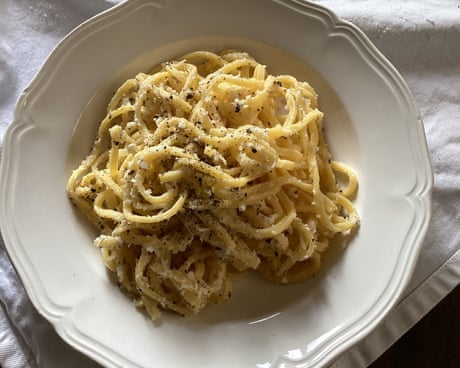
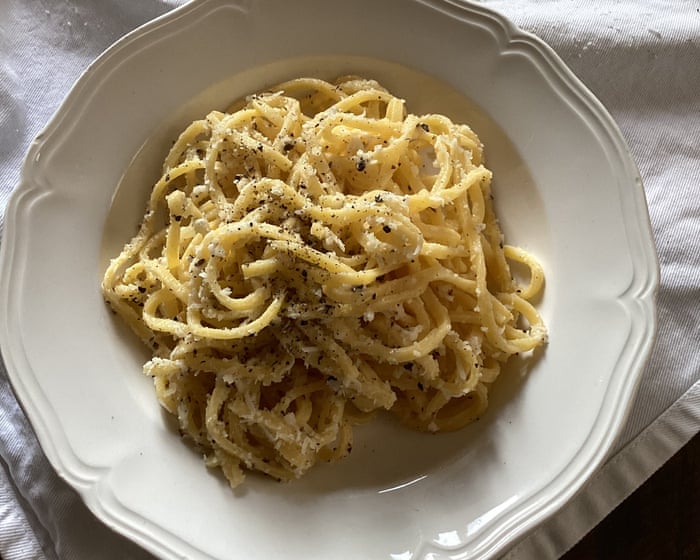
A few use the caves as originally intended – that is, as natural warehouses offering steady low temperatures and good humidity. In short: the ideal temperature for storing certain foods and wine. Most recently, Vincenzo Mancini, whose project DOL distributes artisanal products from small agricultural realities in Lazio, has taken over a deep cave behind door 93, reclaiming it as an urban ageing space for cheese and cured meat. I visited a few months ago with the chefs from Trullo in London, to do a cheese tasting – and to eat an unexpected cacio e pepe.

Continue reading...

© Photograph: Rachel Roddy/The Guardian

© Photograph: Rachel Roddy/The Guardian

© Photograph: Rachel Roddy/The Guardian

  •  
❌