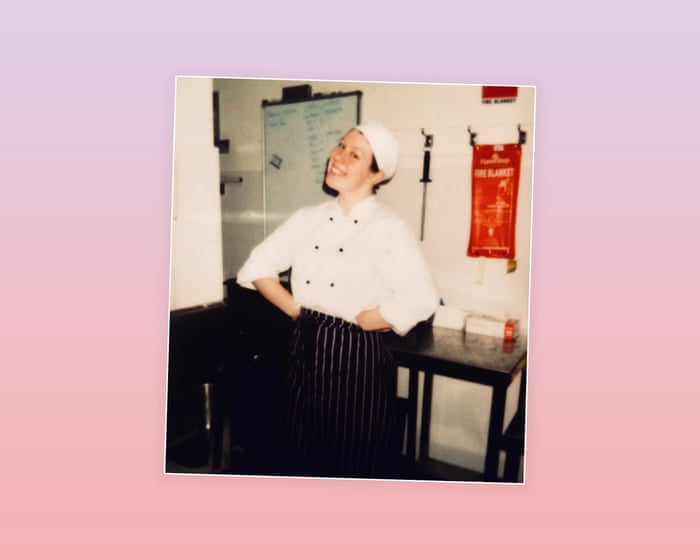
I was a keen-bean 15-year-old when I got my first job in a commercial kitchen in Canberra, raised on a diet of Jamie and Nigella and bursting with a passion for food. I dived headfirst into an apprenticeship and eagerly put my training into practice on my days off, cooking elaborate meals for friends and creating plenty of dirty dishes.
But as the years went on, my love for the kitchen was dulled by a series of toxic workplaces, bullying bosses and long hours. Eventually, cooking for myself became a chore. I was more likely to eat cereal on my kitchen floor than do anything creative that would result in dirty dishes.
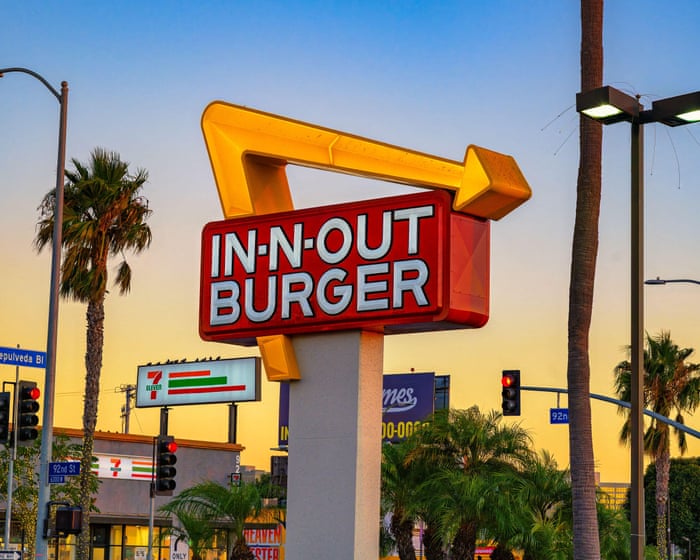
Michael B Jordan headed there straight from the Oscars. No wonder. Their Double-Double is ‘the near perfect expression of burger-ness’
They say you never forget your first time, but for most of us, this doesn’t apply to cheeseburgers. We can’t really remember our first cheeseburger, because we start eating them at such an early age, before the memory centres of our brains are fully formed. In fact, in Wisconsin (“America’s dairyland”) babies are traditionally weaned on a fortifying diet of cheeseburgers, bratwurst and fondue, along with little sips of lager, just to make sure we acquire the taste.
But while I may not be able to recall the particular details of my very first cheeseburger, the sense-memories of them are embedded deep within my subconscious. The perfect flavour-chord of ketchup, mustard and pickles on molten cheese and juicy beef occupies the same psychological space as the peppery cinnamon-and-clove aroma of my father’s Old Spice and the warmth of my mother’s hug. More than mere memories, these are encoded messages: comfort comes in the form of hugs, spicy aftershave, and cheeseburgers.
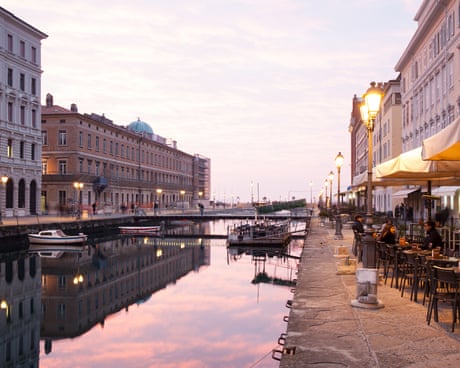
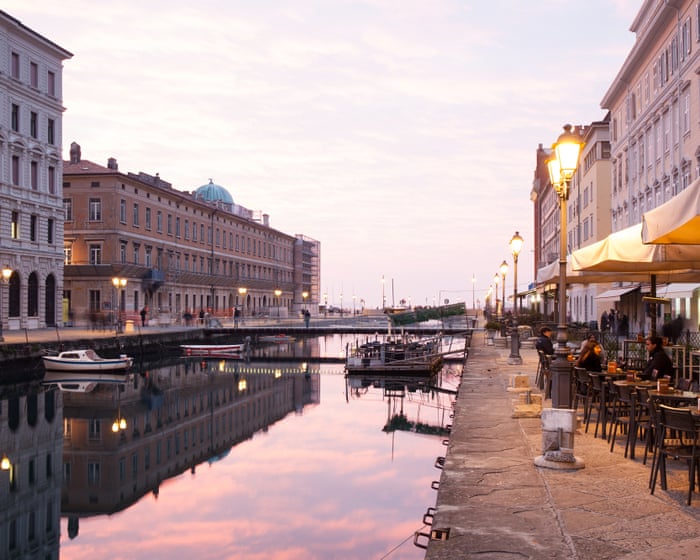
The historic port is a cosmopolitan gateway to global flavours and traditions. And it’s barely on the tourist trail. Take a tour …
Many years ago, I swapped languages with a young woman from Trieste. It was during one of our half-English, half-Italian practice hours that she introduced the idea of Trieste, on a map, as possessing the shape of a stomach. She described her city (which is also a province) as being suspended: pressed by the sea on one side, enveloped by Slovenia and the Karst hills on the other, with a short oesophagus attaching it to the body of Italy. She also suggested I read la Conscienza di Zeno – Zeno’s Conscience –Italo Svevo’s devilishly funny hymn to procrastination, self-delusion and walking around in search of a suitable cafe, and warned me about the ruffian wind.
It would be almost two decades before I finally visited Trieste, bringing with me enough anticipation to tempt disappointment (unfounded) and the itinerary of a food writer. I carried the image of a stomach too, fitting in so many ways for this remarkable food city, not least for making its geography vivid, which in turn explains so much about its history. Once a coastal fishing village, colonised by the Romans, raided by the Venetians, entrusted to the Habsburg monarchy in Vienna (for four centuries, which included a prolonged heyday), appended to the newly united Kingdom of Italy, fought over, briefly independent, handed back to Italy in 1954, from which point it developed into what is today one of the most outward looking and dynamic cities in Italy. Trieste, it seems, has digested and assimilated, meaning its complex history is reflected in the architecture, dialect, music, literature, sports, civic nature and multifaceted food culture: surely one of the most intriguing and rewarding in Italy.

 Anmelden