❌

Lese-Ansicht

Welcome to the age of the grown-up soft drink

There is now a wealth of less sugary, more sophisticated nonalcoholic options out there, with flavours clearly aimed at an adult market

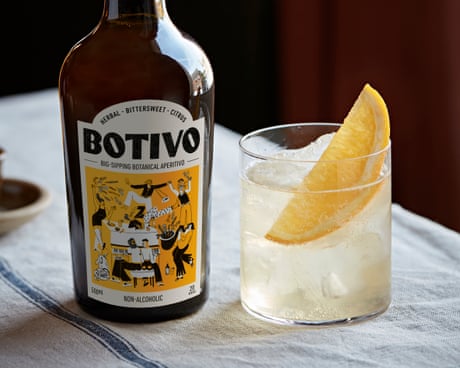
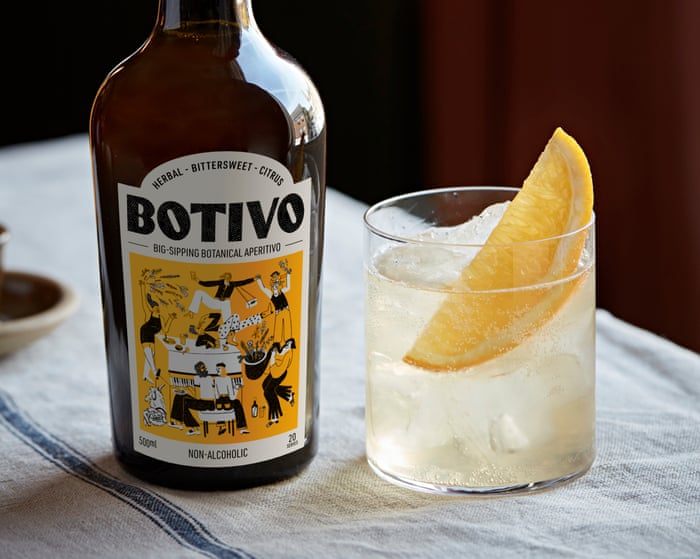
I have written recently about several families of nonalcoholic drinks that are having a moment: tonic water, flavoured sparkling water and wine substitutes. It stands to reason that soft drinks are enjoying their time in the sun. Quite literally, too: the heat of 2026 has demanded some serious refreshments and UK booze consumption is at a record low. But it has dawned on me that there is a broader trend in alcohol-free beverages beyond individual categories, namely that we are living in the age of the grown-up soft drink.

By that I mean those with less sugar and more complexity than post-mix drinks, or “soda pop” (as my daughter now calls them, thanks to the KPop Demon Hunters song of the same name), which are clearly aimed at adults. One example is the tribe of “functional” drinks that have hit the market in the past year or so and that have supposed health benefits or performance-enhancing qualities, such as improving focus or helping you to slow down. Sonic Tonics’ CBD-infused 0% drink, for example, promises to shift your mood, and it certainly quenches thirst with a really original flavour profile of bitter hemp root with sweet and floral fig and violet. And while usually sceptical of celebrity-backed products with wellness claims, Gillian Anderson’s G Spot drinks are genuinely delicious. The passion fruit and habanero chilli is my favourite; I can’t support its aphrodisiac claims (allegedly due to its ingredients including butterfly pea and L-arginine, both of which are said to increase blood flow to the sexual organs), but, at £6.50 for four from Ocado, it’s cheaper than trying Gwyneth Paltrow’s sex oil.

Continue reading...
© Photograph: Steven Joyce/Botivo
© Photograph: Steven Joyce/Botivo
© Photograph: Steven Joyce/Botivo
  •  

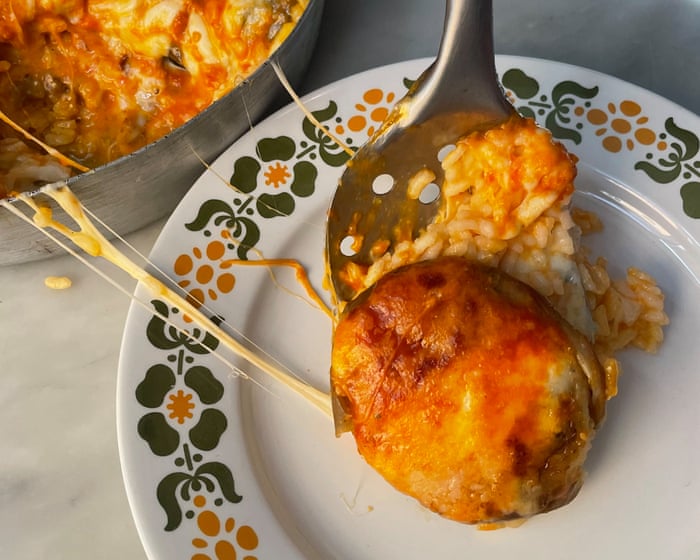
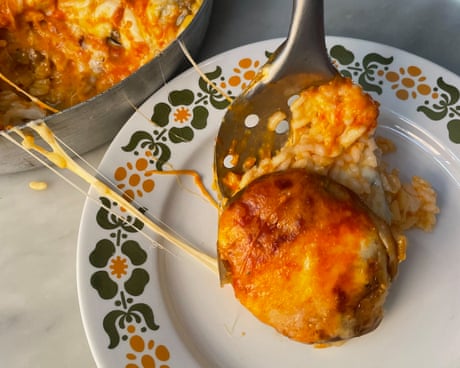
Rachel Roddy’s recipe for rice, aubergine and mozzarella bake | A kitchen in Rome

A 1950s cookbook classic – eat it hot and stringy or firm and flavoursome

Yesterday’s lunch and this week’s recipe is thanks to my friend, the designer Jake Tilson, who gave me a pristine 1977 edition of The Talisman Italian Cook Book. With a cover of red, white and green stripes cover that makes me think as much of seaside rock as Italy’s national colours, the edition was part of the 24th printing of the US translation of Il Talismano della Felicità (The Talisman of Happiness), by Ada Boni. First published in 1950, the abridged translation was sold as a complete guide to Italian cookery, covering all notable dishes. Well, on the cover at least; inside, the introduction is more realistic, warning the reader that, “to criticise the writer [Boni] or translator [Mrs Matilde La Rosa] for failing to include certain dishes is useless”, because no living man or woman can be acquainted with all the variety of dishes of a such variegated country.

The introduction, by a man called Mario A Pei, goes on to explain that the variety of dishes mirrors the wide dialectical array in Italy at the time (1950); its diversity of speech, customs, costumes, psychology and general world outlook. In the next sentence, he notes that this variety was undoubtedly a very bad thing from the standpoint of national unity and progress (the professor and polyglot was an ardent supporter of European fascism and uniting humans under one language). Not that you would guess that from his following sentence: “Variety is the spice of life.” I regretted reading his introduction, and also telling an Italian friend, who said, laughing: “You don’t know the half of it”, in reference to my romanticism about the original Talismano, which may be great, but also (in her opinion) endorses a Stepford Wives fantasy of womanhood; a journey with Boni as patient guide.

Continue reading...

© Photograph: Rachel Roddy/The Guardian

© Photograph: Rachel Roddy/The Guardian

© Photograph: Rachel Roddy/The Guardian

  •  

Mascots, merchandise and Mixue: the new wave of Asian fast food chains in Australia

Since 2023, a slew of fast food and quick service restaurants from east and south-east Asia have debuted in Australia, capturing the youth market and ‘little treat’ culture

On a Thursday night along Sydney’s George Street, teenagers Sasha Luangrungvilai and Livinia Boyden are looking for a “little treat” after a big day of window shopping. Although it’s Luangrungvilai’s first time at Mixue, it’s been a long-awaited visit – Boyden has been hyping up the Chinese bubble-tea juggernaut for weeks. “I love having so many dessert options for treats,” says Luangrungvilai. “It gives me a chance to try new foods which is always great.”

The first Australian outpost of Mixue opened in 2023 in Sydney and now they have more than 10 locations across the country. The brand is part of a wave of fast food and quick service restaurant chains originating from east and south-east Asia that have set up shop in Australia in recent years.

Continue reading...

© Composite: CFOTO/Future Publishing via Getty Images/The Guardian/Marrybrown Australia

© Composite: CFOTO/Future Publishing via Getty Images/The Guardian/Marrybrown Australia

© Composite: CFOTO/Future Publishing via Getty Images/The Guardian/Marrybrown Australia

  •  
❌