❌

Lese-Ansicht

‘There is no secret agenda’: Nara Smith on home-making absolutely everything, raising four kids at 25 – and why she’s definitely not a tradwife

The model, actor and influencer is known for making her own frozen yoghurt, bubblegum or even toothpaste while dressed in immaculate haute couture. But she insists she is not who the internet thinks she is

Nara Smith is not a tradwife, she wants you to know that. Nor is she an ex-tradwife – pace the New York Times who included her in a feature on how ex-tradwives are as popular a movement now as the tradwives were in the first place. Nor was she peddling a tradwife-adjacent lifestyle choice by marrying at 18, having four children by 24, and devoting hours to cooking and documenting it online. Nor is she Mormon, by the way. Although, yes, her husband, the model and former teen heart‑throb Lucky Blue Smith, was raised Mormon, but we’ll get to that. Nor was she telegraphing subliminal religious messages in her content: “There is no secret agenda.” Nor was she abandoning her biracial heritage by wearing her hair in a sleek little bob. Nor was she leaning into a 1950s housewife archetype – even when dressed in a pink and red polka-dot minidress to batch-cook sourdough.

Smith wants you to scrap everything you think you know about her and start again. She also doesn’t care if you don’t. As with her content: “Those that get it, get it. Those that don’t, don’t. And that’s totally fine. I tell people: ‘If you don’t like my content, I won’t see you scroll past me.’ ‘If you need to block me for your own sanity, please do. I promise I won’t know.’ And if you want to stick around, that is beautiful, I’m grateful, welcome.”

Continue reading...

© Photograph: Mary Rozzi/The Guardian

© Photograph: Mary Rozzi/The Guardian

© Photograph: Mary Rozzi/The Guardian
  •  

All the whey up! How a dairy byproduct became the star of the ‘proteinmaxxing’ boom

As GLP-1s drive the current protein craze, a supplement once only taken by powerlifters is now so popular US producers are struggling to keep up

For generations, the Meives family made cheese. Tony Meives’s grandfather, a Swiss immigrant, and his father both ran small cheese factories in Wisconsin, in the heart of America’s dairyland. “I worked in the cheese factory my whole life,” Meives says. “I have four world-class cheesemakers in my family.” But when it came time to inherit the family business, Meives found there was more money in the industrial runoff that his grandfather would have once thrown away. Today, the 39-year-old bodybuilder and gym owner runs a company that sells whey protein powder, the watery byproduct of cheesemaking that was once considered waste. “Twenty years ago, the only people who took whey were bodybuilders,” he says. “Over the past five years, the market has really opened up to each and every type of person you can probably think of.”

When Robert F Kennedy Jr, the US health secretary, declared late last month, that “the war on protein is over”, he sounded a bit like one of those Japanese soldiers of second world war lore, who spent years hunkering in the jungles of south-east Asia, oblivious to the fact that hostilities had long ceased. Perhaps there was a time when advice leaned more towards a diet based around fruit, vegetables and carbohydrates – but by May 2026, the war on protein was surely over. Protein had won.

Continue reading...

© Illustration: Guardian Design / Getty Images

© Illustration: Guardian Design / Getty Images

© Illustration: Guardian Design / Getty Images

  •  

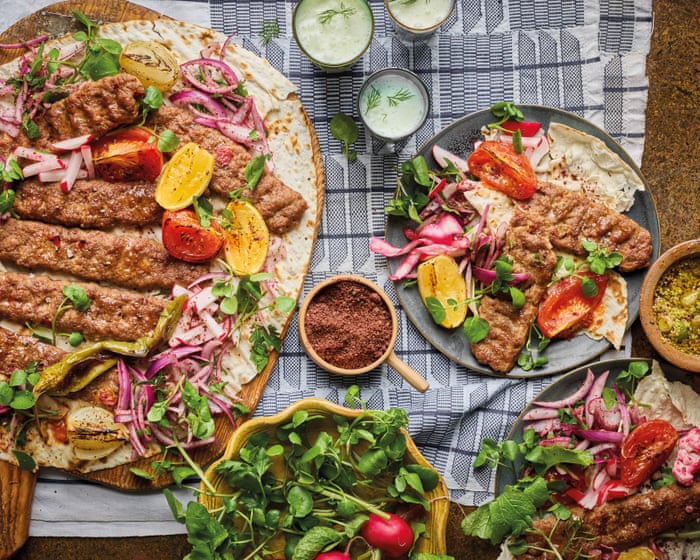
Historic Istanbul, a spotlight on South Africa, and Indian made easy: the best summer cookbooks for 2026 – review

Essential new titles for your kitchen shelf – plus a classic to rediscover

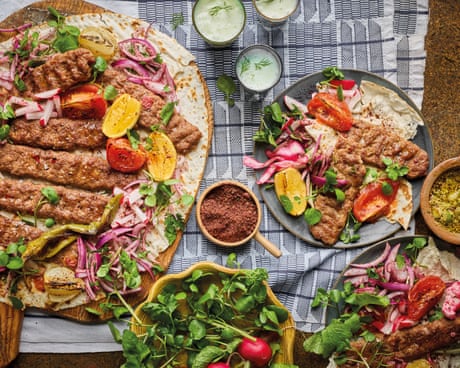
Istanbul
Özlem Warren (Quadrille, £28)

Continue reading...

© Photograph: Kim Lightbody/The Guardian, Food and Props Emma Cantlay

© Photograph: Kim Lightbody/The Guardian, Food and Props Emma Cantlay

© Photograph: Kim Lightbody/The Guardian, Food and Props Emma Cantlay

  •  

Carlo Petrini obituary

Italian activist, author and pioneer of the Slow Food movement

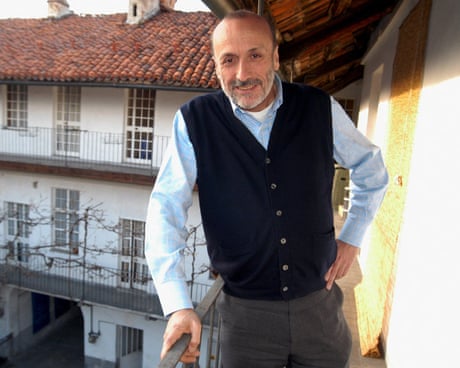
On 20 April 1986, Carlo Petrini was part of a group who cooked and distributed spaghetti to passers-by in Piazza di Spagna in Rome. The huge pot of pasta was their response to the opening, the previous month, of the biggest McDonald’s in the world just metres from where they stood. For Petrini and fellow members of Arcigola, a group dedicated to the pleasures of food and shared political ideals, the opening of McDonald’s in the centre of Rome represented an attack on Italian culinary identity, local biodiversity and the natural rhythms of life: the spaghetti was a declaration of resistance.

A few months laters, during a meeting over dinner at Osteria dell’Unione in Treiso, Piedmont, in north-west Italy, the group came up with the idea of ​​trying to stem the fast food invasion, whose single value was profit, with slow food, which they saw as a defensive trench. The essayist Folco Portinari, then head of the Rai TV company, wrote the text, while Petrini gathered signatures, and on 3 November 1987, a manifesto was published on the front page of Gambero Rosso, a supplement edited by Stefano Bonilli within the communist newspaper Il Manifesto.

Continue reading...

© Photograph: Dino Fracchia/Alamy

© Photograph: Dino Fracchia/Alamy

© Photograph: Dino Fracchia/Alamy

  •  

Friends, with recipes: how a love of food brought my husband and me together, and helped us part

Though we are no longer together, we talk food every time we speak and always ask what the other is having for dinner

For our first date – a picnic on the grassy banks of the Molonglo River near Canberra – the man I would marry brought the tartan blanket (tick), the wine (tick), a crusty baguette (tick), the cheese (tick), and then the ka-boom of a chicken and grape salad he’d made from a recipe in a gourmet magazine. His score flew off the charts.

I’d met no other male who browsed gastro porn for inspiration. His culinary romance drew me to him, deaf to what would ultimately become the cautionary tale of too many cooks spoiling the broth.

Sign up for the fun stuff with our rundown of must-reads, pop culture and tips for the weekend, every Saturday morning

Continue reading...

© Photograph: Tom Werner/Getty Images

© Photograph: Tom Werner/Getty Images

© Photograph: Tom Werner/Getty Images

  •  

Kurdish kitchens, baked bean alaska and Mexican soul: the best spring cookbooks for 2026 – review

These are the new titles for your kitchen shelf – plus a classic to dust off

Nandên: Recipes from my Kurdish Kitchen by Pary Baban

Nandên by Pary Baban (Ryland, Peters & Small, £25). To support the Guardian, order your copy at guardianbookshop.com. Delivery charges may apply.

Continue reading...

© Photograph: Clare Winfield/Ryland Peters & Small

© Photograph: Clare Winfield/Ryland Peters & Small

© Photograph: Clare Winfield/Ryland Peters & Small

  •  

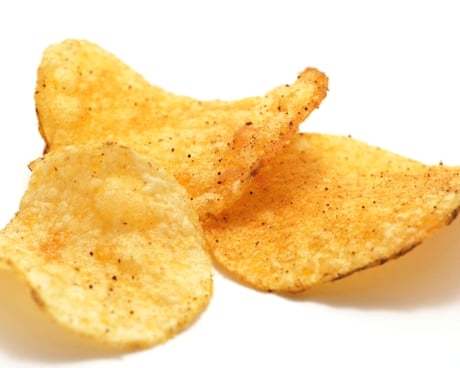
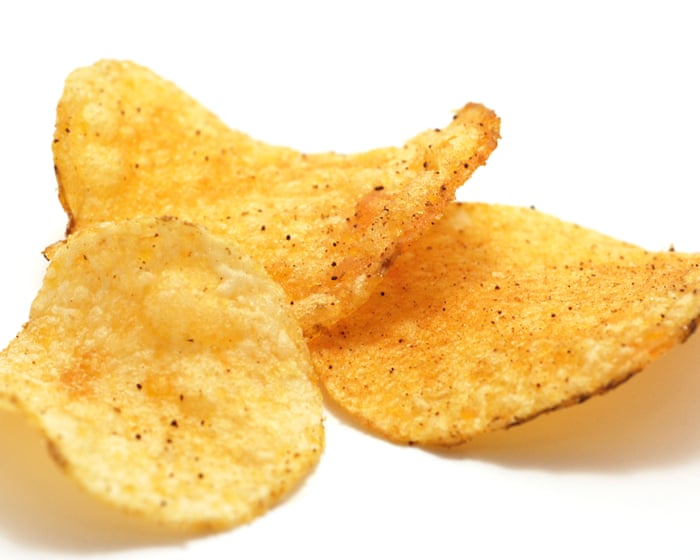
I’ll never forget the day I tasted roast chicken crisps – it changed my life for ever | Adrian Chiles

Everyone knows the dowdy potato snack, but reading a recent book on them has reignited a personal journey and taken my intake to hitherto unseen levels

I’m reading a book about the history of crisps. It’s by Natalie Whittle and it’s called Crunch. Unlike crisps, it’s nourishing – fascinating to learn of the human endeavour, all the science that’s gone into them. But, just like crisps, it’s also comforting – in that it’s good to know I’m not the only one with such strong feelings about them.

I once heard a fellow broadcaster denigrated as the kind of presenter who just wanted to do phone-ins about listeners’ favourite crisps. I knew where he was coming from. You could do a phone-in on this subject every day of the week and never run out of contributors. Because surely everyone has their own relationship with crisps, their own personal crisp journey.

Continue reading...

© Photograph: Helen Sessions/Alamy

© Photograph: Helen Sessions/Alamy

© Photograph: Helen Sessions/Alamy

  •  

Five of the best food books of 2025

Sami Tamimi celebrates Palestine’s culinary heritage, Helen Goh uncovers the psychological benefits of baking and Roopa Gulati reveals tricks used in the best Indian kitchens

Lugma: Abundant Dishes & Stories from My Middle East
Noor Murad (Quadrille)
One of the greatest tests of a cookbook is not just whether the recipes appeal on first glance, but whether they have the power to weave themselves into your regular cooking life. By this measure, Lugma is my top food book this year. Its author, Noor Murad, is a young Bahraini-British food writer who has previously worked with Ottolenghi. It is a delight to find her writing here in her own voice about the Middle Eastern ingredients that mean so much to her (you’ll need black limes!). The recipes hit a sweet spot between ease and specialness. Even a simple side dish of greens becomes a feast, sauteed with fried onions and turmeric oil. Alongside a pantheon of rice dishes for celebrations, there are simpler midweek hits such as tuna jacket potatoes enlivened with a spicy tomato sauce and preserved lemons. Noor’s deeply fragrant Middle Eastern bolognese is now the recipe against which I judge all other ragus.

Baking and the Meaning of Life
Helen Goh (Murdoch)
The idea of baking as therapy is often bandied around, but Helen Goh knows whereof she speaks. Alongside her career as a baker, Goh (who was born in Malaysia to Chinese parents) was for a long time a practising psychologist. Whatever the theory behind the effect, every time I follow Goh’s wonderfully precise yet creative recipes, I feel a deep calm and happiness as well as a sense that she is teaching me new skills (“learning, growth and achievement” are among the psychological benefits of baking, according to Goh). The Shoo Fly buns are the currant buns of dreams (with a whole raw orange pureed into the dough) and I wanted to make the chocolate financiers with rosemary and hazelnuts so much that I bought a financier tin specially (no regrets there).

Continue reading...

© Illustration: Debora Szpilman

© Illustration: Debora Szpilman

© Illustration: Debora Szpilman

  •  
❌