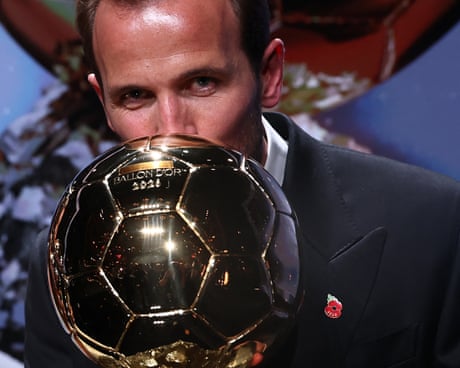
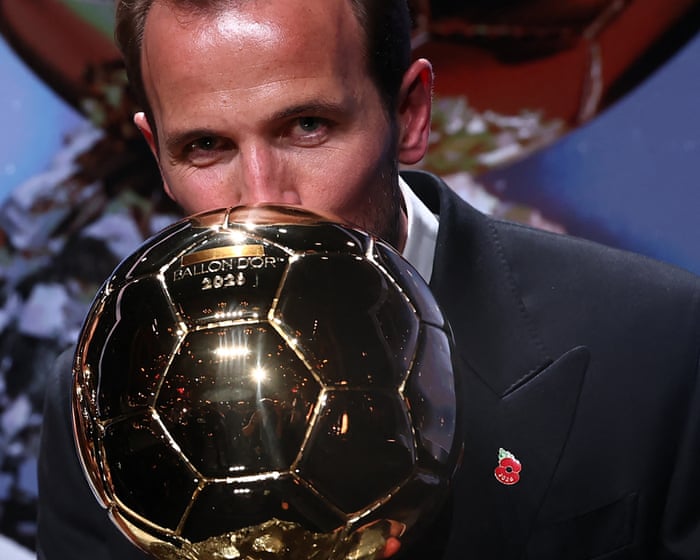
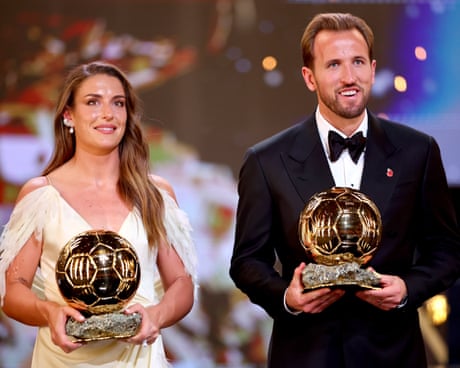
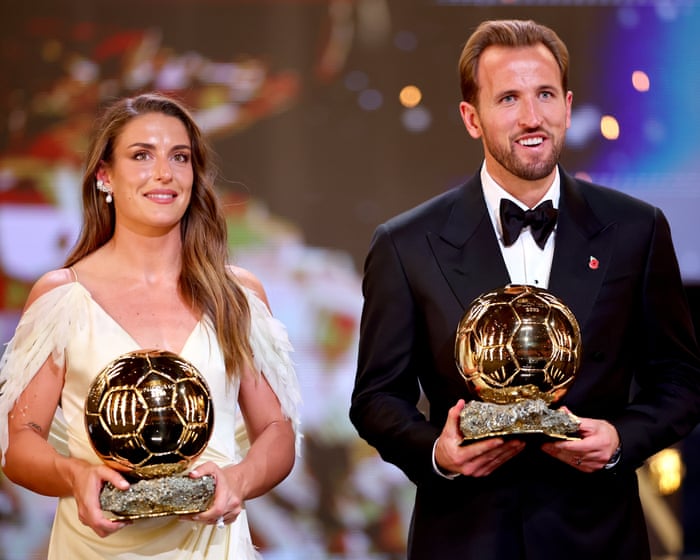
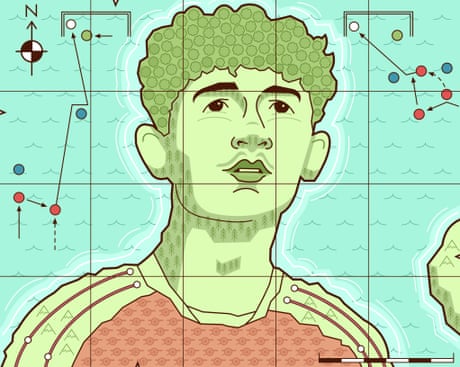
Harry Kane is the men’s Ballon d’Or winner for 2026, the first Englishman to win the trophy in 25 years. At a lavish ceremony at the Palladium Theatre in London, Kane unexpectedly won ahead of co-favourites Lamine Yamal of Barcelona and Kylian Mbappé of Real Madrid. In a contest that has been critiqued for promoting individualism and celebrity in sport, Lucy Hough speaks to the Guardian’s chief sports writer, Barney Ronay, about the symbolism of Kane’s win
The England captain spoke movingly on a night of deserving winners and unintentional hilarity in London
Well, there’s something new. Football: now available in new, genuinely heartwarming flavour.
There was a lovely moment at London’s Palladium theatre on Monday, with the clock creeping towards 11pm at the end of a startlingly shrill and bloated evening of never‑ending awards and never-ending award‑related excitement.
Alexia Putellas picks up women’s award for third time
England captain acclaimed in London ceremony
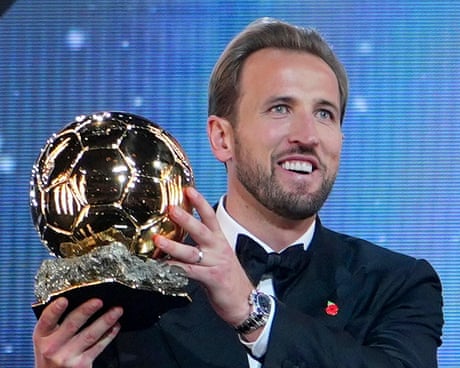
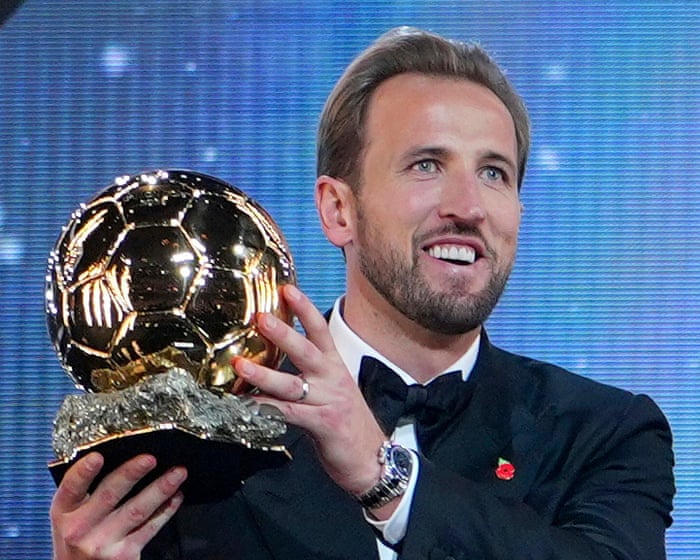
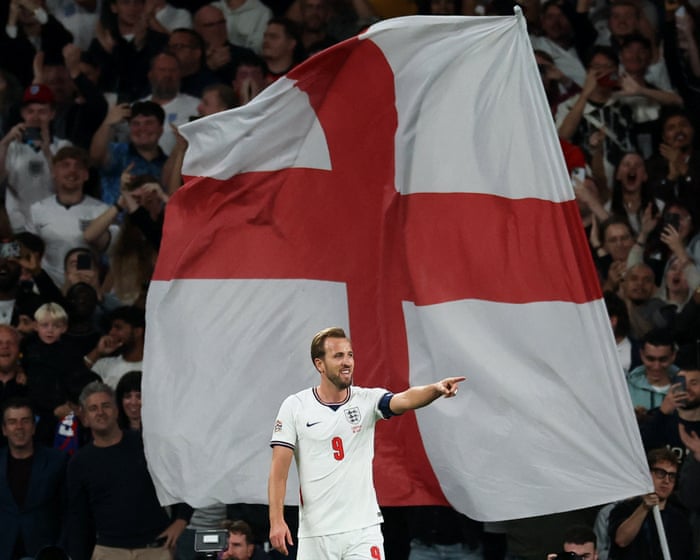
Harry Kane is the Ballon d’Or winner for 2026, the first Englishman to win football’s most prestigious individual trophy in 25 years.
Two hours into a lavishly excitable ceremony at the Palladium Theatre in London, Kane’s name emerged from the final envelope to wild cheers inside the auditorium. The women’s Ballon d’Or, awarded moments earlier, was won by Alexia Putellas of London City Lionesses, a third Ballon, five years on from her first in the colours of Barcelona.
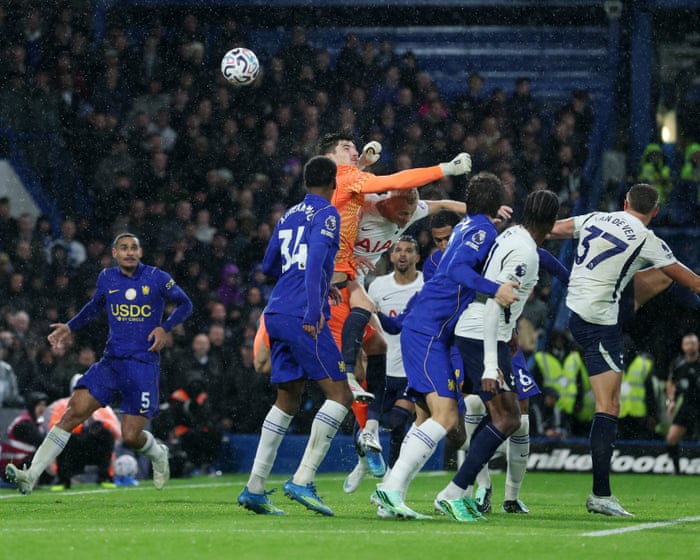
Home side broke the game open with some unique corner routines, but a goalkeeping error ruined the plan
There was an odd interlude at Stamford Bridge with 76 minutes gone and the score still 0-0, one of those moments where suddenly your brain seems to be on inside out, like trying to walk the wrong way down an escalator.
Tottenham had a corner on the left-hand side, in a game that had felt to that point like an extended practice session, a refinement of systems, the football equivalent of watching two middle-aged men methodically emptying the dishwasher, adding salt, descaling the hoses, tutting over knives incorrectly slotted, cups in the wrong row.
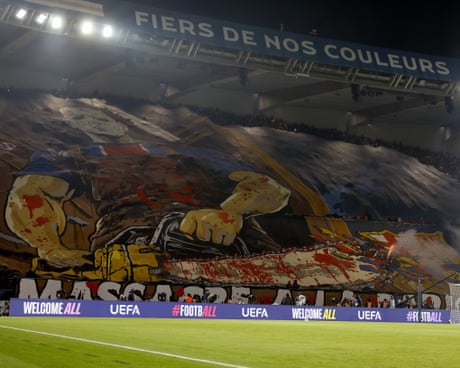
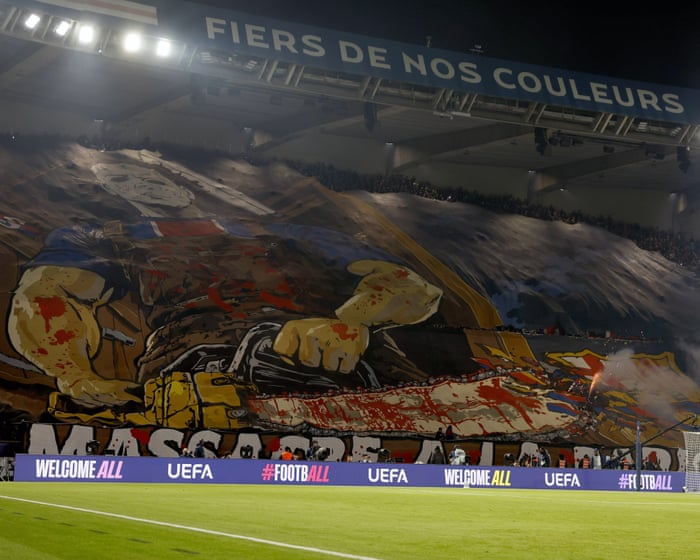
Fire, noise, fury, a sense of empty energy. And across town, a football match too. Do any of these randomly pitched autumnal Champions League fixtures mean anything? Probably not when you’re Paris Saint-Germain and Barcelona, and the only game in town is risk-free TV income and a semi-guaranteed place in the knockout stuff.
But this was still a dazzling occasion at the Parc des Princes, where the champions of France and Spain played out a light, open, frictionless, exhibition-style game of football. PSG finished 4-2 winners, having been pegged back to 2-2 midway through the second half. But this was also a game where the score almost did not seem to matter, and where the only really hard message was the frailty of the Barcelona backline and PSG’s thrilling attacking energy in these midweek A-games.
Getting rid of head coach is not going to solve the problems that led to his appointment. Perhaps it’s worth, for once, doing something different
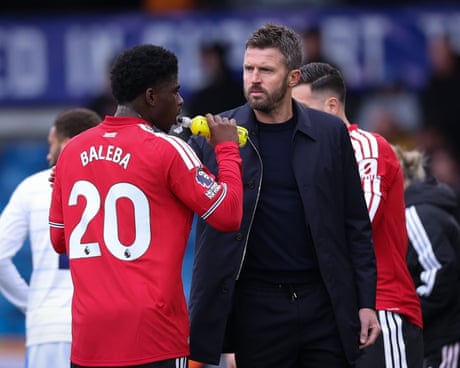
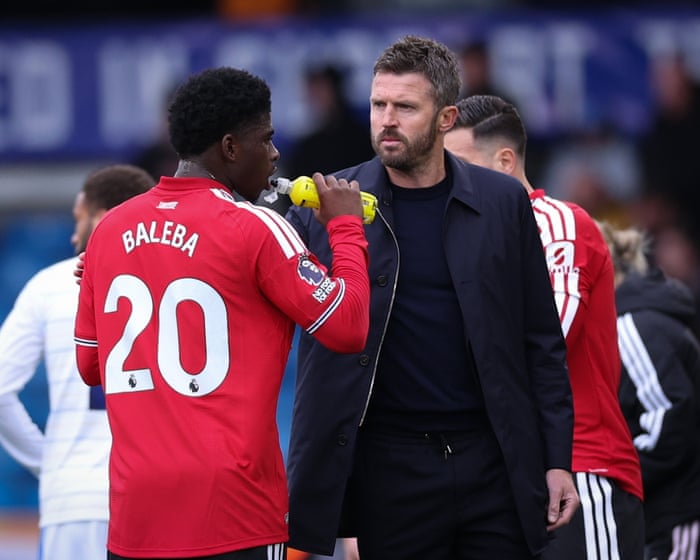
At the final whistle at Elland Road the TV cameras cut to a lingering shot of the Manchester United chief executive, Omar Berrada, looking down pensively from the stands, deciding, it is to be hoped, on a little clemency, a re-sheathing of the managerial shotgun.
Here we have the man who hired the man. The man who fires the man. The man who also hired or rehired the previous two men he had to fire. Berrada was poached from Manchester City on the basis of his ability to grow commercial revenue (yes, OK, stop laughing), and appears, like everyone else with any actual reach around here, to exist in a strangely consequence-free bubble.
This is by far the most interesting this club have ever been and they faced PSG, a kind of twin entity in all this as oil state glove puppets
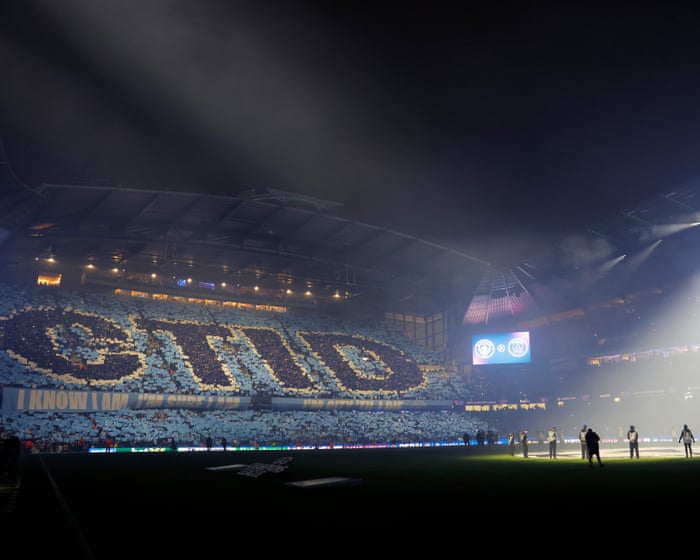
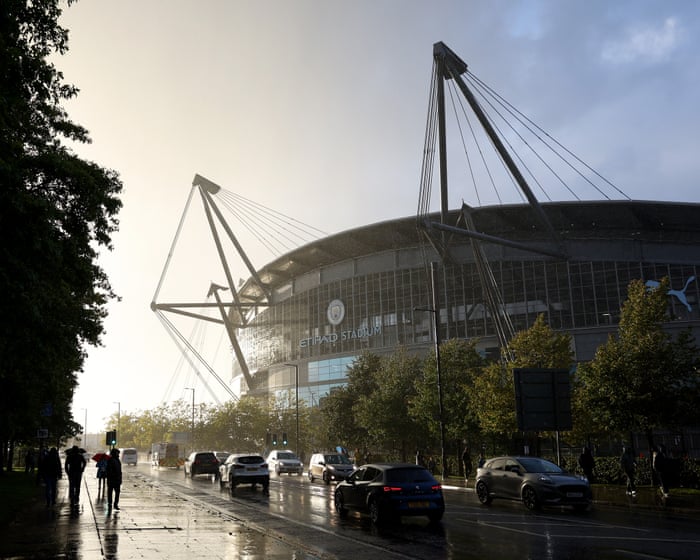
Another day, another note of unreality; another vivid and brilliant spectacle that feels as though it has been whipped together out of meringue and burnt sugar. Time flies when the world is closing in. Two weeks on, this was Manchester City’s first home game since the verdict dropped, the irrefutable body of evidence was refuted, and English football entered its state of ongoing whiplash.
In the stadium this felt like watching someone dance while the world burns. This was a brilliant game pegged out around six goals, a collapse, a comeback, posts and bars struck, saved penalties, and a performance of state-of-the-art omni-football from this brilliantly high-grade Paris Saint-Germain team.
As the top flight returns, armed with the knowledge its serial champions have been the authors of a 10-year sham supremacy, the first question is simple: how is it going to feel?
The internet: an apology. It turns out you were right. It was actually a simulation all along. Now, talk to me about chemtrails again. And yes, maybe Vinícius Júnior has been replaced by a handsome, baffled-looking waxwork.
Welcome to the weirdest weekend of them all. We are now post-judgment, post-statement, postlapsarian. As the Premier League prepares to snap back into what must be described, out of habit, as reality, armed with the knowledge its serial champions have been the authors of a 10-year sham supremacy, the first question is fairly simple. How is it going to feel?
On a night where he equalled Peter Shilton’s England appearance record, Harry Kane did what he always does
It is a very Harry Kane kind of thing to equal a record. Respectful, no ego, all about the collective. On a room temperature night at Wembley Stadium Kane duly did this, drawing level with Peter Shilton’s record for England caps, and doing so while delivering a performance of Total Midweek Kane.
There were two neat, slick goals, one in each half, the high points of a 3-0 win against Czechia that all but guarantees a place in the Nations League knockouts. England need one more point in November to be certain. At which point Kane will have the chance to carry on equalling his own new caps record, humbly paying tribute to himself each time, saying, yeah, it’s an honour to share that number with a man like (myself).
Coming third in the World Cup was really not a disaster, and Saturday’s rout of Croatia and building the team around Jude Bellingham are good signs
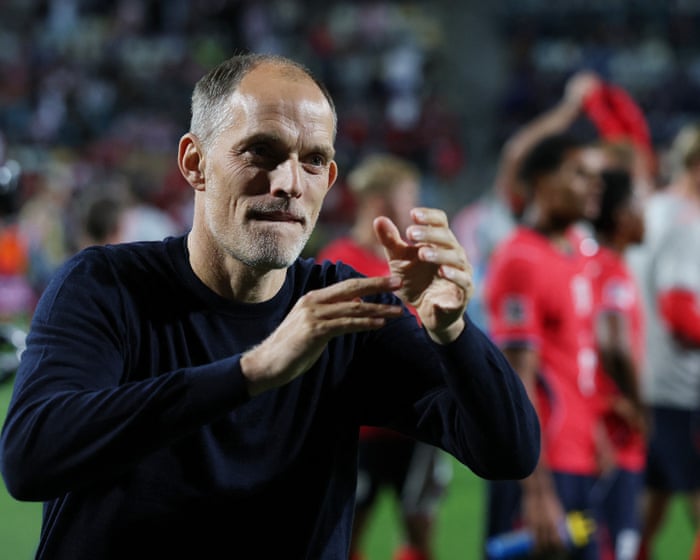
Move fast and fix things. It has been a fine week so far for Thomas Tuchel as he attempts the cyclical task of soldering together not just an England team, but a way of looking like one, all the while being battered by the to-and-fro conflicting winds of England managerdom.
There is nothing new here. This is a job that involves not just picking the right players and making high-stakes calculations over your second-half substitutions, but carrying out these basic duties while wrestling with aggrieved members of the Thuggee cult on a collapsing rope bridge outside the Temple of Doom, and simultaneously having your heart ripped out.
PM’s contortions over the Manchester City verdicts have landed him with an early test of what he wants to stand for. Realpolitik, or real values?
It’s coming for you. It’s coming for you. Oh Andy Burnham, the hugely problematic relationship between principle and realpolitik in post-cash Britain. It’s coming for you. We are going all in on football chat these days, aren’t we? Football populism, football blokeyness, the stylings of the football everyman. That was certainly the horse the prime minister rode in on a few months ago. And right now it’s a horse that’s still very much snorting around the cabinet room, and threatening to run right over the top of him.
Also: fresh plot twists. Previous governments have been thrown into early-term crisis by things such as war, sex scandals and economic meltdown. But never, and historians will have time to pore over this in the coming decades, by the urgent need to overpay for Jack Grealish. “The ramifications of this are MASSIVE,” the man on the radio said on Thursday morning. And he was right. There are ramifications here. And the ramifications, well, Clive, they’re massive. In this case the man on the radio was discussing the United Kingdom’s multilayered geopolitical meltdown through the prism of whether this means Spurs are less or more likely to get relegated. And to be fair there are very few global events that can’t be better understood through a Spurs-in-crisis lens.
Guardiola’s success at Manchester City was underpinned by financial cheating. Now he can only double down on his adherence to the owners
“Do you know the question that you are asking me? Today, do you honestly think it is my job to make this kind of question happen …” Cut to the long, painful pause. Chuck in a deep, shaming stare, eyes that have suddenly become death rays of betrayal and disgust and Pep Guardiola himself transformed from a man cheerfully toasting his own FA Cup final victory to a grizzled chief detective addressing a room full of convicted perverts.
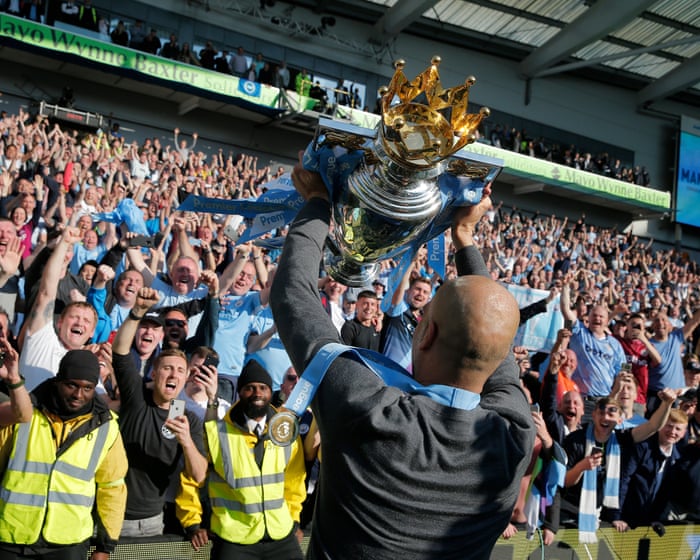
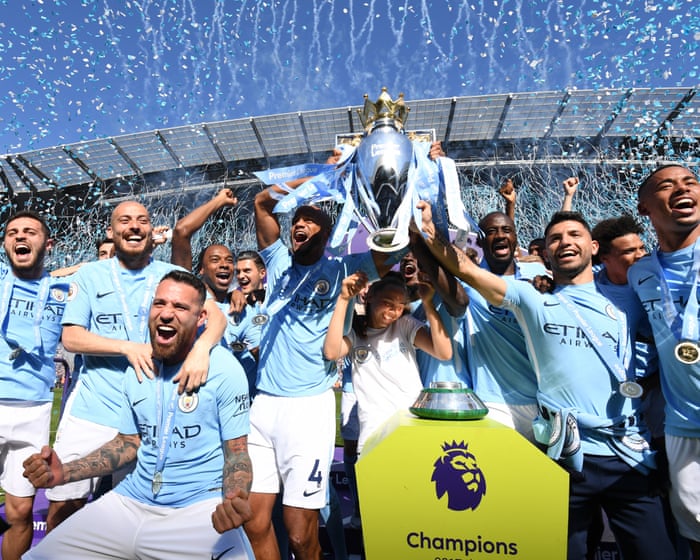
Guardiola had the wind entirely at his back at this point, sitting in the Wembley press room an hour after Manchester City’s 6-0 defeat of Watford in May 2019. Success drowns out every other noise in football. To be good is also to be good, noble, virtuous. History is written by the domestic treble winners. Right up until the moment it isn’t.
Manchester City have come out fighting against the guilty verdict but the Premier League faces questions of its own
Nothing is over, nothing is done. Or at least not judging by the bravura, balls-out confidence of Manchester City’s chair, Khaldoon al-Mubarak, who remains convinced the past three days of whiplash are simply the drumroll before the big reveal, prelude to some clinching piece of evidence that will swish away the initial finding of guilt on the Premier League’s 100-plus charges.
This appears to be the official City position right now. Rope‑a‑dope litigation. Scooby‑Doo justice. A verdict that is simply exposition, buildup to that moment where we finally get to rip off the zombie mask and reveal the cranky old amusement park owner underneath, with his bulging ring‑binder full of irrefutable evidence of City’s innocence.
Things started to go wrong against Spain at the same time they did against Argentina, but for very different reasons and with far more cause for optimism
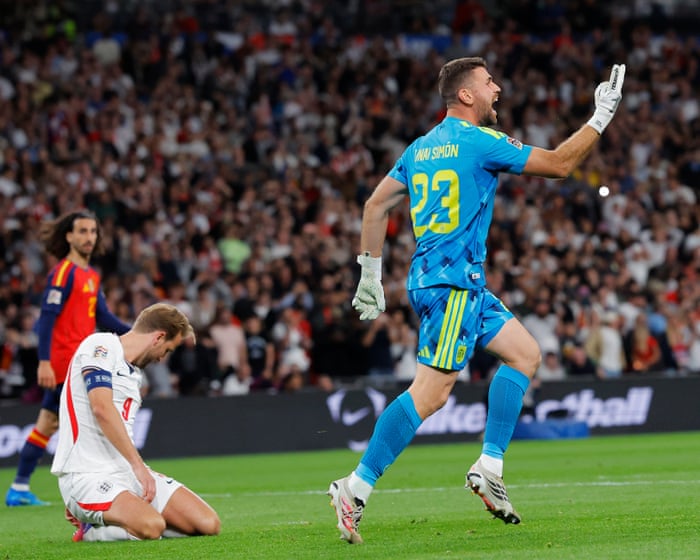
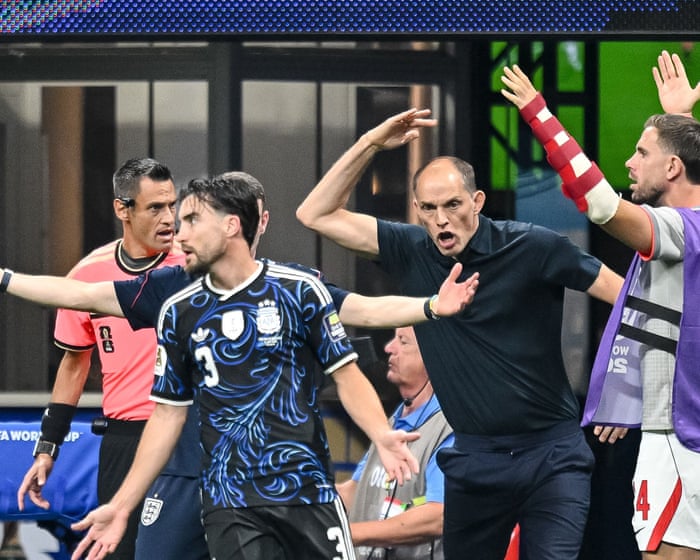
You could feel it inside the stadium, one of those moments where the air starts to shift, the birds fly backwards through the sky, and outside on Wembley Way an old man clutches his copy of the England Pathway Blueprint to his chest and cowers up at the moon. Welcome to the witching hour, 55 minutes in, when things just seem to happen to Thomas Tuchel’s England.
Before this Nations League opener there was general agreement on the desirability of systems, pattern, repeatability. And you can’t say England aren’t consistent. Their last two significant matches, here and in Atlanta in July, have both involved going a goal ahead against the World Cup finalists, playing well and dominating parts of the game, right up until the 55-minute mark.
Friday’s verdict against Manchester City will change everything we understood about their Premier League title triumphs
Welcome, then, to the age of asterisk. Whatever punishment Manchester City and their owners receive at the end of this process, the fact remains, everything is tainted now.
Overturn the tables, scatter the gold coins. Throw your medals in the bin. You cheated to win them. Whatever that thing was, it’s done. Stolen glory, stolen income, stolen joy. Every chant, every “we won the lot”, every awkward documentary scene about the deep, throbbing heart of this empire of love. It all looks odd, sinister, cold, sloppy, but also, and this is always the best response, utterly absurd.
Manager is not responsible for underlying weaknesses but there are reasons for optimism in the buildup to Euro 2028
In the end, Steve, Brian, Gaz or similar, he’s just not done the job he was hired to do. The job? The one he was hired to do? He’s not done it. How can I put this? There are three things here. The job. The being hired. The doing it. And him. Four things. And if you put those things together, there is no clear equation of … no linear semiotic cluster, he’s not, he’s just not, what I’m saying is …
How many times have you heard variations on this statement in the few short, tender weeks since England’s World Cup campaign? Perhaps you strayed too close to a sport-themed radio show, or accidentally ingested a celebrity football pundit podcast. Either way the verdict is pretty much universal, and delivered always with an air of finality, a sad shake of the head.
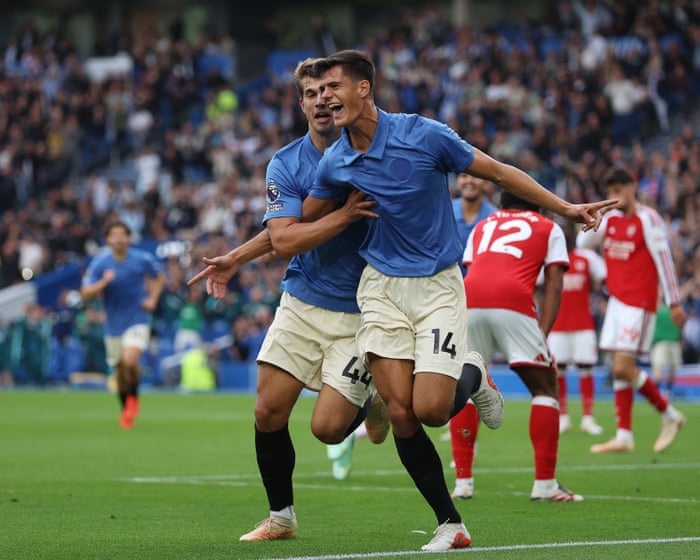
Brighton have impressed in a goal-laden start to the season, in a league that remains a brutally strong attraction
Get ready for the dopamine crash. And this one really is a proper autumn nosedive. The past 17 days up to and including Sunday’s cut-off gave us 30 Premier League games and 79 goals. Which, if you take Spurs out of it – and this is fair because Spurs are now post‑goal, an entertainment concept unrelated to goals or even football itself – is really quite a lot.
Are your pathways stimulated? Are the neural connectors flickering? Well get ready for cold turkey, for 19 blank days of shivers and shakes until the Premier League show resumes in October. Maybe it really is time to buy one of those powders off the internet.
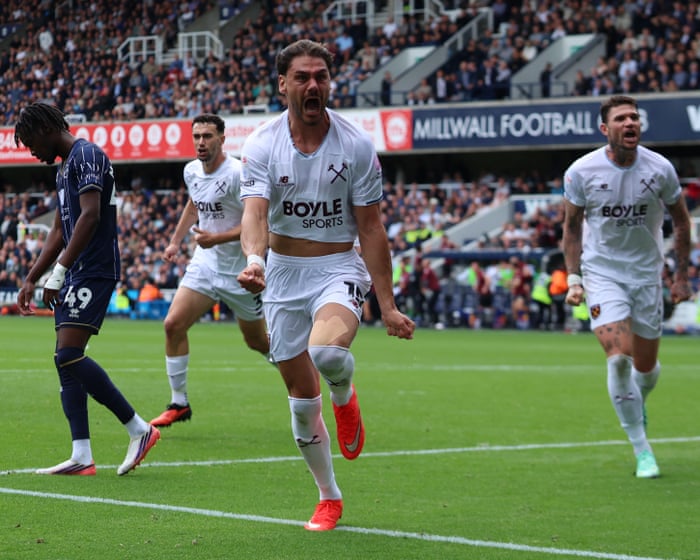
Welcome back, then, the Dockers Derby. We really must do this again. On a lovely soft September afternoon on the Bermondsey peninsula, watched by an outrage-ready media multiverse, something unexpected happened at the Den. A really good football match broke out.
Not wild or violent. No shameful scenes that nobody (trans: everybody) wants to see. Not in the stands or the streets at least: the only really sour note was an allegation of spitting against West Ham’s Taty Castellanos, which will now presumably be investigated.
This most modern and well-honed of footballers will not be able to escape the spotlight in an age of constant scrutiny but looks equipped to handle it
The poet Jorge Luis Borges wrote a famous short story about a society that had become so good at making maps, so obsessed with capturing every detail, that its rulers decided the only way to do the job right was to make a lifesize map of its entire empire, which could then be laid out across the actual land from coast to coast. Imagine a map of Britain the exact same size as Britain, showing every branch of Greggs, every nail bar, every vape shop in perfect detail. Only then can we really see what Britain looks like, by standing on a fake Britain laid over the top of actual Britain.
Borges was writing in the 1940s, at a time when people were fascinated by the mechanised future, with its new forms of measuring out the world: the wireless, the 30mph motorcar, the rise of Big Tape Measure. And to be fair, the mega-map is a pretty accurate vision of our own fully networked present, a place where you can snoop around a village in Mozambique from your laptop in Egham, where no one ever stops committing acts of minute self-surveillance, even if they think they’re just searching “What is beetroot?” on the internet.

 Anmelden