❌

Lese-Ansicht

Slovenia mourns loss of glacier on its highest peak after scorching summer

Extreme heat accelerated disappearance of Triglav glacier from mountain revered as a symbol of Slovenian identity

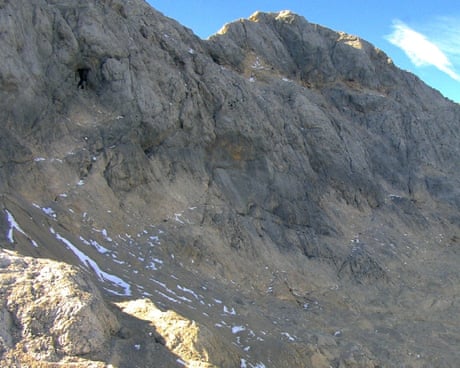
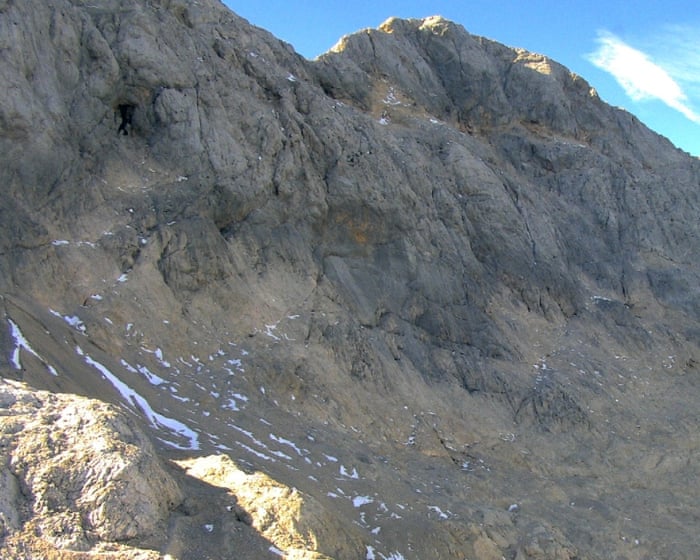
The final ice patch has vanished from Slovenia’s Triglav glacier, the latest Alpine casualty of Europe’s scorching summer.

The once mighty ice mass lost 93% of its surface area between 1983 and 2003, shrinking to cover less than a hectare of overheated rock, but went on to surprise researchers who feared its imminent demise, clinging on to the mountain for two more decades.

Continue reading...
© Photograph: Anton Melik Geographical Institute
© Photograph: Anton Melik Geographical Institute
© Photograph: Anton Melik Geographical Institute


  •  

Tinned mackerel, hand-crank radios and bags for poo: crisis-prepping guides around the world

UK allies have long urged people to stockpile supplies for a crisis. How are people from France to Australia being advised to prepare?

The UK has told people to fill their pantries with food for three days in case of catastrophe, joining a host of countries urging citizens to ready themselves for core systems failing.

Such advice, once dismissed as the preserve of preppers, has become more common in government circles as climate breakdown worsens weather extremes and geopolitical tensions turn cyber-attacks and sabotage into a regular occurrence.

Continue reading...

© Photograph: pundapanda/Getty Images

© Photograph: pundapanda/Getty Images

© Photograph: pundapanda/Getty Images

  •  

‘Crucial opportunity to act’ as study finds most of Europe’s wild bee species in decline

As Cop17 kicks off, records since 1921 show more bee species declining than increasing in all parts of Europe except the Alps

Most of Europe’s wild bee species and about half of its hover fly species have declined over the last century, a study has found, as a UN biodiversity summit begins in Armenia.

Records since 1921 show more bee species are declining than increasing in all parts of Europe except the Alpine region. The richness of bee and hover fly species suffered a persistent drop in the Atlantic and Continental regions, the study found, though trends in other regions were mixed or even positive.

Continue reading...

© Photograph: Niall Carson/PA

© Photograph: Niall Carson/PA

© Photograph: Niall Carson/PA

  •  

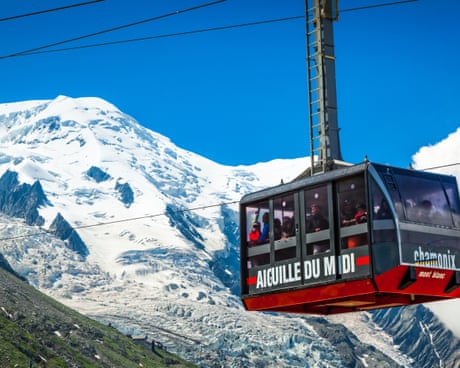
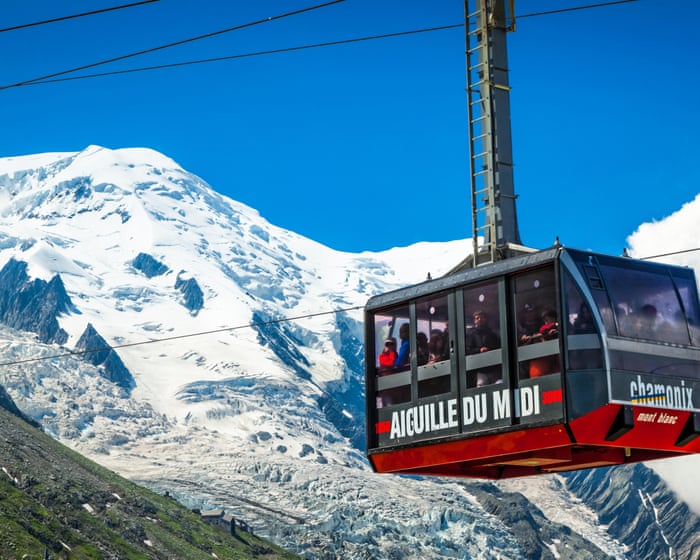
Mont Blanc, the ‘roof of Europe’, loses more than a metre of height in a year

Peak of French mountain now 4,807 metres high and fluctuates year by year due to changes in Alpine climate

Western Europe’s highest mountain shrank by more than a metre last year. The peak of Mont Blanc in France now stands 4,807.47 metres above sea level, a team of surveyors said on Wednesday, putting “the roof of Europe” 1.29 metres lower than in 2025.

The mountain is about 4,792 metres tall but the summit constantly shifts as heat, wind and precipitation change the thickness of snow and ice on top. The height scientists recorded during an expedition last month was 1.88 metres greater than it was in 2023, when it reached the lowest levels in recent memory.

Continue reading...

© Photograph: Design Pics Inc/Alamy

© Photograph: Design Pics Inc/Alamy

© Photograph: Design Pics Inc/Alamy

  •  

Carbon pollution has fuelled ‘massive expansion’ of marine heatwaves in Europe, study finds

Hottest periods this year in most sea regions would have been ‘virtually impossible’ in a preindustrial climate

Carbon pollution has fuelled a “massive expansion” of marine heatwaves in Europe this summer, research has found, with some waters recording temperatures 6C higher than normal.

The hottest fortnights of this year would have been “virtually impossible” in a preindustrial climate in three of the four sea regions studied, according to analysis by World Weather Attribution, while in the Celtic region, which covers much of the water around the British Isles, heat hit levels that used to strike just once a century.

Continue reading...

© Photograph: Anadolu/Getty Images

© Photograph: Anadolu/Getty Images

© Photograph: Anadolu/Getty Images

  •  

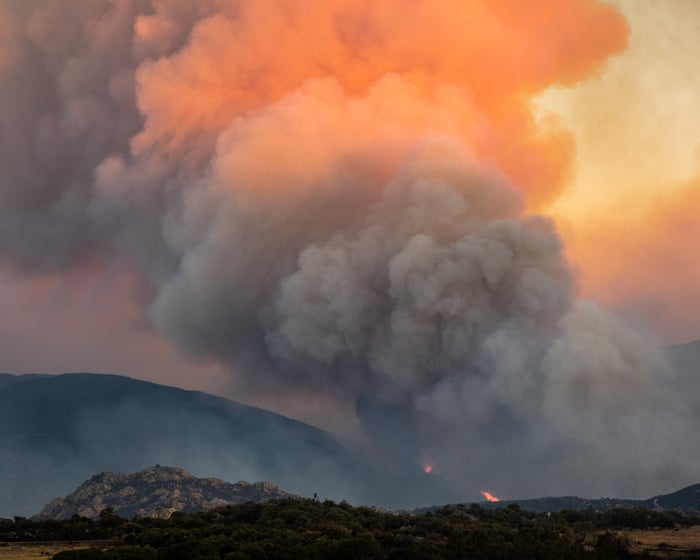
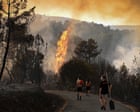
Record wildfires in Europe show failure to adapt carries a mounting cost

Scientists call for better land management alongside reduction in greenhouse gases causing the crisis

When storm after storm battered the Mediterranean at the start of the year, drowning fields and sending water spurting from plug sockets, few people were fretting about fires.

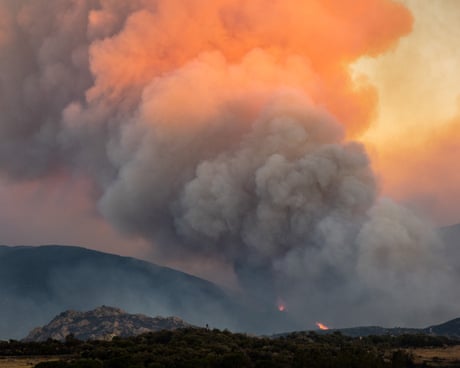
But just four months later, the murky brown floods that swamped towns and fouled homes across western Europe have given way to angry red blazes and choking black smoke. Rampant wildfires burned 28,000 hectares (69,160 acres) in France and 50,000 hectares in Spain as of 1 July, more than double the average for that time of year, and more land has been charred by bigger fires in the week since.

Continue reading...

© Photograph: Jc Milhet/AFP/Getty Images

© Photograph: Jc Milhet/AFP/Getty Images

© Photograph: Jc Milhet/AFP/Getty Images

  •  

‘But we’re just 1% of emissions’: do smaller countries’ climate efforts matter?

Past and present leaders of wealthy nations such as UK and Germany have argued their actions are insignificant

On first hearing, it is a position that sounds reasonable. “When our share of global emissions is less than 1%,” Rishi Sunak argued when he was the UK prime minister in 2023, “how can it be right that British citizens are now being told to sacrifice even more than others?”

Sunak is not the only world leader to have cited such figures while delaying cuts to pollution. In 2019, Scott Morrison, Australia’s then prime minister, used his country’s 1.3% of global emissions to reject any suggestion Australia was not “doing our bit” on climate breakdown. In July, the German chancellor, Friedrich Merz, pointed to his country’s 2% share of global emissions while supporting loopholes in European climate targets. A few months later the Italian prime minister, Giorgia Meloni, followed suit, flagging the EU’s 6% share.

Continue reading...

© Photograph: Bloomberg/Getty Images

© Photograph: Bloomberg/Getty Images

© Photograph: Bloomberg/Getty Images

  •  

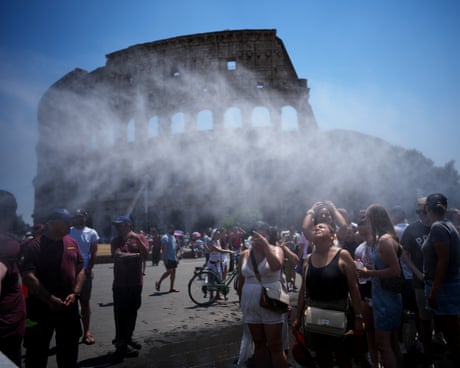
‘A sad inevitability’: after decades of climate warnings, why is Europe so unprepared for rising heat?

Scorching summer of 2003 triggered first efforts to deal with the problem but heatwaves still have devastating impact

On Wednesday, Pierre Masselot received a text from his daughter’s nursery – less than 50 miles from the weather station that was the first this week to break the UK June temperature record – asking parents to collect children early because the school buildings were about to get worryingly hot.

Similar scenes were repeated across Europe this week as the continent swelters through its most severe and widespread heatwave on record – an oppressive force made hotter by carbon pollution and less bearable by repeated failures to prepare for it. France experienced its hottest day and night on record, while the UK and Switzerland both broke their heat records for a June day.

Continue reading...

© Photograph: Andrew Medichini/AP

© Photograph: Andrew Medichini/AP

© Photograph: Andrew Medichini/AP

  •  

Adapting to the heat: four ideas from European cities

From checking on older neighbours to greening spaces, some cities are stepping up efforts to keep people safe

Extreme heat has seared Europe this week, with the UK smashing its top heat record for June for three days in a row, and France sweltering through its hottest day and night on record.

As fossil fuel pollution bakes the planet, making heatwaves hotter and longer, some places are adapting better than others. What have European cities done to stay safe when it gets too hot?

Continue reading...

© Photograph: Annice Lyn/Getty Images

© Photograph: Annice Lyn/Getty Images

© Photograph: Annice Lyn/Getty Images

  •  

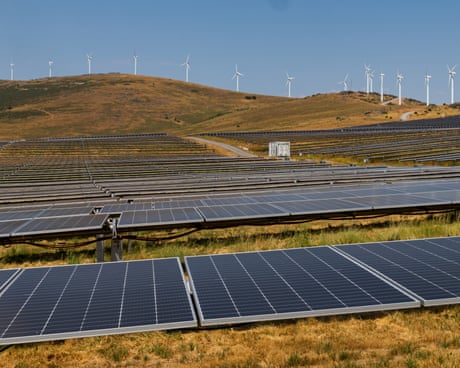
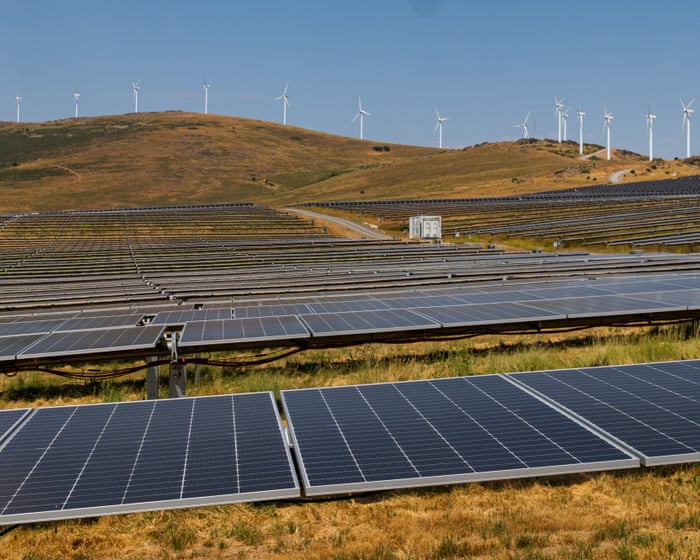
Spanish households save €10 a month thanks to renewables expansion, report finds

Thinktank says decoupling electricity from gas prices has also helped shield Spain from hikes caused by Iran war

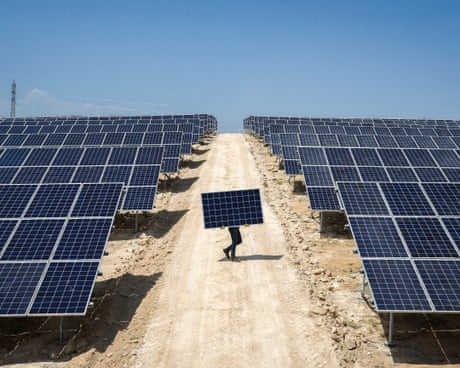
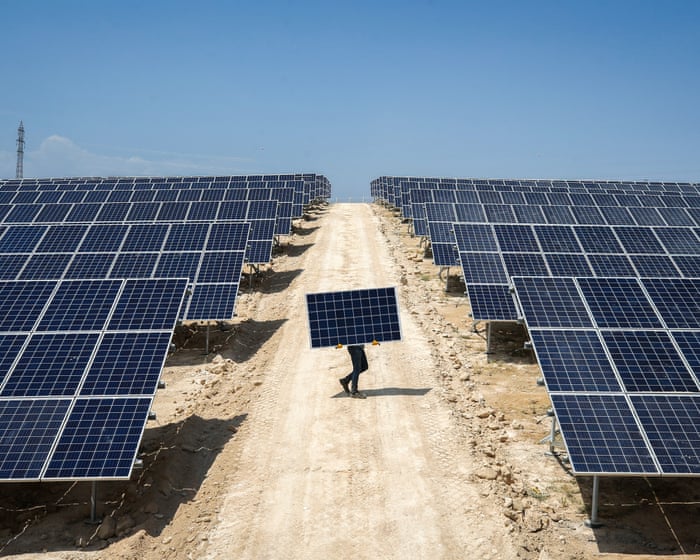
Spanish households save €10 a month on electricity bills because of wind turbines and solar panels installed in the last five years, a report has found.

Typical energy bills would be 19% more expensive if electricity costs were still as tightly coupled to gas prices as in 2021, according to Ember, a climate thinktank. It found Spain’s “strategic” expansion of renewables since Russia invaded Ukraine in 2022 has shielded Spanish households from the latest rises in fossil fuel prices caused by the Iran war.

Continue reading...

© Photograph: Bloomberg/Getty Images

© Photograph: Bloomberg/Getty Images

© Photograph: Bloomberg/Getty Images

  •  

​Why is Europe still not ready for extreme heat?

​The first heatwaves of the season reveal how ​ill-prepared governments across the continent are to protect people from increasingly dangerous temperatures

• Don’t get This Is Europe delivered to your inbox? Sign up here

Meteorological summer has begun, ushered in with scorching heat that struck before spring was up. Although western Europe is now mostly free from last week’s heat dome – which shattered temperature records for May in the UK and Ireland – it is already bracing for yet another sweltering summer. Oppressive days, restless nights and furious fires are brewing. On Tuesday, the World Meteorological Organisation warned us all to prepare for the imminent return of the warming weather pattern El Niño.

Scientists have not worked out how many people died during this latest bout of hot weather, but one environmental epidemiologist’s early modelling pegged it at 250 extra deaths in the UK alone on the weekend before temperatures peaked. The full death toll is likely to be particularly high because the heat struck before people had properly adjusted their behaviour to stay safe in the heat.

Continue reading...

© Photograph: Simon Wohlfahrt/AFP/Getty Images

© Photograph: Simon Wohlfahrt/AFP/Getty Images

© Photograph: Simon Wohlfahrt/AFP/Getty Images

  •  

Prepare for imminent return of El Niño, UN warns

UN agency predicts phenomenon that supercharges weather extremes has 80% chance of forming before September

The world must prepare for the imminent return of El Niño and the supercharged weather extremes it brings, the UN has warned.

The powerful natural weather pattern, which raises global temperatures and worsens some rainfall, has an 80% chance of forming before September and a 90% chance before November, the World Meteorological Organization (WMO) said on Tuesday.

Continue reading...

© Photograph: Kevin Herbian/NurPhoto/Shutterstock

© Photograph: Kevin Herbian/NurPhoto/Shutterstock

© Photograph: Kevin Herbian/NurPhoto/Shutterstock

  •  

‘Mind-bogglingly crazy’: climate experts alarmed by deadly spring heatwaves searing Europe

Scientists warn of ‘new reality’ of heat extremes that claim three times more lives than car crashes and 16 times as many as murderers

Malcolm Mistry knew it was going to get “very warm, very quickly” on Monday morning but a slow start out of bed delayed his plans for an early game of cricket with his son. It was already 10am by the time the pair arrived at the sun-soaked nets of their local club in south-west London, and to the embarrassment of the 48-year-old scientist, who played cricket in his youth, his body was struggling after just half an hour of bowling.

Had he continued for another hour, Mistry reckons he would have probably suffered from heatstroke. Had he and his son stayed until noon, they would have found themselves straining their bodies in direct sunlight while a nearby weather station logged the UK’s hottest May temperature since records began.

Continue reading...

© Photograph: Alice Sacco/Reuters

© Photograph: Alice Sacco/Reuters

© Photograph: Alice Sacco/Reuters

  •  

UK records its hottest ever day in May as temperature hits 34.8C

Scientists say record-breaking heat is a reminder of how climate crisis is affecting lives

The fierce heat sweeping across Europe over the bank holiday weekend has beaten the UK’s all-time temperature record for May, with scorching highs of close to 35C.

A temperature of 33.5C was recorded at Heathrow airport on Monday lunchtime, according to provisional data from the Met Office, beating the previous May record that was set in 1922 and reached again in 1944. Later in the afternoon a temperature of 34.8C was recorded at London’s Kew Gardens.

Continue reading...

© Photograph: Isabel Infantes/Reuters

© Photograph: Isabel Infantes/Reuters

© Photograph: Isabel Infantes/Reuters

  •  

Inequality causing 100,000 extra deaths a year from heat and cold in Europe

Findings come after third-hottest April on record globally and amid fears of more brutal European summer weather

Economic inequality adds more than 100,000 deaths to the vast toll from heat and cold in Europe each year, research has found.

Cutting levels of inequality to match that of Europe’s most equal region, Slovenia, as measured by the Gini index, would reduce temperature-related mortality by as much as 30%, equating to 109,866 people, the study found.

Continue reading...

© Photograph: Miguel Riopa/AFP/Getty Images

© Photograph: Miguel Riopa/AFP/Getty Images

© Photograph: Miguel Riopa/AFP/Getty Images

  •  

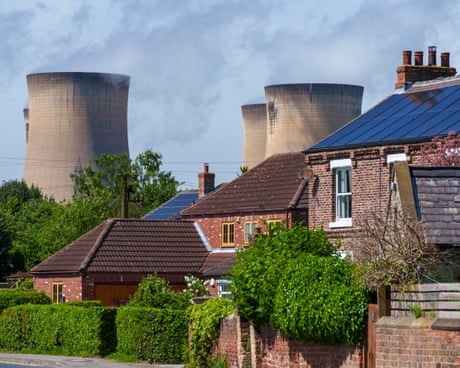
Turkey to race ahead of EU on battery storage amid fossil fuel crisis

More than 33GW of battery capacity approved for Turkish grid since 2022 compared with 12-13GW in Germany

Turkey has given the green light to more batteries to buffer its electricity grid than any EU member state, a report has found, in a further sign of rich countries losing steam in the race to a clean economy.

More than 33GW of battery capacity have been approved in Turkey since 2022, according to the climate thinktank Ember, while the total planned and operational capacity in European frontrunners that started deploying them earlier, such as Germany and Italy, is 12-13GW.

Continue reading...

© Photograph: Anadolu Agency/Getty Images

© Photograph: Anadolu Agency/Getty Images

© Photograph: Anadolu Agency/Getty Images

  •  

In Europe, lobbyists are using soaring fuel prices to make the case for more dirty energy

The argument for transitioning to renewables seems stronger than ever – and yet, attacks mount on the carbon price scheme that underpins the EU’s success at cutting pollution

• Don’t get This Is Europe delivered to your inbox? Sign up here

On the one hand, experts say, Europe is better prepared for this energy crisis than the last. On the other, it is still waging a culture war against the most obvious path out.

Fuel prices have soared to ruinous levels since the Iran war left ships of oil and liquefied natural gas (LNG) stranded in the Gulf. The pain is most acute in Asia, but high energy prices are already causing panic in Europe. Shortages could hit the continent this month, oil company Shell warned last week. Donald Trump’s “go get your own oil” comments on Tuesday sent prices to their highest level since the start of the US-Israel attack on Iran. They briefly dipped below $100-a-barrel on Wednesday amid hopes that the war may soon end.

Continue reading...

© Photograph: Sean Gallup/Getty Images

© Photograph: Sean Gallup/Getty Images

© Photograph: Sean Gallup/Getty Images

  •  

‘Tempolimit? Nein, danke!’: why German petrolheads won’t slow down – despite the energy crisis
Driving fast is in ‘the German DNA’, say lovers of the speed-limit free Autobahn, but support in the country for a restriction is growing

Death-defying thrills are not what draws Lutz Leif Linden to zip down the Autobahn faster than a plane taking off. Instead, the feeling of freedom and an appreciation of technological mastery play a part in his “almost loving relationship” with driving cars faster than most people can imagine.

The top speed he has reached on the road in Germany, the world’s only democracy without a blanket speed limit on motorways, is 400km/h (249mph). “It’s like an airplane,” said Linden, the president of the Automobile Club of Germany (AvD). “You are faster than an Airbus at start.”

Continue reading...

© Photograph: filmfoto/Alamy

© Photograph: filmfoto/Alamy

© Photograph: filmfoto/Alamy

  •  

Europe’s ‘staggering’ clean power gains undermined by failure to phase out fuel-burning machines

The EU’s reluctance to replace petrol cars and gas boilers keep it hooked on foreign fuels, say industry groups

Europe has made “staggering progress” in producing clean power but neglected efforts to phase out fuel-burning machines, the head of an industry group said as the global oil crisis deepens.

Adrian Hiel, director of the Electrification Alliance, said the EU has “radically transformed” its power supply and must now focus on getting “more electricity into the stuff we use every day”.

Continue reading...

© Photograph: Pascal Rossignol/Reuters

© Photograph: Pascal Rossignol/Reuters

© Photograph: Pascal Rossignol/Reuters

  •  

Humanity heating planet faster than ever before, study finds

Researchers identify sharp rise to about 0.35C every decade, after excluding natural fluctuations such as El Niño

Humanity is heating the planet faster than ever before, a study has found.

Climate breakdown is occurring more rapidly with the heating rate almost doubling, according to research that excludes the effect of natural factors behind the latest scorching temperatures.

Continue reading...

© Photograph: Jae C Hong/AP

© Photograph: Jae C Hong/AP

© Photograph: Jae C Hong/AP

  •  
❌