❌

Lese-Ansicht

One thing must now be clear to Andy Burnham. The rightwing press is on a war footing – and he’s the enemy | Jane Martinson

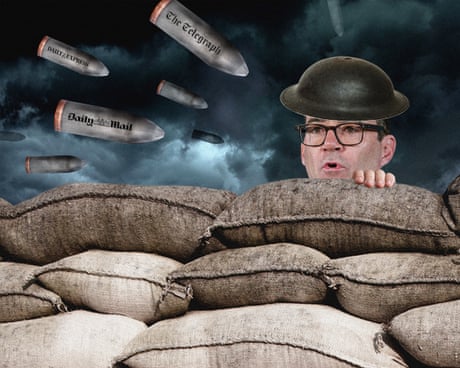
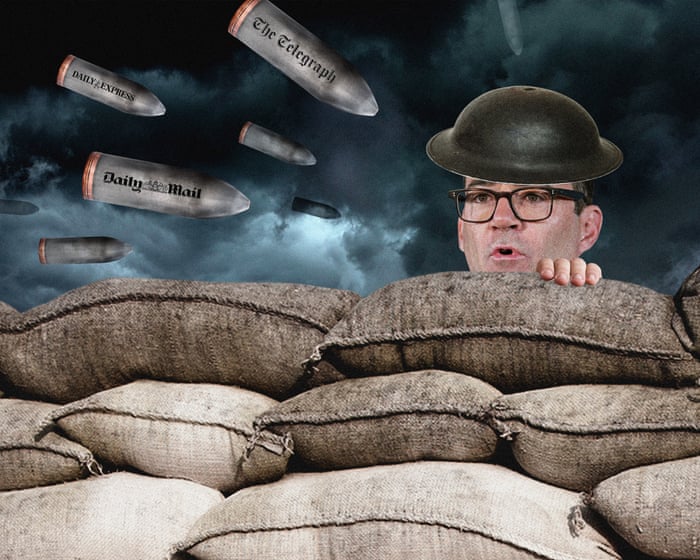
Farage was its champion, now it’s Badenoch – and the aim is the PM’s defeat at all costs

While the merits of a so-called Britannia shield to protect Britain from missiles and drones are debatable, the Conservatives’ proposal did achieve one thing last week: the very idea of the shield was used to anoint a political leader.

In a significant development, little observed amid the hullaballoo of news events, Kemi Badenoch’s uncosted, pie-in-the-sky plans to build a £10bn anti-missile system were enthusiastically heralded by the rightwing press. It was not just a matter of the plans themselves being lauded, even by outlets that must know them to be ridiculous. More significant is what it said about the champion chosen by these media organisations in their offensive against the Labour government and Andy Burnham.

Jane Martinson is an academic and Guardian columnist. She is a board member of the Scott Trust, which owns the Guardian Media Group, and writes in a personal capacity

Continue reading...

© Illustration: Guardian Design/Anaïs Mims/Guardian Design
© Illustration: Guardian Design/Anaïs Mims/Guardian Design
© Illustration: Guardian Design/Anaïs Mims/Guardian Design

  •  

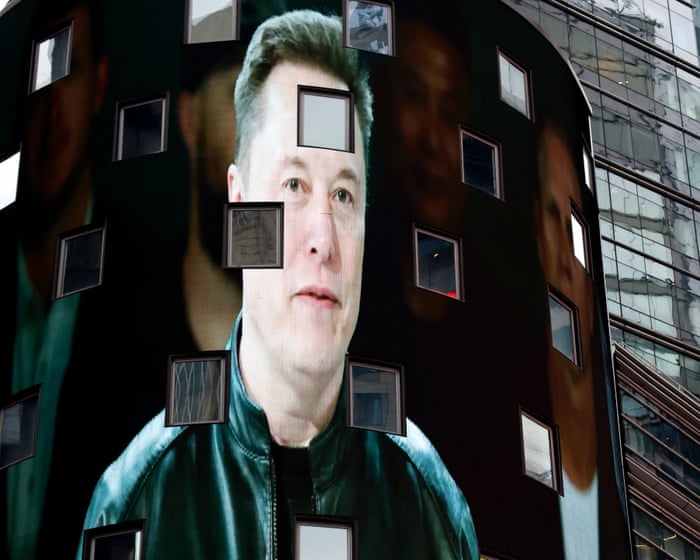
In the battle of Elon Musk v the press, we can’t let truth be the loser | Jane Martinson

The trillionaire Tesla owner has called the editor of the Economist a ‘traitor to the west’ after a clash-filled interview. How should the media respond?

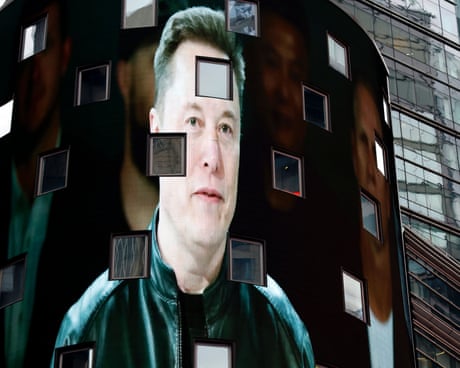
Elon Musk’s long interview with the editor of the Economist is as good a representation as any of the current clash between two worlds. In one corner, the editor of an 182-year-old news organisation which promotes economic liberalism and freedom. In the other, the world’s first trillionaire, who spreads misinformation to his hundreds of millions of followers on his own social media platform. The bout is a masterclass in the challenges journalists face in a new world of AI, fact avoidance and online aggression.

The flash points in Zanny Minton Beddoes’ conversation with Musk start with definitions. Musk says that the people Minton Beddoes calls “far-right” and “fringe” (she mentions Germany’s AfD party) are in fact just “normal people”. They clash over whether the speed of his cuts to USAID led to unnecessary deaths in developing countries – she believes his claim that it didn’t defies not only statistics but the evidence from her reporters on the ground. Asked if he is racist, he cites the fact he has four children with a woman who is “half Indian”. In an awkward exchange, when asked by Minton Beddoes whether he is anti-Muslim, Musk says he is against “people coming to a country with antithetical views … I’m against rape and murder.”

Jane Martinson is a Guardian columnist. She is a board member of the Scott Trust, which owns the Guardian Media Group. As the Marjorie Deane professor of financial journalism at City St George’s, University of London, she has a connection through a charitable foundation to Zanny Minton Beddoes, who is chair of trustees. She writes in a personal capacity

Do you have an opinion on the issues raised in this article? If you would like to submit a response of up to 300 words by email to be considered for publication in our letters section, please click here.

Continue reading...

© Photograph: John Angelillo/UPI/Shutterstock

© Photograph: John Angelillo/UPI/Shutterstock

© Photograph: John Angelillo/UPI/Shutterstock

  •  

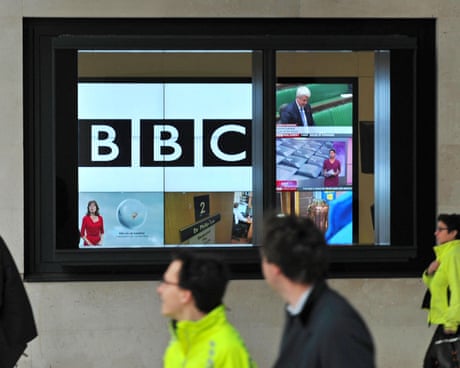
The BBC could be our best weapon against Trump, Musk and fake news. Here’s how that could work | Jane Martinson

A dynamic new strategy would allow the BBC to redefine what trusted news means, as it is still valued highly in this age of anxiety

Timing is all, and the timing of last week’s brutal job cuts at the BBC News could have been better. Not just because the director general Matt Brittin was reportedly on holiday, but because the announcement came straight after a new report showed social media platforms and AI chatbots had now overtaken traditional TV channels and websites as people’s first port of call for news.

The same Reuters Institute for the Study of Journalism report also noted higher levels of global uncertainty and anxiety – caused not just by geopolitical instability, economic and environmental fears, but by a loss of trust in institutions, and in the news itself.

Jane Martinson is a Guardian columnist

Continue reading...

© Photograph: Carl Court/AFP/Getty Images

© Photograph: Carl Court/AFP/Getty Images

© Photograph: Carl Court/AFP/Getty Images

  •  

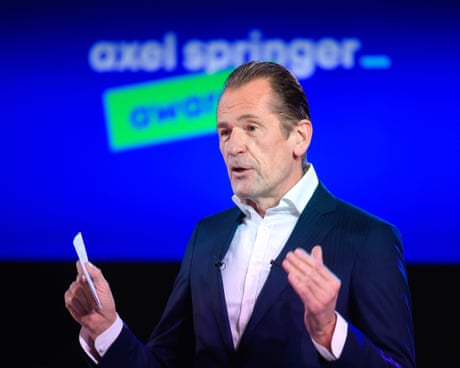
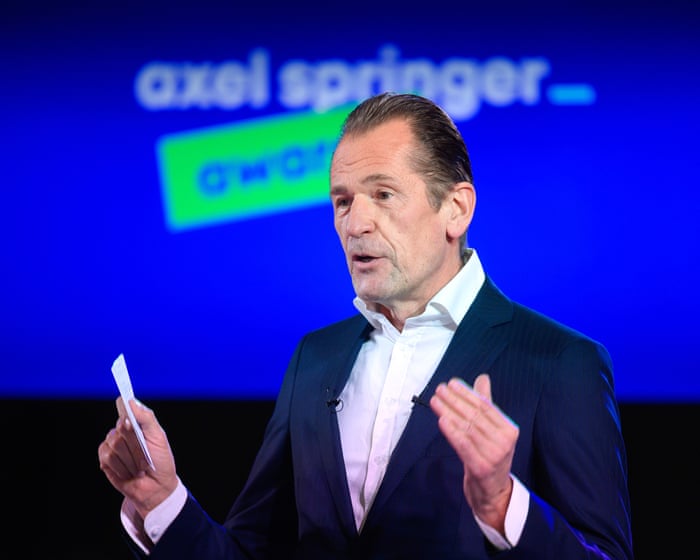
Will the Telegraph’s new owner curb its wilder excesses – or make them worse? | Jane Martinson

Mathias Döpfner beat the Mail to seize a British institution. But whether he will be a sobering or malign influence is not yet clear

After fighting off one foreign takeover, staff at the paper that broke the news of the second world war might have been expected to react badly when meeting their potential new German owners on Monday. Instead, journalists at the Telegraph felt “optimistic”, “enthusiastic” and even “cautiously pleased” – one called a takeover by media conglomerate Axel Springer the “best possible outcome”.

The reason for this Panglossian response is partly hope that Axel Springer and its boss, Mathias Döpfner, might genuinely be keen on journalism, and partly exhaustion at the end of a wildly convoluted three-year takeover battle. The fight says a lot about the state of the print news business – upended by technological and economic headwinds yet still seen as an attractive bauble for rich power players and important as a home for journalism. For how much longer this persists could well depend on what Axel Springer and its part-owner and boss Döpfner do with it.

Continue reading...

© Photograph: Bernd von Jutrczenka/EPA

© Photograph: Bernd von Jutrczenka/EPA

© Photograph: Bernd von Jutrczenka/EPA

  •  

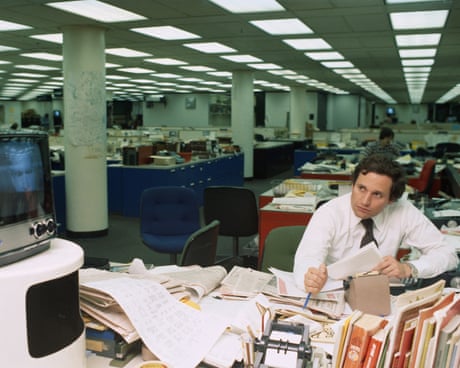
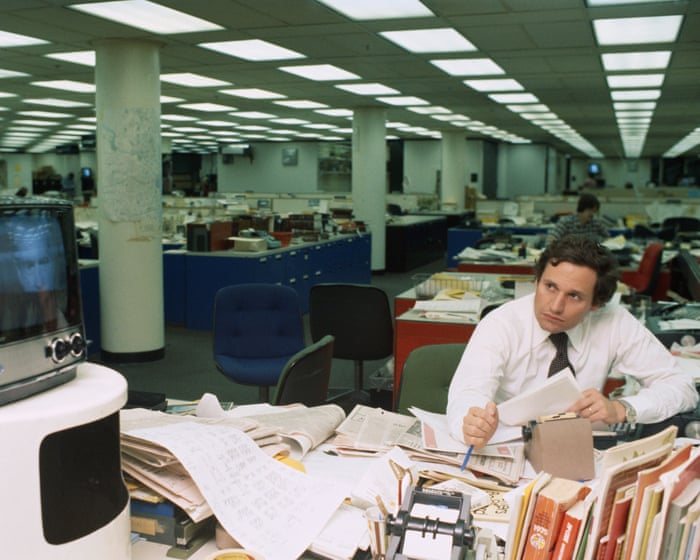
Learn this from Bezos and the Washington Post: with hypercapitalists in charge, your news is not safe | Jane Martinson

His shameful stewardship of a once great title highlights how much we lose when private interest eclipses the public good

Not long after being made Time magazine’s Person of the Year in 1999, Jeff Bezos told me: “They were not choosing me as much as they were choosing the internet, and me as a symbol.” A quarter of an increasingly dark century later, the Amazon founder is now a symbol of something else: how the ultra-rich can kill the news.

Job cuts in an industry that has struggled financially since the internet came into existence and killed its business model is hardly new, but last week’s brutal cull of hundreds of journalists at the Bezos-owned Washington Post marks a new low. The redundancies that were announced to staff on a video call, the axing of half its foreign bureau (including the war reporter in Ukraine) – not since P&O Ferries have layoffs been handled so badly. Former Post stalwart Paul Farhi described a decision that affected nearly half of the 790-strong workforce as “the biggest one-day wipeout of journalists in a generation”.

Continue reading...

© Photograph: Wally McNamee/Corbis/Getty Images

© Photograph: Wally McNamee/Corbis/Getty Images

© Photograph: Wally McNamee/Corbis/Getty Images

  •  

It was lethal to be in Gaza this year, and deadly for those who tried to tell the world | Jane Martinson

The Al Jazeera reporter Anas al-Sharif was the most prominent name among so many targeted for simply bearing witness to the truth

In January this year, Anas al-Sharif was filmed being lifted into the air after taking off his helmet and flak jacket to celebrate a ceasefire that would prove all too temporary in Gaza. This summer, the Palestinian journalist broke down while reporting on starvation in his home town that is now a war zone. A bystander told him: “Persist, Anas, you are our voice”.

But al-Sharif’s popularity in Gaza made him a target. In July, international agencies warned of the danger he was in as the Israel Defense Forces stepped up online attacks, falsely labelling him a Hamas terrorist. His employer, Al Jazeera, insisted he restrict his reporting to the more protected al-Shifa hospital after his father and many colleagues were killed. In August, a few months short of his 29th birthday, al-Sharif and six others were killed in a direct attack on a media tent next to the hospital. In a posthumous post he said: “If these words reach you, know that Israel has succeeded in killing me and silencing my voice.”

Jane Martinson is professor of financial journalism at City St George’s and a member of the board of the Scott Trust, which owns the Guardian Media Group. She writes in a personal capacity

Do you have an opinion on the issues raised in this article? If you would like to submit a response of up to 300 words by email to be considered for publication in our letters section, please click here.

Continue reading...

© Photograph: Stephanie Keith/Getty Images

© Photograph: Stephanie Keith/Getty Images

© Photograph: Stephanie Keith/Getty Images

  •  
❌