❌

Lese-Ansicht

If Mikel Arteta’s dossier is part of a deliberate strategy, it is a dangerous one for Arsenal | Jonathan Wilson

The manager is not yet in Alex Ferguson and José Mourinho’s league, but his conspiracy theories have reached new levels

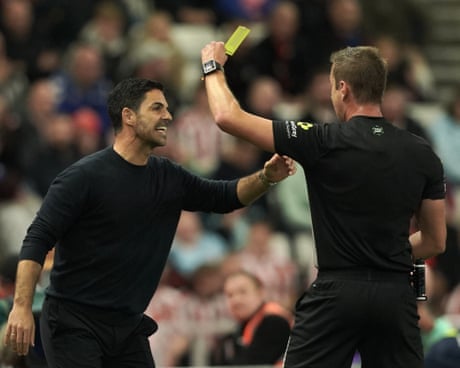
English football loves the word “dossier”. It doesn’t love dossiers themselves, of course; they’re for nerds – unless, that is, they’re a “secret dossier”, which have a thrilling redolence of spy dramas, invisible ink and dead drops. Non-secret dossiers, though, are inherently risible: call something a “dossier” in English football and you’re immediately signalling: this is absurd poindextering. Dossiers were preposterous when Don Revie was – imagine the pretension! – drawing up scouting reports on opposing players, and they are preposterous today as Mikel Arteta collates images of rival managers stepping outside their technical area.

Arteta, it should be said, did not use the word “dossier”; rather it was swiftly applied to what he had called “a massive storage of images”. During Arsenal’s 2-0 win against Everton last Saturday, he received his second booking of the season for leaving his technical area. This, it turns out, is another part of the vast conspiracy against Arsenal. Yes, Arteta accepted, he left his technical area (44 times before being booked, according to the former referee Graham Scott), but other managers do it too. “There are managers who have the record in the league, 36 times in 10 minutes [they] leave the touchline – no yellows,” he said. “I am clipping all of that … so if somebody comes to me I can say: ‘I am not in the record yet.’ Somebody else has the record so let’s see. Then it’s 36 yellow cards in 10 minutes for the managers.”

Continue reading...
© Photograph: Ian Hodgson/AP
© Photograph: Ian Hodgson/AP
© Photograph: Ian Hodgson/AP

  •  

The horse that ushered in Manchester United’s tragic arc | Jonathan Wilson

There’s plenty of blame to go around at Old Trafford. Like all downfalls it started with a seemingly small, unconnected moment

And so here we are again, at that point as the nights draw in and Manchester United prepare to sack a manager. Autumn: season of mists, mellow fruitfulness and a crisis at Old Trafford. Sunday’s 3-0 home defeat to Bournemouth, coming on the back of last week’s 4-1 reverse against Como, made clear what many had feared from the moment Michael Carrick was given the job on a permanent basis: that he isn’t up to it.

But then, who could be? When you’ve burned through a long list of managers in 13 years, it’s perhaps worth considering whether the manager is really the problem. Could some blame perhaps go to the director of football, Jason Wilcox, or the chief executive, Omar Berrada, the people making the appointments? Or perhaps to Sir Jim Ratcliffe, the cost-cutting tax exile and minority shareholder with responsibility for sporting operations? Or to the Glazer family, who plunged the club into debt with a leveraged buyout in 2005 and have since made calamitous decision after calamitous decision, reducing the most successful club in English league history to a mid-table laughing stock with a roof that leaks symbolically?

This is an extract from Soccer Desk, a newsletter from the Guardian US. Subscribe for free here.

Continue reading...

© Composite: Guardian Design, Getty Images

© Composite: Guardian Design, Getty Images

© Composite: Guardian Design, Getty Images

  •  

Osula and Barnes strike as Newcastle pile pressure on lacklustre Palace

The first half was dreadful. The pass completion rate was a meagre 72.8%, although it felt lower. There were only two shots on target. The sun kept popping out from behind the clouds to take a look, and then going back in again, appalled. And the really bad news for Crystal Palace is that, for them, that was the good bit.

Newcastle were much improved after the break. Will Osula touched in a Jacob Murphy cross two minutes after half-time, Joe Willock had an effort ruled out for a marginal offside five minutes later, and Harvey Barnes completed a slick passing move six minutes after that. A smattering of boos from the home fans made clear what everybody already knew. Quarter of an hour of proper football had been enough to win the game, and that leaves Pierre Sage under significant pressure.

Continue reading...

© Photograph: Tom Jenkins/The Guardian

© Photograph: Tom Jenkins/The Guardian

© Photograph: Tom Jenkins/The Guardian

  •  

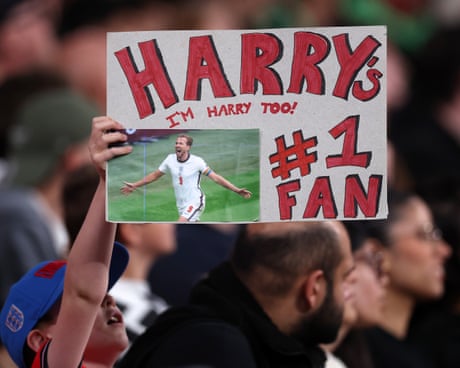
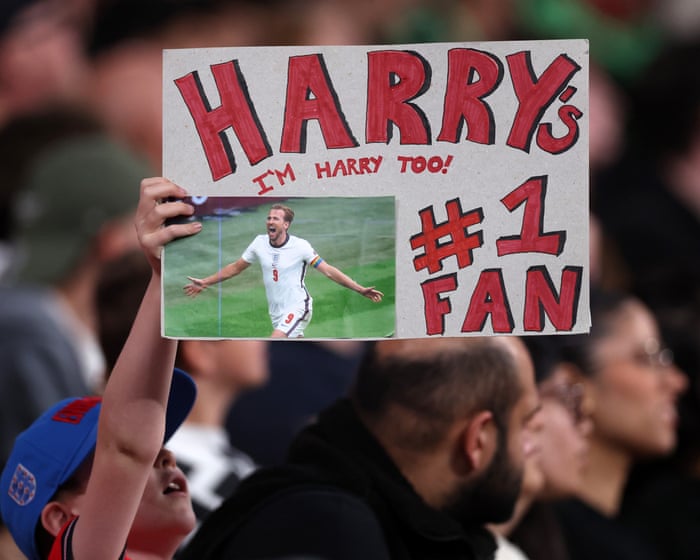
Why Stanley Matthews’ Ballon d’Or triumph echoes down the years for Harry Kane | Jonathan Wilson

In 1956, the Blackpool great was recognised for his force of individual will, the very thing that makes the Bayern and England striker the standout candiate

Systems football began In 1963
(On the hallowed turf at Wembley)
With the impact of a cynical foul
By Gino Pivatelli.

At that moment in the European Cup final, when the hard-working Milan forward, brought in to combat Benfica’s Mário Coluna, caught the great playmaker, football of the individual came to an end. The foul not only checked a promising break, but broke a bone in Coluna’s foot. Without substitutes, he hobbled on, diminished, and Milan won 2-1 to lift the trophy and register the first victory for a team that prioritised the system over the individual. Modern football was born.

Continue reading...

© Photograph: Catherine Ivill/AMA/Getty Images

© Photograph: Catherine Ivill/AMA/Getty Images

© Photograph: Catherine Ivill/AMA/Getty Images

  •  

Brighton are the apex B club – their next target should be a Champions League place | Jonathan Wilson

Diego Gómez’s wondergoal in a five-star demolition is just the latest in an impressive run of results for the south coast team

For two or three years now, it’s been standard to nod approvingly at how well-run Brighton, Brentford and Bournemouth are, and to move on. What else is there to say? It’s true, of course – these are sides who have made the most of relatively limited resources. But there’s also an underlying assumption in the designation: that these are clubs who have no higher aspiration, that their limit is earning praise for upper mid-table finishes.

This season, perhaps, offers an opportunity to change that. Other than Arsenal, every major club is undergoing significant transition. Manchester City may have started the season with seven straight wins, but there’s every chance the punishment for their multiple breaches of Premier League regulations takes them out of the race for the top five. In that context, why shouldn’t one of those efficient smaller sides qualify for the Champions League?

Continue reading...

© Composite: Guardian Pictures (via Getty / REX)

© Composite: Guardian Pictures (via Getty / REX)

© Composite: Guardian Pictures (via Getty / REX)

  •  

Europe is a blast – but more a curse than a blessing if you are not a Premier League super-club I Jonathan Wilson

The four Premier League clubs playing in the lesser continental competitions face each other on Sunday – but three are struggling domestically

The sun shone. The temperature was in the high 20s. There was a mood of great conviviality. If you were struggling with the official allocation, it turned out you could just email the president of Torreense and he’d sort you out. Were these “Nuno-tickets” real? It turned out they were. Not only that, but you could sit anywhere you wanted in a stadium too big for the game and, if you happened to have gravitated to the comfortable hospitality seating at the back of the lower tier, the beer was inexplicably free.

Locals in Leiria seemed bewildered but could hardly have been more accommodating. A beer pump had been installed outside a patisserie on the Praça Francisco Rodrigues Lobo, whose owner soon found fans happy to help stack empty barrels if that facilitated the free flow of Sagres. “There was a meeting at the town hall to explain these are not hooligans,” said the owner of a radical leftist flammkuchen restaurant between the square and the cathedral. “They told us the club comes from the labour movement and I found that very interesting.” And how had she found the fans? “Noisy, but with a quirky sense of humour.”

Continue reading...

© Photograph: Octávio Passos/UEFA/Getty Images

© Photograph: Octávio Passos/UEFA/Getty Images

© Photograph: Octávio Passos/UEFA/Getty Images

  •  

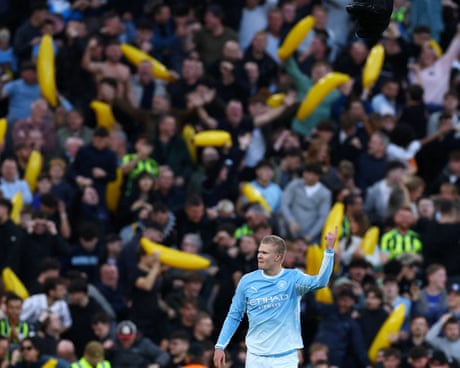
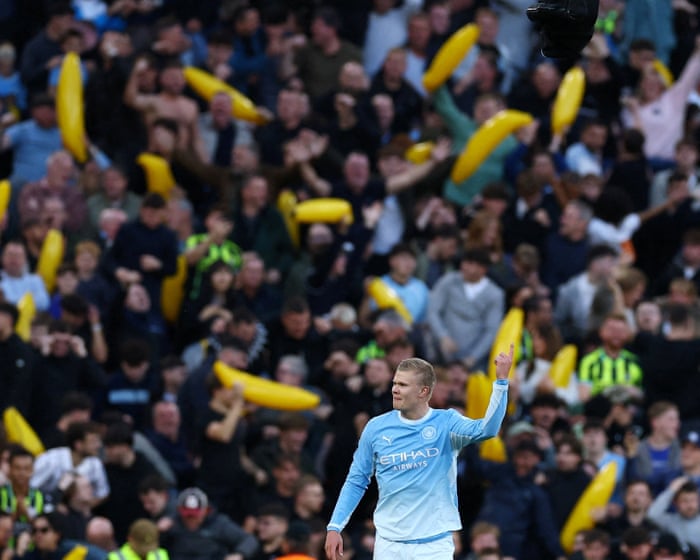
Winning is not enough for Manchester City to move on from this crisis | Jonathan Wilson

It’s not just that the club’s recent charges themselves are unprecedented – it’s the language used to describe them too

The language of football is a fine and highly nuanced dialect. The majority of people involved in the game speak it with a high degree of sophistication. Minor deviations from the familiar, almost imperceptible to outsiders, can set off alarm bells: what’s really going on there? Why isn’t he happy? What’s she hinting at? But it’s an argot developed to talk about football, and when applied to other subjects, it can sound extremely jarring.

Erling Haaland is one of the brighter, more engaging players. There’s an appealing quirkiness to him that suggests he has a higher-than-usual level of self-awareness. He doesn’t mind stepping outside the norms, being a bit different. But consider his assessment of Manchester City’s 3-0 win at Liverpool on Sunday.

Continue reading...

© Composite: Guardian Design, Getty Images

© Composite: Guardian Design, Getty Images

© Composite: Guardian Design, Getty Images

  •  

Premier League returns in shadow of Manchester City’s judgment day | Jonathan Wilson

Football felt secondary on the first weekend of action since club were found guilty of breaking financial rules

The Cimbri are heading menacingly south, but in Rome life goes on. The asteroid is definitely coming this way, but people go to work, eat, drink, plan as usual. The White Walkers are approaching the Wall, but the squabbles between the great houses go on. Everyone in the Premier League knows the crisis is approaching, thinks – hopes, fears? – it may be apocalyptic, but until it arrives, what can you do but carry on?

After any break, there’s always an awkward moment while everybody resets. What was the cliffhanger we left the soap opera on? What new plotline had just been seeded? This is one of the reasons international weeks are so disruptive. It’s not just that the Premier League story slows for a while, it’s that we are reminded that these entities are not eternal but alliances of convenience between paid employees who have a life outside the soap opera.

Continue reading...

© Photograph: Phil Noble/Reuters

© Photograph: Phil Noble/Reuters

© Photograph: Phil Noble/Reuters

  •  

Why we’re stuck with a Premier League in the clutches of the global mega-rich | Jonathan Wilson

There’s little prospect of the model changing in a country that welcomes wealthy international owners with open arms

Football, the world’s most popular sport, played by laws drawn up in London in 1863. The Premier League is the UK’s greatest soft power export. Premier League clubs are owned by a deputy prime minister of Abu Dhabi, the public investment fund of Saudi Arabia, a billionaire based in Monaco for tax reasons and a disappointing assortment of investors and private equity funds. And what, really, could be more British than that? Football truly is the national game.

What the Manchester City case has exposed is just how difficult it is to regulate some of the richest and most powerful bodies in the world. While the wait for the verdict was frustrating, it was perhaps unavoidable given the possibility of legal objection at every turn when a leaked email from City’s in-house lawyer during Uefa’s action against the club had threatened to “spend 30 million on the 50 best lawyers in the world to sue them for the next 10 years”. You didn’t get that with Albert Alexander Sr or Peter Swales.

Continue reading...

© Photograph: Ed Sykes/Action Images/Reuters

© Photograph: Ed Sykes/Action Images/Reuters

© Photograph: Ed Sykes/Action Images/Reuters

  •  

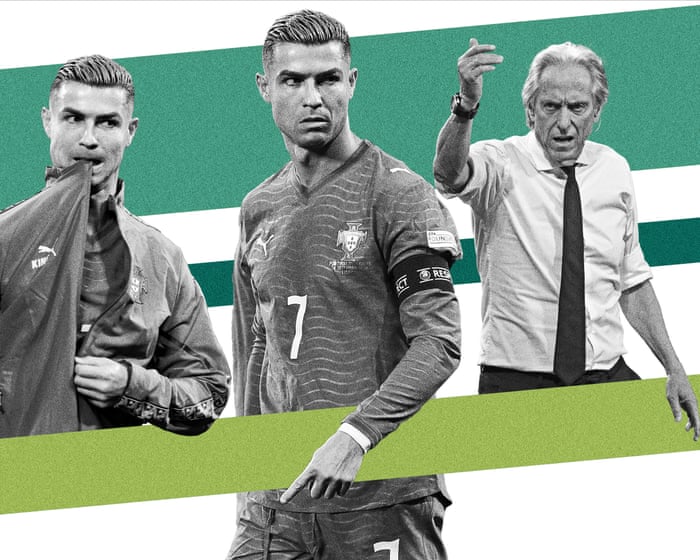
Ronaldo’s break with Portugal is sad, fitting, and long overdue | Jonathan Wilson

The star’s rift with Jorge Jesus is an unfortunate affair. But the forward has been holding his national team back for years

If this is to be the end for Cristiano Ronaldo at international level, at least it can be said that he left the stage as he bestrode it: with monumental self-regard. Ronaldo has always been a preening, self-absorbed player, but for a time, when he was one of the best in the world, it could be tolerated. For the past four years, though, he has actively and obviously held Portugal back. There is a great generation of technical talent here weighed down by the monstrous albatross of his ego.

To recap the basic details of the past couple of weeks. Ronaldo played 67 minutes of Portugal’s scratchy 1-0 win over Wales. Portugal coach Jorge Jesus, who replaced Roberto Martínez after the World Cup, said he had a verbal agreement with Ronaldo that he would not start the following game against Norway but would perhaps come off the bench. Early in the second half, Ronaldo went to warm up – although whether that was on his own initiative or because Jesus had told him to is unclear. The game was tight, Portugal ultimately winning 2-1, and Jesus did not bring Ronaldo on.

Continue reading...

© Composite: Getty, Shutterstock

© Composite: Getty, Shutterstock

© Composite: Getty, Shutterstock

  •  

Let there be blanks instead of Manchester City’s name on trophies: there was no honour there | Jonathan Wilson

The spaces can stand both as a rebuke to an era of greed but also a tribute to the Premier League’s hunt for justice

At half-time in the 2014 League Cup final, Sunderland led Manchester City 1-0. Yaya Touré equalised with a casually brilliant 30-yard clip 10 minutes after the break, and City went on to win 3-1. City, we now know from the independent commission, were at the time involved in a prolonged and calculated act of cheating, while Touré, the leaks in Der Spiegel suggested, was being paid via a dual contract to disguise exactly how much City were spending. Although precise details were left to the appendices, the commission’s report refers to payments “not recorded in an employment contract … but instead recorded in a consultancy agreement”.

Had Sunderland won, they would not merely have ended a 41-year wait for a trophy but would have qualified for the following season’s Europa League. It’s possible, of course, that the strain the extra games placed on the squad would have led to relegation in 2015, rather than the familiar trope of sacking a manager, in this case Gus Poyet, midway through the season, and surviving thanks to a bump under his successor, Dick Advocaat.

Continue reading...

© Photograph: Martin Rickett/PA

© Photograph: Martin Rickett/PA

© Photograph: Martin Rickett/PA

  •  

Sham City: verdict on financial breaches is damning and punishment must be severe | Jonathan Wilson

How can Manchester City be trusted under these owners after they were found to have devised £900m of ‘sham’ contracts?

How bad could it be, really? How serious can a breach of arcane financial regulations be, really? Just how damning can accountancy be? Even after Friday’s revelation that Manchester City had been found guilty of all but one of the charges brought against them by the Premier League, it was perhaps difficult to grasp the scale of what that meant. After the publication of the independent commission’s findings, there can be no doubt: the commission found that Manchester City cheated, that they did so deliberately, and that they have sought to cover that up with a campaign of calculated misinformation.

City continue to maintain their innocence and issued a statement insisting that “the opinion contains clear material errors, of law, principle and fact, and is unsafe”. It referred, once again, to “a comprehensive body of irrefutable evidence that exists in support of all of its positions”, and, again, insisted that “the club has diligently respected due process for eight years on the basis that the Premier League Board and Executive would behave as an independent, impartial and fair-minded regulator, free from partisan influence”.

Continue reading...

© Photograph: Phil Noble/Reuters

© Photograph: Phil Noble/Reuters

© Photograph: Phil Noble/Reuters

  •  

The Nations League is a welcome example of soccer done well

The tournament was treated with skepticism when it was introduced in 2018, but it shows that sometimes administrators get things right

England’s first game after the 2022 World Cup was a 2-1 win away over Italy. Their first game after the 2018 World Cup was a 2-1 defeat to Spain. Their first game after the 2014 World Cup was a 1-0 friendly win over Norway – and that was not the Norway of Erling Haaland, Martin Ødegaard and Antonio Nusa but of Joshua King, Håvard Nordtveit and Tarik Elyounoussi. The first game after the 2010 World Cup was a 2-1 friendly win over Hungary.

The Italy and Spain games perhaps had their appeal, but the sense of anticlimax was palpable. It’s inevitable, of course: how can a side or its supporters pick themselves to go again after the unparalleled drama of a World Cup? Major tournaments, whether a team does well or badly, are sport played with maximum emotion; there cannot be anything except a comedown, whether after glorious victory, thrilling defeat or ignominious exit.

This is an extract from Soccer Desk, a newsletter from the Guardian US. Subscribe for free here.

Continue reading...

© Composite: Guardian Design, Getty Images

© Composite: Guardian Design, Getty Images

© Composite: Guardian Design, Getty Images

  •  

Ever feel you’ve been cheated? Consequences could be profound after Manchester City guilty verdict | Jonathan Wilson

Premier League could be hit hard by aftermath, while Manchester City fans may know they took 30 years to recover from a guilty verdict in 1906

So it turns out none of that was real. Nothing that happened in English football between 2009‑10 and 2017-18 that involved Manchester City actually happened. City beating Manchester United 6-1 at Old Trafford? Fake. Sergio Agüero’s 94th‑minute winner to clinch the title in 2012? A figment of the imagination. That season City reached 100 points? Bobby Ewing dreamed it in the shower.

Without those successes, City wouldn’t have been in the position they were for the past eight seasons (and 35 of the charges relate to a failure to cooperate with Premier League investigations between 2018 and 2023). The 14 successive wins that took them to the league title in 2018-19 would not have happened without what went before. Neither would the Treble of 2023 or the record four league titles in a row.

Continue reading...

© Photograph: Carl Recine/Reuters

© Photograph: Carl Recine/Reuters

© Photograph: Carl Recine/Reuters

  •  

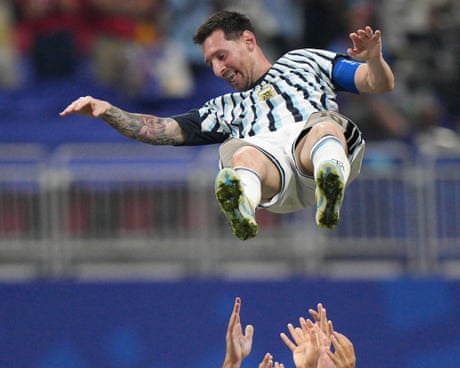
Messi’s exit leaves Argentina with impossible task of replacing their superhero | Jonathan Wilson

When things are going awry, the Albiceleste will no longer be able to rely on their ultimate get-out clause

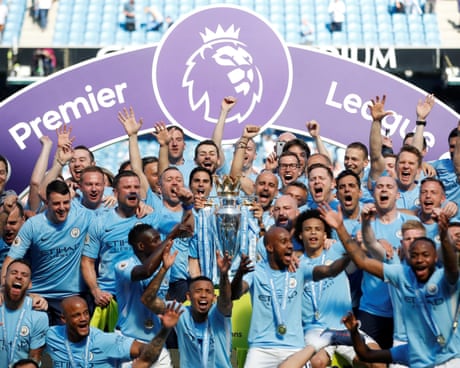
It isn’t quite over yet. Lionel Messi will return a week on Wednesday for his formal farewell in a friendly against Benin, but, before that, Argentina face two games when they will begin to experience a future without the most potent get-out-of-jail-free card football has known.

Messi’s international career falls into two distinct halves. There was the first decade when there was a sense that he didn’t quite fit, was somehow insufficiently Argentinian, didn’t care for his country. That was always absurd and can be recognised now as a manifestation of the Argentinian public’s frustration at their trophy drought despite the presence in their forward line of one of the best three to play the game.

Continue reading...

© Photograph: Jacob Kupferman/AP

© Photograph: Jacob Kupferman/AP

© Photograph: Jacob Kupferman/AP
  •  

The last two seasons were grim for Spurs. This is as bad as it’s ever been | Jonathan Wilson

Pre-season thoughts of European qualification are already beginning to look bafflingly optimistic for Roberto De Zerbi’s team

In March, Tottenham, fearing possible relegation, spent big to bring in Roberto De Zerbi, who will probably never go into a negotiation with a stronger hand. There was obvious improvement and they stayed up on the final day of the season. Since then, Spurs have spent a net £175m ($234m) on improving the squad. The message seemed clear: the fiscal caution of the Daniel Levy era was over and this was a club willing to spend. Yet Spurs go into the first international break bottom of the Premier League table.

To an extent, the issue is confidence. On the opening weekend at Brentford, with a weird mishmash of a side, a team that was clearly undercooked, they were hammered 3-0 by much better-prepared opponents. That was not hugely surprising given how sensible Brentford’s transfer dealing had been and how early they had done it. More worrying was what happened the following week as Spurs, starting well before fading, lost 2-0 at home to Newcastle.

Continue reading...

© Composite: Shutterstock, Getty

© Composite: Shutterstock, Getty

© Composite: Shutterstock, Getty

  •  

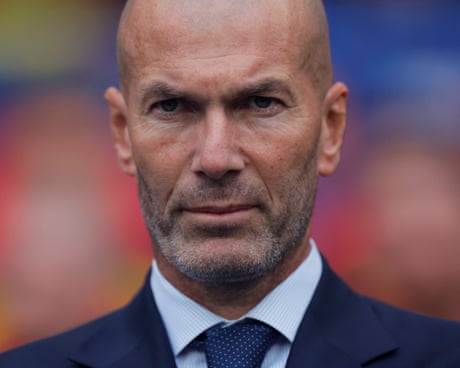
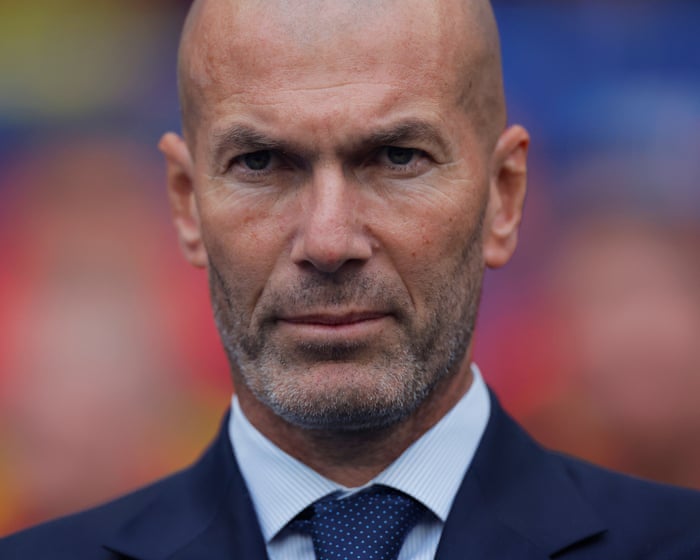
Zidane’s next move as France coach may reveal the wizard behind the curtain | Jonathan Wilson

It is apt that the most perplexing football country will now be guided by the most enigmatic of leaders

Even in his playing days, Zinedine Zidane seemed unknowable. As a manager, the sense of distance has only grown. He won three Champions Leagues with Real Madrid without ever giving a sense of what his idea of football looked like.

France are perhaps the most perplexing football country: a squad that teems with such talent that a B team would be serious contenders at a World Cup, that reached three major finals under Didier Deschamps with a sense of unfulfilment, a team that progressed but rarely entranced, or at least didn’t until this summer’s World Cup, when they attacked with gusto and ended up overrun in midfield by Spain.

Continue reading...

© Photograph: Tom Jenkins/The Observer

© Photograph: Tom Jenkins/The Observer

© Photograph: Tom Jenkins/The Observer

  •  

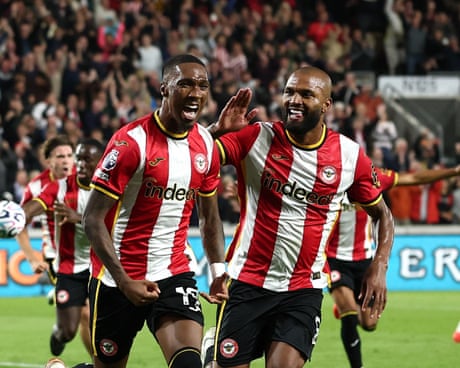
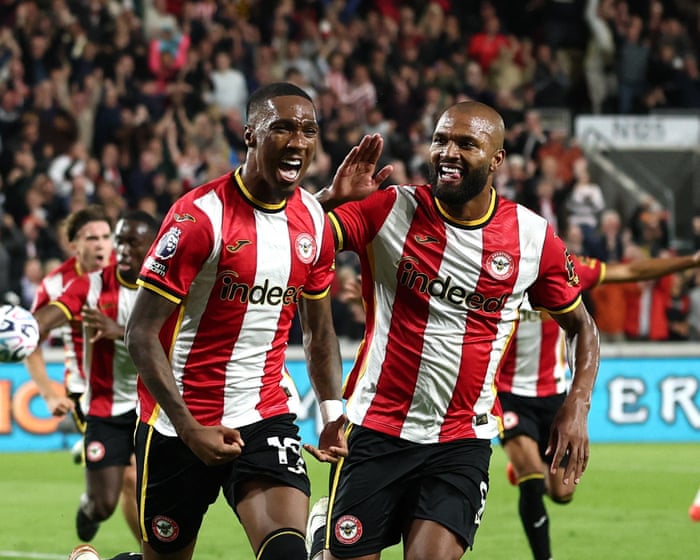
Brentford blitz Chelsea as Fábio Carvalho caps stunning second-half display

Those early-season thoughts that Chelsea might be the team best-placed to challenge Arsenal are beginning to look extremely over-optimistic. The two chaotic wins with which they began were always difficult to read: they might have been useful points picked up on the way to a more solid structure, or they might have represented evidence of significant problems. After three games without a win, and 12 goals conceded in five games this season, it’s beginning to look like the latter.

At the final whistle, Keith Andrews tipped his head back and roared at the sky, celebrating Brentford’s first home win over Chelsea since 1938. They remain unbeaten, coherent and disciplined, and moved up to third in the table. The comparison is impossible not to draw: as one side flail in an orgy of structured spending, their far less wealthy neighbours thrive with a clear plan and sense of direction. “It was a performance I felt was bubbling,” said Andrews. “I could see it in the players’ eyes over the last two days. They were very focused, very determined.”

Continue reading...

© Photograph: David Klein/Reuters

© Photograph: David Klein/Reuters

© Photograph: David Klein/Reuters

  •  

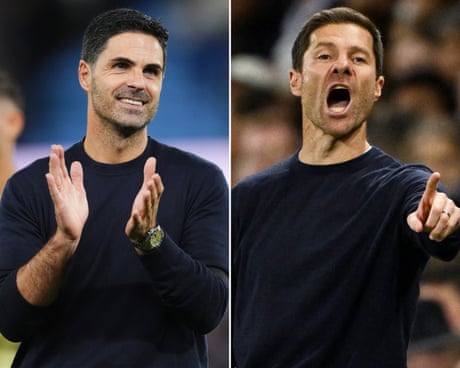
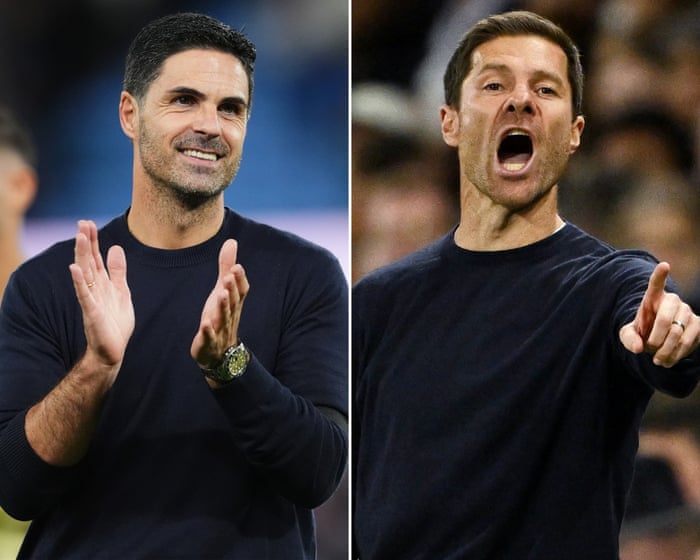
Arteta v Alonso, part one: a desire for control and the theory behind the chaos | Jonathan Wilson

Mikel Arteta and Xabi Alonso prepare for an intriguing tactical battle in the first Premier League meeting between old friends

Control v chaos. On the one hand, the forces of order, regimented, playing in precise patterns and, on the other, something darker, more visceral, a method that acknowledges the imperfection of the human soul, the unknowability of football in all its randomness; better, that second way says, to attempt to ride the fury than to believe it might be harnessed.

When it began, a decade ago, that’s how the Pep Guardiola v Jürgen Klopp rivalry appeared. Apollo v Dionysius. Two fundamentally opposed ways of seeing the world. But in time, the two crept towards each other. Klopp moved away from the heavy metal of his Borussia Dortmund years to something more conservative. Guardiola experimented in multiple directions, slowly abandoning the possession-oriented idealism of his past to something less radical but also less predictable.

Continue reading...

© Composite: PA, Reuters

© Composite: PA, Reuters

© Composite: PA, Reuters

  •  

Chelsea’s perfect yet unserious start to the Premier League season | Jonathan Wilson

Xabi Alonso’s side have scored seven and conceded five in two wins so far, a product of the squad’s constant churn

Two Premier League games played for Chelsea under Xabi Alonso: two wins and seven goals scored. It’s the sort of start that would delight many new managers – only two other clubs can boast about a six-point start this Premier League season (albeit with Arsenal to play later on Monday). Points gained in this odd transitional phase, when almost nobody seems quite ready, could prove extremely valuable come the end of the season. And yet, for all the attacking potency, there must also be concerns about Chelsea’s openness and the five goals conceded.

Context must also be considered, and it projects both ways. It’s early in the season. There has been, as ever, a lot of change at Chelsea. They will get better; they will achieve greater coherence. But equally there has to be a sense of realism about the nature of the teams they’ve played. Brighton may have thrashed a shambolic Aston Villa 4-0 last weekend, but they were missing seven frontline players at Stamford Bridge and still put three past Chelsea on Sunday. And while Fulham looked very lively as Chelsea won 3-2 on the opening weekend, they couldn’t muster a shot on target against Sunderland on Sunday.

This is an extract from Soccer Desk, a newsletter from the Guardian US. Subscribe for free here.

Continue reading...

© Composite: Guardian Design, Getty Images

© Composite: Guardian Design, Getty Images

© Composite: Guardian Design, Getty Images

  •  
❌