❌

Lese-Ansicht

‘I left shellshocked’: writers on their scariest non-horror movies

For Halloween, Guardian writers have picked the most efficiently terrifying films outside of the horror genre from How to Have Sex to The Hunchback of Notre Dame

Minor spoilers ahead

Hiding in plain sight throughout Lee Chang-dong’s deliciously enigmatic Burning, in which a spirited young woman (Jeon Jong-seo) disappears, and a wealthy playboy (Steven Yeun) gives serial killer vibes, is a disaffected male rage. That’s perhaps the most commonplace horror of our times, whether on the internet or politics, and you feel the tremors of it steadily breaking the surface in Yoo Ah-in’s performance. He plays Jong-su, an aspiring writer, quietly frustrated with his lot in life. Jong-su works odd jobs and tends to his incarcerated father’s dilapidated farm, growing more desperate to grasp some sense of control over the world around him, which is where the scary part comes in. Lee is the master dramatist who with Burning tilts violently into thriller territory, navigating elements from Taxi Driver, The Vanishing and Michael Haneke’s Caché, using the language of horror movies to conjure up a creeping anxiety and dread that erupts into pure existential fear. Radheyan Simonpillai

Continue reading...

© Photograph: Landmark Media/Alamy

© Photograph: Landmark Media/Alamy

© Photograph: Landmark Media/Alamy


  •  

Other Desert Cities review – Julia Louis-Dreyfus and Ed Harris shine in timely Broadway revival

Hudson Theatre, New York
Allison Janney and Joe Keery co-star in a powerful drama about a family reunion turned political minefield

Just in time for the holidays, Jon Robin Baitz’s family reunion drama, Other Desert Cities, is back with an even starrier cast than its 2011 premiere. The revival is a headline-grabber for marking the stage debuts of Julia Louis-Dreyfus and Joe Keery, alongside the Broadway returns of Ed Harris, Allison Janney and Lily Rabe.

But if this raises eyebrows as a takeover of Hollywood vanity, those concerns are easily quelled by the performances – especially those of the newcomers. John Benjamin Hickey’s staging is well attuned to its cast’s abilities, more than justifying its speedy return to Broadway. This Pulitzer finalist play still has a lot to say.

Continue reading...

© Photograph: Emilio Madrid

© Photograph: Emilio Madrid

© Photograph: Emilio Madrid

  •  

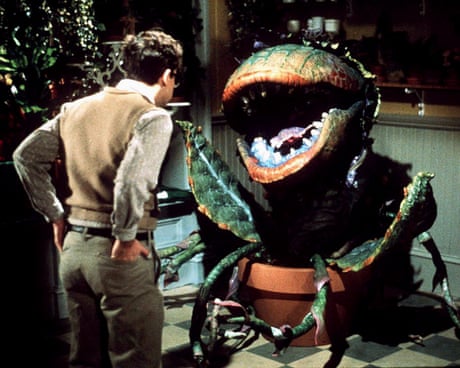
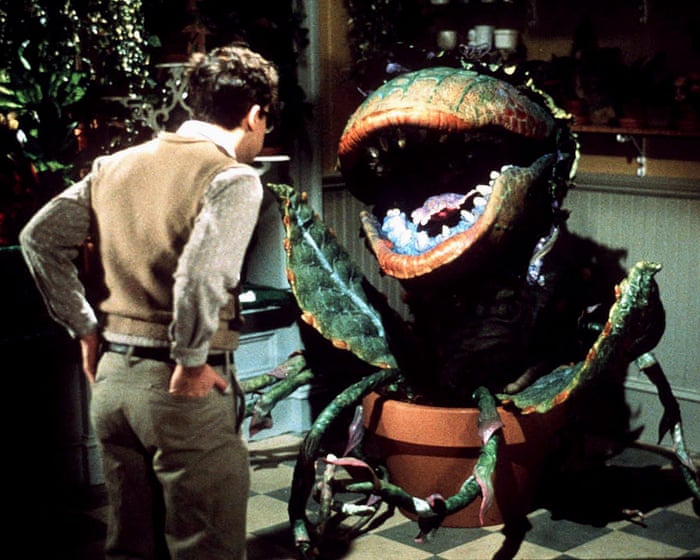
‘Exceptionally crafted’: why Little Shop of Horrors is my feelgood movie

The latest in our series of writers’ favorite comfort films is a tribute to the lovably quirky 80s musical

The key to a feelgood movie, beyond the necessary rewatchability, is familiarity – the real kind that lets you look away or fall asleep without doubting your affection. Musicals are perfectly suited to this particular subgenre since the majority of them, especially the classic ones adapted for film, atrophy with second-act problems. That’s where writers suddenly remember the plot they had introduced and drop all that singing and dancing to arrive at some type of conclusion.

The first act of Funny Girl? A near-flawless parade of showstoppers, Barbra Streisand as Fanny Brice having the time of her life falling in love. I’ve probably seen it 200 times. The second act … well, who ever cared about her husband’s gambling addiction?

Continue reading...

© Photograph: Warner Bros/Sportsphoto/Allstar

© Photograph: Warner Bros/Sportsphoto/Allstar

© Photograph: Warner Bros/Sportsphoto/Allstar

  •  

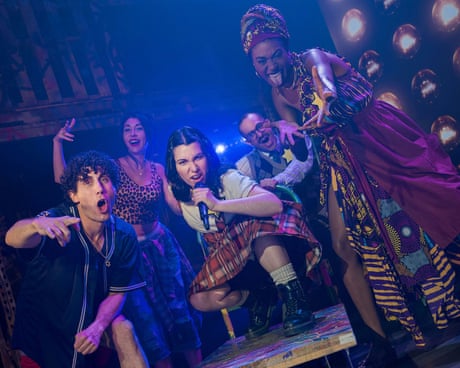
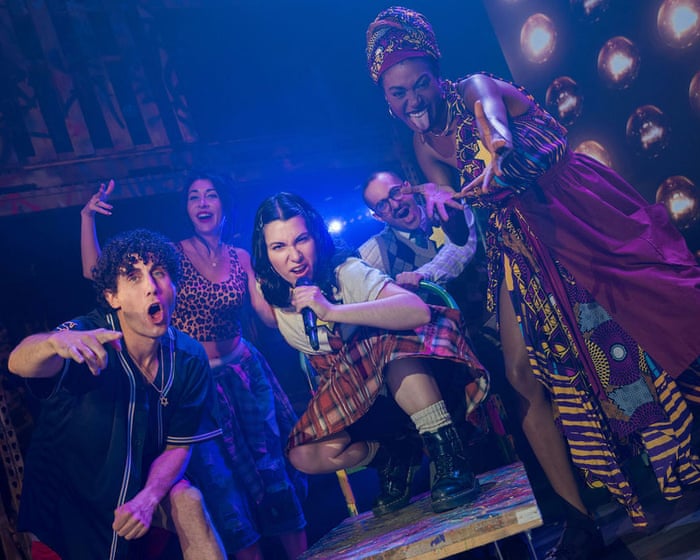
‘A couple of times people walked out’: how an Anne Frank musical became the hottest theater ticket of the year

The creators and stars of Slam Frank on their off-Broadway production - which reimagines the Holocaust victim as a pansexual rapper

It’s difficult to not invoke the term “woke” when discussing Slam Frank, the 2025 musical that reimagines Anne Frank as a pansexual Latina. Controversial even before its first performance, it giddily satirizes identity politics through its show-within-a-show structure, in which a progressive theatre company attempts to modernize the Holocaust victim’s story by paralleling it to the struggles faced by marginalized people today. Here, the mother of “Anita” is Black, her father is neurodivergent and, while hiding in Amsterdam, they are very much immigrants.

Creator Andrew Fox recognizes “a temptation to categorize it as anti-woke art”, but points readily at the show’s fans and detractors, who fall across every conceivable party line, and cautions against one-note interpretations. “I think the piece is just trying to grapple with the last 15 years of cultural and intellectual upheaval and get some comedy out of it.”

Continue reading...

© Photograph: Shawn Salley

© Photograph: Shawn Salley

© Photograph: Shawn Salley

  •  

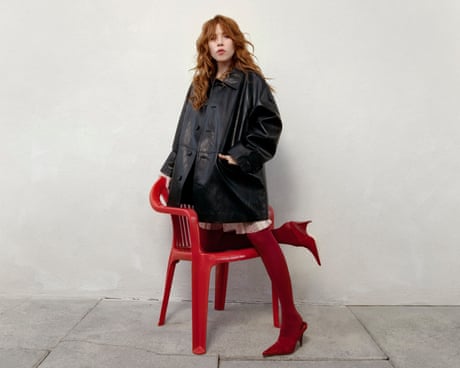
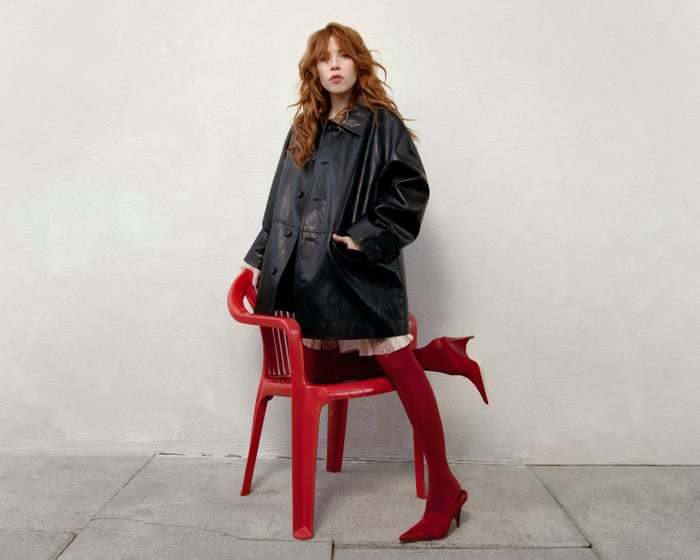
‘I’ve never been more terrified!’ Carly Rae Jepsen on motherhood, stardom and her horniest album ever

Call Me Maybe made the singer-songwriter famous – but also confused. Who was she? Who was her music for? Fourteen years later, about to release the double album Day and Night, she finally has some answers

Carly Rae Jepsen is as bubbly as ever as she comes down for breakfast at Manhattan’s Hotel Chelsea. She’s one of those pop princesses, like Kylie Minogue, whose voice and demeanour remain unchanged whatever the situation. And she feels at home at this New York landmark where, last year, she married the musician and producer Cole MGN. That a wedding at the Chelsea would need to be kept to about 100 people was an immediate selling point. “I loved that it was smaller,” she says. “It felt big to me! I didn’t even get time with all the people that were there.”

We’re here to talk about her new album, though, which comes out 14 years after the song that made her world-famous. Born and raised in the city of Mission in British Columbia, Jepsen had come third on Canadian Idol in 2007, and then released a low-key folk album called Tug of War in 2008, before dropping Call Me Maybe four years later. It became the bestselling global single of 2012; her second album, Kiss, came out in the same year. Now, at the age of 40, she has six more studio albums under her belt. The latest, Day and Night, is her take on marriage and motherhood. And, in its own way – which is to say, a bit coy, a bit breathy – it might also be Jepsen’s horniest album to date.

Continue reading...

© Photograph: Vince Aung

© Photograph: Vince Aung

© Photograph: Vince Aung

  •  

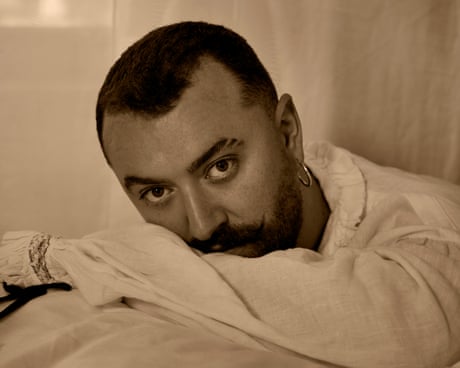
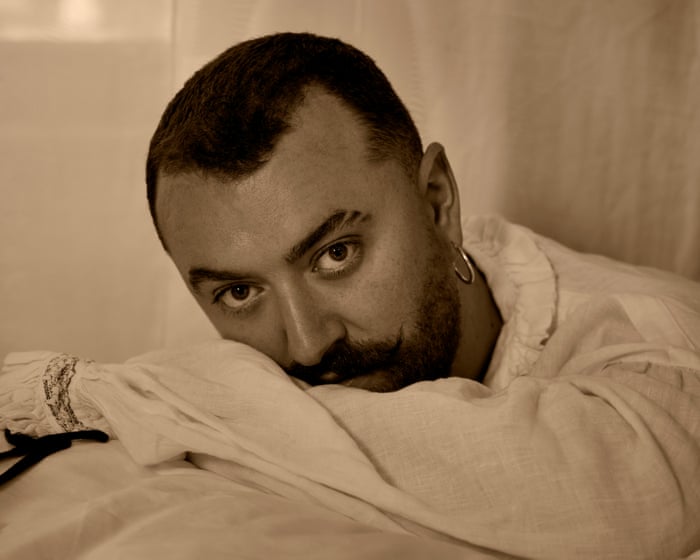
‘It was lonely being a young queer artist’: Sam Smith on finding health, happiness – and their hazel-eyed fiance

On their new album, Smith is subverting their singer-songwriter roots to tell a queer love story. They talk about their shifting fanbase, the nasty undercurrents of fame – and finding sanctuary in New York City

Sam Smith logs on to our video call with the username “Lily of the Valley”, the May-born singer’s birth flower. It sets a serene tone. They’re in Guadalajara, Mexico, for the latest stop of a residency tour, titled To Be Free, in support of their fifth studio album. Instead of Smith’s usual jet-lagged arena itinerary, this lower-key excursion stops at smaller venues in only six cities and sheds the ostentatious theatricality of their last outing.

On stage on their last tour, “I was flailing around on a massive gold bum and had, like, seven costume changes,” Smith says with a chuckle. It’s intimacy they’re after now, the ability to satisfy their “craving to look at people again”, which matches the romantic feeling of their fifth album, Hazel Eyes. But for Smith, whose genre-shifting stardom has been accompanied by harsh controversies, it’s also a chance to observe who’s still in their corner: “There’s some wonderful people that have stayed, but it’s a completely different room than it was with In the Lonely Hour,” their 2014 debut.

Continue reading...

© Photograph: Collier Schorr

© Photograph: Collier Schorr

© Photograph: Collier Schorr

  •  

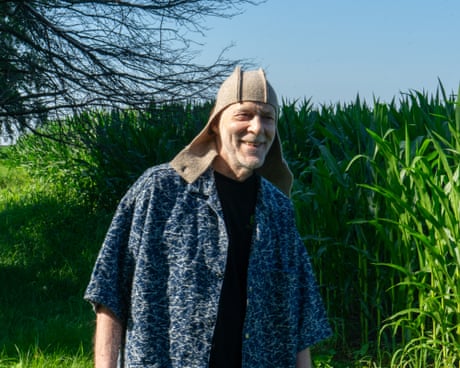
‘No plan, no budget, no promotion’: how a genre-mashing masterpiece by a forgotten New York beatnik blew gen Z away

How did an album that began life in 1984 – fusing disco, folk, synth-pop and Chinese opera – end up as ‘one of 2026’s most thrilling releases’? And why does its creator call himself Nirosta Steel?

‘It’s kind of mind-bending,” says 69-year old Steven Hall. For the last three years, the Scottish musician has been living with his lawyer husband a few hours south of Chicago, driving an Uber for some additional income. Now, suddenly, he is being lauded by critics for his double LP My Skyscraper, released last month under the name Nirosta Steel. Compiling material recorded between 1984 and 2025, it charts a sonic landscape through disco, folk and synth-pop with detours into Chinese opera and ecclesiastical a cappella. Pitchfork called it “an archival triumph and one of the year’s most thrilling new releases”.

It all came about when a label head, impressed with Nirosta Steel’s 2014 album Cool Fire, asked Hall if he had any more music. “He didn’t know what he was in for,” says Hall. The couple of dozen unreleased songs he shared spanned four decades of eclectic musicianship, and revealed a globe-trotting life and career that intersects with experimental icons such as Arthur Russell and Allen Ginsberg. Now My Skyscraper seems poised to admit Hall into that rarified pantheon of historically salvaged artists whose time has belatedly arrived.

Continue reading...

© Photograph: Claire Daly/The Guardian

© Photograph: Claire Daly/The Guardian

© Photograph: Claire Daly/The Guardian

  •  

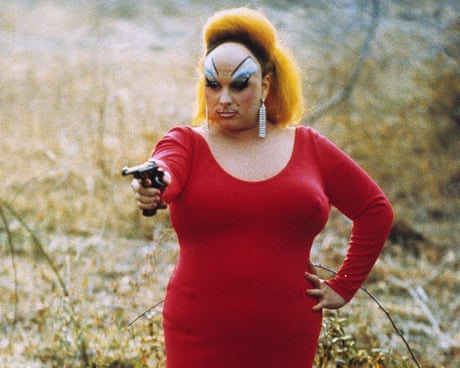
‘Sheer outrageousness’: writers on their favourite LGBTQ+ movie characters

From gritty criminals to teens coming to terms with their identity, pride month sees Guardian writers on their most beloved queer characters

Forget about dimly lit period dramas where miserable women with no access to electricity gently sob in their heaving corsets and accidentally-on-purpose brush hands in the trembling candlelight; overblown, bombastic heist-capers and brooding, butch anti-heroes are far more up my street when it comes to lesbian cinema. What, after all, could be more intensely gay than immediately committing to a life of crime with someone you’ve only just set eyes on? My favourite of the entire bunch has to be the swaggering ex-con turned plumber Corky, who helps to save Violet from the clutches of her mob boss husband in 1996’s cult classic Bound. Though we first meet Corky trussed up in a literal closet, the metaphor doesn’t play out how you might expect: unapologetic and visible in a time when few films explored queerness full stop, she flexes a labrys tattoo, spends her down time swigging beer in grotty dive bars, and eventually drives off into the sunset, her new partner-in-crime in tow, in a beaten-up Chevy pick-up. The sheer simplicity of Corky as a queer heartthrob was, somehow, ridiculously ahead of its time, and her magnetic influence has played out everywhere from Bottoms to Love Lies Bleeding. El Hunt

Continue reading...

© Photograph: Dreamland Prods/Kobal/Shutterstock

© Photograph: Dreamland Prods/Kobal/Shutterstock

© Photograph: Dreamland Prods/Kobal/Shutterstock

  •  

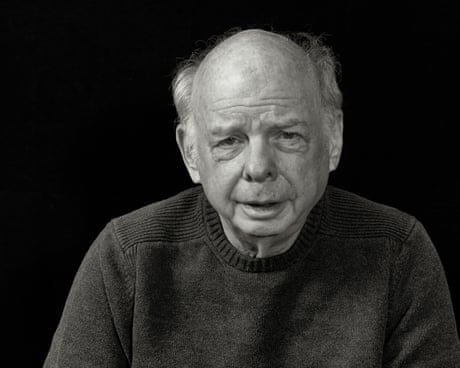
‘A lot of people don’t think I can act’: Wallace Shawn on Hollywood, therapy and speaking out on Palestine

At 82, the character actor is as frank and fired-up as ever with two hit stage shows and a summer blockbuster on the way. He’s embracing being odd, he says, even if everyone doesn’t quite get it

When I ask Wallace Shawn how he cast his latest stage work, What We Did Before Our Moth Days, the actor and playwright smiles matter-of-factly: “Well, I think that’s secret. I don’t think I’ll tell you.” It’s polite, to the point and sets a clear boundary: something that I soon discover that the charming 82-year-old is entirely comfortable with.

On an overcast Wednesday, we are in a restaurant atop the hip Manhattan arthouse cinema Metrograph, watching people trickle in a few days before a retrospective of his films opens there. Spending time with Shawn feels like stepping into his own constant sense of wonderment: something midway between a knowing shrug and puzzlement over his immediate situation. When the cinema’s publicist offers him a Twix bar, he cocks his head and asks what that is, but politely accepts one. (When she returns with more options, he opts for popcorn instead.)

Continue reading...

© Photograph: Don J Usner

© Photograph: Don J Usner

© Photograph: Don J Usner

  •  

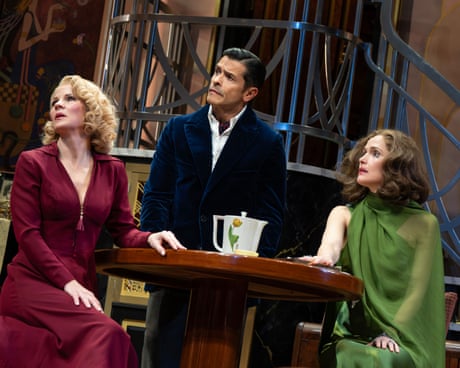
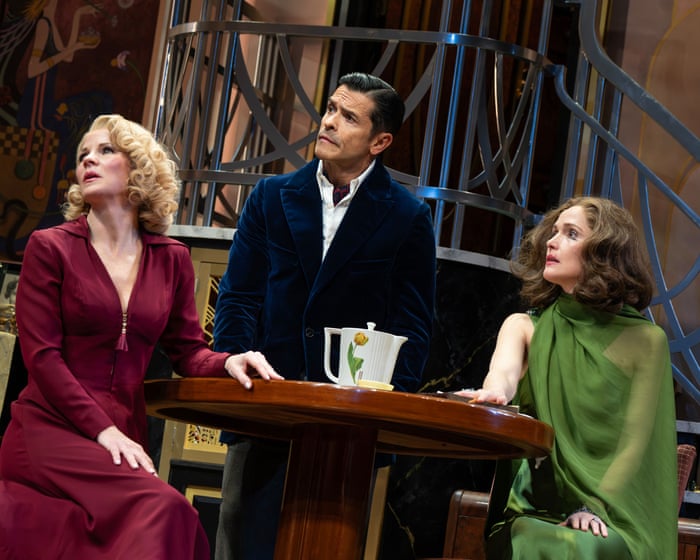
Fallen Angels review – Rose Byrne is utterly delightful in Noël Coward comedy revival

Todd Haimes Theatre, New York
Rose Byrne and Kelli O’Hara are comic gems in a pitch-perfect revival that sparkles like champagne

Fallen Angels has appeared only twice on Broadway since its stateside premiere in 1927, two years after the lustful comedy’s London premiere cemented Noël Coward as England’s drawing room enfant terrible. A sort of proto-Godot where two society women drink themselves into a stupor waiting for an old lover to arrive while their husbands are away, it was nearly censored by the office of the Lord Chamberlain for its sexual frankness. (That kind of historical description usually indicates that perhaps someone showed some ankle). But 99 years later the play remains hilariously horny and startlingly modern, and Scott Ellis’s champagne cocktail of a revival has the exact right ingredients: complete faith in the material, drop-dead deluxe design, and the sugar-and-bubbles combination of Oscar-nominated actor Rose Byrne and stage veteran Kelli O’Hara.

The two are stars of elastic, compulsively watchable talent, and the unexpectedness of their pairing only serves their dynamic in this expert staging of Coward’s play, as their characters goad each other’s worst impulses on until they come into conflict with their own. Their performances work – brilliantly – in the converse, with Byrne’s knack for bawdiness and O’Hara’s born gentility swirling around to intoxicating effect.

Continue reading...

© Photograph: Joan Marcus

© Photograph: Joan Marcus

© Photograph: Joan Marcus

  •  

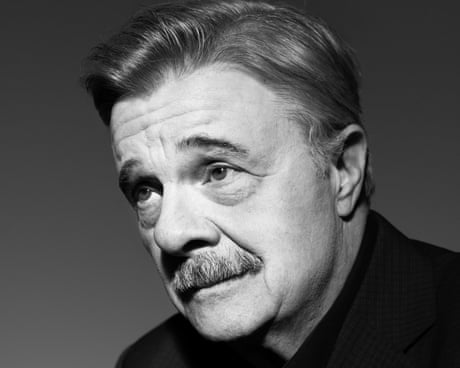
‘Coming out in the 90s? You might as well say ‘I love cock!’’ Nathan Lane on gay life, Broadway and defying stereotypes

The brassy actor’s performance in Death of a Salesman is the crown jewel in a life spent on stage. He says it could be his last Broadway role

“It’s, like, 10 minutes. I pee, I have a cup of tea, I put the jacket back on and I go out and fight my way to the death.”

The way Nathan Lane describes spending the intermission of Death of a Salesman – the nearly three-hour play in which his character flails and ultimately fails through an epic depression – reflects the actor’s own spirit: practical, lightly fatalistic, artfully hyperbolic and very, very funny. Today he is in fine form, nestled into a corner table in New York’s classic Upper West Side haunt Cafe Luxembourg. When I ask him if Salesman marks his first time performing at the Winter Garden Theatre, he responds without missing a beat: “Yes, except when I took over in Mame.”

Continue reading...

© Photograph: Thea Traff

© Photograph: Thea Traff

© Photograph: Thea Traff

  •  
❌