❌

Lese-Ansicht

As King Charles heads to the Caribbean, he should know that Winston Churchill admitted to imperial plunder 90 years ago | Kenneth Mohammed

Modern politicians play on tales of empire to exaggerate what Britain left behind, but the monarch should consider a historical speech on the vast wealth taken away

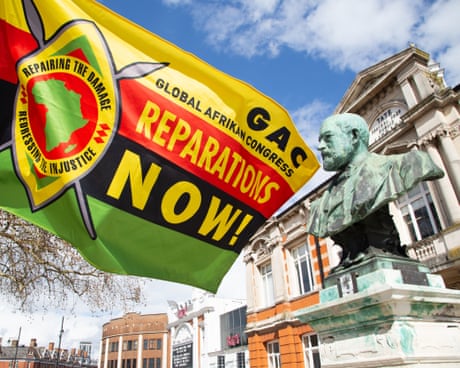
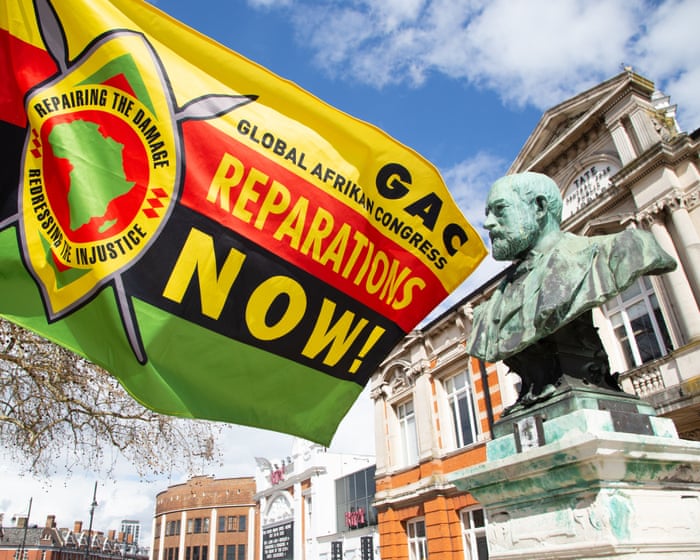
For us in the Caribbean, there is something surreal about Britain’s renewed nostalgia over empire. As Britain’s monarch prepares to visit the Caribbean, and at a time when we in the former colonies are demanding to have a serious reckoning with slavery and reparations, UK politicians are invoking a dumbed-down distortion of history.

Rewriting the facts: the Reform MP Robert Jenrick has argued that colonies owed Britain a “debt of gratitude” for the institutions empire bequeathed them. Jacob Rees-Mogg, a former minister in a Conservative government, has described British colonialism as “one of the greatest civilising, prosperity-creating forces the world has ever seen”. The opposition leader, Kemi Badenoch, has disputed colonialism’s contribution to Britain’s prosperity. Then there is Suella Braverman. The Reform MP suggested in July that rather than Britain paying reparations, former colonies should repay Britain for the investment and infrastructure provided under empire. This prompted Mia Mottley, the prime minister of Barbados, to call that proposition “asinine”. At best it is historical amnesia. At its worse it is an insidious misrepresentation of facts.

Continue reading...
© Photograph: Thabo Jaiyesimi/SOPA Images/LightRocket/Getty Images
© Photograph: Thabo Jaiyesimi/SOPA Images/LightRocket/Getty Images
© Photograph: Thabo Jaiyesimi/SOPA Images/LightRocket/Getty Images
  •  

It’s no surprise that an AI-faked presidential speech condemning foreign exploitation went viral – the world is suffering from a leadership vacuum

Attributed to the president of Namibia, the speech is still being shared as citizens across Africa and the Caribbean cry out for moral leaders willing to speak uncomfortable truths

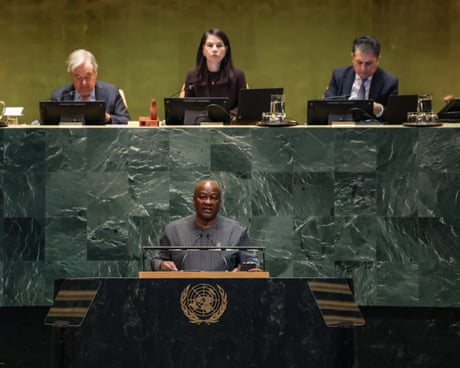
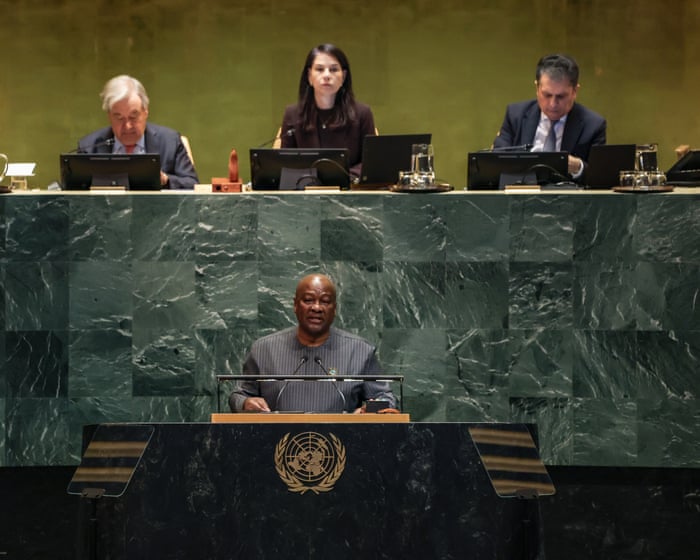
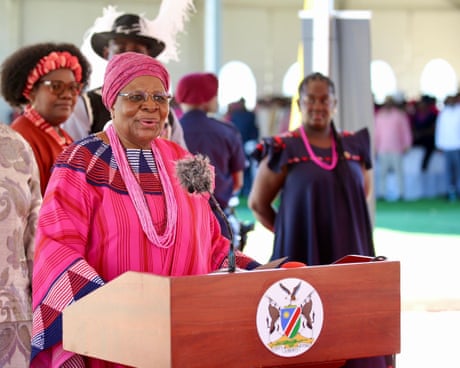
For a moment, the speech attributed to Namibia’s president travelled across the world like a gust of hope. It was fierce. Defiant. Unapologetically sovereign. The speaker denounced corruption, condemned foreign exploitation and declared that Africa’s resources belonged not to politicians or multinational corporations but to its people. Netumbo Nandi-Ndaitwah spoke of leaders who signed away national wealth behind closed doors and warned that those who betrayed the public trust would face accountability. It sounded like the language of decolonisation reborn.

Across social media, many listened with admiration. Finally, here was a leader speaking with moral clarity. Here was the rhetoric that generations of postcolonial citizens had been waiting to hear. But there was one problem. It was fake. Nandi-Ndaitwah rejected it as an AI-generated fabrication.

Continue reading...

© Photograph: Xinhua/Shutterstock

© Photograph: Xinhua/Shutterstock

© Photograph: Xinhua/Shutterstock

  •  

The real danger of Islamophobia? It rarely announces itself as hatred yet shapes how millions think | Kenneth Mohammed

The difference in framing around antisemitism and anti-Muslim hatred distorts public understanding, inflames tensions and makes both Jewish and Muslim communities less safe

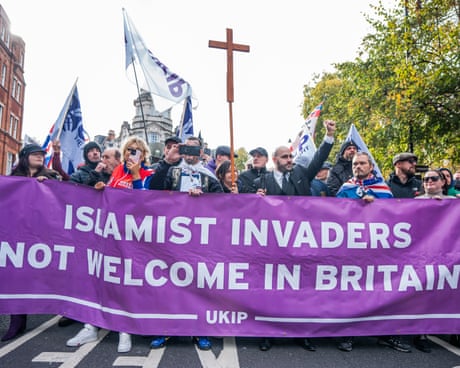
The horrific terrorist attack on the Islamic Centre of San Diego in California has been reported by many news outlets over the past few days. Yet as the story travelled across screens and news feeds, something more subtle unfolded: the language of reporting. Some outlets spoke of “teen suspects” and “three deceased” rather than murdered worshippers or a terrorist attack on a mosque. Words matter. They shape sympathy, urgency, and influence how violence is understood. Too often, the vocabulary of terror and extremism appears unevenly distributed; sharpened for some perpetrators but softened for others.

There is a growing sense that the world is slipping backwards – not through dramatic rupture, but through the steady normalisation of hate, the coarsening of public discourse and politicians increasingly fuelling division and racism.

Continue reading...

© Photograph: Lab Ky Mo/LightRocket/Getty Images

© Photograph: Lab Ky Mo/LightRocket/Getty Images

© Photograph: Lab Ky Mo/LightRocket/Getty Images

  •  

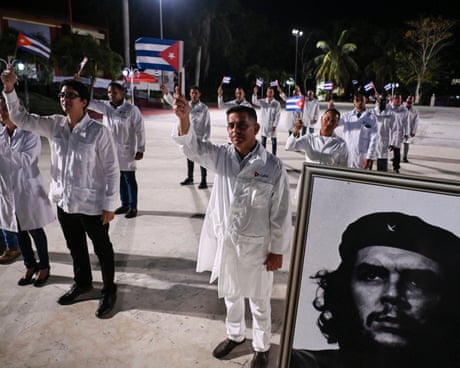
Cuba’s doctors were a lifeline for the world. Now the Caribbean is shamefully complicit in the US drive to expel them | Kenneth Mohammed

For decades, Cuban doctors have served the Caribbean’s most marginalised. Now, as Cuba faces its own crisis, the region looks away, waiting on Trump’s approval

There is a line, often quoted, seldom practised, from the Christian gospels: “Love thy neighbour as thyself.” It is recited from the Americas to Africa, invoked in speeches, embroidered into national mottoes.

But like many moral injunctions, it has proven easier to proclaim than to live by. Across the Caribbean and Latin America, something extraordinary and shameful is unfolding.

Continue reading...

© Photograph: Yamil Lage/AFP/Getty Images

© Photograph: Yamil Lage/AFP/Getty Images

© Photograph: Yamil Lage/AFP/Getty Images

  •  

Don’t look at who voted to call the slave trade ‘the gravest crime’, look at who didn’t | Kenneth Mohammed

The UK and EU countries who abstained when Ghana’s UN resolution was adopted may soon find it harder to sustain the same old script on reparations

The most revealing thing about Ghana’s UN resolution was not that it passed. It was who could not bring themselves to stand with it.

On 25 March, the UN general assembly adopted the Ghana-led resolution by 123 votes to three, with 52 abstentions. It declared that the trafficking and racialised chattel enslavement of Africans was “the gravest crime against humanity” and urged steps including formal apologies, reparatory justice and the return of looted cultural property. The three states that voted no were the US, Israel and Argentina; the UK and all EU member states abstained.

Continue reading...

© Photograph: Bianca Otero/ZUMA Press Wire/Shutterstock

© Photograph: Bianca Otero/ZUMA Press Wire/Shutterstock

© Photograph: Bianca Otero/ZUMA Press Wire/Shutterstock

  •  

Corruption is no longer envelopes of cash – now it is about who is being shielded and who is being sacrificed | Kenneth Mohammed

Trump has attacked judges and weakened global safeguards. Someone needs to stand up to the US and stop the erosion of democracy

In an era of overlapping crises, corruption is no longer a side issue – it is a structural threat to achieving international equality and even freedom itself. Each year, Transparency International’s Corruption Perceptions Index, a league table of 182 countries, is greeted with predictable theatrics: praise where it flatters power, condemnation where it can be weaponised, and hollow promises of reform that quietly expire once attention moves on. Instead of a moment of reckoning, it is ignored by those with the power to act.

As this newspaper reported, last week’s table showed a “worrying trend” of backsliding and a picture of “democratic institutions being eroded by political donations, cash for access and state targeting of campaigners and journalists”.

Continue reading...

© Photograph: SOPA Images/LightRocket/Getty Images

© Photograph: SOPA Images/LightRocket/Getty Images
© Photograph: SOPA Images/LightRocket/Getty Images

  •  

Sanctions are not a humane alternative to bombs. They are economic warfare with civilians as collateral damage | Kenneth Mohammed

In the Caribbean and Latin America, the lived reality of these measures – presented in the language of diplomacy – is stark

Across borders, cultures and faiths, most ordinary people want the same things: the ability to earn a living, put a roof over their heads, feed their families and watch their children grow up with a future. These are not radical ideas, but they are today routinely sacrificed on the altar of geopolitics.

When power and profit take precedence, governments abandon the everyday realities of those they claim to protect and serve, especially when domination of another country’s resources, markets or political direction is at stake.

Continue reading...

© Photograph: Gina M Randazzo/ZUMA Press Wire/Shutterstock

© Photograph: Gina M Randazzo/ZUMA Press Wire/Shutterstock

© Photograph: Gina M Randazzo/ZUMA Press Wire/Shutterstock

  •  

Trinidad and Tobago went all in with the US – it will prove a costly misjudgment | Kenneth Mohammed

Aligning itself with Washington and dismissing regional diplomacy has left the dual island nation isolated amid the Venezuela crisis

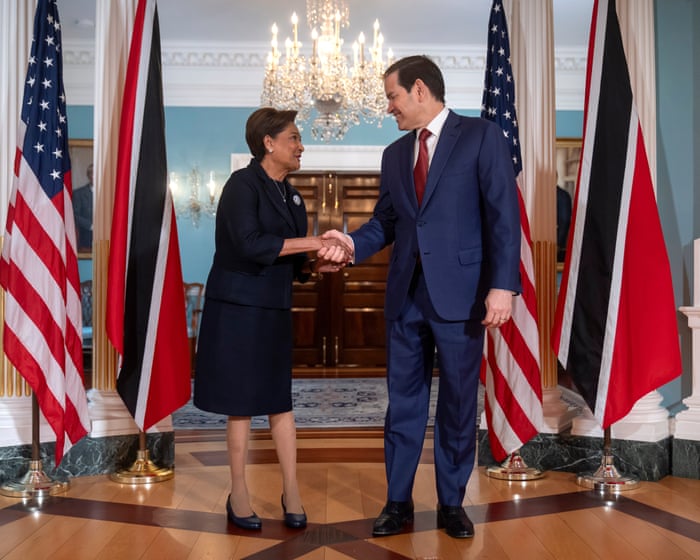
There is a saying in Trinidad and Tobago: “Cockroach should stay out of fowl business.” It captures a hard truth. Small states that stray into great-power conflicts rarely emerge unscathed. They are not players; they are expendables.

It’s a statement that frames the reality of where Trinidad and Tobago sits uneasily today.

Continue reading...

© Photograph: Mark Schiefelbein/AP

© Photograph: Mark Schiefelbein/AP

© Photograph: Mark Schiefelbein/AP

  •  

In 2025 reparations became central to UK ties with the Caribbean and Africa – so how do we move forward? | Kenneth Mohammed

This year was a pivotal one, in which the issue of restorative justice began to frame the UK’s post-imperial relationship with the global south

A little while ago, I was interviewed for a forthcoming book about reparations by a black British comedian and his co-writer. I approached it with modest expectations. It is a serious subject for me as a Caribbean man, and I wondered whether the complexity might be flattened or trivialised in the process.

I got to read the book this week. In The Big Payback, Lenny Henry and Marcus Ryder take a complex, controversial and deeply contested subject and do something both rare and necessary: they break it down into its constituent parts and explain – debunking and demystifying along the way – why so many of the stock objections to reparations are intellectually incoherent, historically illiterate or politically evasive.

Continue reading...

© Photograph: AU

© Photograph: AU

© Photograph: AU

  •  
❌