❌

Lese-Ansicht

Knightfall review – low-rent gender-flipped Bond knock-off swaps Aston Martins for Minis

Jeanine Nerissa Sothcott’s no-nonsense spy heads a game cast that includes Ian Ogilvy and Roger Moore’s son Geoffrey, but this austerity actioner lacks tension

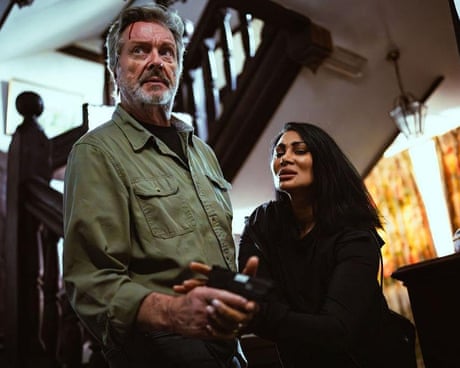
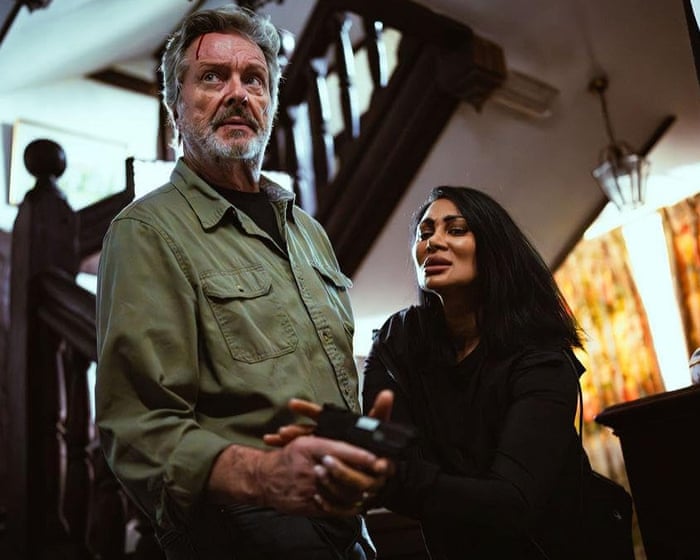
Proceeding from an old-school title pun – yes, the heroine goes by the name Ros Knight – the latest from resourceful microbudget producer Jonathan Sothcott surely has one optimistic eye on filling the void left by the withdrawal of 007 from public life. Here is the gender-flipped Bond some have been seeking: the adventures of a no-nonsense, tough-talking security operative (Jeanine Nerissa Sothcott) who is tasked with recovering a lethal bioweapon pilfered from a scaled-down Porton Down during the prologue. Everything, in truth, proves a bit reined-in. This austerity actioner spends less on its set pieces than the Broccolis typically did on keeping one Aston Martin refuelled; the Sothcotts’ car of choice, emblematically, is the dinkiest of Minis.

In essence, it’s Bond without the attendant glamour, hanging around drizzly marinas and parky-looking country lanes, in dim light that hopefully obscures some of the more obvious budget limitations. What money there is here has wisely been spent on human resources, faces who might still look good on the promotional material: a cameoing Michael Paré as a shady Felix Leiter type, Roger Moore’s son Geoffrey as our gal’s understandably worried-looking lover, Nick Moran giving cut-price Colin Firth as a meddling bureaucrat. The pick of the players is a spry, characterful Ian Ogilvy as Ros’s estranged father, helpfully identifying where the real power lies on a chessboard and generally steadying scenes whenever matters get a bit too threadbare.

Continue reading...

© Photograph: PR IMAGE
© Photograph: PR IMAGE
© Photograph: PR IMAGE
  •  

The Furious review – dial-shifting dadsploitation mayhem as father goes in search of kidnapped daughter

There’s more than a whiff of Taken in Kenji Tanigaki’s exhilarating martial-arts movie, in which a handyman goes after some evil people traffickers

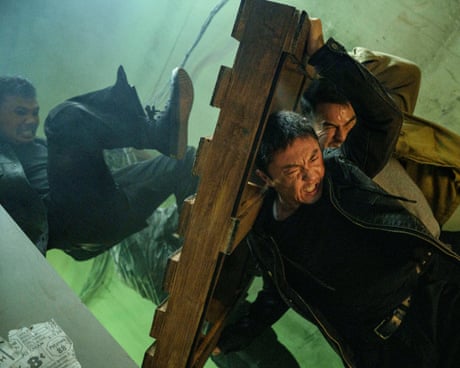
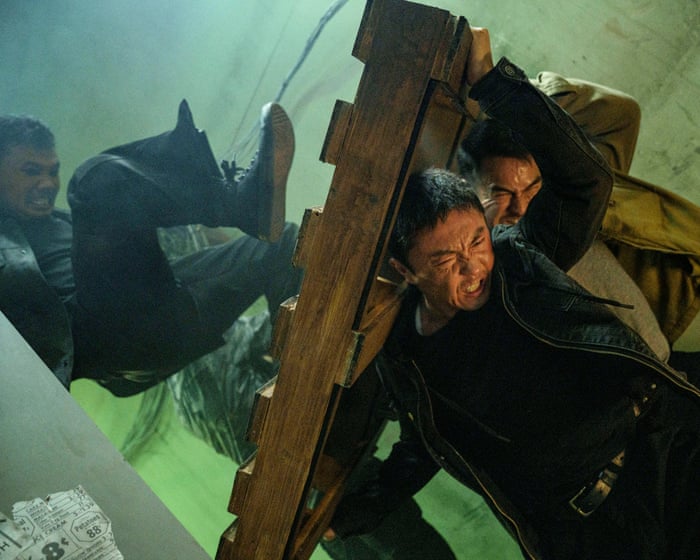
It keeps happening: every few years, usually during a run of lethargic Hollywood spectacles, the Overton window of screen violence gets recalibrated by a muscular wonder from the east. Thundering along in the bloody footsteps of the Raid films and the Hindi punch-’em-up Kill, this martial-arts showcase from Japanese-born, Hong Kong-based director Kenji Tanigaki opens in generic dadsploitation territory. “Somewhere in Southeast Asia”, as a caption has it, mute Chinese handyman Wang Wei (Miao Xie) tears off after the traffickers who have nabbed his daughter (Enyou Yang). Having Hulk-smashed its way out of the Taken box, though, The Furious starts to crank it up. Boy, does it crank it up; the closing half-hour achieves a pummelling intensity unlikely to be matched by any other release this year.

There are one or two plot developments. Cribbing from John Woo’s buddy movies, Tanigaki has his hero run into an undercover journo (Danny Dyer lookalike Joe Taslim) with his own reasons for chasing the traffickers; this route-one approach bears out the advantages of keeping things simple while turning the dial to 11. The complexities are reserved for the frame itself: jaw-droppingly limber, seemingly boneless performers pull off bruising manoeuvres on concrete floors, with Tanigaki’s well-placed cameras capturing unexpected delicacies and flourishes amid otherwise crunching dustups. It’s as if someone has brought a crossbow and a ballpeen hammer to the dance, and they’re intent on using them.

Continue reading...

© Photograph: Lionsgate/PA

© Photograph: Lionsgate/PA

© Photograph: Lionsgate/PA

  •  

Alienated by Disclosure Day? You are not alone

Audiences have propelled Spielberg’s alien thriller to the top of the box office. Yet some exiting the cinema appear to believe this sappy extravaganza is not the director’s finest hour

A sage person once told me every noted director’s career is an ongoing conversation with the audience. Some film-makers – Michael Haneke, say – sit on high, like a headteacher at an assembly, and loftily number the ways in which we’ve let ourselves and the school down. There are others – Lars von Trier and Ari Aster spring to mind – whose work sidles up uncomfortably close, gooses the viewer and then flees the scene sniggering before the relevant authorities can be alerted. The career of Steven Spielberg – arguably the most remarkable career in the history of popular cinema – has long depended on the audience being on the exact same page, looking up wide-eyed and guileless towards the light: his greatest films, from Close Encounters to The Fabelmans, invite further discussion, an awestruck back-and-forth.

You can therefore understand why Spielberg has broached the subject of social division with Disclosure Day, his much-trumpeted return to the summer event movie: he has almost as much skin in this game as the rest of us non-trillionaires. Yet if early box office has been solid enough, secondary indices – not least a slew of disappointed foyer texts from friends and loved ones – would suggest the film has itself proved distinctly polarising. In the US, market research firm CinemaScore – which polls opening-day cinemagoers to assess a film’s commercial prospects – graded Disclosure Day a B, the joint second-worst for a Spielberg film, ahead of AI: Artificial Intelligence (recipient of a harsh C), dead level with Indiana Jones and the Kingdom of the Crystal Skull. Headmaster Haneke again shakes his weary head.

Continue reading...

© Photograph: Niko Tavernise/Universal Pictures and Amblin Entertainment/AP

© Photograph: Niko Tavernise/Universal Pictures and Amblin Entertainment/AP

© Photograph: Niko Tavernise/Universal Pictures and Amblin Entertainment/AP

  •  

Mary Beth Hurt obituary

Actor who made her name in The World According to Garp and was nominated for a Bafta for Woody Allen’s Interiors

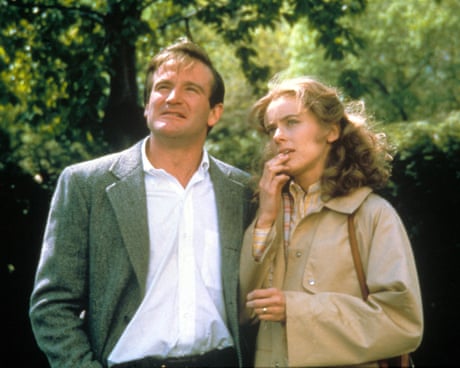
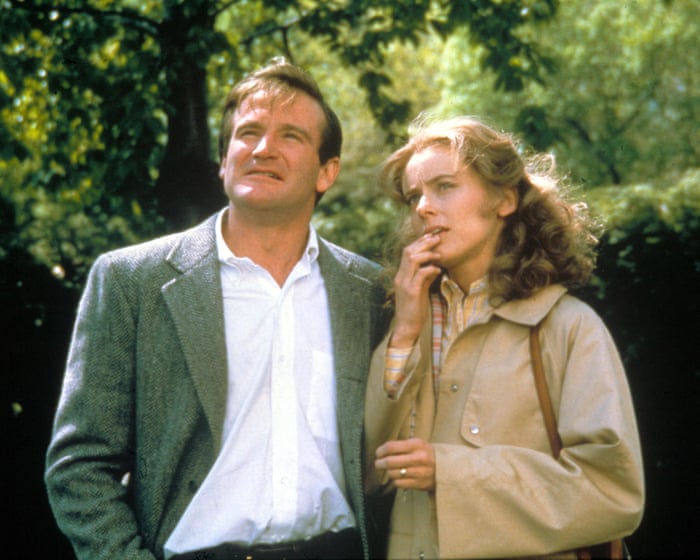
The thoughtful, understated actor Mary Beth Hurt, who has died aged 79, enjoyed the good fortune of seeing her early career intersect with an unusually intellectual moment in American cinema. She earned a Bafta nomination as one of the three sisters in Woody Allen’s Chekhov-via-Bergman experiment Interiors (1978) before causing onscreen havoc as Robin Williams’s frisky college professor wife in the John Irving adaptation The World According to Garp (1982).

In Interiors, Hurt – making her movie debut – was cast as the directionless Joey, who belatedly achieves a kind of purpose in attempting to save her overbearing mother (Geraldine Page) from drowning. By far Allen’s gloomiest vision, the film nevertheless made $10m off a $3m budget, while Hurt did more than tread water in illustrious company. Though she lost out in Bafta’s most promising newcomer category to Christopher Reeve as Superman, the film’s minor-key success prefigured Hurt’s four-decade big-screen career.

Continue reading...

© Photograph: Moviestore/Shutterstock

© Photograph: Moviestore/Shutterstock

© Photograph: Moviestore/Shutterstock

  •  

Dead Lover review – go-for-broke grotesquerie promises fragrant filth in full Stink-O-Vision

Grace Glowicki’s microbudget Canadian horror follows a lovelorn gravedigger who salvages the corpse of her deceased sweetheart

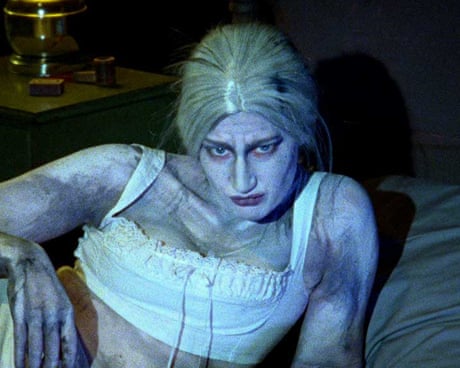
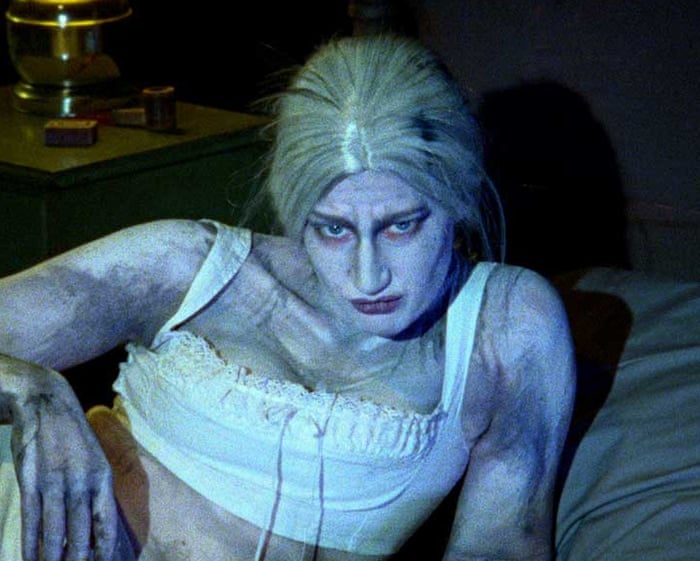
If memory serves, the last theatrical release to arrive with a scratch-and-sniff component was 2011’s Spy Kids 4, which invited its victims to huff the gastric emissions of a yapping robot dog voiced by Ricky Gervais. This microbudget Canadian horror curio offers more art than fart, although its Stink-O-Vision conceit is only one unusual element in what is an altogether bizarre proposition: a morbidly perverse chamber play with a pastiche penny-dreadful plot, pieced together by writer-director-star Grace Glowicki. Some whiff of that narrative persists among the perfumes awaiting your nostrils: scents include “love”, “opium” and “ghost puke” – plus “milkshake’ by way of light relief. Delicate sensibilities are advised to stay at home.

Dead Lover’s heroine is odorous by trade, a lovelorn gravedigger of indeterminate age and origin. Glowicki’s accent, roaming between Canada, Canvey Island and Canberra, becomes part of the fun – she’s driven to extremes after her verse-spouting poet sweetheart (co-writer Ben Petrie) perishes in a shipwreck. Part-Burke and Hare, part-Victor Frankenstein, she salvages what she can of the corpse. The script – part-Carry On, part-Ken Russell – grabs both: “I do hope he loves how big my bush has got while he’s been away,” sighs our gal during some wistful botany. Even without the scratch-and-sniff, even before two lesbian nuns wander on, much of it would qualify as ripe indeed.

Continue reading...

© Photograph: PR HANDOUT

© Photograph: PR HANDOUT

© Photograph: PR HANDOUT

  •  

Peaky Blinders – The Real Story review – how a pop crime sensation became a network-hopping brand

This patchwork tribute to a cultural phenomenon that sent Cillian Murphy’s undercut hairstyle global is a rather unambitious affair

Given the global reach of the Peaky Blinders, next month’s Netflix-backed movie threatens to be as momentous as a new Downton or Bridgerton, only with razor blades concealed about its person. This week, that anticipation secures a pay-per-view release for this hour-long meat-and-potatoes primer, fashioned by Sophie Ellis-Bextor’s dad, Robin Bextor, out of much the same combo of talking heads, drone shots and fair-use clips you would normally encounter on free-to-air Channel 5.

Uppermost in the edit is a recognition that Steven Knight’s creation was one of those peak TV shows that blurred the televisual and cinematic. Heaven’s Gate, The Godfather and Rio Bravo provide contextualising material; critic Michael Hogan positions the show as Knight’s Once Upon a Time in the West Midlands.

Continue reading...

© Photograph: Publicity image

© Photograph: Publicity image

© Photograph: Publicity image

  •  

O’Romeo review – Bollywood Shakespeare takes dive into grisly mafia queens territory

After hit takes on Macbeth, Othello and Hamlet, Vishal Bhardwaj’s Romeo and Juliet adaptation sees dead-eyed lovers drag one another to gutter and grave

It must be Misbegotten Adaptations week. This Hindi gangland epic’s credentials are impeccable: director Vishal Bhardwaj previously wowed with textured, inventive variations on Macbeth (Maqbool, 2003), Othello (Omkara, 2006) and Hamlet (Haider, 2014). But rather than a straightforward modernisation of Romeo and Juliet, this latest revisits a grisly true-crime story ripped from Hussain Zaidi’s Mafia Queens of Mumbai, the book that previously inspired Sanjay Leela Bhansali’s 2022 hit, Gangubai Kathiawadi. The results align Bhardwaj with the newly lurid turn mainstream Bollywood has taken with recent smashes Animal and Dhurandhar, but it’s jarring to witness, as if Kenneth Branagh had followed his turn-of-the-90s Shakespeare successes by trying for Natural Born Killers.

For Venice (or Baz Luhrmann’s Venice Beach), Bhardwaj swaps the Mumbai underworld of the 1990s, ushering in the movies’ first morally degenerate Romeo. Shahid Kapoor’s Hussein Ustara – nicknamed Romeo – is a heavily tattooed bellower employed as a hitman for a local godfather; his Juliet (Animal’s Triptii Dimri) an aggrieved widow clutching a sizeable hitlist. These two are star-crossed: he rescues her amid a bungled assassination attempt on the lawyer smearing her late husband, earning them both powerful foes. The fish tank through which Leo glimpsed Claire Danes here abuts the bed to which this Romeo takes two escorts while his Juliet listens in. Happy Valentine’s Day, everybody.

Continue reading...

© Photograph: Collection Christophel/Alamy

© Photograph: Collection Christophel/Alamy

© Photograph: Collection Christophel/Alamy

  •  

Whistle review – a smart, sympathetic spin on the cursed-artefact horror

Chiller about a skull-shaped Aztec whistle blends Final Destination-style deaths with a tender portrait of anxious adolescence

On the surface, this teen-courting, genre-savvy Irish-Canadian horror effort looks like the kind of project ushered into production after the Philippou brothers’ cursed-artefact chiller Talk to Me cleared up at the box office. However, rather than suburban Australia, writer Owen Egerton and director Corin Hardy relocate us to an autumnal, Springsteen-ready North American steeltown, where artsy high-schooler Chrys (Dafne Keen) inherits the locker of the star basketballer we’ve just seen flambeed in a prologue. The deadly doodad she finds there is a skull-shaped Aztec whistle with either “summon the dead” or “summon your dead” (there’s some linguistic quibbling) inscribed on the side. Naturally she puts it back, and everybody lives happily ever after.

I kid, of course. For a while, the horror element is less in-your-face than it was in the pummelling Antipodean predecessor, but whistleblowing soon makes everyone’s worst fears about dying literal. That development gives Hardy’s increasingly bloody kill scenes a Final Destination-like piquancy: your heart can only go out to the boy racer who perishes via car crash in his upstairs bedroom. One similarity to the Philippous’ film is the sympathy for insecure, troubled teens who couldn’t seem more unlike the usual disposable jocks and prom queens. Egerton observes courtship rituals with tenderness, quietly foregrounding Chrys’s struggles to come out to upright classmate Ellie (Sophie Nélisse); beneath the looming shadow of death, this is an attempt to live one’s truest life.

Continue reading...

© Photograph: Black Bear/PA

© Photograph: Black Bear/PA

© Photograph: Black Bear/PA

  •  

Stitch Head review – animated adaptation of hit Frankenstinian tale hangs loosely together

Asa Butterfield leads a cast of freaks looking for acceptance and love in a harsh and uncaring world in this rather melancholy version of Guy Bass’s kid-lit series

Perhaps the most noteworthy aspect of this middling Brit-populated, European-financed, Indian-manufactured animation is the radical change of career trajectory it represents for its pinballing director, Steve Hudson. Hudson broke through with 2006’s Loachian social drama True North, a migrant movie starring Peter Mullan – now, having witnessed how the other half lives while directing episodes of primetime TV’s Cranford, he pivots to pixels with a big-screen adaptation of Guy Bass’s kid-lit books. Stitch Head feels like a tentative first step into a heavily crowded field, sutured together from ideas and images previously encountered in far more confident and accomplished entertainments.

Bass’s eponymous hero is rendered here as a boy with Bowie-esque heterochromatic eyes, a baseball-like head and the voice of Asa Butterfield; his home is a castle overlooking small town Grubbers Nubbin, where a mad professor (Rob Brydon) carries out Frankenstinian experiments. If the lead character design is solid – accompanying adults may wind up knitting replicas of Stitch Head’s onesie – the surrounding menagerie seems a bit too Pixar for comfort; Stitch’s furry cyclops pal Creature (Joel Fry) is conspicuously a hybrid of Monsters, Inc’s Mike and Sully. Once this pair abscond to join a travelling freak show, Stitch Head ventures a rather melancholy and misshapen showbiz story – that of a boy who, much like the film, just wants to be loved.

Continue reading...

© Photograph: Publicity image

© Photograph: Publicity image

© Photograph: Publicity image

  •  

The Strangers: Chapter 3 review – pointless remake trilogy ends with a sputter

Renny Harlin’s thankless trio of movies, taking a simple story and extending it for no creative reason, is at least finally over

If you’re wondering how this shrug-along horror series has got this far, Renny Harlin shot all three back-to-back in Bratislava in late 2022; reshoots followed the indifferent response to the first chapter in 2024, which didn’t much alleviate the even more indifferent response to last year’s second. We’re getting them whether we wanted them or not: the modest resources had been spent, and so we now arrive at the last knockings which comprise this year’s most dutiful carnage. The mistake is to expand a morally gloomy universe that was better off self-contained; the more light Harlin and collaborators let in, the more their set-up presents as generic runaround, hopelessly out of place amid the recent horror renaissance.

We’re deep into Strangers lore now, but last girl standing Maya (Riverdale graduate Madelaine Petsch, who surely hoped this was her Neve Campbell moment) continues to scurry about a devout woodland community like a bloodied fieldmouse with resting iPhone face; the masked thrill-killers – previously three, now two – have now gained ulterior motives for pursuing her. Also present: tatted survivor Gregory (Gabriel Basso, who must have been hoping for more to do) and ever-shifty Sheriff Rotter (Richard Brake), whose link to the killers is finally made explicit. New blood arrives in the form of Maya’s sister Debbie (Hollyoaks alumna and recent short-film Oscar-winner Rachel Shenton) who comes to town seeking answers, only to be drawn into another round of humdrum stalk-and-slash.

Continue reading...

© Photograph: Lionsgate/PA

© Photograph: Lionsgate/PA

© Photograph: Lionsgate/PA

  •  

Iron Lung review – YouTuber Markiplier crash lands with big-screen sci-fi horror

Online gaming legend Mark Fischbach writes, directs and stars in this feature about a convict on a vague intergalactic mission – but his barebones production has nothing to show

William Goldman’s old showbiz maxim continues to apply that nobody knows anything. Independently financed horror movie Iron Lung has been smuggled into multiplexes without the usual promotional hoopla, where it was keenly awaited by the massed followers of its Hawaiian writer-director-star Mark Fischbach, better known as YouTube gaming legend Markiplier. Many of us have long sensed culture is making a decisive break with the analogue in favour of the (perhaps terminally) online and Fischbach’s film makes that paradigm shift not just visible but visceral; it feels not unlike spending 12 hours on Twitch with all the curtains closed.

Though Markiplier is approaching the horror genre from a notionally fresh angle – by adapting Dave Szymanski’s eponymous space-submarine sim – he lands on the narratively rusty idea of an astronaut straying beyond his depth; this is Moon in dimmer light. Beset by ominous rumbles and mounting doubts about the state of mankind, the begrimed and squalid craft singlehandedly piloted by Fischbach’s straggle-haired convict Simon is indistinguishable from the average teenage bedroom. Our hero staggers round this intergalactic deathtrap completing vaguely specified missions – ram this, repair that, download something or other – like a harassed dad ticking off his Sunday to-do list. In this, Simon proves more proficient than Fischbach’s offscreen self, who is either stumped by or oblivious to the film’s fundamental issues.

Continue reading...

© Photograph: Everett Collection Inc/Alamy

© Photograph: Everett Collection Inc/Alamy

© Photograph: Everett Collection Inc/Alamy

  •  

Jayasree Kabir obituary

Actor who was a celebrated figure of Bangladeshi cinema after being discovered by the Indian director Satyajit Ray

Few performers’ careers have encompassed both discovery by Satyajit Ray and working opposite sometime Likely Lad James Bolam. Yet this was the distinction the actor Jayasree Kabir, who has died aged 73, achieved while shifting between the southern and northern hemispheres as work and family commitments required.

Launched while still a teenager in Ray’s 1970 film Pratidwandi (The Adversary), Kabir compiled a modest yet highly selective list of credits, including several key titles of Bangladeshi cinema, before making her final screen appearance in a 2004 episode of the BBC’s primetime ratings winner New Tricks, starring Bolam.

Continue reading...

© Photograph: web

© Photograph: web

© Photograph: web

  •  

Staying in with the old: the best films to watch on New Year’s Eve

For those not going out to celebrate, you can still party with Harry and Sally, play cards with Jack Lemmon and make merry hell at the Overlook Hotel

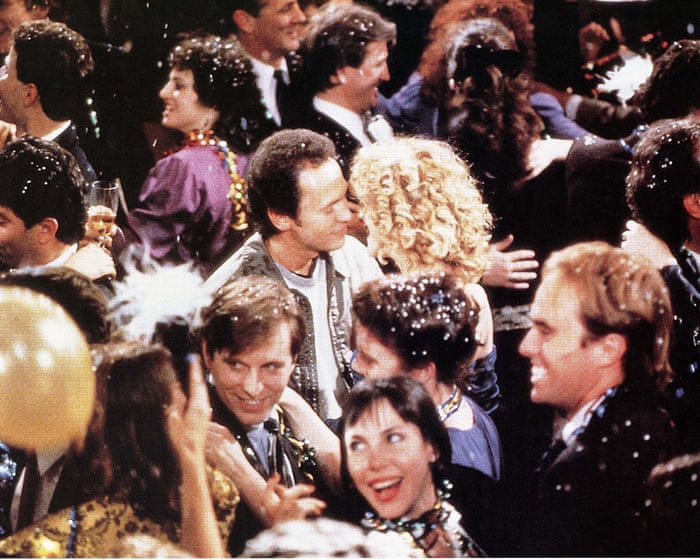
At the end of any especially troublesome year it’s always good to revisit The Apartment, Billy Wilder’s brilliantly bleak comedy of office politics and festive bad cheer. It memorably ends on the stroke of midnight as heartsick Fran Kubelik (Shirley MacLaine) abandons a drunken new year’s party to be with hapless, jobless CC Baxter (Jack Lemmon) instead. Is The Apartment suggesting that Kubelik and Baxter then live happily ever after? Probably not, because I’ve never been convinced that these two lovers are going to stay the course. They’re too mismatched and desperate; their wounds are still too fresh. What the ending gives us is the next best thing: a sudden sense of hope and freedom, with everything packed in boxes except for a bottle, two glasses and a deck of cards. Nothing to lose and nowhere to go. “Shut up and deal.” A clean break, a fresh start. Xan Brooks

Continue reading...

© Photograph: RONALD GRANT

© Photograph: RONALD GRANT

© Photograph: RONALD GRANT

  •  

The SpongeBob Movie: Search for SquarePants review – swashbuckling, snicker-inducing silliness

With a turn by Mark Hamill and a saltily suggestive catchphrase for Patrick, the fourth SpongeBob film shows that anything can still happen in Bikini Bottom

Could the students who snickered their way through those first SpongeBob adventures have foreseen the franchise persisting 25 years on, even after metabolising the most lysergic pharmaceuticals? Such longevity is partly down to extra-commercial considerations, in that the series has a capacity for tickling adults’ funny bones – possibly even those now fully grown students – as well as the very young. Though it can’t claim anything quite as unexpected as the David Hasselhoff cameo in 2004’s The SpongeBob SquarePants Movie – not so much a high bar as an unforgettably wonky one – feature four thinks nothing of making Clancy Brown talk like a pirate while handing royalty cheques to Barbra Streisand and Yello. Anything can still happen in Bikini Bottom.

Preceded by a festive short for Paramount’s other weathered babysitters, the Teenage Mutant Ninja Turtles, the new SpongeBob film soon settles into a familiarly goofy groove, its script a PG-rated treatise on the pros and cons of growth. This SpongeBob (once more voiced by Tom Kenny) is now 36 clams high, a source of particular excitement as this will allow him to ride the rollercoaster of his dreams. (One early, trippy laugh: our overexcitable hero’s imagined loop-the-loops.) As in the best contemporary American animation, though, the corkscrew plotting is the real rollercoaster. SB’s quest to obtain the fabled swashbuckler certificate that will prove him a “big guy” brings him into conflict with the Flying Dutchman, voiced by the suddenly ubiquitous Mark Hamill.

Continue reading...

© Photograph: Paramount/Everett/Shutterstock

© Photograph: Paramount/Everett/Shutterstock

© Photograph: Paramount/Everett/Shutterstock

  •  

Sisu: Road to Revenge review – Finnish hero takes on a Red Army butcher in terrific sequel

Punchy, old-school stunt work, inventive baddie-splattering and a simple plot as our grizzled Finish prospector finds a new foe in his Soviet-occupied homeland

In 2022, the Finnish indie action movie Sisu had the look of a one-hit wonder. Pitting a grizzled prospector against an entire platoon of Nazis, writer-director Jalmari Helander heeded the lessons of George Miller’s Mad Max: Fury Road, principally that there is serious cinematic value in going pedal-to-the-metal along a single, straight narrative line. That profitable sleeper hit now yields this choice follow-up, which somehow feels more expansive while still clocking in under 90 minutes.

Having seen off the SS, indomitable hero Aatami (Jorma Tommila) gains a tragic backstory and a new, vicious postwar foe in the tremendously named Red Army butcher Igor Draganov, played by wily James Cameron favourite Stephen Lang. Again, the economy of Helander’s approach proves striking and thrilling. No unnecessary obstacles have been placed between the audience and a good time at the movies: we get one scene of Aatami dismantling his family home beam by beam and one scene of Draganov being sprung from jail before the pair intersect in the back roads of Soviet-occupied Finland. Cutting to the chase grants Helander time to craft set pieces in which Aatami outthinks and outflanks the Red Army’s might; in this respect, Sisu 2 is a more-of-the-same sequel. The good news is that it remains terrific: punchy, old-school stunt work, crisply uncluttered cutting, and varied, inventive baddie-splattering from the moment Aatami deploys one of those beams to take down a jet fighter.

Continue reading...

© Photograph: Screen Gems/Everett/Shutterstock

© Photograph: Screen Gems/Everett/Shutterstock

© Photograph: Screen Gems/Everett/Shutterstock

  •  
❌