❌

Lese-Ansicht

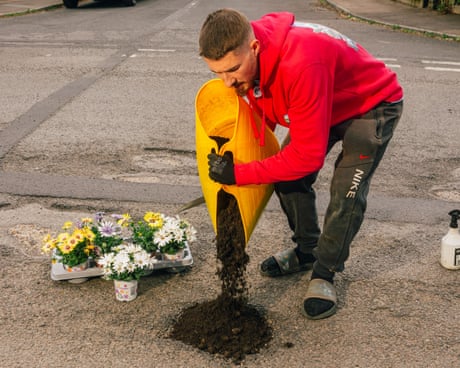
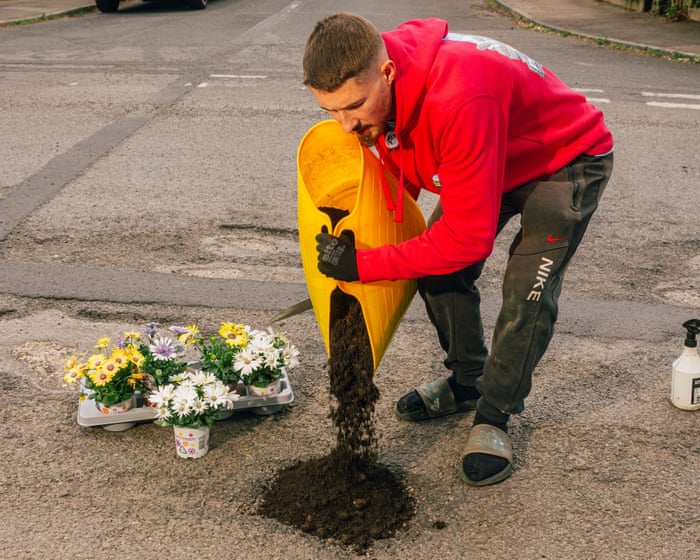
‘One day I thought, that’s enough’: the people fighting back against pothole-riddled roads

The dire state of roads has provoked pothole vigilantes and become a political flashpoint from Manchester to Manhattan. How did we get here?

Sitting in St Albans crown court, waiting for his case to be called, Derek Bennett’s anger momentarily gave way to a sense of disbelief. “I mean, there’s rape and murder cases going on,” he says. “I couldn’t believe I was there, with this stupid subject.”

Initially, neither could the judge, whom Bennett says remarked that such issues were surely a matter for the magistrates. But Bennett, a 68-year-old construction consultant who has spent decades navigating building rules and regulations, had read the law carefully. Section 56 of the UK’s Highways Act 1980 clearly states the “highway authority or other person” responsible for a road in Britain is liable to maintain it, and should it fall into “disrepair”, a member of the public may apply for a crown court order to fix it. The other crimes would just have to wait. Bennett was here about potholes.

Continue reading...

© Photograph: Mark Chilvers
© Photograph: Mark Chilvers
© Photograph: Mark Chilvers

  •  

‘They’ve invented a spurious pseudo-disease’: why are so many men being told they have low testosterone?

Social media influencers and booming men’s health companies are pushing the hormone as an answer to all ills. But is ‘low T’ really problematic – or something created to sell men a cure to a problem they don’t have?

A s a young man, Nick Dooley never thought about his hormones. He always considered himself “quite an outgoing, confident, chatty person”. Around the time he turned 30, however, Dooley began putting on weight and struggling with anxiety, “just slowly becoming a shell of my former self”, he says. By 38, he weighed 22st (140kg) and had a range of health issues. “I spent most of my life sat in front of a TV, doing nothing, with zero motivation, and from how I was in my 20s, that wasn’t me. I knew something wasn’t right.”

In 2024, Dooley had a private medical exam, which flagged he had fatty liver disease and was producing low levels of testosterone. “It wasn’t something I’d ever really heard of,” he says. “So I started down a Reddit rabbit hole.” An NHS doctor told him his blood testosterone levels, at 11.2 nmol a litre, were “within range” (although guidance differs between trusts, NHS England generally considers between 8 and 30 nmol/L normal) and offered him antidepressants. “I knew that wasn’t going to fix me,” he says. Instead, Dooley signed up with Manual, an online men’s health company. After two quick blood tests and a virtual consultation, Manual, which has since rebranded as Voy, started him on testosterone replacement therapy (TRT).

Continue reading...

© Photograph: Kevin Van Aelst

© Photograph: Kevin Van Aelst

© Photograph: Kevin Van Aelst

  •  
❌