❌

Lese-Ansicht

Spain’s trust in high-speed rail ‘broken’ after second deadly crash this year, says PM

Pedro Sánchez vows to investigate crash that killed 69 people – and rebuild public confidence

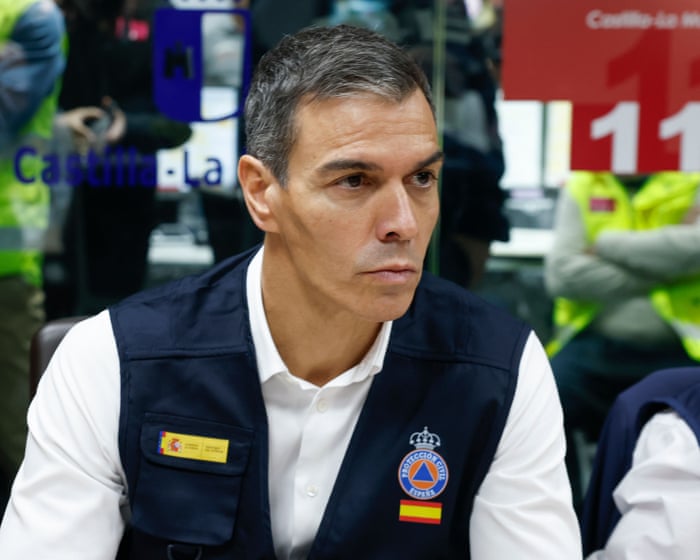
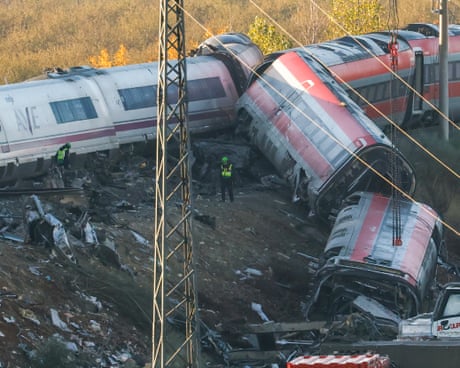
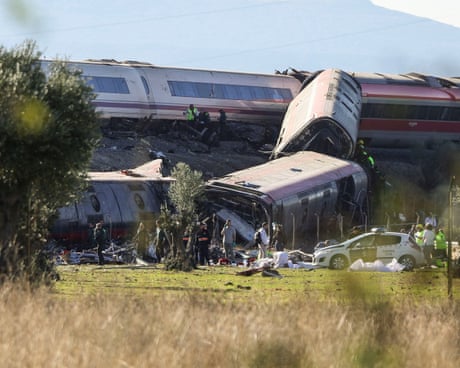
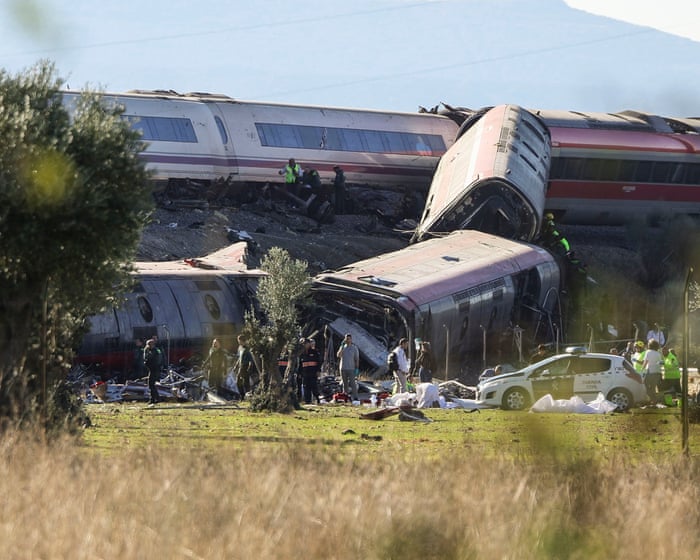
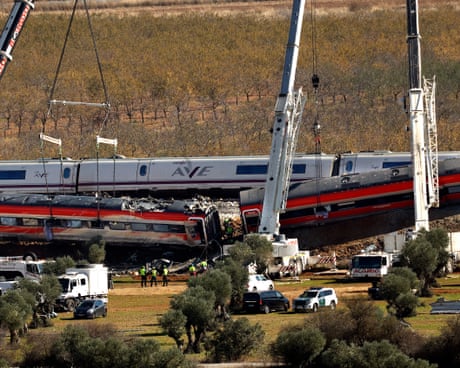
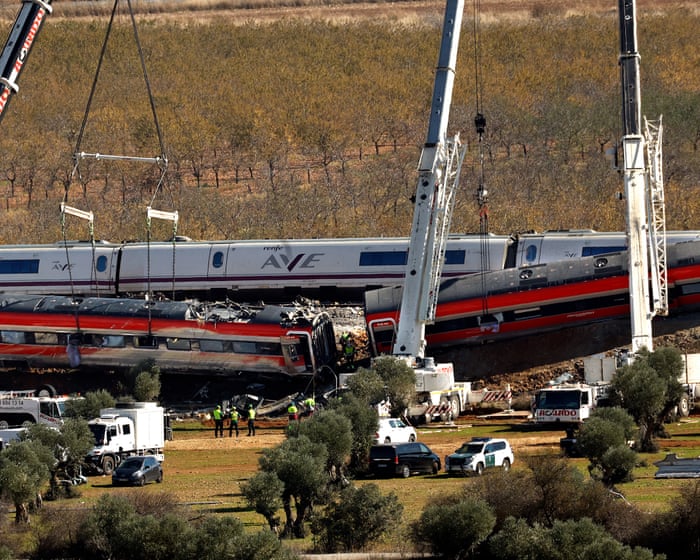
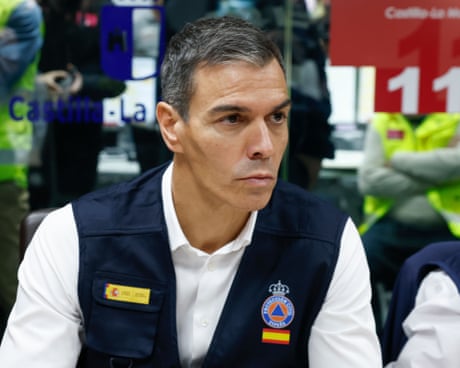
Spain’s prime minister, Pedro Sánchez, has admitted “trust in high-speed rail has been broken” after Wednesday’s train collision that killed at least 69 people, injured more than 100 and prompted a national debate on the safety of the country’s rail network.

Sánchez said Spain was “working tirelessly” to provide information as quickly as possible to the families of the victims – who include people from at least 23 different foreign countries – adding his government was committed to finding what had caused the country’s second deadly train collision this year.

Continue reading...

© Photograph: Óscar del Pozo/AFP/Getty Images
© Photograph: Óscar del Pozo/AFP/Getty Images
© Photograph: Óscar del Pozo/AFP/Getty Images

  •  

Battle lines redrawn in Spain’s snap election after latest train disaster

Next month’s poll no longer the contest it was, as Pedro Sánchez finds himself forced to defend government’s safety record

One of the most dependable cliches of contemporary Spanish politics is that it never pays to bet against Pedro Sánchez. Time and time again – as leader of the Spanish Socialist Workers’ party (PSOE) and as prime minister – Sánchez has shown an almost preternatural ability to profit from adversity, and to confound expectations and wrongfoot his opponents.

But next month’s snap general election, called by Sánchez after rightwing and far-right parties voted down the housing reforms his coalition government had announced in response to angry protests, may suddenly not be the contest it once was.

Continue reading...

© Photograph: Sergio R Moreno/GTRES/Shutterstock

© Photograph: Sergio R Moreno/GTRES/Shutterstock

© Photograph: Sergio R Moreno/GTRES/Shutterstock

  •  

Survivors shell-shocked after deadly Spain train crash - The Latest

Spain has begun three days of mourning after at least 69 people were killed and more than 100 were injured in a crash between two high-speed trains. The town of Urda has become the site of a major operation, as emergency services continue to search through the wreckage and relatives wait for news of their loved ones. There is growing public anger over the incident, which is the second fatal train collision in Spain in less than a year. Lucy Hough speaks to the Guardian’s Madrid correspondent, Sam Jones

Continue reading...

© Photograph: AFP/Getty Images

© Photograph: AFP/Getty Images

© Photograph: AFP/Getty Images

  •  

Spain begins mourning period as search continues for train crash victims

Emergency services, drones and dog unit continue to comb carriages as Civil Guard sets up clinics for relatives to provide DNA samples

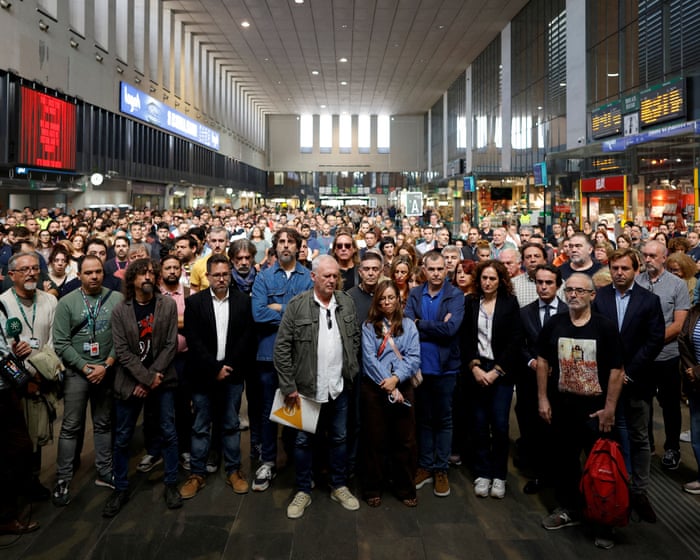
Spain began three days of mourning on Thursday for at least 69 people who died in a high-speed rail collision, as hospitals continued to treat dozens of injured passengers and train drivers went on strike to urge more investment in railway safety.

The trains – one from Spain’s state-owned Renfe and the other from the private rail company Iryo – were travelling from Madrid towards the southern region of Andalucía on Wednesday when they collided just before 9am. After the Iryo train came to a halt, the other slammed into its rear, knocking several carriages off the track near Urda in the central region of Castilla-La Mancha.

Continue reading...

© Photograph: Marcelo del Pozo/Reuters

© Photograph: Marcelo del Pozo/Reuters

© Photograph: Marcelo del Pozo/Reuters

  •  

‘It all happened in a split second’: survivors recount details of deadly train crash in Spain

Passengers describe carriages full of seriously injured people after crash that has claimed at least 68 lives

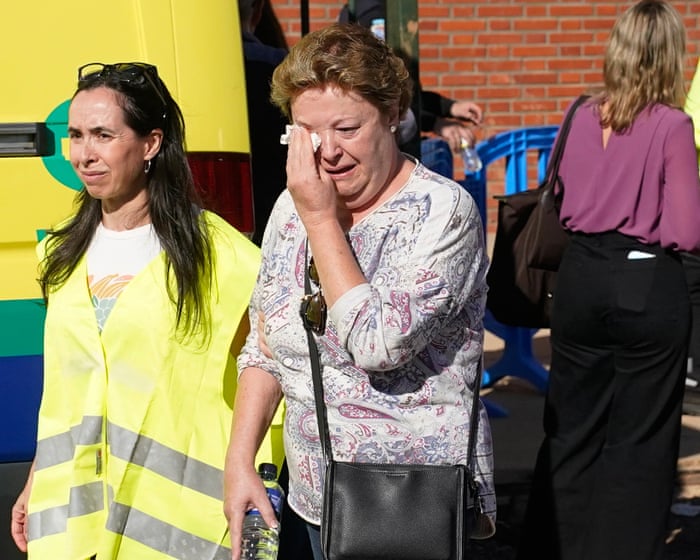
Josimar Medina woke a little before 9am on Wednesday to find himself airborne and hurtling through his carriage on the fast train from Madrid to Seville.

“I remember flying through the air and looking for my girlfriend, who was also shooting through the air,” said Medina, a 37-year-old tourist from the northern Peruvian city of Chiclayo.

Continue reading...

© Photograph: Andrea Comas/AP

© Photograph: Andrea Comas/AP

© Photograph: Andrea Comas/AP

  •  

Spain’s Sánchez declares three days of mourning after at least 68 killed in Toledo train crash

High-speed service travelling from Madrid to Seville ran into back of another, knocking two carriages off track

The Spanish prime minister has declared three days of mourning after at least 68 people were killed and dozens more injured in a collision between two high-speed trains that officials suggested was caused by an “inexplicable” error at the central command centre.

The trains, one from Spain’s state-owned Renfe and the other from the private rail company Iryo, were travelling on Wednesday morning in the same direction on the line that stretches from the Spanish capital, Madrid, to the southern region of Andalusia. After the Iryo train came to a halt, the other slammed into its rear, knocking several carriages off the track near the town of Urda.

Continue reading...

© Photograph: Ismael Herrero/EPA/Shutterstock

© Photograph: Ismael Herrero/EPA/Shutterstock

© Photograph: Ismael Herrero/EPA/Shutterstock

  •  

‘It’s part of our history’: can the menú del día survive Spain’s changing eating habits?

Established under the Franco dictatorship, the lunchtime ritual is in decline but all is not lost

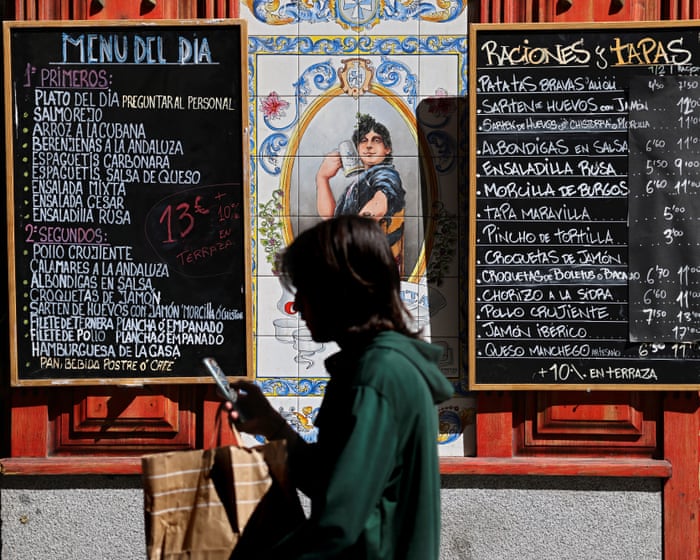
A little before lunchtime each working day across Spain, evidence of one of the lingering, if less notorious, legacies of the Franco dictatorship is carefully traced in chalk, marker pen and printer ink.

Beckoning to hungry workers from blackboards, whiteboards and pieces of paper hastily taped to windows, the competitively priced menú del día, or daily set-price lunch, has been part of everyday Spanish life for more than half a century. But while 4m menús are still served each weekday, Spain is slowly losing its appetite for the familiar ritual.

Continue reading...

© Photograph: Thomas Coex/AFP/Getty Images

© Photograph: Thomas Coex/AFP/Getty Images

© Photograph: Thomas Coex/AFP/Getty Images

  •  

US ambassador to Israel calls West Bank settler attack on American photojournalist ‘terror’

Mike Huckabee calls for arrest and prosecution of those responsible as Heidi Levine, 63, recovers in hospital in Israel

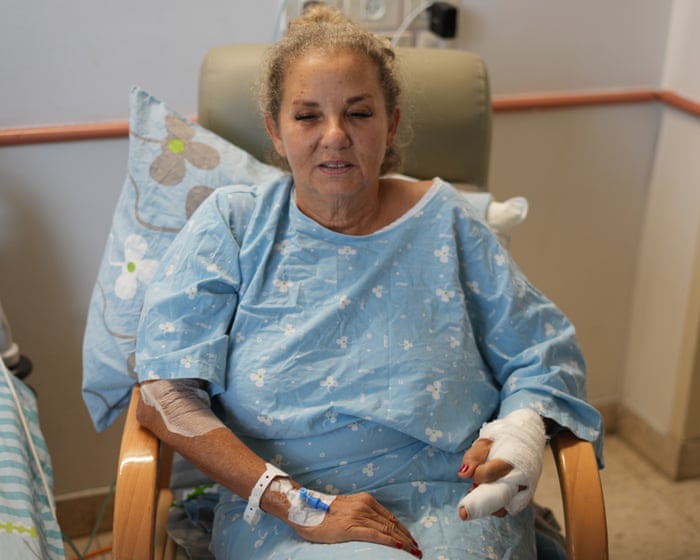
The US ambassador to Israel, Mike Huckabee, has denounced the settler attack that left the Washington Post photojournalist Heidi Levine badly beaten and needing surgery as a “despicable act of terror” and called for the arrest and prosecution of those responsible.

Levine, 63, an award-winning journalist who lives in Israel, was set upon last Friday by masked Israeli settlers who used clubs and other weapons to attack Palestinian people attempting to harvest their olives in occupied West Bank towns.

Continue reading...

© Photograph: Ariel Schalit/AP

© Photograph: Ariel Schalit/AP

© Photograph: Ariel Schalit/AP

  •  

Zelenskyy thanks Trump for resumed intelligence sharing after US Starlink ‘message’

Two people killed and at least 17 injured as Russia and Ukraine continue to trade strikes on power infrastructure

Volodymyr Zelenskyy on Sunday thanked the Trump administration for resuming intelligence sharing between the two countries, but maintained the US had intentionally throttled its Starlink satellite internet access so that Donald Trump could send a “message” in his ongoing feud with the Ukrainian president.

In an interview on NBC, Zelenskyy said the US had “unblocked” intelligence on impending Russian ballistic missile strikes, which have pounded the country’s energy infrastructure as winter draws in.

Continue reading...

© Photograph: Omar Havana/AP

© Photograph: Omar Havana/AP

© Photograph: Omar Havana/AP

  •  

‘We are suffocating’: protests spread to Lisbon and Milan as housing and living cost tensions intensify

Hundreds at Lisbon tent camp demand action, as Giorgia Meloni says march in Italy was exploited by ‘hooligans’

The angry protests that have convulsed Spain and France in recent weeks have spilled over to Italy and Portugal, with rioters clashing with police and setting property on fire in Milan, and a tent encampment springing up in Lisbon over the weekend.

A march in central Milan on Saturday to protest against rising living costs began peacefully but ended with masked rioters throwing stones, paving blocks and other objects at riot police and setting fire to barricades made from bar tables.

Continue reading...

© Photograph: Piero Cruciatti/AFP/Getty Images

© Photograph: Piero Cruciatti/AFP/Getty Images

© Photograph: Piero Cruciatti/AFP/Getty Images

  •  

Miriam González Durántez launches new centrist party in Spain

Wife of former British deputy PM Nick Clegg promises liberal alternative to the PP and Socialists before snap election

The Spanish lawyer Miriam González Durántez has launched a new liberal, centrist party, vowing to clean up politics and give voters an alternative to the dominant socialist and conservative parties as the country gears up for next month’s snap general election.

González Durántez, an ex-EU adviser who is married to the former British deputy prime minister Nick Clegg, says her new party, Democracia21, will offer a modern, transparent kind of politics that “doesn’t feed on fear, insults or nostalgia”.

Continue reading...

© Photograph: Alejandro Martinez Velez/Reuters

© Photograph: Alejandro Martinez Velez/Reuters

© Photograph: Alejandro Martinez Velez/Reuters

  •  

Thousands march in Madrid after death of evicted pensioner Maricarmen

Rally to remember woman, 87, whose rent battle with investment firm triggered nationwide protests over housing crisis

About 20,000 people took part in a march through the centre of Madrid on Thursday evening in memory of María del Carmen Abascal, the 87-year-old woman whose eviction from her flat in the capital a fortnight before her death triggered mass protests over Spain’s housing crisis.

The pensioner, whose flat had been bought by an investment firm that sought to increase her rent by 230%, had become the public face of the crisis before her death in hospital on Wednesday night.

Continue reading...

© Photograph: Burak Akbulut/Anadolu/Getty Images

© Photograph: Burak Akbulut/Anadolu/Getty Images

© Photograph: Burak Akbulut/Anadolu/Getty Images
  •  

An elderly woman’s death after eviction is rocking Spain. Will public outcry help its socialist PM stay in power?

Recent death of 87-year-old woman likely to focus attention on crisis in run-up to election at end of November

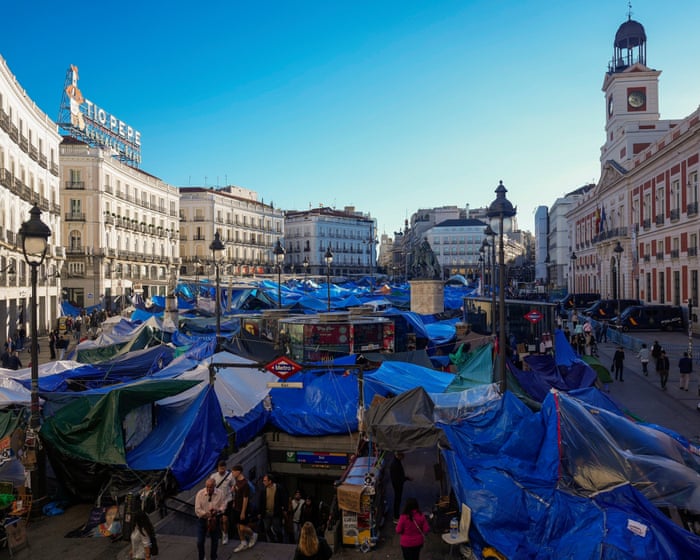
Even before María del Carmen Abascal died on Wednesday night, a mere fortnight after her eviction from the Madrid flat where she had lived for most of her life, the frail 87-year-old woman had become the enduring face of Spain’s housing crisis.

Her plight – and the wider issue it embodied – had led to street demonstrations, the creation of a protest camp in the middle of the Spanish capital, and spurred the socialist-led government to propose emergency measures to facilitate and protect access to housing. When rightwing and far-right parties voted down those measures in congress last week, the prime minister, Pedro Sánchez, responded by announcing a snap general election for the end of November.

Continue reading...

© Photograph: Borja Sanchez-Trillo/EPA

© Photograph: Borja Sanchez-Trillo/EPA

© Photograph: Borja Sanchez-Trillo/EPA

  •  

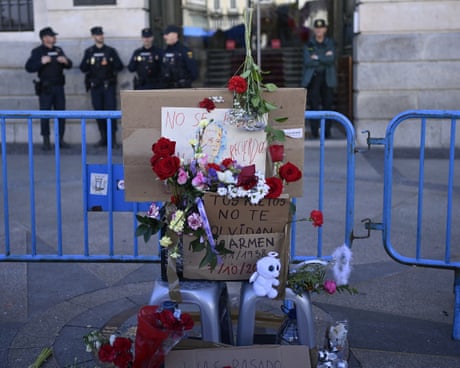
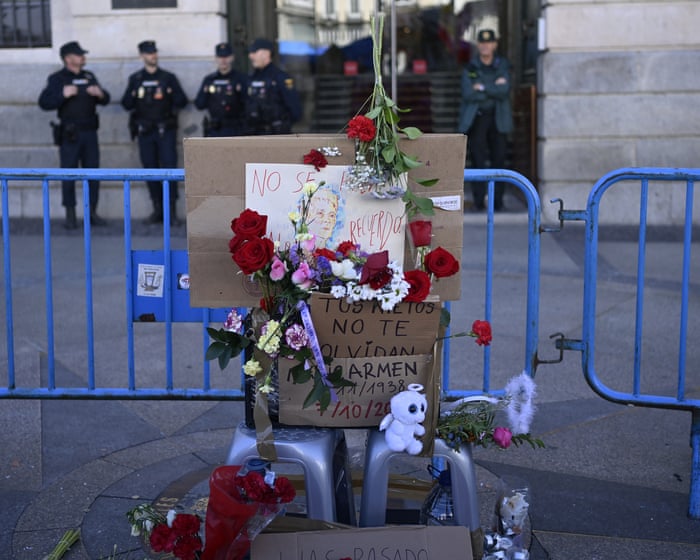
María del Carmen Abascal, symbol of Spain’s housing protests, dies aged 87

Maricarmen’s eviction from Madrid apartment after over seven decades set off wave of protests against housing crisis

María del Carmen Abascal, the 87-year-old whose eviction set off a nationwide wave of protests against Spain’s housing crisis, has died.

News of her death came two weeks after Maricarmen, as she had come to be known across Spain, was evicted from the Madrid apartment where she had lived for more than seven decades.

Continue reading...

© Photograph: Europa Press News/Europa Press/Getty Images
© Photograph: Europa Press News/Europa Press/Getty Images
© Photograph: Europa Press News/Europa Press/Getty Images

  •  

Will Pedro Sánchez’s gamble to call snap general election in Spain pay off?

Spanish PM is hoping to shore up his fragile mandate by tapping into public anger over country’s housing crisis

Spaniards will head to the polls on 29 November – months before schedule – after the country’s socialist prime minister, Pedro Sánchez, announced a snap general election on Monday morning. The vote, which will be Spain’s fifth general election in 10 years, is likely to be dominated by growing anger over the housing crisis

Continue reading...

© Photograph: Jon Nazca/Reuters

© Photograph: Jon Nazca/Reuters

© Photograph: Jon Nazca/Reuters

  •  

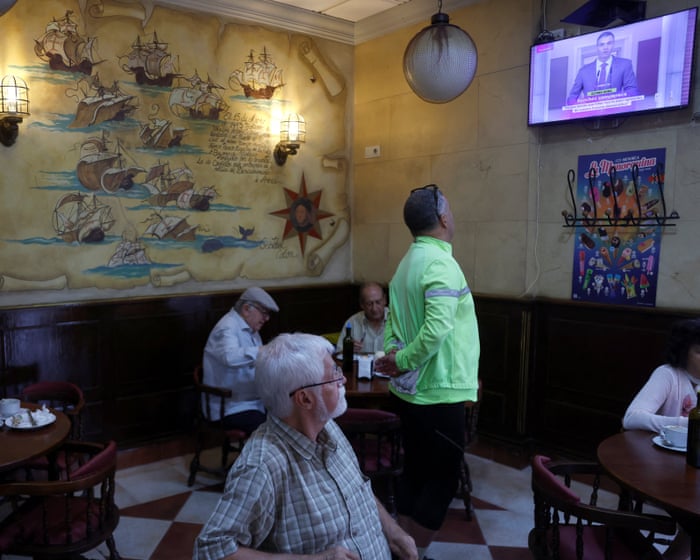
Spain’s PM Pedro Sánchez calls snap election after housing law fails to pass

Election called after rightwing parties voted down emergency legislation aimed at tackling housing crisis

Spain’s socialist prime minister, Pedro Sánchez, has once again staked his political future on a snap general election called after rightwing parties torpedoed emergency legislation to tackle the housing crisis.

Sánchez, who has been in office since 2018, used a televised address to communicate his decision, which had been widely expected. The next general election had been due before the end of next summer.

Continue reading...

© Photograph: Xavier Malafosse/SIPA/Shutterstock

© Photograph: Xavier Malafosse/SIPA/Shutterstock

© Photograph: Xavier Malafosse/SIPA/Shutterstock

  •  

Madrid residents brace for noise and disruption from new F1 circuit

City council emphasises economic case for Madring amid local outrage over disruption and environmental impact

Opponents of Madrid’s newly constructed Formula One circuit have accused the regional authorities of putting profit before people’s wellbeing after tests for the inaugural Spanish Grand Prix at the track later this month yielded noise levels that were many times the legal decibel limit.

The regional government of Madrid and the city council are hoping that the 5.4km-long (3.3 miles) Madring circuit – which has been built in the north-east of the Spanish capital at a cost of €83m (£71m) – will attract visitors, boost the local economy and put the city firmly on the motor racing map. The Madring bills itself as “a perfectly connected circuit: just 20 minutes from the city centre”.

Continue reading...

© Photograph: Aaron Heredia/NurPhoto/Shutterstock

© Photograph: Aaron Heredia/NurPhoto/Shutterstock

© Photograph: Aaron Heredia/NurPhoto/Shutterstock

  •  

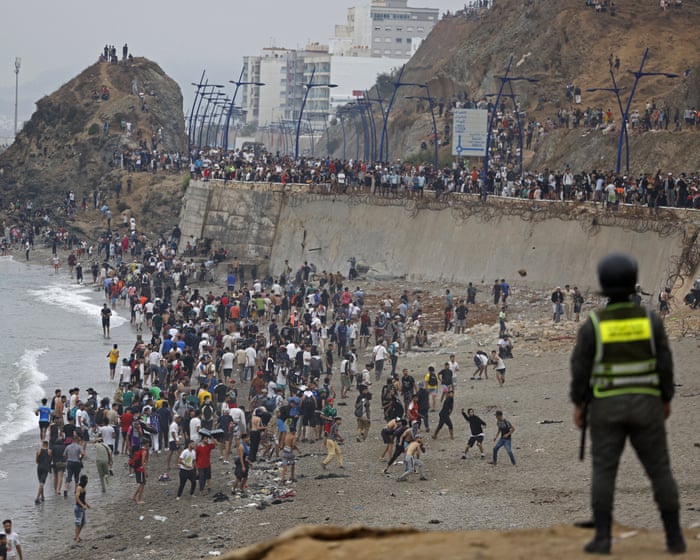
Morocco not to blame for Ceuta border breach, says Spanish PM

Pedro Sánchez says two countries cooperating and accuses Israel and Russia of spreading fake news about migration

Spain’s prime minister, Pedro Sánchez, has said there is no evidence to suggest the Moroccan government was behind last month’s massive border crossing into Ceuta but accused Israel and Russia of spreading disinformation.

As many as 141 people are thought to have died trying to enter the Spanish enclave at the end of July. The influx of about 70,000 men, women and children unleashed a political crisis, a humanitarian emergency and reignited tensions within the EU over immigration.

Continue reading...

© Photograph: Abdel Majid Bziouat/AFP/Getty Images
© Photograph: Abdel Majid Bziouat/AFP/Getty Images
© Photograph: Abdel Majid Bziouat/AFP/Getty Images

  •  

The president and the penthouse: how Madrid’s government spent €6.3m on a temporary ‘office’

Saga surrounding purchase for outspoken rightwing regional leader Isabel Díaz Ayuso refuses to go away
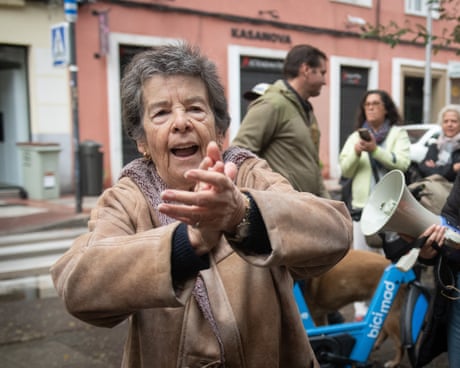
The outspoken rightwing leader of the Madrid region is under growing pressure to explain why her government spent €6.3m (£5.4m) on a residential penthouse purportedly to serve as a temporary workspace while her offices were being renovated.
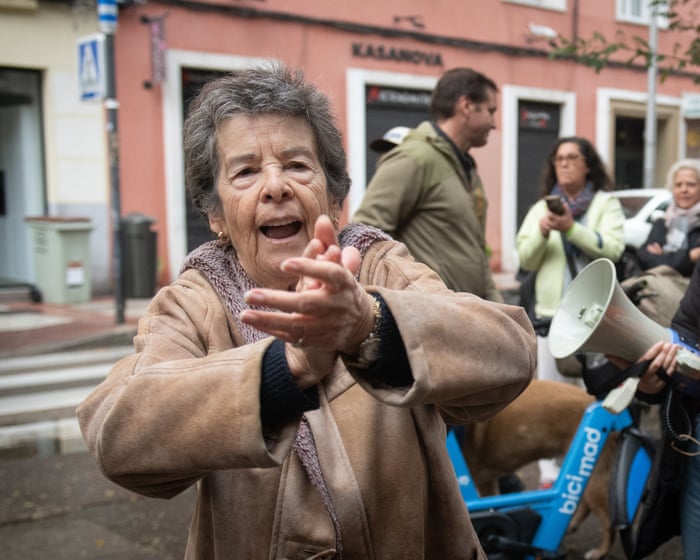
Isabel Díaz Ayuso, a prominent member of Spain’s opposition conservative People’s party (PP), has been the president of the Madrid region since 2019.

Continue reading...

© Photograph: Europa Press Entertainment/Europa Press/Getty Images

© Photograph: Europa Press Entertainment/Europa Press/Getty Images

© Photograph: Europa Press Entertainment/Europa Press/Getty Images

  •  

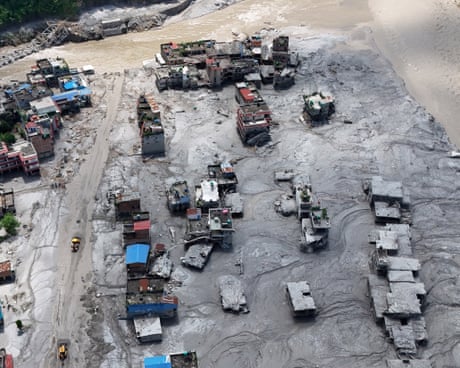
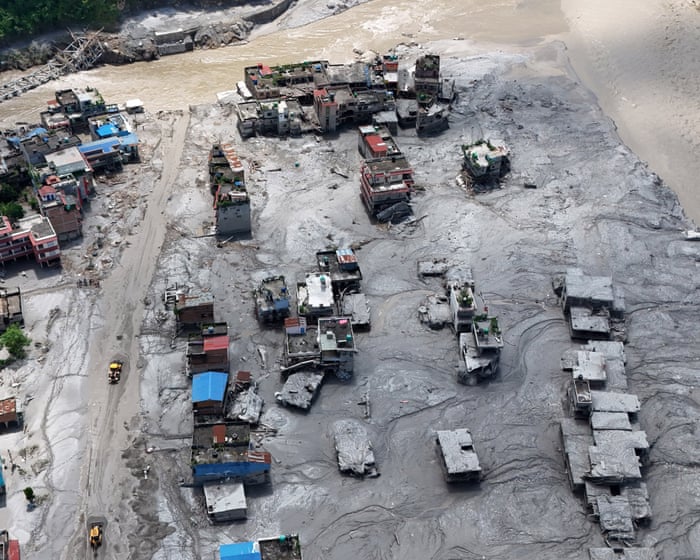
Race to get aid into Nepal and Tibet amid warnings flood lake could burst

Flash floods have killed at least 469 people while homes and infrastructure have been swept away

The international community was scrambling to get aid into flood-stricken parts of Nepal and Tibet on Thursday as authorities warned that a lake ⁠formed at the ⁠site ⁠where the ​deadly torrents occurred ⁠was rising and ⁠at risk ​of ‌bursting.

The catastrophic flash floods that hit Nepal and Tibet on Wednesday, thundering down valleys and obliterating entire villages, killed at least 469 people and left more than 1,300 missing.

Continue reading...

© Photograph: Skanda Gautam/SOPA Images/Shutterstock

© Photograph: Skanda Gautam/SOPA Images/Shutterstock

© Photograph: Skanda Gautam/SOPA Images/Shutterstock

  •  
❌