❌

Lese-Ansicht

The White House Farm massacre phone calls: could a single disputed digit set Jeremy Bamber free?

He has been in prison for 41 years for killing five members of his family. But if a phone call was made to the police by Bamber’s father on the night of the murders – as his team believes – one of the UK’s most notorious criminals could be exonerated

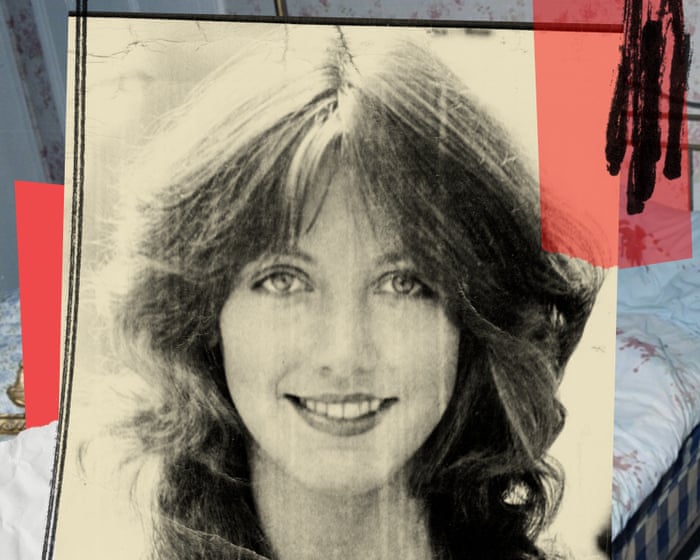
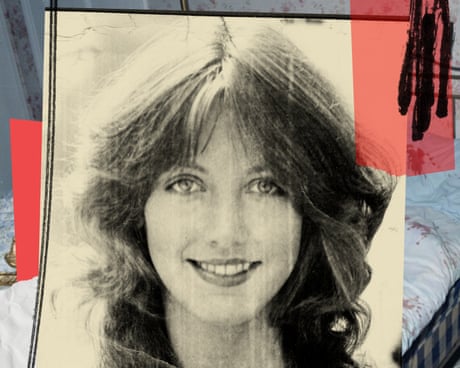
On 7 August 1985, five people were found dead at White House Farm in Essex, England: 28-year-old Sheila Caffell (known to her family as Bambi); her six-year-old twin sons, Daniel and Nicholas; and her 61-year-old adoptive parents, June and Nevill Bamber. All five had been shot with a rifle. Caffell’s 24-year-old brother, Jeremy Bamber, who was also adopted, had called to alert Essex police to a disturbance inside the farmhouse – he said his father had called to tell him – and had been outside with the police for four hours before the bodies were discovered. Caffell, who had recently been hospitalised with schizoaffective disorder and is said to have feared her children were going to be taken into foster care, was found with the rifle lying on her chest, pointing towards her neck. There were two gunshot wounds to her neck and chin and a bloodied Bible by her side.

The case was initially thought to be open and shut, a tragic murder-suicide committed by Caffell. But a month later, Bamber was arrested after relatives went to the police to voice their suspicions about him; his former girlfriend Julie Mugford then told police he had made a confession to her. The relatives went on to inherit from Nevill and June Bamber’s considerable estate after Bamber’s convictions. It was later discovered that Mugford had agreed to sell the story of their relationship to the News of the World for £25,000 if Bamber was convicted. Essex police and crown prosecutors had also agreed to drop charges against her for burglary, chequebook fraud and selling cannabis, because “prosecuting her could jeopardise her availability or credibility as a key witness” against Bamber.

Continue reading...

© Composite: Guardian Design; Sinenkiy/Getty

© Composite: Guardian Design; Sinenkiy/Getty

© Composite: Guardian Design; Sinenkiy/Getty

  •  

The White House Farm massacre - exclusive: new forensic evidence suggests Sheila Caffell killed herself. Is Jeremy Bamber innocent?

In 1985, Bamber was sentenced to life imprisonment for killing five members of his family. Now analysis of crime scene photographs by a leading forensic biologist could exonerate him.

Warning: this article contains graphic photographs

On 7 August 1985, five people were found dead at White House Farm in Essex, England: 28-year-old Sheila Caffell (familiarly known as Bambi); her six-year-old twin sons Daniel and Nicholas; and her adoptive parents, June and Nevill Bamber. All five had been shot with a rifle. Caffell’s 24-year-old brother, Jeremy Bamber, who was also adopted, had alerted Essex police to a disturbance inside the farmhouse – he said his father had called to tell him – and was outside with the police for four hours before the bodies were discovered. Caffell, who had recently been hospitalised with schizoaffective disorder and is said to have feared her children were going to be taken into foster care, was found with the rifle lying on her chest, pointing towards her neck. There were two gunshot wounds to her neck and chin, and a bloodied Bible by her side.

Continue reading...

© Composite: Guardian Design; David Thorpe/ANL/REX/Shutterstock

© Composite: Guardian Design; David Thorpe/ANL/REX/Shutterstock

© Composite: Guardian Design; David Thorpe/ANL/REX/Shutterstock

  •  

‘Some things are worth dying for’: Karl Bushby’s incredible 28-year walk home, through deserts, kidnappers and polar bears

The ex-soldier has marched 36,000 miles since he left Hull in 1998. He’s crossed the Americas, Asia and Europe, fallen in love, been held at gunpoint and been deported, in between nearly drowning, nearly dying of thirst and nearly being eaten. But that’s just the start of it …

‘It’s a big moment,” says Karl Bushby, who has had plenty of big moments in his life. He is recording himself on his phone for social media. “We’re in Dover, and I’m about to have my first fish and chips and mushy peas in 28 years. Mushy peas, my God, I forgot they even existed!” He points his phone at the plate in front of him. “It better be good.” And he tucks in. “Mmmm. See, this is a big chunk of fish and a decent bit of batter, and that’s something you don’t see in other parts of the world. I mean, come on! That. Is. Fish. And. Chips! You see, Britain is special.”

It has been two days since Bushby swam the Channel to return to England. Tomorrow, he’ll start the walk home to Hull for the first time since he left in 1998. He hopes to get back on 1 November, the same date he set off all those years ago.

Continue reading...

© Photograph: Courtesy of Karl Bushby

© Photograph: Courtesy of Karl Bushby

© Photograph: Courtesy of Karl Bushby

  •  

Billionaire Sheiks and ‘sham’ contracts: the Manchester City scandal – podcast

Jonathan Liew explains the accusations against Manchester City – and Simon Hattenstone explains how it feels to be a fan

Simon Hattenstone, a features writer for the Guardian, has been a Manchester City fan for more than 50 years. He was very young – and recovering from a childhood illness that had nearly killed him – when he started going to matches in his home town with his dad.

For a long time, it was a relationship built on occasional highs and many, many lows. But then something extraordinary happened: Manchester City’s fortune began to turn and it had a glittering decade – until it all came crashing down.

Continue reading...

© Photograph: Martin Rickett/PA

© Photograph: Martin Rickett/PA

© Photograph: Martin Rickett/PA

  •  

We Manchester City fans fear relegation and losing trophies … but club are bang to rights

Despite attempts to legally filibuster the charges out of existence for the past three years, we’ve rightfully failed

It couldn’t have been more prophetic. In 2008, 15 years before Manchester City were charged with financial fraud, fans started singing “City’s going down with a billion in the bank” to the tune of Yellow Submarine. This was because the former Thailand president Thaksin Shinawatra’s 15-month ownership of City had come to an abrupt end when more than £1bn of his assets were frozen. And although Sheikh Mansour of the UAE had stepped in to save City, we were sinking fast.

Despite the UAE’s untold riches, by December we were in the relegation zone. It’s called Cityitis – shorthand for our tendency to self-destruct when things appear to be going well. In fact we won trophy after trophy. But we continued to sing the song about going down with a billion in the bank. When the financial fair play investigation was launched in 2018, the chant got louder. Then in 2023 we learned there were more than 100 charges. The chant became even louder and more cavalier. And now that our grubby, griftin’, cheatin’ chicken has come home to roost, you can bank on one thing (if banks still deal with us) – the chanting will be louder and more cavalier than ever.

Continue reading...

© Photograph: Oli Scarff/AFP/Getty Images

© Photograph: Oli Scarff/AFP/Getty Images

© Photograph: Oli Scarff/AFP/Getty Images

  •  

‘We’ve been on a good run lately. We’ve not had a row for weeks!’: Coleen and Wayne Rooney on marriage, mistakes and making reality TV

His on-pitch triumphs (and off-pitch scandals), her turn as Wagatha Christie … for years, the football power couple have made headlines, despite efforts to keep their lives private. So why are they now about to reveal all on screen?

“If you’d said to me 10 years ago, ‘You’re going to be doing a TV show about the family’, I would have said, ‘No chance’,” Wayne Rooney says. Few would have disagreed. After all, he and his wife Coleen had spent their adult lifetime running away from the public gaze. And not very successfully, at that.

Wayne, a wonderful footballer with the strength of a bull and agility of an acrobat, was often back-page news. He scored 253 goals for Manchester United (overtaking Bobby Charlton’s record), 53 for England (the record until Harry Kane surpassed him in 2023), is still England’s youngest goal scorer (17 years and 317 days), won five Premier League titles, was twice young player of the year and was voted player of the year by both his peers and football journalists in 2009/10.

Continue reading...

© Photograph: Stephanie Sian Smith/The Guardian

© Photograph: Stephanie Sian Smith/The Guardian

© Photograph: Stephanie Sian Smith/The Guardian

  •  

‘I am seen as a Marmite figure’: Margaret Hodge on political battles, victories, errors – and regrets

At 82, the politician and anti-corruption champion is indefatigable. She discusses fighting the BNP, tackling antisemitism, and why, with her new memoir, she’s reclaiming the word ‘battleaxe’

Margaret Hodge doesn’t do small talk. “So, how d’you think Andy’s doing?” is her opening gambit. “Not too bad, huh? I think he’s had a really good start.” It’s classic Hodge – sufficiently curious to ask the question about the new Labour prime minister, and assertive enough to provide the answer before you get yours out. “Yep. Fantastic empathy. But then he’s got to deliver. I think the budget is going to be the key moment. And we’ve also got these awful global challenges and Iran and Hormuz. God, it’s a mess. Ugh. Hahahaha!” She hoots with laughter at the horror of it all.

She says she was against ousting Keir Starmer. “I thought we were doing so badly that what we really needed was a complete change in what we were about, what our ambitions were, where we were going, what our priorities were and how we were going to have a message of hope. I thought it was about much more than Keir at that point. I thought changing leaders was like rearranging deckchairs on the Titanic. I think I was wrong, right?”

Continue reading...

© Photograph: Suki Dhanda/The Guardian

© Photograph: Suki Dhanda/The Guardian

© Photograph: Suki Dhanda/The Guardian

  •  

‘I don’t chase the dollar. I never did’: the astonishing hidden life of Mr T

He grew up in the ghetto, became a global superstar – then gave it all up. Why did he step away from the spotlight?

Mr T explains why he’s late, but he wants to make one thing clear – this is not an apology. “You caught me in my devotion, and nothing comes before God. So I won’t say I apologise for the delay. I just want you to know that God comes first in all my life. For allowing my success, I give God the glory.”

He is here to discuss a new Netflix documentary, Untold Mr T: I Pity the Fool. At 74, he rarely gives interviews. But when Mr T decides to talk, he really does talk. What Mr T thinks, Mr T says. And I’ve never heard anyone trash the very thing they’re here to promote quite like Mr T does today.

Continue reading...

© Photograph: Nolis Anderson/The Guardian

© Photograph: Nolis Anderson/The Guardian

© Photograph: Nolis Anderson/The Guardian

  •  

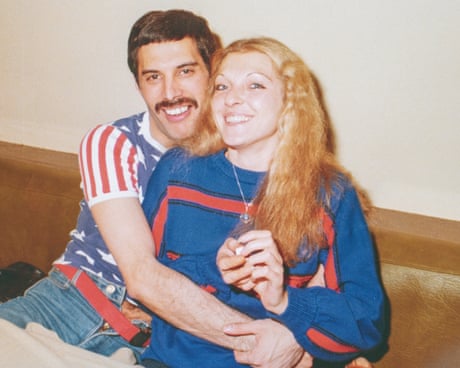
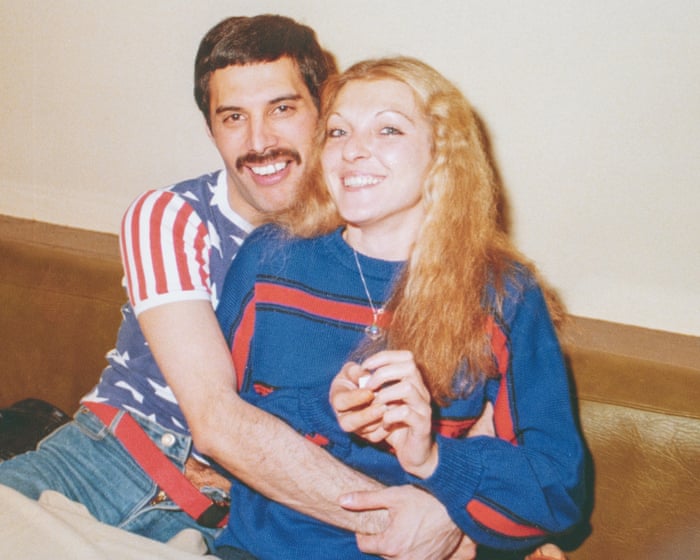
The extraordinary untold story of Freddie Mercury: Mary Austin on her best friend – and love of her life

He was Queen’s flamboyant frontman. She was his shy girlfriend, dreaming of marriage until they both realised he preferred men. Thirty-five years after his death, in the week he would have turned 80, Mary Austin talks about their unbreakable bond

There were four silver trunks in Mary Austin’s attic that she packed in the mid-1980s and hadn’t opened since. It was too painful. Almost 40 years on, in 2022, she opened one. It was crammed with lyrics from songs written by Freddie Mercury – Don’t Stop Me Now, Killer Queen, We Are the Champions and, of course, Bohemian Rhapsody. She shut the case. It was still too painful.

“To say I was overwhelmed is an understatement,” she says. “I couldn’t look at the lyrics. I felt as I did when I originally packed them – that they were his personal belongings and I was being offered an opportunity to delve into them, and I couldn’t do that.” Eventually she asked her two sons to sift through the treasures on her behalf.

Continue reading...

© Photograph: Courtesy of Mary Austin

© Photograph: Courtesy of Mary Austin

© Photograph: Courtesy of Mary Austin

  •  

‘In 1984, I worked 363 days’: how Russ Abbot soared to success – then walked away

The comedian dominated Saturday night TV in the 1980s, with his sketch shows attracting 18 million viewers. Next came the West End musicals and sitcoms. But in 2016 he quietly disappeared from the limelight. What happened?

The electronic gates slide open to reveal a gorgeous Portuguese villa, a swimming pool and a beansprout of a man. “You’ve made me feel very important,” says Russ Abbot with a smile. “Come in!”

It’s more than 30 years since Abbot, aged 78, dominated Saturday night TV with his sketches, songs and impersonations. He appealed to all sorts. Kids, parents and grandparents united around the TV – first for Russ Abbot’s Madhouse, which ran from 1980 to 1985, then The Russ Abbot Show, from 1986 to 1991. He was joined by the inimitable Bella Emberg and a cast of young comics, including Les Dennis, Dustin Gee and Michael Barrymore. But make no mistake, it was Abbot’s show and the 80s was his decade. At his peak, he attracted 18 million viewers an episode.

Continue reading...

© Photograph: David Levene/The Guardian

© Photograph: David Levene/The Guardian

© Photograph: David Levene/The Guardian

  •  

Prison without hope or end is psychological torture. Burnham doesn’t need another review to tell him that | Simon Hattenstone

Political leaders have kicked the can of public protection tariff reform down the road for years – causing hopeless inmates to take their own lives

In January 2015, Tommy Nicol told his family that he was suffering “psychological torture of a person who is doing 99 years”. Nicol had been given an imprisonment for public protection (IPP) sentence six years earlier for stealing a car from a garage and injuring the owner. He was already two years beyond his four-year tariff – the minimum time you can serve in prison before being considered for release. Nicol was given another two-year knock-back from the Parole Board and was in despair. If and when he got released, he would be on a lifelong licence. Eight months later, aged 37, Nicol hanged himself at The Mount prison in Hertfordshire, England.

By the time he took his own life, the inhumane IPP sentence had already been abolished for three years. The problem is, it didn’t apply retroactively. Those already serving IPP sentences stayed on them. This, despite David Blunkett, who devised and introduced them as home secretary in 2005, calling it “the biggest regret” of his political career. And this despite UN special rapporteur on torture Alice Edwards agreeing with Tommy Nicol that the sentence was “psychological torture”. Astonishingly, more than 2,000 people are still serving IPP sentences in England and Wales.

Simon Hattenstone is a Guardian features writer

In the UK and Ireland, Samaritans can be contacted on freephone 116 123, or email jo@samaritans.org or jo@samaritans.ie. In the US, you can call or text the 988 Suicide & Crisis Lifeline at 988 or chat at 988lifeline.org. In Australia, the crisis support service Lifeline is 13 11 14. Other international helplines can be found at befrienders.org

Continue reading...

© Photograph: Murdo Macleod/The Guardian

© Photograph: Murdo Macleod/The Guardian

© Photograph: Murdo Macleod/The Guardian

  •  

‘I’ve sat at the very precipice of life’: ex-footballer Clarke Carlisle on gambling, depression – and survival

The former Leeds and Burnley defender has struggled with his mental health for most of his life. But it took five suicide attempts for him to admit how badly he wanted to end it. He talks about how he turned the corner – and his hopes for his new post with the charity Mind

‘How are you?” I ask Clarke Carlisle. Usually when you meet people it’s a nicety. Not with Carlisle. He smiles ecstatically. “I’m incredibly well, thank you. Yeah, really, really good,” says the former footballer and incoming chair of the mental health charity Mind. “I have been consistently well – not just stable, but well – for three or four years now.”

Few people understand what it is to be mentally unwell quite like Carlisle does. And few understand what recovery means like he does. “It doesn’t happen by accident. Once you get stable that’s not the end of the journey. And that seems to be the MO of our society these days. You do something, you go into hospital and they patch you up, then send you on your way. And that’s the same with mental health. You might get some pills, have a counselling session, you might have a hug and a chat with someone, and they think that’s the end of the journey. And it’s not.”

Continue reading...

© Photograph: David Levene/The Guardian

© Photograph: David Levene/The Guardian

© Photograph: David Levene/The Guardian

  •  

‘I never mentioned it for 25 years. I didn’t want to be a victim of the bomb’: Hiroshima survivor Koko Kondo on horror, anger and forgiveness

On that fateful day in 1945, Kondo was just a baby in her mother’s arms. She talks about her father’s newly discovered eye-witness account of the aftermath – and why she decided to continue his work as a peace campaigner

• ‘Everywhere there were pitifully injured people’: read an extract from Kiyoshi Tanimoto’s memoir

Koko Kondo holds up a tiny salmon-pink dress. “This is what I was wearing,” she says. The dress, with its white-ribboned collar, is in perfect condition. A miracle. On 6 August 1945, Koko was eight months old and crawling on a tatami mat at the family parsonage. Mrs Takaki, a member of the church, had just popped round to have a chat with Chisa, Koko’s mother. Chisa gathered Koko up in her arms so she wouldn’t be a distraction, and they stood by the door. It was 8.15am; a serene summer day in Hiroshima. That was when the uranium-fuelled atom bomb, named Little Boy by the Americans, was dropped. The most deadly bomb in history. Koko and Chisa were buried in the rubble, unable to move. The parsonage roof had crashed down on them. For 40 years, Chisa couldn’t bear to tell Koko about the day, the pink dress, and how they survived. It was too painful.

Today, 81 years on, Koko is talking to me via video link. She is an elegant woman with a kind face and a vertiginous silver quiff. She speaks quietly in perfect English, then surprises you by stamping on a word fiercely to make her point. The virtual background to her screen is the Hiroshima Peace Memorial Park, which was built on ground zero, the point directly underneath where the bomb exploded.

Continue reading...

© Photograph: Aya Fujioka/The Guardian

© Photograph: Aya Fujioka/The Guardian

© Photograph: Aya Fujioka/The Guardian

  •  

Lizzo answers her critics: ‘I’m a fat, black, happy girl – they were always going to try to tear me down’

Three years ago, the pop star was riding high after a sellout tour. But then a slew of shocking accusations from her former dancers changed everything. Where does she go from here?

On 30 July 2023, Lizzo finished a 10-month world tour. She had played 80 shows across North America, Europe, Oceania and Asia, selling more than 853,000 tickets and grossing $86.3m. The rapper turned pop star was on top of the world. Then everything came crashing down.

Two days later, three of her former dancers alleged that they had been subject to sexual harassment, a hostile work environment, religious and racial discrimination and fat-shaming on the tour. Two had been sacked, and one resigned. After the accusations, there was a huge pile-on from mainstream media and social media. And it seems to have gone on ever since. Lizzo, whose real name is Melissa Viviane Jefferson, disappeared. We were told that she was busy recording the follow-up to her huge hit album Special. But there were also rumours that she’d had a terrible breakdown.

Continue reading...

© Photograph: Shaniqwa Jarvis/The Guardian

© Photograph: Shaniqwa Jarvis/The Guardian

© Photograph: Shaniqwa Jarvis/The Guardian

  •  

‘I understand why some people think I’m a bitch’: world No 1 Aryna Sabalenka on screaming, stunt matches, and why she’s much nicer off court

Last month she had a post-defeat meltdown and insisted she was done with tennis. On the eve of Wimbledon, she talks about what really happened – and why her ‘aggressive’ face gives people the wrong impression

It’s less than a month since Aryna Sabalenka told the world that she felt like walking away from tennis. The world No 1 had suffered an almighty implosion. Sabalenka is as famous for her implosions as she is for her on-court ferocity. But this was a different level.

She had been playing at her imperious best in the French Open, one of tennis’s four major tournaments. Winner after winner from the back of the court, and when she bullied her opponents back to the baseline she’d dupe them with the most delicate drop-shot. In the last 16 against Naomi Osaka she looked invincible. And then came the quarter-final. By now, all her main rivals were out. The 28-year-old had a clear path through to winning her fifth grand slam singles title. Again, she was playing well against the world’s No 25, Diana Shnaider. Sabalenka won the first set easily, 6-3, and was 5-3 up in the second set. Victory was an inevitability. And then it happened. One game lost. Then another. And another. The wind had picked up, playing conditions got ever worse, the organisers failed to close the roof. And Sabalenka was walloping shot after shot out of court.

Continue reading...

© Photograph: Emmie America/The Guardian

© Photograph: Emmie America/The Guardian

© Photograph: Emmie America/The Guardian

  •  

‘I felt I could smash my past up through sex’: the ruthlessness and redemption of Rupert Everett

‘Brash, disingenuous, lethal’: that’s how the 67-year-old actor describes his younger self. He lied to his partners, disrespected his audiences, betrayed his friends. Has this indiscreet, unreliable heartbreaker finally grown up and settled down?

Rupert Everett is struggling with the heatwave. It reminds him of the summer of 1976, when he was 17, basking in the sun, serene as a sloth, his future spread out ahead of him. It’s so different now. “When you were young, hot weather was nice. But when you’re chubby like me now, it’s not so nice,” he says.

“You’re not chubby,” says his publicist, with reassuring brio.

Continue reading...

© Photograph: David Levene/The Guardian

© Photograph: David Levene/The Guardian

© Photograph: David Levene/The Guardian

  •  

Versatile, graceful, lovable and spiky: Bernardo Silva is in a sphere of his own | Simon Hattenstone

Manchester City are about to lose a player Pep Guardiola called ‘my weakness’ and ‘my favourite’. Who am I to disagree?

Bernardo Silva is more than a footballer. He’s a time-travelling, shapeshifting superhero. He even looks like a superhero – a nine-volt battery of a man doing battle with feral giants on the pitch. In 55 years of watching football I’ve never seen anybody or anything like him. For the past decade I’ve been lucky enough to watch him turning out week in, week out for my club, Manchester City. And now it’s time to say goodbye.

Some footballers are famous for having played in virtually every position on the field. James Milner, John O’Shea and Phil Neville come to mind. They tend to be solid, stolid types, as reliable as they are unimaginative.

Continue reading...

© Illustration: David Humphries

© Illustration: David Humphries

© Illustration: David Humphries

  •  

‘I want to hit 100’: Derek Jacobi on Aids, ageing and failing to boil an egg

The giant of stage and screen is 87 and still hates looking in the mirror. At home with his husband, he talks about weeping, sleeping with Daniel Craig, terrifying directors and the joys of white wine and a nap

Derek Jacobi is chatting to the photographer in the living room. His voice is unmistakeable – rich, buttered, every sentence beautifully parsed and phrased. I’m in the kitchen with his husband, Richard Clifford, who is making coffee. He tells me they have been together 47 years. “We met when I was 22 and he was 39.”

“I’m a child snatcher,” guffaws Jacobi from the lounge.

Continue reading...

© Photograph: David Levene/The Guardian

© Photograph: David Levene/The Guardian

© Photograph: David Levene/The Guardian

  •  

‘Men are so frightened of being too cuddly or affectionate’: Danny Dyer on going from hardman to heart-throb in Rivals

The actor has always been full of surprises – and now thanks to Jilly Cooper’s bonkbuster he’s become a romantic lead. As the series returns, he talks about marriage, masculinity and meditation

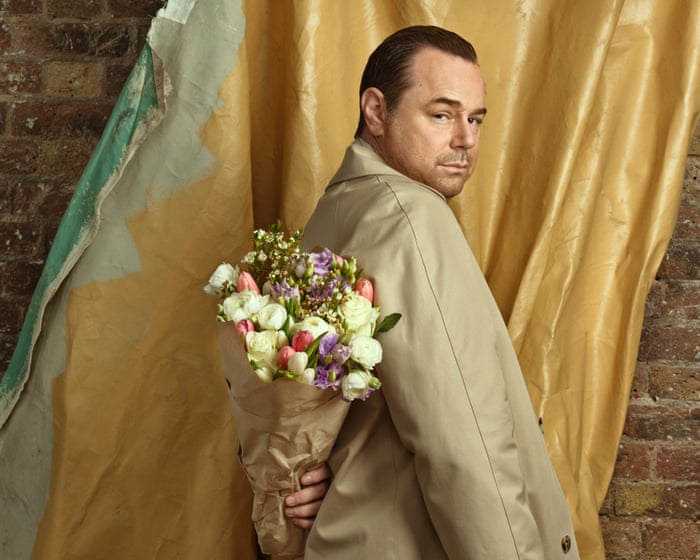
Danny Dyer is dressed in white and carrying a huge bouquet of flowers when I drop in on his Guardian photoshoot. “Hello, baby,” he says to me in a voice so bad-boy East End, so fabulously filthy, that he sounds like a parody of Danny Dyer. We’ve never met before, but you wouldn’t guess.

Dyer has been in the limelight for 30 years, but never like this. As he approaches 50, he has become a middle-aged heart-throb. The week we meet, he’s on the front of Rolling Stone UK, and he can’t quite believe it. “I’m on it now, as we speak. And the cover before was Timothée Chalamet! Pretty cool! You know, I’ve had a long career and I couldn’t get on the cover of anything till now.”

Continue reading...

© Photograph: Jay Brooks/The Guardian

© Photograph: Jay Brooks/The Guardian

© Photograph: Jay Brooks/The Guardian

  •  

‘I wanted alcohol to take me to a place where I was not’: comedian John Robins on the moment he realised he had a drinking problem

For most of his life, John Robins assumed he got more out of alcohol than it took from him. Now he knows it was the other way round

• ‘I picked up the bottle of wine and drank straight out of it. I was seven’ Read an exclusive extract from his new memoir

The comedian John Robins has always loved talking about booze. In his standup, he used to portray himself as a bon viveur who knew how to give himself the best of times; a larky drinker out for a laugh; a nerdy tippler who recorded nights out in Sherlock Holmes-themed notepads – arrival time, drinks consumed, percentages of alcohol, pub atmosphere. He also had a routine about contracting gout, even though he never has done in real life.

On the radio, he hosted a show with his friend Elis James in which they meticulously detailed pub crawls and coined the phrase “Keep it session”, encouraging listeners to stick to low-alcohol beer when out for the whole evening. If anybody was in doubt about his love of booze, Robins then devised a podcast series called The Moon Under Water, named after George Orwell’s 1946 essay describing the perfect pub. In it, Robins and his co-host Robin Allender invited guests to design their dream watering hole. Yet, despite dedicating so much time to the discussion of booze, Robins could never find the right word to describe his relationship with it. Then in 2023 he finally discovered it: alcoholic.

Continue reading...

© Photograph: Pål Hansen/The Guardian

© Photograph: Pål Hansen/The Guardian

© Photograph: Pål Hansen/The Guardian

  •  
❌