❌

Lese-Ansicht

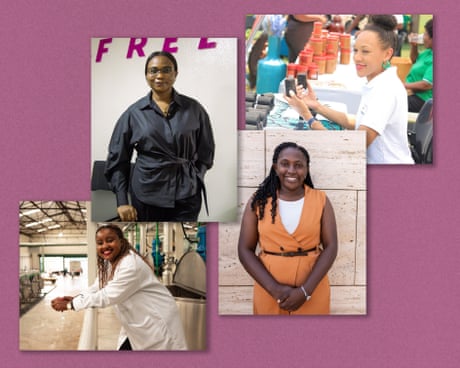
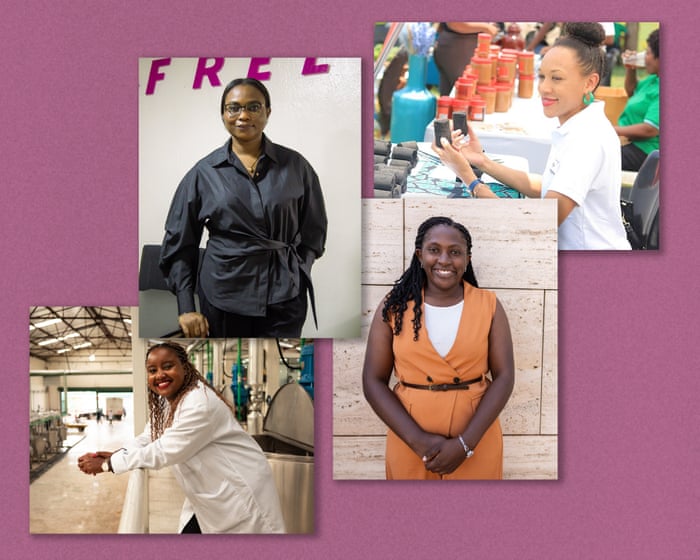
‘They assume the man next to me is the owner’: four women doing business in Africa in their own way

From feeding schoolchildren to recycling tyres, these entrepreneurs are challenging stereotypes while solving social and environmental problems

Africa is thought to have a higher proportion of female entrepreneurs than any other continent and yet many still struggle to access financing. Four business leaders from Nigeria, Uganda, Kenya and Malawi tell us about the inspiration behind their success – and the challenges women still face.

Continue reading...

© Illustration: Edwin Ndeke/ Valentine Benjamin/Stefanie Glinski
© Illustration: Edwin Ndeke/ Valentine Benjamin/Stefanie Glinski
© Illustration: Edwin Ndeke/ Valentine Benjamin/Stefanie Glinski
  •  

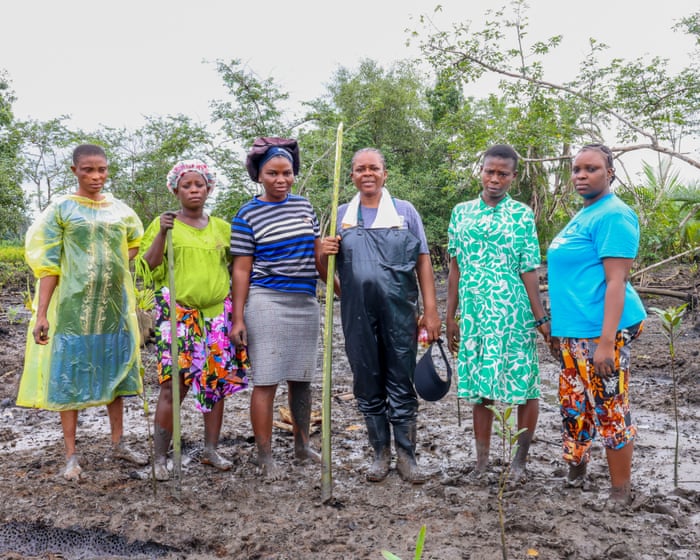
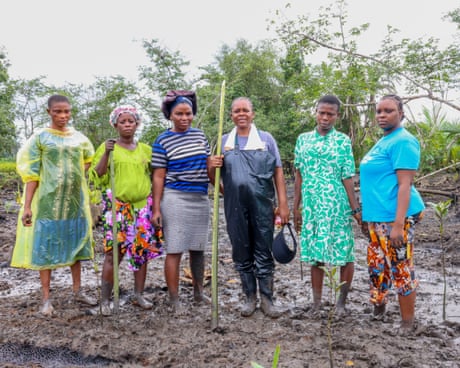
One green shoot at a time: the women restoring mangrove forests in the oil-ravaged Niger delta

In a region of Nigeria blighted by decades of pollution, Martha Agbani and her team are not just replanting trees but regaining ownership of their lost lands and livelihoods

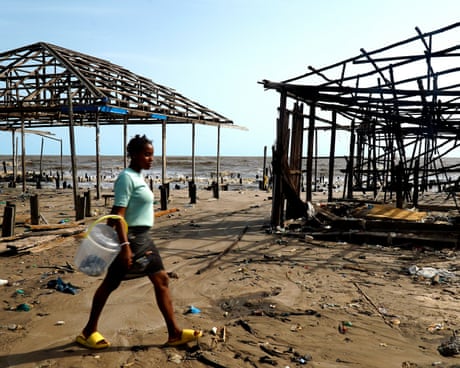
A toxic landscape was familiar to Martha Agbani when she was growing up – the smell of crude oil in the air, rivers running black and trees dying on the banks. In Ogoniland, in Nigeria’s oil-exploited Niger delta, Agbani saw the spills rot away the mangrove forests and destroy the livelihoods of communities around her.

Now, she is training women to plant them back – one fragile green shoot at a time.

Continue reading...

© Photograph: Valentine Benjamin

© Photograph: Valentine Benjamin

© Photograph: Valentine Benjamin

  •  

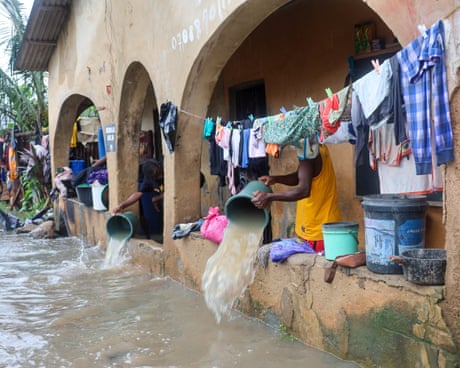
‘Every time the rain falls, the fear comes back’: life in Lagos under the constant threat of floods

As Nigeria braces for another season of devastating rains, people affected describe the mental toll of repeatedly rebuilding their lives

Murky water first tore down a perimeter fence, then bubbled into the yard before spilling into every room. Within minutes, electronics, kitchen appliances, furniture, documents and academic certificates lay submerged.

With the water rising rapidly, Daniel Ebiesua evacuated his home in the Shogunle area of Lagos, with his wife, their two-week-old baby, four-year-old son and his mother-in-law to a neighbour’s upstairs apartment. There they stayed trapped for four hours, helplessly watching the flood swallow the streets below.

Continue reading...

© Photograph: Valentine Benjamin

© Photograph: Valentine Benjamin

© Photograph: Valentine Benjamin

  •  

Smoke, soot and toxic fumes: Nigerian families living in shadow of burning oil well six years after blowout

Villagers in Awoye in the Niger Delta say the ongoing pollution is causing sickness and environmental destruction, while pleas for help go unanswered

Perched on a narrow hospital cot across from her son, Bodunwa Orugbemi can hear the distant Atlantic Ocean and smell the stench of crude oil on the air drifting in from the shore. For days, her 21-year-old son has been lying in this hospital in the Niger Delta, swallowing small spoonfuls of food without being able to speak.

Seventy‑year‑old Orugbemi says Ijadopin started coughing one evening in May, inside their small wooden home in Awoye on Nigeria’s Atlantic coastline. After a few days his cough intensified, then he developed a skin irritation, followed by difficulty breathing.

Continue reading...

© Photograph: NurPhoto/Getty Images

© Photograph: NurPhoto/Getty Images

© Photograph: NurPhoto/Getty Images

  •  

‘The sea took everything away’: how Nigeria’s ‘Happy City’ is disappearing beneath the waves

More than half of Ayetoro – a Christian utopia founded in the 1940s – has been lost to the ocean, and its remaining people are running out of options

In the early hours of 15 February 2019, the Atlantic Ocean came for Arowo Victoria’s livelihood. The 60-year-old retired midwife was asleep when neighbours began banging on her door, shouting that the sea had started covering buildings along the nearby coastline.

By the time she got to her small shop, she discovered that the Atlantic had already swept it away, destroying the business she had built with borrowed money after retirement.

Continue reading...

© Photograph: Dan Ikpoyi/AP

© Photograph: Dan Ikpoyi/AP

© Photograph: Dan Ikpoyi/AP

  •  

‘Now people stop to ask their names and even stroke them’: Nigerians embrace dogs as pets

As social attitudes shift and concern for animal rights grows, the dog meat tradition in many parts of Nigeria is increasingly being questioned

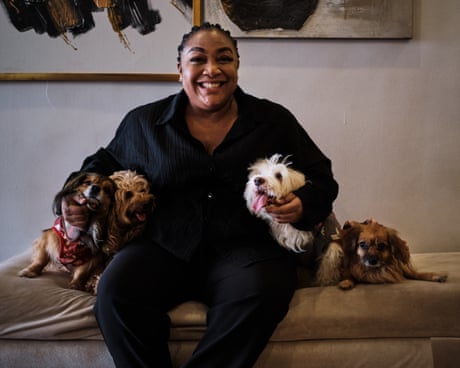
Every weekend in Lagos, 36-year-old Izien Aigbodion walks down his street with his three dogs – a poodle and two chow chows. Neighbours and passersby, more used to seeing dogs in cages than walking on leashes beside their owners, stop to stare.

With treats in one pocket and a bottle of water in the other, he pauses to calm his most skittish dog. “People believe that dogs can only follow orders,” he says, as one nudges his leg for attention. But when you live with them, you come to appreciate things like loyalty, emotion, even empathy.”

Continue reading...

© Photograph: Sogo Oladele/The Guardian

© Photograph: Sogo Oladele/The Guardian

© Photograph: Sogo Oladele/The Guardian

  •  

Soaring rents and a four-hour commute: the misery of the Lagos housing crisis

The Nigerian megacity’s dynamic growth is outstripping its rental supply, and wages are not keeping up with rising costs

Every weekday before dawn, Oluwatobi Ogundipe leaves his small flat in Sango Ota, an industrial town in Ogun state, for a four hour commute to the glass towers of Lagos Island.

Despite working in one of Nigeria’s growing technology sectors, the 32-year-old product manager cannot afford to live any closer to his office.

Continue reading...

© Photograph: Valentine Benjamin

© Photograph: Valentine Benjamin

© Photograph: Valentine Benjamin

  •  

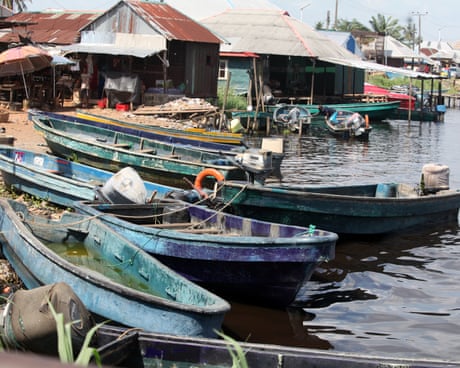
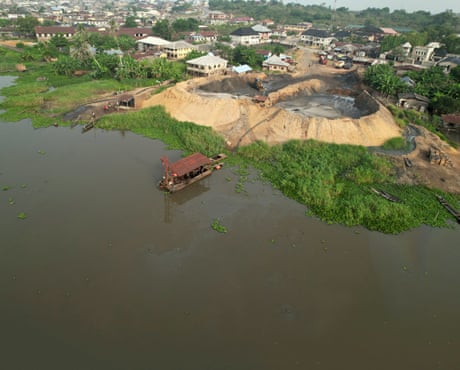
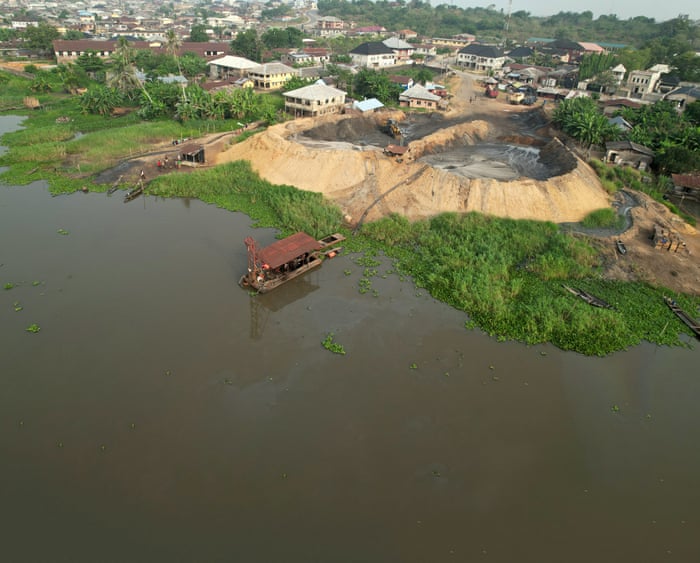
‘The water is no longer our friend’: how dredging is pushing Lagos Lagoon towards ecosystem collapse – photo essay

Taking sand from the Nigerian city’s lagoon to supply a building boom harms more than fish – it affects the entire food chain, erodes coastlines and is depriving fishing communities of their livelihoods

Before dawn, when the noise of Lagos’s danfo buses fills the air and generators rumble to life, the city’s lagoon is already stirring. Not from fish splashing or canoes gliding, but from the long suction pipes of the dredging machines, pulling up the lagoon bed and spitting out wet sand that will be used in the construction of high-rise blocks, housing estates and flyovers.

Sand dredging is regulated by the Lagos state government and the waterways authority but in a city of more than 20 million people, where sharp sand has never been in higher demand, not all dredging is being done by the book.

Dredging leaves its mark on the landscape along the shores of the Lagos Lagoon in Epe

Continue reading...

© Photograph: Valentine benjamin

© Photograph: Valentine benjamin

© Photograph: Valentine benjamin

  •  

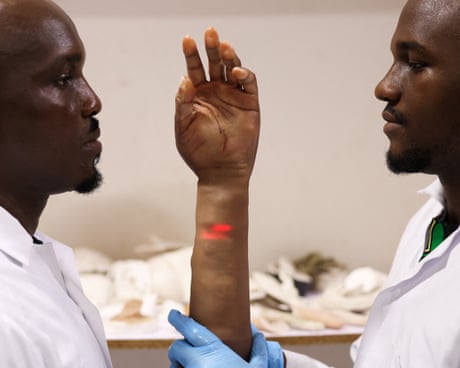
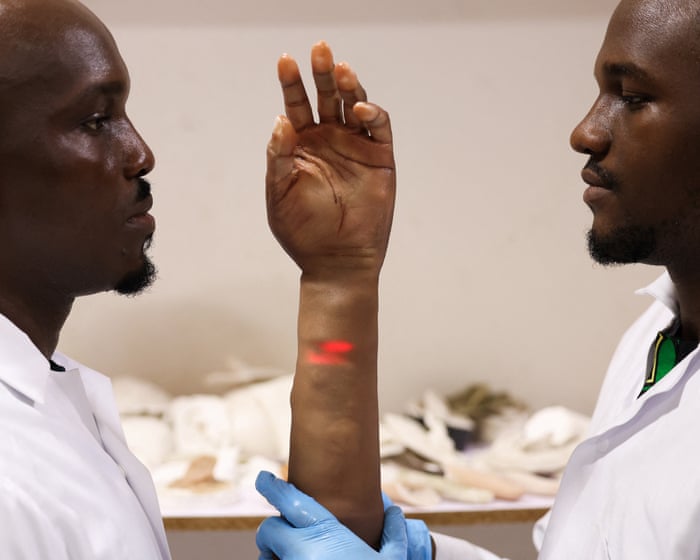
‘Prosthetics aren’t made for people like us’: the brothers creating innovative artificial limbs for Africans

When Ubokobong Amanam lost his fingers in an accident he teamed up with his brother John, a special effects artist, to design a prosthetic that suited him – now they run a thriving business

On a humid morning in Uyo, Nigeria, Ubokobong Amanam shows off the lifelike prosthetic where his fingers once were. The skin bears tiny wrinkles, and the nails are naturally shaped. Seven years ago, he was badly injured in a firework accident. Doctors could save him, but not his fingers.

The prosthetics available at the time were clumsy, poorly fitted and designed for bodies nothing like his.

Continue reading...

© Photograph: Sodiq Adelakun/Reuters

© Photograph: Sodiq Adelakun/Reuters

© Photograph: Sodiq Adelakun/Reuters

  •  

‘At 2am, it feels like someone’s there’: why Nigerians are choosing chatbots to give them advice and therapy

With many unable to access or afford qualified therapists, AI is filling the mental healthcare vacuum, amid calls for tighter regulation

On a quiet evening in her Abuja hotel, Joy Adeboye, 23, sits on her bed clutching her phone, her mind racing and chest tightening. On her screen is yet another abusive message from her stalker – a man she had met nine months earlier at her church.

He had asked Adeboye out; when she declined, he began sending her intimidating, insulting and blackmailing messages on social media, as well as spreading false information about her online. There were even death threats.

Continue reading...

© Photograph: Yana Iskayeva/Getty Images

© Photograph: Yana Iskayeva/Getty Images

© Photograph: Yana Iskayeva/Getty Images

  •  

‘They told us to leave. They didn’t tell us where to go’: the demolitions destroying homes and lives in Lagos

Makoko’s waterfront stilt settlements were razed with little warning amid government claims that the move was essential for sanitation and security

It was 12.30pm when amphibious excavators escorted by armed police roared through Makoko, crushing wooden shacks built on stilts. “It was the second time this year,” says Augustine Agpoko, 42, a fisher and father of eight whose six-bedroom bungalow was demolished on 16 January.

Like many of his neighbours, Agpoko was already dismantling his home piece by piece in an attempt to save some of the materials before the machines arrived. “I was removing my roofing sheets, trying to salvage materials from my house when the bulldozers began demolition,” he says. “When they started firing tear gas into the air, I had to quickly evacuate my family to safety in a neighbouring community, because one of my two wives is in her second trimester.”

Continue reading...

© Photograph: Valentine Benjamin

© Photograph: Valentine Benjamin

© Photograph: Valentine Benjamin

  •  
❌