❌

Lese-Ansicht

‘I left shellshocked’: writers on their scariest non-horror movies

For Halloween, Guardian writers have picked the most efficiently terrifying films outside of the horror genre from How to Have Sex to The Hunchback of Notre Dame

Minor spoilers ahead

Hiding in plain sight throughout Lee Chang-dong’s deliciously enigmatic Burning, in which a spirited young woman (Jeon Jong-seo) disappears, and a wealthy playboy (Steven Yeun) gives serial killer vibes, is a disaffected male rage. That’s perhaps the most commonplace horror of our times, whether on the internet or politics, and you feel the tremors of it steadily breaking the surface in Yoo Ah-in’s performance. He plays Jong-su, an aspiring writer, quietly frustrated with his lot in life. Jong-su works odd jobs and tends to his incarcerated father’s dilapidated farm, growing more desperate to grasp some sense of control over the world around him, which is where the scary part comes in. Lee is the master dramatist who with Burning tilts violently into thriller territory, navigating elements from Taxi Driver, The Vanishing and Michael Haneke’s Caché, using the language of horror movies to conjure up a creeping anxiety and dread that erupts into pure existential fear. Radheyan Simonpillai

Continue reading...

© Photograph: Landmark Media/Alamy

© Photograph: Landmark Media/Alamy

© Photograph: Landmark Media/Alamy
  •  

‘Each artist on their own terms’: why Lee Krasner was every bit the equal to husband Jackson Pollock

At a landmark exhibition at New York’s Met Museum, Mrs Pollock finally steps out of her spouse’s shadow

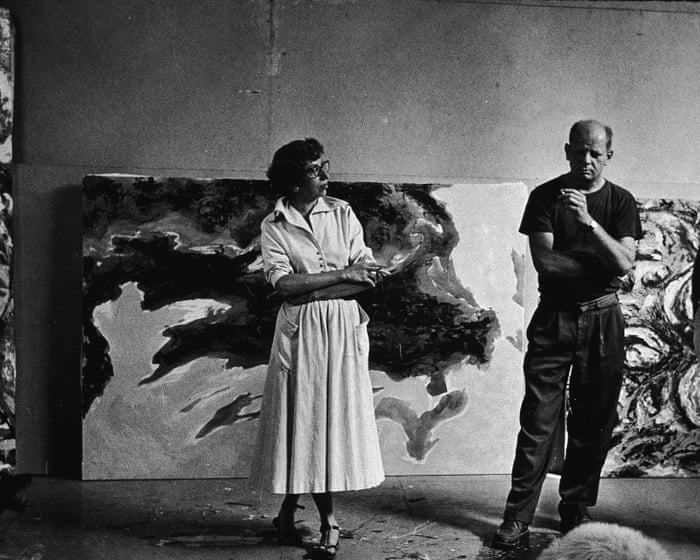
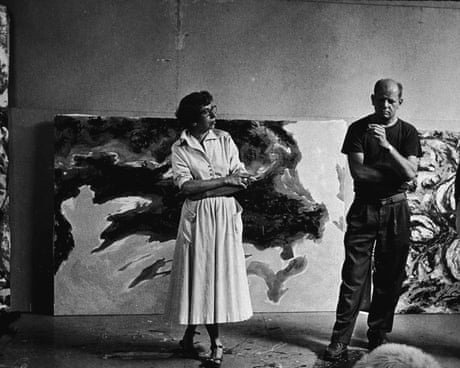
In addition to managing her own career as an artist and being a devoted partner to an often unpredictable and tumultuous Jackson Pollock, Lee Krasner had at least one other duty – acting as the unofficial publicist to her husband’s career.

“She was a great champion of Pollock’s work, but also so aware of the gender politics of the time,” says curator David Breslin, who alongside Brinda Kumar worked for three long years to bring a new blockbuster dual show, exploring the arc of Pollock’s and Krasner’s careers, to the public at New York’s Metropolitan Museum of Art. “She was such a realist, she knew if there was one person in the couple who would sell, it was him. She wanted to pay the bills.

Continue reading...

© Photograph: Tony Vaccaro/Getty Images

© Photograph: Tony Vaccaro/Getty Images

© Photograph: Tony Vaccaro/Getty Images

  •  

‘A saving gesture’: the art exhibition spotlighting US prisoners’ creations

A trio of shows at Michigan’s Grand Rapids Art Museum humanizes people who are incarcerated and celebrates the resilience of creativity

With nearly 2 million people behind bars, America is the global leader in incarceration. When you look at it per capita, we have the highest rate of incarceration of any independent democracy and rank fourth overall in the world, just behind El Salvador, Cuba and Turkmenistan.

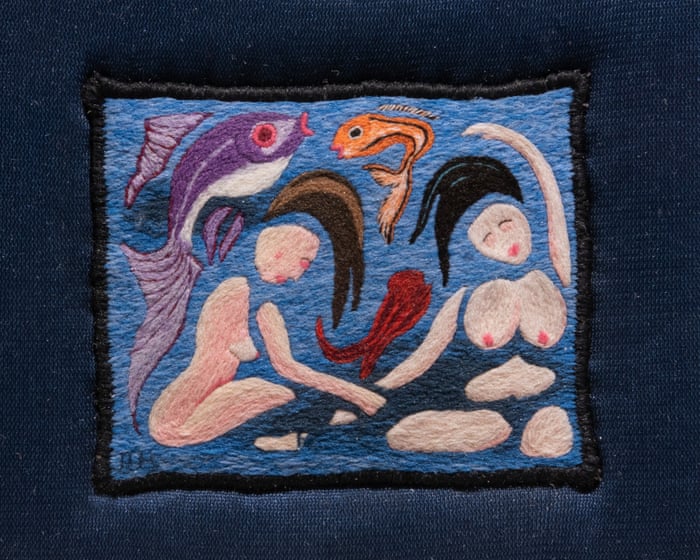
Despite these troubling numbers, mass imprisonment is largely invisible. “Our carceral system is something we as a society try to separate out from the everyday,” observes Terra Warren, an associate curator at Grand Rapids Art Museum, Michigan, who alongside curator Jennifer Wcisel brings audiences three solo shows from artists Julie Green, Gary Tyler and Ray Materson. They collectively aim to make us examine more closely just what prisons are doing to our society – and how art can prove transformative to those incarcerated.

Continue reading...

© Photograph: Courtesy of Diana Bowes

© Photograph: Courtesy of Diana Bowes

© Photograph: Courtesy of Diana Bowes

  •  

Skyscrapers and smokestacks: the grittier side of Georgia O’Keeffe

Beyond her famed paintings of flowers and landscapes, the American artist created stunning studies of urban architecture

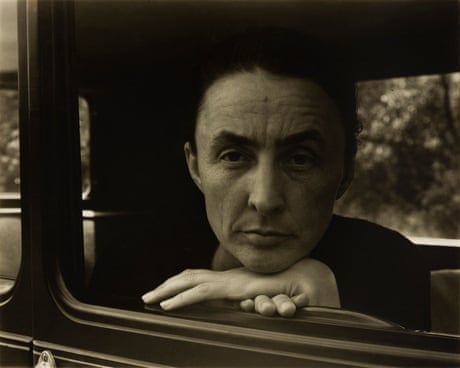
Georgia O’Keeffe is celebrated for her ethereal depictions of flowers, sunlight, landscapes and animal bones, their gracefully swooping forms dripping with organic curves and seemingly on the verge of melting before our eyes. Such an approach would seem to be quite at odds with the firm, straight lines of farmhouses and barns, to say nothing of the electrified skyscrapers of New York City – and yet that is exactly what is centered in Georgia O’Keeffe: Architecture, a new show at the Detroit Institute of Arts (Dia).

“I wanted to tell a new story about an artist who is so familiar,” said curator Ben Colman, who oversaw this collection of close to 40 works from the famed artist. “We can take a fresh look at works that O’Keeffe always considered essential and celebrate them in the way she wanted to.”

Continue reading...

© Photograph: Alfred Stieglitz/AP

© Photograph: Alfred Stieglitz/AP

© Photograph: Alfred Stieglitz/AP

  •  

‘Climate change is a form of oppression’: the voices affected most by environmental crisis

In HBO documentary The Welcome Table, director Josh Fox brings together people from across the world whose lives have been dramatically altered by the climate crisis

In an age of division, director Josh Fox is hoping to bring people of all kinds together. Specifically, he wants them to share a table – to break bread for a meal, and come together in exuberant song.

In his new documentary film The Welcome Table, the director of the the Emmy-winning Gasland travels around the world to talk to people at the leading edge of global warming’s effects. The film is part stark warning of the climate crisis, part opportunity to enter into the experience of those living in the corners of the globe. It culminates with the sounds of these individuals together at an enormous table in New Orleans, eating and rejoicing.

Continue reading...

© Photograph: HBO Max

© Photograph: HBO Max

© Photograph: HBO Max

  •  

‘Sheer outrageousness’: writers on their favourite LGBTQ+ movie characters

From gritty criminals to teens coming to terms with their identity, pride month sees Guardian writers on their most beloved queer characters

Forget about dimly lit period dramas where miserable women with no access to electricity gently sob in their heaving corsets and accidentally-on-purpose brush hands in the trembling candlelight; overblown, bombastic heist-capers and brooding, butch anti-heroes are far more up my street when it comes to lesbian cinema. What, after all, could be more intensely gay than immediately committing to a life of crime with someone you’ve only just set eyes on? My favourite of the entire bunch has to be the swaggering ex-con turned plumber Corky, who helps to save Violet from the clutches of her mob boss husband in 1996’s cult classic Bound. Though we first meet Corky trussed up in a literal closet, the metaphor doesn’t play out how you might expect: unapologetic and visible in a time when few films explored queerness full stop, she flexes a labrys tattoo, spends her down time swigging beer in grotty dive bars, and eventually drives off into the sunset, her new partner-in-crime in tow, in a beaten-up Chevy pick-up. The sheer simplicity of Corky as a queer heartthrob was, somehow, ridiculously ahead of its time, and her magnetic influence has played out everywhere from Bottoms to Love Lies Bleeding. El Hunt

Continue reading...

© Photograph: Dreamland Prods/Kobal/Shutterstock

© Photograph: Dreamland Prods/Kobal/Shutterstock

© Photograph: Dreamland Prods/Kobal/Shutterstock

  •  

‘A kind of reconnecting with the past’: the Met celebrates the art of the portrait

In a new exhibition, work from artists including Pablo Picasso and Wifredo Lam offer different ways to see what a portrait can represent

What exactly is a portrait? At its simplest, it might be an attempt to depict oneself or someone else via a painting. But then consider German expressionist Max Beckmann’s masterpiece The Beginning, a triptych of scenes from his childhood, or Cuban artist Wifredo Lam’s Ídolo, a melange of forms based around the goddess Oyá. Rooted more in memory and myth than a mere physical likeness, these pieces stretch just what we might decide counts as a portrait.

Works such as the Beckmann and the Lam – as well as cubist abstractions, an ornate hand mirror, and one of Joan Miró’s pieces of “painting-poetry”, — are all portraits as defined by The Met’s new show The Face of Modern Life, which gathers close to 80 works from the museum’s permanent collection. A boisterous and effusive selection of work from one of the nation’s most storied museums, this show gives audiences a peek into the museum’s estimable archives and a chance to wonder just what defines this seemingly simple but truly elusive form.

Continue reading...

© Photograph: Juan Trujillo/Bequest of Scofield Thayer

© Photograph: Juan Trujillo/Bequest of Scofield Thayer

© Photograph: Juan Trujillo/Bequest of Scofield Thayer

  •  

‘You look at it and you just feel better’: this year’s Photoville festival highlights

The annual New York-based display of photography contains moving pictures from behind bars and a revealing look at trans lives back in the 1990s

For the 15th installment of the annual Photoville festival, which sees more than 90 exhibits of photographic portfolios from all around the world, festival co-founder Sam Barzilay is thinking about apples – specifically the bizarre and at times cosmic-looking ones in the exhibit Old Apples.

“I was so delighted it got selected,” he enthusiastically told me. “It’s the most whimsical thing we have, it’s about apples and how there are no two apples in nature that are the same.”

Continue reading...

© Photograph: Ava Pellor

© Photograph: Ava Pellor

© Photograph: Ava Pellor

  •  

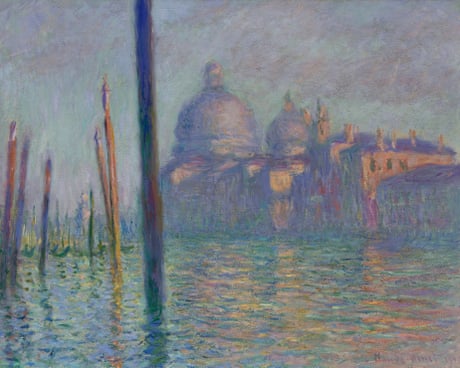
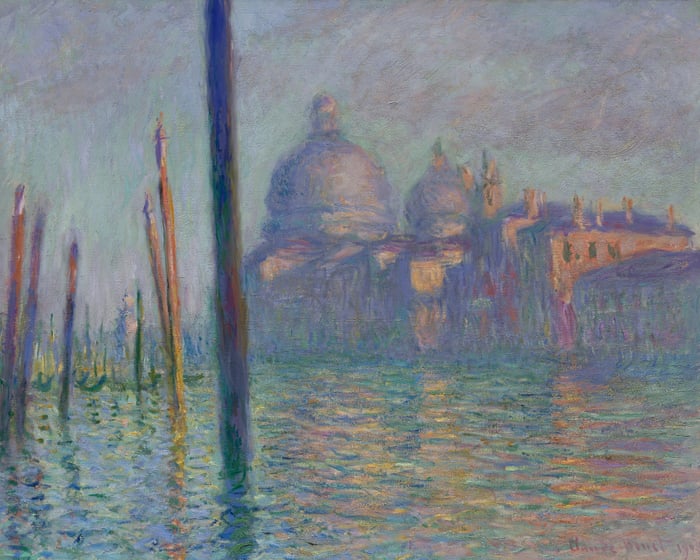
‘What a fascinating challenge for an artist’: how Monet captured Venice in his twilight years

New exhibition brings together the artist’s many Venetian paintings, a perfect match of artist and location that almost didn’t happen

Claude Monet was 68 years old before he ever set foot in Venice, surprisingly keeping his distance from a city that for hundreds of years has attracted many of Europe’s best painters. When Monet finally did get there, he created dozens of paintings and the French impressionist’s Venetian works are now the subject of a show at San Francisco’s de Young Museum, simply titled Monet and Venice.

“It might have been insecurity, because Venice had been painted so famously and by so many major names in western history,” said Melissa Buron, who co-curated the show with Lisa Small. As she explained, given Venice’s artistic pedigree, even a master such as Monet would have reason to feel intimidated by the location.

Continue reading...

© Photograph: Saravuth Neou/Museum of Fine Arts, Boston

© Photograph: Saravuth Neou/Museum of Fine Arts, Boston

© Photograph: Saravuth Neou/Museum of Fine Arts, Boston

  •  

‘Absolutely transformative’: Willem de Kooning exhibition uncovers raw intensity of early work

A Princeton University Art Museum show captures the urgent power of the iconic abstract expressionist’s 1945-50 breakthrough years

Artist Willem de Kooning held his first solo exhibition at Charles Egan Gallery in spring 1948, just shy of his 44th birthday. A smash success, the exhibition made his reputation, repositioning the artist and catapulting him to international renown by the early 1950s. By the decade’s end, many would consider him the world’s pre-eminent painter.

Princeton University Art Museum now offers a kind of revisiting of de Kooning’s transformative star-making show with Willem de Kooning: The Breakthrough Years, covering 1945-50. Featuring 18 paintings that reveal an artist feeling his way between figuration and abstraction, it shows de Kooning finding his own unique relationship with both styles. Although The Breakthrough Years does not feature the exact lineup of paintings from the Egan show, it does take audiences intimately into the artist’s creative life from that period.

Continue reading...

© Photograph: Anderson Collection at Stanford University. Gift of Mary Margaret Anderson.

© Photograph: Anderson Collection at Stanford University. Gift of Mary Margaret Anderson.

© Photograph: Anderson Collection at Stanford University. Gift of Mary Margaret Anderson.

  •  

‘People are in awe’: exhibition unveils ancient Egyptian Book of the Dead

A rare gilded and complete Book of the Dead, used by ancient Egyptians to help them to the afterlife, is now on display in Brooklyn

In the ancient world, travel to eternal bliss was not easy. For the Greeks, you’d have to hitch a ride with Charon across the River Styx and hope you were one of the few fortunate souls to make it to Elysium. If you were lived among the ancient Aztecs, your journey to Mictlan involved numerous struggles, including climbing a mountain made of obsidian and crossing a desert where there was no gravity and you were blown around by enormous winds.

For the ancient Egyptians, the journey to the afterlife included a danger-filled journey where your wits were tested at every turn – those fortunate enough to make it through would then sit before the god Osirus and 42 other deities while their heart was weighed against a single feather. If things went sideways, your soul would be devoured by a fearsome goddess named Ammit, composed of a lion, hippopotamus and crocodile (the three creatures most likely to eat ancient Egyptians).

Continue reading...

© Photograph: aula Abreu Pita

© Photograph: aula Abreu Pita

© Photograph: aula Abreu Pita

  •  

‘Full of emotional wisdom’: Guardian writers on the best movie romances you might not have seen

For Valentine’s Day, writers picked their favourite lesser-known film love stories – from a dom-sub chamberpiece to a magical teen comedy

It’s the first rule of romcoms that opposites attract, and you can’t imagine two more different lovers than Poinsettia (Lynn Redgrave), a spark plug of a dame convinced that she is in a relationship with the 19th-century composer Giacomo Puccini, and Fish (James Earl Jones), a gentle giant who spends his spare time wrestling a demon that only he can see. That makes for some of the film’s funniest moments, like when Poinsettia ruins a Madama Butterfly opera performance by loudly singing along to the aria. Charles Burnett’s touching film is about how Fish and Poinsettia find refuge with each other that lets them emerge from the fantasies protecting them from the real world’s cruelty, and they find a kind of late-in-life puppy love over dinner dates, cozy sleepovers and card games at their Barbary Lane-like boarding house. When I saw the restoration last 14 February, the theater was filled with couples who, like my boyfriend and I, seemed cozied up just a little closer than usual. Owen Myers

The Annihilation of Fish is available on the Criterion Channel in the US

Continue reading...

© Photograph: SNAP/Rex Features

© Photograph: SNAP/Rex Features

© Photograph: SNAP/Rex Features

  •  

‘Uncomfortably relatable’: writers on their favourite unlikable movie characters

With debate still swirling over the unlikable nature of Marty Supreme’s careless protagonist, Guardian writers have picked their all-time love-to-hate leads

Spoilers ahead

I can remember seeing As Good As It Gets in the theater as a teenager and being pleasantly startled by the sight of Jack Nicholson’s Melvin Udall, romcom super-grouch. Here’s a bestselling romance author who disdains love, an OCD sufferer who weaponizes his affliction, a New Yorker who hates crowds (who can’t relate?). In one scene, an adoring fan asks Melvin his secret to writing women. “I think of a man, and I take away reason and accountability,” he says, an epic burn forever seared in my brain. Of course Melvin’s anti-charm offensive only goes so far in a James L Brooks project. Before long, the rudeness erodes as Melvin is forced on to a journey of self-discovery with the nextdoor neighbor he can’t abide (Greg Kinnear) and the diner waitress he can’t live without (Helen Hunt). Melvin comes out a changed man in the end, but retains the essence of his super-grouch-dom. That was the moment I fell in love with the writer’s life. Andrew Lawrence

Continue reading...

© Photograph: Miramax/Sportsphoto/Allstar

© Photograph: Miramax/Sportsphoto/Allstar

© Photograph: Miramax/Sportsphoto/Allstar

  •  

Narnia! Dune! Charli xcx! The 2026 films Guardian writers are most excited about

From much-anticipated sequels to music mockumentaries to auteur returns, the next 12 months offers up a wide variety of intriguing new movies

I doubt very much that 2026 will see anything in the Marty Supreme league, but here’s hoping one of the most bizarre side-steps of the decade turns out as interesting as it hopes. Short of Christopher Nolan signing on to the new Mr Men movie, I didn’t think much would throw the industry a loop as when Greta Gerwig decided to follow up bubblegum blockbuster Barbie with …… a Narnia movie. More specifically, Gerwig – previously a skilled purveyor of achingly hip alt-indie comedy with Lady Bird, Frances Ha and Damsels in Distress – is restarting the Narnia series, which had got through three of CS Lewis’s series before Netflix took over the rights. To my mind, though, The Magician’s Nephew, Lewis’s origins/prequel to the Wardrobe/Caspian/Dawn Treader narrative, is the most interesting of the entire Narnia canon, with its Edenic fall, “deplorable word” and mystical apple. We know some of the cast: Emma Mackey is the future White Witch, Carey Mulligan the terminally ill mother of one of the main kids, and Daniel Craig might be Aslan or mad inventor Uncle Andrew – or both, or neither. All eyes will be naturally be on Gerwig, but I have confidence she will pull it off in style. Andrew Pulver

Continue reading...

© Photograph: A24

© Photograph: A24

© Photograph: A24

  •  

Dancing! Fighting! Impregnating! The best movie moments of 2025

From Sinners to F1 to Highest 2 Lowest, Guardian writers pick the scenes that stuck with them the most this year

Spoilers ahead

Disclosure: I covered auto racing for years and still follow Formula One skeptically. I definitely went into F1: The Movie knowing what I was in for, an answer to the hypothetical: what if the bougiest sport on God’s green earth was turned into a western? But you can’t help going along for the ride once Brad Pitt starts filling the frame with his blue-eyed winks, wry smiles and Butch Cassidy swagger. I should’ve been more indignant about this martinet sport making a literal hero out of the biggest rogue on the grid. But I left disbelief in parc fermé as Pitt’s Sonny Hayes bumped and nicked his way to the season finale at Abu Dhabi to much consternation before his wingman (Damson Idris) takes up the ticky tactics at Yas Marina circuit and winds up sacrificing himself and producer Lewis Hamilton (not again!) to help Sonny win his first race and thwart a hostile takeover of their fragile team. And when the lights went up at my desolate midday screening, it was just me still on the edge of my seat and my disbelief still firmly off track. Andrew Lawrence

Continue reading...

© Photograph: Courtesy of Warner Bros. Pictures/AP

© Photograph: Courtesy of Warner Bros. Pictures/AP

© Photograph: Courtesy of Warner Bros. Pictures/AP

  •  

‘A festive tour de force’: Guardian writers on their favorite underrated Christmas movies

From a John Cusack 80s teen comedy to the other Frank Capra Christmas crowd-pleaser, here are some seasonal picks you might not have seen

Something that bugs me about a lot of contemporary Christmas movies is how insistently self-conscious they are about the whole production – the ostentatious decorations, checklist of soundtrack chestnuts, the dialogue about the true meaning of the holidays that sounds canned even when the movie is trying to acknowledge its various stressors. Maybe because the idea of a holiday movie hadn’t yet ossified into routine, I’ve found that the versions of these films that came out in the 1940s tend to approach Christmas from more inventive, less neurotically obsessive angles. One of my favorite discoveries in sifting through 1940s Christmas comedies is It Happened on Fifth Avenue, a 1947 semi-romantic farce with a great starting hook: a cheerful vagrant Aloysius T McKeever (Victor Moore) winters in New York every year, because he knows a way into a particular Fifth Avenue mansion seasonally vacated by its enormously wealthy owner. One winter, Aloysius invites some new acquaintances to stay with him: veteran Jim Bullock (Don DeFore) and his military buddies, plus runaway Trudy O’Connor (Gale Storm) – who is secretly the daughter of the mansion’s owner. Eventually, the owner himself is forced to disguise himself as another vagrant and stay in the house, too, so Trudy can make sure Jim loves her on her own merits. This all takes place during the run-up to Christmas and into New Year’s, and director Roy Del Ruth gives the movie a found-family warmth that newer holiday movies have to labor two or three times as hard for, assembling a funny and lovable surrogate family in one of the city’s well-appointed empty spaces. Speaking of labor: It Happened on Fifth Avenue lands perfectly between class-conscious social picture about the importance of affordable housing and romantic urban fairytale. Jesse Hassenger

It Happened on Fifth Avenue is available on Plex and to rent digitally in the US, UK and Australia

Continue reading...

© Photograph: PictureLux/The Hollywood Archive/Alamy

© Photograph: PictureLux/The Hollywood Archive/Alamy

© Photograph: PictureLux/The Hollywood Archive/Alamy

  •  
❌