A flat white, as any self-respecting coffee drinker will tell you, should be a short, strong, balanced drink – espresso, a small amount of milk, minimal microfoam, absolutely no fluff. But a disturbing trend is sweeping Australia. Even in Melbourne – where people treat coffee with near-religious reverence – I’m now routinely asked: small or large flat white? I find myself regularly wincing into my keep cup.
A large flat white is an oxymoron – a bastardisation of the drink Australia claims to have given the world. The moment it takes a larger form, it stops being a flat white and becomes something else entirely: a milky latte, ordered by those too afraid to admit that’s what they really want.
An incredible smoked haddock paste for toast, crackers or crudités, and a moreish and indulgent multi-mushroom-topped pastry
Two key elements at the heart of Portuguese eating culture are couvert and pastry. A couvert, comprising bread, butter, pickled or garlic carrots, cheese and fish paté (often sardine), comes as standard at every Portuguese restaurant and family dinner table alike, as it does at our restaurant Luso, where our fish paste is an ode to this way of dining. The mushroom tart, meanwhile, celebrates the Portuguese love of pastry and is a take on a traditional savoury tart. While such tarts are unlikely to feature solely mushrooms (they’re much more likely to be mixed vegetable tarts), we like to focus on the incredible varietals of this single ingredient.
From one-pot meals to versatile dishes that last all week, our panel of experts serves up ideas for solo chefs
I really struggle with cooking for one, so what can I make in January that’s interesting but easy and, most importantly, warming? Jane, via email
“There’s an art to the perfect solo meal,” says Bonnie Chung, author of Miso: From Japanese Classics to Everyday Umami, “and that’s balancing decadence with ease.” For Chung, that means good-quality ingredients (“tinned anchovies, jarred beans”), a dish that can be cooked in one pan (“a night alone must be maximised with minimal washing-up”) and eaten with a single piece of cutlery, “preferably in front of the telly and out of a bowl nestling in your lap”. Happily, she says, all of those requirements are met by miso udon carbonara: “It has all the rich and creamy nirvana of a cheesy pasta, but with a delicious, mochi-like chew that is incredibly satisfying.” Not only that, but you can knock it up in less than 10 minutes. “Melt cheese, milk and miso in a pan to make the sauce base, then add frozen udon that have been soaked in hot water.” Coat the noodles in the sauce, then serve with crisp bacon or perhaps a few anchovies for “pops of salty fat”. Crown with a golden egg yolk (preferably duck, but hen “will suffice”), which should then be broken: “Add a crack of black pepper, and your cosy night in has begun.”
“January feels like a time for fresh, bright flavours,” says the Guardian’s own Felicity Cloake, which for her often means pasta con le sarde made with tinned fish, fennel seeds and lots of lemon juice; “or with purple sprouting broccoli and a generous helping of garlic and chilli”. A jar of chickpeas, meanwhile, mixed, perhaps, with harissa, chopped herbs and crumbled feta, brings the possibility of a quick stew, Cloake adds, while it’s always a good shout to braise some beans, because cook-once, eat-all-week recipes are a godsend – so long as they’re versatile, that is.
A light but filling no-bechamel souffle with a zingy citrus salad to add a sharp burst of flavour and colour
There is a skill in not wasting food and it’s all about good, old-fashioned housekeeping. If you learn how to store ingredients properly (cool, dark places are handy for spuds, for example) and keep tabs on what’s in your fridge/freezer, you can use everything up before it goes off – and make delicious things in the process. This golden, cheese-crusted souffle uses up the celeriac and spuds left after the festive season, plus any odds and ends of cheeses. It is spectacularly good, especially paired with a sparkling citrus salad.
A homegrown favourite with an Italian twist: choose whichever antipasti vegetables you like, and definitely use the oil from the jar
Perhaps you still have some cheeseboard odds and sods in the fridge from Christmas? I know I still have a few to get through, but, other than that, my fridge and cupboards are looking pretty bare. Beans on toast has always been my go-to meal in times such as these, and when I need comfort, familiarity and ease. What used to involve opening a tin and reheating the contents, however, has now become something slightly more elaborate. But only slightly: these beans are incredibly simple and quick to make, with store-bought antipasti adding real depth.
Arrabbiata means angry, but this simple and delicious pasta dish is pure joy
Pasta all’arrabbiata is the perfect dish for January. Not only is it quick, vegan and made from ingredients you might conceivably have in the cupboard already, but the name, which means angry, could be said to suit my mood now that the last of the Christmas festivities are over. Happily, a big plate of rich, tomatoey pasta can always be relied upon to lift the spirits.
Does central London really need another fancy Italian restaurant? Well, yes, apparently it does …
Does the area around Sloane Square in central London really need another fancy, Italian-leaning restaurant that serves up tortellini in brodo and veal Milanese? Well, yes, apparently it does. One Saturday lunchtime late last year at Martino’s was hectic even in the delightful reception area, where we were waiting to check in a coat with the elegantly uniformed front-of-house ladies. All the tables in this hot new all-day brasserie were booked and busy, and plenty of walk-ins were champing at the bit for cancellations.
Actually, “delightful reception” is not a phrase I’ve often uttered, or even thought, but this is a Martin Kuczmarski restaurant, so the small things tend to add up to a larger picture – this cocoon-like holding pen keeps would-be queuers away from the diners. Why was I so charmed by this weird, crisply officiated bends chamber that operates as a liminal space between the real grubby world outside and the glitzy, sexy, mock-Italian trattoria inside? Well, it turns out that’s because it solved a problem that I didn’t even realise I had.
Earthy, sweet swede soaks up a curry sauce like a champion, and this ginger, tomato and coconut number is no exception
As a day-in-day-out home cook, there is no more welcome tool in my dinner toolbox than a bung-it-in-the-oven dish. A second necessary tool in the month of January is the ability to dispose of or transform a swede into an evening meal. For the uninitiated, when roasted, the swede, that pretty, purple-creamed, dense little ball, is part-creamy, part carrot-like in nature, and earthy and sweet in flavour. It also takes to big-flavoured sauces such as this tomato, ginger and coconut curry like a chip to vinegar and couples up well with its seasonal pal, fresh, crunchy purple sprouting broccoli.
Poland’s capital is now rated above cities like San Francisco and Copenhagen for its vegan options. We sample plant-based schnitzel, ramen and, of course, pierogi
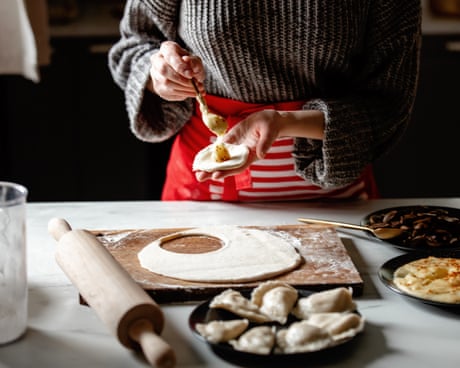
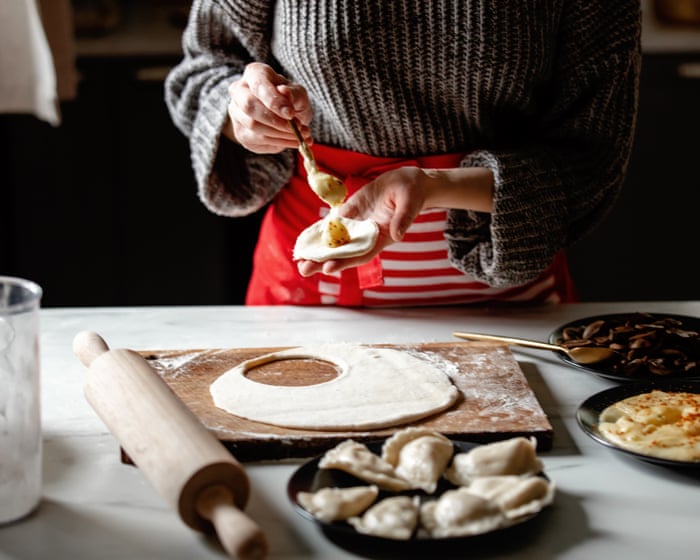
Pinny on, hands dusted with flour, I rolled out dough, cut it into circles, added a spoonful of filling and sealed it into little parcels. I was getting stuck into a dumpling cooking class in one of the most vegan-friendly cities in the world. Making gyoza in Tokyo, perhaps? Wontons in Singapore? Potstickers in Taipei?
In fact, I was preparing pierogi in Warsaw. Friends who associate Polish cuisine with stews and sausages were surprised to hear it, but vegan food has proliferated across the country over the past 20 years. Happy Cow, the veteran vegan restaurant guide, now consistently ranks Warsaw in its top cities globally – last year it was in 11th place, ahead of Bangkok, San Francisco and Copenhagen.
A wholesome and indulgent pudding that’s a great way to use up dried fruit left over from the festive season
After the excesses of December, these baked apples are a light, refreshing vegan pudding. The filling makes good use of any dried fruit lingering still from Christmas, and is brightened with lemon and bound with nutty tahini. As the apples bake, they turn yielding and fragrant, while the sesame oat topping crisps to a golden crown. Serve warm with a splash of cream, yoghurt or ice-cream (dairy or otherwise), and you have comfort that feels wholesome and indulgent.
This superb winter salad uses shaved and roast pumpkin to bring a riot of textural contrast and a flash of colour to a grey winter’s day
I try to grow a few varieties of squash every season, but in the past couple of years the results have more or less failed me. I originally put that down to the lack of time and attention I’d given those poor plants, but I’m now starting to wonder if the soil in my raised garden beds overlooking Lyme Bay in Dorset is actually right for them.
I’m not giving up just yet, though, and this year I’ll be trying different varieties in a different bed that I’ve prepared and composted over the winter with seaweed mulch. As luck would have it, however, my friend Rob Corbett came to the rescue a couple of weeks ago by giving me several specimens when he delivered some wine from his Castlewood vineyard a few miles away in east Devon. If you know your gourds even a little, you will also know that squashes keep for months, which is handy, because they ideally need to cure and ripen before use. Happily, that also means you can use your crop throughout the long winter months.
Mark Hix is a restaurateur and writer based in Lyme Regis, Dorset. His latest limited-edition book, Fishy Tales, with illustrations by Nettie Wakefield, is published at £90.
A warm, silky soup and a nourishing and flavourful stew to help get you through the colder weather
bowl of creamy red lentil soup feels like pure comfort – warm, silky and deeply satisfying. The lentils cook down into a smooth, golden blend, their gentle sweetness enriched by sauteed onions, garlic and a touch of spice. A drizzle of dukkah oil brightens things up, making it perfect for January. Then, a Levantine chickpea stew with aubergine and tahini, which is so nourishing and full of flavour. Tender chickpeas simmer slowly in a rich tomato base until they absorb the sweetness of onions, garlic, and the gentle warmth of cumin. Fried aubergine melts into the stew, and its smoky softness gives each spoonful a lush texture.
Top tips from a roster of experienced curry-makers, from adding a dollop of yoghurt to experimenting with pastes
I want to make more vegetarian curries, but most call for a tin of coconut milk and I’m trying to cut down on saturated fats. What can I use instead? Jill, via email Coconut milk brings silkiness and sweet richness to curries, and also mellows spices, so any substitute will likely change the nature of the dish. That said, if you really want to avoid the white stuff, Karan Gokani, author of Indian 101, would simply replace it with vegetable stock. Another easy swap (if you’re not averse to dairy) is yoghurt, says John Chantarasak, chef and co-owner of AngloThai in London, which is handy, because “that’s normally hanging about in the fridge”.
Not all curries involve coconut milk, however, and it’s these that perhaps offer a better solution to Jill’s conundrum. “Once you get past that idea, you go into two realms,” says Sirichai Kularbwong of Thai restaurant Singburi in London, by which he means wet and dry curries. The latter involve frying curry paste (“usually containing dried chillies”) and seasoning with fish sauce (“in Jill’s case, a vegan fish sauce”), tamarind and sugar. “The consistency of the sauce is never thin, and you pair it with root vegetables and flat beans, and eat alongside rice,” he adds. Meanwhile, a favourite wet curry that doesn’t call for coconut milk is gaeng om, made with “a simple curry paste of garlic, chillies and lemongrass boiled with good veg stock and seasoned with vegan fish sauce”. Veg-wise, to that base you’d typically add pumpkin, mushrooms, maybe pak choi.
Served with mustard aïoli, crisp chickpeas and a quick-pickled red onion and parsley salad, these root veg fritters make a satisfying dish that’s ideal for a weekend brunch
I’m a sucker for a rösti, and I truly believe it makes the best breakfast, brunch – or any meal, really. This one leans into the amazing varieties of root vegetables we have at our disposal, and it is especially stunning when layered and presented with all of the other elements: a bold mustard aïoli, crisp curried chickpeas, and an easy parsley and red onion salad that is quick-pickled to provide an acidic finish to a satisfying dish.
Ferment: Simple Ferments and Pickles, and How to Eat Them, by Kenji Morimoto, is published by Pan Macmillan at £22. To order a copy for £19.80, visit the guardianbookshop.com
An inviting combination of bright, warming flavours, all in a single tin
A brilliant, warming 30-minute traybake, all in one tin. I love the combination of roast sweet potatoes with crumbled feta and a bright, fresh pesto; adding butter beans to the mix brings another hit of protein, as well as getting more legumes into your diet – win-win! A jar or tin of chickpeas would work just as well, if that’s what you have in, and feel free to substitute the parsley for other soft herbs, should you wish.
Roll up, roll up for the yummiest start to the day with this tantalising TexMex mishmash of refried beans, eggs, potatoes. But just what goes in, and what should be left out?
Breakfast tacos should not be confused with tacos eaten for breakfast. Of course, they often are eaten for breakfast, but the stuffed flour tortillas eaten on both sides of the southern US border are quite different from the tacos mañaneros of central and southern Mexico, the rich, corn-based tacos de canasta (“tacos in a basket”) or the smoky beef barbacoa that Monterrey-born Lily Ramirez-Foran recalls being her dad’s favourite Sunday breakfast. Instead, Texas Monthly explains, breakfast tacos “marry the key elements of an American morning – scrambled eggs, bacon, potatoes – with the Mexican staples of salsa, cheese, refried beans … genius.”
Although they’re originally a Mexican creation, according to José R Ralat, the magazine’s taco editor (what a job title!), these $3 treats are now so popular north of the border that they’re the subject of regular taco wars, mostly between those who claim Austin as their spiritual home (often blow-ins, according to their fiercest critics), and those who know that no single city can take the credit. The fillings may vary, from pork chops to chilaquiles and beans to cheese, but Ralat maintains that all should be salty, soft and, above all, comforting, and told the Washington Post a few years ago that “the greatest breakfast taco is the one made at home”. Which, if you live 5,000 miles from the Mexican border, is good news indeed.
The cooking is refreshingly light, delicate and, you might even say, wholesome
If you find yourself ice-skating at Somerset House in central London over the next week or so (and hurry: you’ve got only until 11 January before it closes), then first please accept my commiserations. Second, please also note that the Chinese restaurant Poon’s, by Amy Poon, scion of the Poon’s restaurant dynasty, recently rooted itself in the New Wing.
Ice-skating itself I have nothing against, but we can all agree that these slippery yuletide stampedes on temporary rinks are the polar opposite of festive, so surely it would be far better to be hiding indoors in the warmth with a round of prawn wontons, a bowl of nourishing “magic soup”, or some wind-dried meat claypot rice. Plus, when the weather outside is frightful, the decor in Poon’s is utterly delightful. So gorgeous, in fact, that within two minutes of entering this dusky, muted salmon-pink, twinkly peach, womb-like space, I found myself asking for the name and brand of the paint shade, because it felt instinctively one that, if applied to my own walls at home, would solve many existential problems.
Bittersweet maroon leaves pair perfectly with juicy red wine in this elegant winter risotto served with a walnut pesto
Bitter ingredients are not to everyone’s taste, but, amid these darkest months, they make me feel alive. I love Seville oranges, grapefruit, brassicas, bitter greens, chicory and, most of all, radicchio. I like the burgundy-spotted castelfranco (great for salad with citrus and cheese) and the long-locked tardivo (best cooked with balsamic vinegar), but radicchio di chioggia is the popular leader of the pack. A chubby little cabbage-y nugget with a middle-of-the-road bitterness that becomes milder, sweeter and more delicious, especially when cooked alongside a large glass of juicy chianti and finished off with a snowy dusting of parmesan.
Swap chicken for beans and avoid cheeze … From a MasterChef finalist to a maker of ready meals, high-profile vegans give their favourite recipes and tips
This new year, you may be embarking on Veganuary, or have resolved to eat less meat and dairy in 2026. What are some of the simplest switches to make and most nutritious dishes to try with minimum fuss? Vegans share their tips on how to eat a balanced plant-based diet.
From ham and chicken croquetas to potato-filled fishcakes, there are plenty of interesting ways to use up the bits you have left over from the festivities
What canapes can I make for New Year’s Eve with my Christmas leftovers that will still feel special? Ella, via email
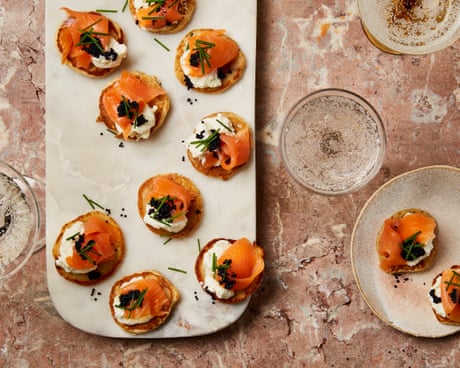
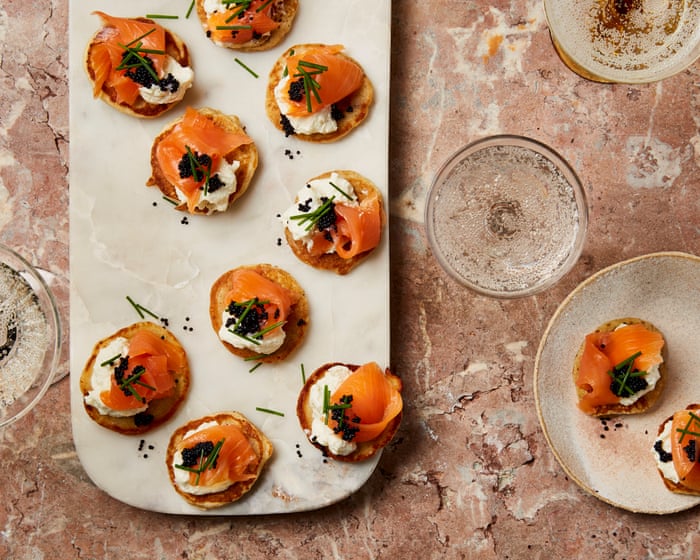
Finger food needn’t be fancy, so New Year is a good opportunity to clear the decks. The only real rule is to keep things to just one bite – no one wants to be manoeuvring a fork, after all. “People just want a big hug of comfort food with a decadent twist,” says Max Bergius, founder of Secret Smokehouse in east London. “If you’ve got a bit of smoked salmon left, get that on blinis and top with lumpfish caviar, which is only £2-£3 per 50g pot.” Mini fishcakes would also be just the ticket: “Whether you’ve got leftover smoked haddock or hot smoked salmon, fold it through mashed potato, mix with dill, lemon and fried leeks, then roll in panko and deep-fry.”
Ella could also have a ball with croquetas, too, says Nieves Barragàn Mohacho, chef-director of Sabor and Legado, both in London. “Make the bechamel up to three days ahead, then use leftover ham or chicken, or mushrooms, for the filling. Whizz old bread into crumbs to coat, then fry.” Sausage roll fillings are, of course, another natural home for those crumbs, or use them as a jacket for chicken pieces, says Joanna Brennan, co-founder of Pump Street Bakery in Orford, Suffolk. “Seasoning-wise, all you need is a bit of lemon zest and thyme, and they’ll sing so much more.” Incidentally, she adds, croissants make excellent crumbs, too: “You know how people use cornflakes to bread chicken? Well, croissant crumbs are also delicious.” (As are croissant crisps: “Thinly slice croissants, bake low and slow, then dip in melted chocolate flavoured with orange zest.”)

 Anmelden