❌

Lese-Ansicht

Moroccan lamb filo pie and rhubarb panna cotta: Thomasina Miers’ Sunday best recipes

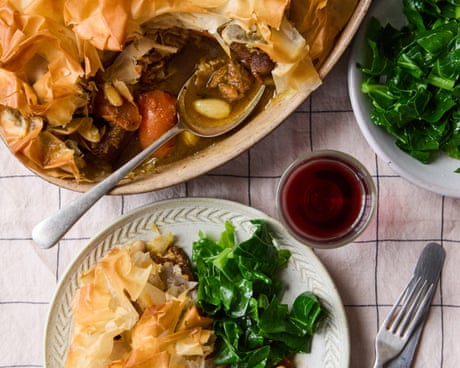
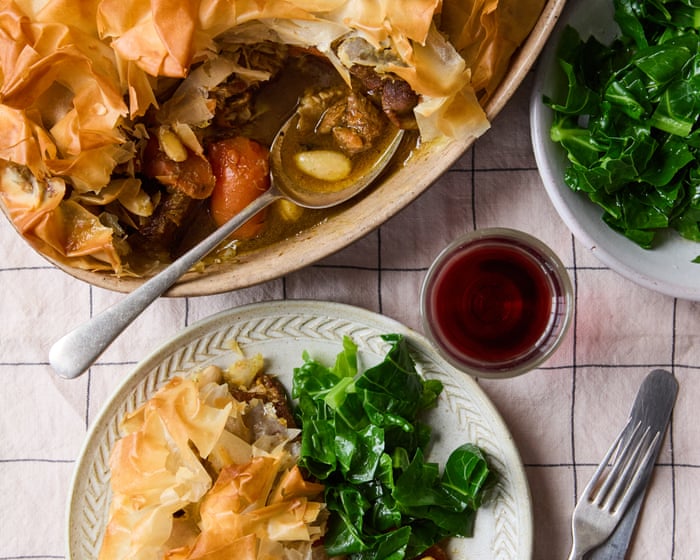
A succulent, richly seasoned lamb pie filled with honey carrots and almonds, followed by a cardamom- and orange-spiked desert

There is little as pleasing to cook in the depths of the winter as a pot of enticingly fragrant, slow-braised meat. A shoulder of lamb is one of my favourite cuts; you, or a friendly butcher, will need to trim away its excess fat, a job that will reward you with an exquisite flavour that marries beautifully with bold spicing. Here, we travel to Morocco, with sweetly aromatic ginger, turmeric and cinnamon, and follow that with cardamom, cream and rhubarb for pudding. A sumptuous, colourful feast to stave off any February blues.

Continue reading...

© Photograph: Ola O Smit/The Guardian. Food and prop styling: Florence Blair.
© Photograph: Ola O Smit/The Guardian. Food and prop styling: Florence Blair.
© Photograph: Ola O Smit/The Guardian. Food and prop styling: Florence Blair.

  •  

Meera Sodha’s vegetarian recipe for haggis dan dan noodles | Meera Sodha recipes

The Burns supper centrepiece is too good to enjoy on only one night a year – especially when it pairs so well with Chinese flavours

I’d like to start a new campaign called Vegetarian Haggis Isn’t Just for Burns Night. Of course, the Scots know this. They know how fantastic this genius concoction of pulses, vegetables, oats and spices is; how meaty without being, well, meaty. I began eating it because I share a birthday with Robert Burns (see haggis kheema) but it deserves to be eaten all year round. Here, I’ve introduced the haggis to another favourite of mine, dan dan noodles, and I’m pleased to report they get on like a house on fire.

Continue reading...

© Photograph: Ola O Smit/The Guardian. Food and prop styling: Florence Blair.

© Photograph: Ola O Smit/The Guardian. Food and prop styling: Florence Blair.

© Photograph: Ola O Smit/The Guardian. Food and prop styling: Florence Blair.

  •  

Craft beer has gone stale: let’s hear it for age-old favourites | Richard Godwin

There’s nothing wrong with a good, hoppy IPA, but perhaps it’s time to reappraise classic styles of beer again

The writer Vladimir Nabokov was extremely particular when it came to language, and rather more basic when it came to sustenance: “My habits are simple, my tastes banal,” he once told an interviewer. “I would not exchange my favourite fare (bacon and eggs, beer) for the most misspelt menu in the world.”

I’ve often thought of this as I’ve perused misspelt beer menus over the years, wondering what Nabokov would make of all the hazy dubble IPAs and triple brown mocha porters, because, over the course of what we might have to label the “craft era”, beer has become anything but simple. You may well have lamented this, too, especially if you’ve ever been cornered by an enthusiast at a party. India pale ale (IPA), for example, which was once a distinctly British style of ale designed for export, has, in the hands of American craft brewers, become a sort of standard-bearer for complicated beer: aggressively hopped, often startlingly bitter and/or sour, and redolent of a bygone era of millennial hipster striving.

Continue reading...

© Photograph: Martin Berry/Alamy

© Photograph: Martin Berry/Alamy

© Photograph: Martin Berry/Alamy

  •  

A local’s guide to Milan: the city’s best restaurants, culture and green spaces

In celebration of the Milano Cortina Winter Olympics, which starts this week, paralympic swimming champion Simone Barlaam shares his favourite places in his hometown

Born in Milan in 2000, Paralympic swimmer Simone Barlaam is a 23-time world champion who won three golds and a silver medal at the 2024 Paris Olympics. He’s a torchbearer and ambassador for the Milano Cortina Winter Olympic Games, which run from 6-22 February (the Paralympic Games run from 6-15 March) at sites across Lombardy and north-east Italy (with events such as speed skating, figure skating and ice hockey in the city). He also worked as a graphic designer for the games.

Barlaam grew up in Milan and lives in NoLo (North of Loreto), a vibrant, artistic neighbourhood. “I’ve lived all over the place, so I can take you around the city and the places that belong to my heart,” he says. Here, he chooses his favourite spots, beyond obvious sights such as the Duomo, La Scala opera house and the glossy Quadrilatero della Moda fashion district.

Continue reading...

© Photograph: Laura Coffey

© Photograph: Laura Coffey

© Photograph: Laura Coffey

  •  

Rachel Roddy’s recipe for pork ragu with herbs (for gnocchi or pasta) | A kitchen in Rome

Marbled flesh and fat are key to this rich, succulent and dense ragu, boosted with powerful notes of bay, sage and rosemary

It’s 10.30am and steam carrying the smell of onions, beans, cabbage and braised meat escapes from the kitchen in the corner of box 37 on Testaccio market. In the small kitchen is Leonardo Cioni, a tall chef from San Giovanni Valdarno, midway between Florence and Arezzo, who, for the past three-and-a-half years, has run box 37 as Sicché Roba Toscana, which roughly translates as “therefore Tuscan stuff”. The escaping steam is effective advertising, leading eyes to the blackboard above the counter to discover exactly what is going on in the back.

Always on the menu is lampredotto. The fourth stomach of the cow and the most tender, delicate tripe, lampredotto looks like a damp dishcloth crossed with a heavily ruffled shirt. It is prepared by simmering it in broth made from onion, carrot, celery, tomatoes, parsley and basil for about an hour and a half, then seasoned with salt and pepper, and served in a roll, maybe with a spoonful of salsa verde. Also made daily by Leo, and many times over, are trays of torta di ceci, a baked chickpea flour pancake much like farinata that is sandwiched in a flatbread called schiaccia, which can also be filled with salumi or cheese. The rest of the menu changes daily, but always includes a bean dish, at least one legume and vegetable soup (often thickened with polenta or bread), some sort of long-braised stew and maybe a ragu.

Continue reading...

© Photograph: Rachel Roddy/The Guardian

© Photograph: Rachel Roddy/The Guardian

© Photograph: Rachel Roddy/The Guardian

  •  

Miso mystery: red, white or yellow – how does each paste change your dish? | Kitchen aide

Our experts unpack the power of miso paste, and the unique flavour profiles you need for your home cooking

What’s the difference between white and red miso, and which should I use for what? Why do some recipes not specify which miso to use?
Ben, by email
“I think what recipe writers assume – and I’m sure I’ve written recipes like this – is that either way, you’re not going to get a miso that’s very extreme,” says Tim Anderson, whose latest book, JapanEasy Kitchen: Simple Recipes Using Japanese Pantry Ingredients, is out in April. As Ben points out, the two broadest categories are red and white, and in a lot of situations “you can use one or other to your taste without it having a massive effect on the outcome of the dish”.

Salty, savoury miso is (usually) made by steaming soya beans, mashing them with salt and koji, then leaving to ferment. “And the age is what changes the colour,” says Anderson. “White miso is not aged for very long – three to six months – and so it retains that beany, beige/yellow colour and tastes fresher, while red miso is aged for six months or longer, resulting in a darker colour and more funk.” The parallel Anderson often draws is that of a mild cheese and an aged or mature cheese. “Gouda is a good example,” he says. “It can be quite mellow and salty, but as it ages it develops a buttery, caramelised flavour.”

Got a culinary dilemma? Email feast@theguardian.com

Continue reading...

© Photograph: Maple’S Photographs/Getty Images

© Photograph: Maple’S Photographs/Getty Images

© Photograph: Maple’S Photographs/Getty Images

  •  

Sami Tamimi’s recipes for spiced bulgur balls with pomegranate, with a herby fennel side salad

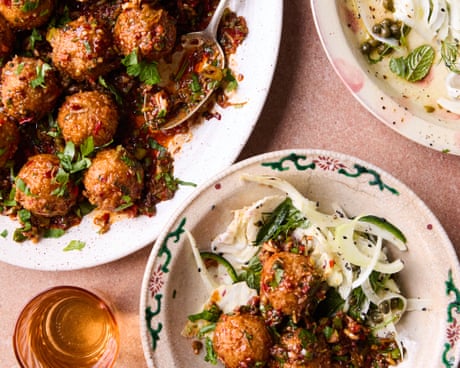
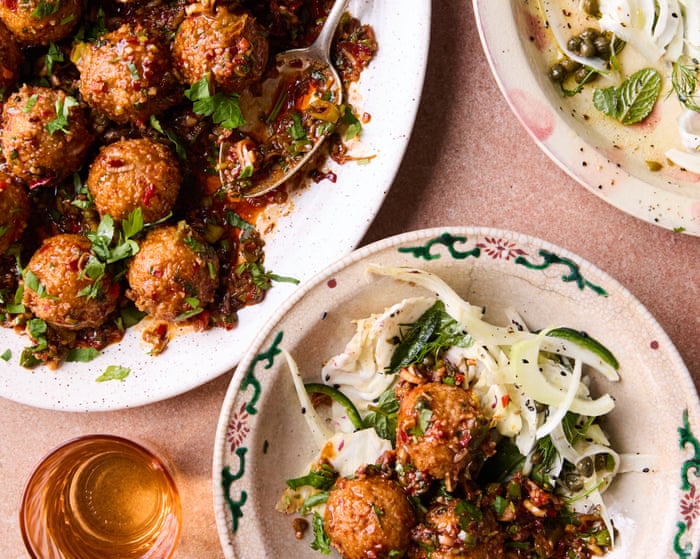
Layers of eastern spice and flavour run through these mini bulgur wheat balls in a spicy sauce of pepper and pomegranate molasses, and there’s a sprightly fennel and herb salad on the side

I have always dreamed of a return to the golden age of Arab trade, when spices, fruits and ideas voyaged across deserts and seas, creating extraordinary food cultures through exchange and curiosity. I’ve imagined bringing new flavours home, letting them transform the kitchen – but with all the madness in today’s world, that dream must stay a dream, for now. So, these recipes become my journey, a way to reconnect with that spirit and taste the magic of the Arab golden age today.

Continue reading...

© Photograph: Ola O Smit/The Guardian. Food and prop styling: Kitty Coles

© Photograph: Ola O Smit/The Guardian. Food and prop styling: Kitty Coles

© Photograph: Ola O Smit/The Guardian. Food and prop styling: Kitty Coles

  •  

My search for the perfect Danish pastry in Copenhagen

In a city packed with bakeries, how do you find the best? I risked tooth decay to track down the quintessential blend of crisp pastry, an oozy centre and sugary cinnamon

Open sandwiches (smørrebrød), meatballs (frikadeller), crispy pork belly (stegt flæsk) … There are many must-eat dishes for food lovers visiting Denmark, though perhaps nothing springs to mind as readily as the Danish pastry. But how are you supposed to choose from the countless bakeries on offer? And once you have decided which to visit, which pastry to eat? As a long-term resident of Copenhagen and pastry obsessive, I took on the Guardian’s challenge to find the best Danish pastry in town.

Let’s get started with the shocking fact that Danish pastries are not actually Danish. In Denmark they’re called wienerbrød (Viennese bread) and made using a laminated dough technique that originated in Vienna. There’s also no such thing as a “Danish” in Denmark – there are so many different types of pastry that the word loses meaning. What we know as a Danish is a spandauer – a round pastry with a folded border and a circle of yellowy custard in the middle. Then there’s the tebirkes, a folded pastry often with a baked marzipan-style centre and poppy seeds on the top; a frøsnapper, a twist of pastry dusted with poppy seeds; and a snegl, which translates as “snail” but is known as a cinnamon swirl in English.

Continue reading...

© Photograph: Maria Thuesen Bleeg

© Photograph: Maria Thuesen Bleeg

© Photograph: Maria Thuesen Bleeg

  •  

Stir-fry suppers: Jeremy Pang’s recipes for Sichuan chicken and Singapore noodles

Enrol in the school of wok and get sizzling with a simple stir-fry and a classic hotch-potch noodle dish. Follow the ‘wok clock’ and both are ready in about half an hour

Stir-frying, as its name suggests, is the technique of frying while continuously stirring or circulating heat, and it is the heat that’s all-important. Stir-frying is all about wok hei, or ‘wok’s air’ in English, which you can think of as the ‘height of fire’, or the level of heat. It’s said that Chinese cooks have good wok hei if they have a true understanding of the heat of their wok and how to handle it in all situations, and a stir-fry’s success is based on the quality of the cook’s wok hei.

Continue reading...

© Photograph: Rita Platts/The Guardian. Food styling: Hanna Miller. Prop styling: Florence Blair. Food styling assistant: Isobel Clarke.

© Photograph: Rita Platts/The Guardian. Food styling: Hanna Miller. Prop styling: Florence Blair. Food styling assistant: Isobel Clarke.

© Photograph: Rita Platts/The Guardian. Food styling: Hanna Miller. Prop styling: Florence Blair. Food styling assistant: Isobel Clarke.

  •  

How to make mulligatawny – recipe | Felicity Cloake's Masterclass

Have you forgotten how good this spicy soup tastes? Here are nine easy steps to rediscovering the Indian-inspired winter warmer

I have yet to see anyone eating mulligatawny in an Indian restaurant – perhaps unsurprisingly, given that it’s a product of the British occupation, and the very name has an off-putting Victorian feel, which is a shame, because it’s aged a lot better than imperialism. Based, historians think, on the Madrassi broth molo tunny, it’s a lovely, gently spiced winter soup that’s well worth rediscovering.

Prep 15 min
Cook 50 min
Serves 4-6

Continue reading...

© Photograph: Kate Anglestein/The Guardian. Food styling: Lucy-Ruth Hathaway

© Photograph: Kate Anglestein/The Guardian. Food styling: Lucy-Ruth Hathaway

© Photograph: Kate Anglestein/The Guardian. Food styling: Lucy-Ruth Hathaway

  •  

Meera Sodha’s vegetarian recipe for patates yahni

Sometimes, all that’s required for supper is simply stewed Mediterranean vegetables and potatoes with a dollop of yoghurt on top …

The world over, you’ll find home cooks trying to turn bags of potatoes into dinner, myself included. Sometimes, my answer is a Sri Lankan potato curry, or a Gujarati one. Perhaps a slow-cooked Spanish omelette if it’s a date night with Hugh at the kitchen island (like this Friday) but today, the solution is Greek. Yahni is the Greek word for a style of cooking: vegetables braised in plenty of olive oil and tomatoes, until tender. It’s a way of being, a vote for the simple and the slow and the good (but it is also dinner, if you wish).

Continue reading...

© Photograph: Louise Hagger/The Guardian. Food styling: Emily Kydd. Prop styling: Jennifer Kay. Food styling assistant: Eden Owen-Jones.

© Photograph: Louise Hagger/The Guardian. Food styling: Emily Kydd. Prop styling: Jennifer Kay. Food styling assistant: Eden Owen-Jones.

© Photograph: Louise Hagger/The Guardian. Food styling: Emily Kydd. Prop styling: Jennifer Kay. Food styling assistant: Eden Owen-Jones.

  •  

Cocktail of the week: El Pirata’s el toro – recipe | The good mixer

A sherry old-fashioned with added southern Spanish sizzle

This reimagining of the old fashioned, in which American whiskey meets Andalusian flair, is a well-earned indulgence for the depths of winter. Deep, dark and full of Spanish warmth, it’s a cocktail that wraps you up like a velvet jacket with bourbon spice, sherry sweetness and a glint of orange zest.

Neki Xhilaga, head bartender, El Pirata, London W1

Continue reading...

© Photograph: Rob Lawson/The Guardian. Drink styling: Seb Davis.

© Photograph: Rob Lawson/The Guardian. Drink styling: Seb Davis.

© Photograph: Rob Lawson/The Guardian. Drink styling: Seb Davis.

  •  

Benjamina Ebuehi’s recipe for citrus and almond cake | The sweet spot

A richly textured and zingy loaf cake to enjoy with a cuppa

Anything bright and zingy is particularly welcome in January, even more so when it’s in the form of cake. I always have an odd end of marzipan after the festive season, and this is a great way to use it up and bring that cosy almond flavour. The marzipan gets blitzed into the butter for a plush-textured loaf cake, and comes together in minutes thanks to simply putting everything in a food processor.

Continue reading...

© Photograph: Rita Platts/The Guardian. Food styling: Aya Nishimura. Prop styling: Florence Blair. Food styling assistant: Isobel Clarke.

© Photograph: Rita Platts/The Guardian. Food styling: Aya Nishimura. Prop styling: Florence Blair. Food styling assistant: Isobel Clarke.

© Photograph: Rita Platts/The Guardian. Food styling: Aya Nishimura. Prop styling: Florence Blair. Food styling assistant: Isobel Clarke.
  •  

Rachel Roddy’s puntarelle, radicchio, celery, apple and cheese salad recipe

This crisp and punchy salad is a tribute to the late veg specialist Charlie Hicks and a shared love of the versatile Italian chicory puntarelle

Like many, I remember Charlie Hicks from Veg Talk, a weekly show that ran on Radio 4 from 1998-2005. The show, according to Sheila Dillon, came into being after her interview with Charlie, a fourth-generation fruit and veg supplier at Covent Garden market, for an episode of The Food Programme exploring where chefs bought their produce. Sitting at the kitchen table with her husband the following evening, Sheila recounted her day and Charlie’s enormous knowledge, enthusiasm and ability to communicate both. A few days after that, a similar conversation took place with her colleagues at Radio 4, which resulted in Veg Talk – what’s in and what’s out in the world of fresh produce. As well as Charlie’s market report, each episode included a feature called “vegetable of the week” and the participation of studio guests – Angela Hartnett, Alastair Little, Rose Gray, Darina Allen and Mitch Tonks, to name just a few – and took calls from listeners.

The show had its critics – in a 2005 interview with the Independent, broadcaster Andy Kershaw is quoted as saying, “This show should have been strangled at birth” – but it also had legions of fans (myself included), who tuned in mostly for Charlie’s expertise accumulated over a lifetime of working the markets, cooking with his wife, Anna, talking to growers and reading, so it was both practical and scholarly. Add to this his sharp humour, easy bantering relationships and warm voice.

Continue reading...

© Photograph: Rachel Roddy/The Guardian. Food: Rachel Roddy.

© Photograph: Rachel Roddy/The Guardian. Food: Rachel Roddy.

© Photograph: Rachel Roddy/The Guardian. Food: Rachel Roddy.

  •  

Slurp the blues away: Ravinder Bhogal’s recipes for winter noodle soup-stews

Heaven in a bowl: sweet-and-sour peanut with pasta, Burmese noodle soup with coconut, noodles and myriad garnishes, and an easy and flavourful dumpling soup

One of the best things for lifting deflated spirits is a deep bowl of steaming, restorative soup – perfect for warming the places your old woolly jumper can’t reach. I love the romance and cosiness of creamy European soups drunk straight out of a mug around a fire in November, but in the icy tundra that is January I need something with more heat and intensity, something sustaining, spicy, gutsy and textured, so that I need a fork or chopsticks to eat it, rather than just a spoon. These punchy soups are simply rapture in a bowl, and make for extremely satisfying slurping.

Continue reading...

© Photograph: Rita Platts/The Guardian. Food styling: Hanna Miller. Prop styling: Florence Blair. Food styling assistant: Isobel Clarke.
© Photograph: Rita Platts/The Guardian. Food styling: Hanna Miller. Prop styling: Florence Blair. Food styling assistant: Isobel Clarke.

© Photograph: Rita Platts/The Guardian. Food styling: Hanna Miller. Prop styling: Florence Blair. Food styling assistant: Isobel Clarke.

  •  

One in four adults in England do not drink alcohol, survey finds

Questionnaire completed by 10,000 people finds sobriety on rise, with women slightly more abstemious than men

One in four adults in England do not drink alcohol, with increasing numbers of men and young people deciding to stay sober, according to a survey.

The figures, which come from a questionnaire of 10,000 people as part of the Health Survey for England, found that almost a quarter (24%) of adults in England had not drunk alcohol in 2024, an increase from just under a fifth (19%) in 2022.

Continue reading...

© Photograph: Alex Segre/Alamy

© Photograph: Alex Segre/Alamy

© Photograph: Alex Segre/Alamy

  •  

Zoning in on Leith, Edinburgh – ‘It’s been a joy to watch the area reinvent itself’

The historic port district – and setting for Irvine Welsh’s Trainspotting – has evolved into a cultural and culinary hub. In the first of a new series, a local resident visits the venues powering the resurgence

Leith is Edinburgh’s port district, where people, goods and new ideas have flowed into the city for centuries. Here, the Water of Leith river meets the sea, and on bright days, when pubs and restaurants spill out to the Shore area, there’s nowhere quite like it. I moved here 13 years ago, and it has been a joy to watch the area evolve and reinvent itself. Today it’s the city’s creative heart, full of artists, musicians, designers and startups, with a thriving food and drink scene. The arrival of the tramline from Edinburgh city centre in 2023 has given it a big boost too.

Continue reading...

© Photograph: Iain Masterton/Alamy

© Photograph: Iain Masterton/Alamy

© Photograph: Iain Masterton/Alamy

  •  

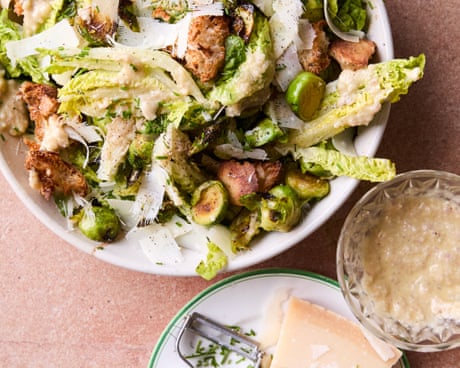
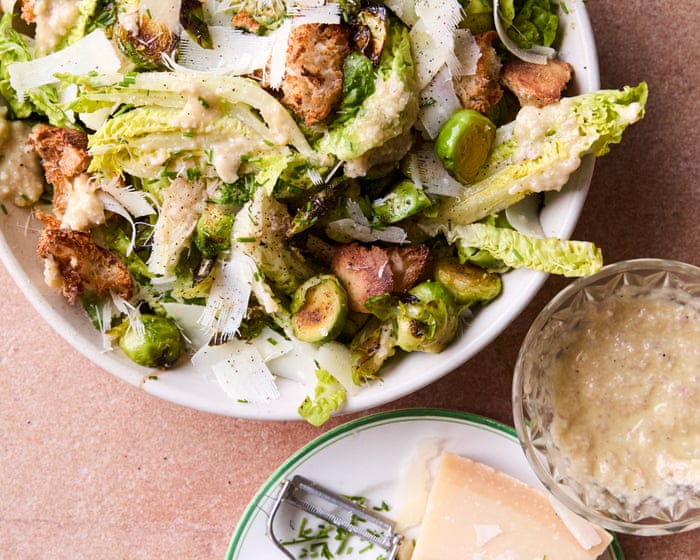
Georginia Hayden’s quick and easy recipe for roast sprout salad with anchovies and parmesan | Quick and easy

There’s lots of deep umami flavour in this crunchy, rubbly side or salad

Brussels sprouts are for life, not just for Christmas. They’re still making a regular appearance in our house, from shredded and stir-fried with chilli and spice, to roasted and dressed, as in this salad. And what a salad it is: with a caesar-esque dressing, it is crisp, salty and crunchy, and hits all the right notes. You can bulk it out, if you like, by topping it with a few soft, jammy boiled eggs cut into wedges or some shredded leftover chicken. However, it is pretty perfect as it is, as a light lunch or side.

Continue reading...

© Photograph: Ola O Smit/The Guardian. Food and prop styling: Kitty Coles

© Photograph: Ola O Smit/The Guardian. Food and prop styling: Kitty Coles

© Photograph: Ola O Smit/The Guardian. Food and prop styling: Kitty Coles

  •  

Meatballs, Persian rice and Korean stew: John Gregory-Smith’s globetrotting chicken traybake recipes

Mediterranean chicken meatballs with feta and black olives, Persian-style saffron chicken and rice, and a garlicky, Korean-inspired chicken and potato traybake

When it comes to traybakes, chicken is the undisputed hero, because it’s endlessly adaptable and perfect for carrying bold, global flavours. First up, some eastern Mediterranean chicken meatballs, flecked with feta and black olives for a sharp, savoury punch. Then a Persian-style saffron chicken and rice; the rice cooks with the chicken, absorbing all the flavours of the sunshine-yellow saffron and crisping up at the edges. Finally, a Korean-inspired chicken and potato traybake in which gochujang and soy create a deeply savoury sauce that elevates a simple midweek meal.

Continue reading...

© Photograph: Louise Hagger/The Guardian. Food styling: Emily Kydd. Prop styling: Jennifer Kay. Food styling assistant: Eden Owen-Jones.

© Photograph: Louise Hagger/The Guardian. Food styling: Emily Kydd. Prop styling: Jennifer Kay. Food styling assistant: Eden Owen-Jones.

© Photograph: Louise Hagger/The Guardian. Food styling: Emily Kydd. Prop styling: Jennifer Kay. Food styling assistant: Eden Owen-Jones.

  •  

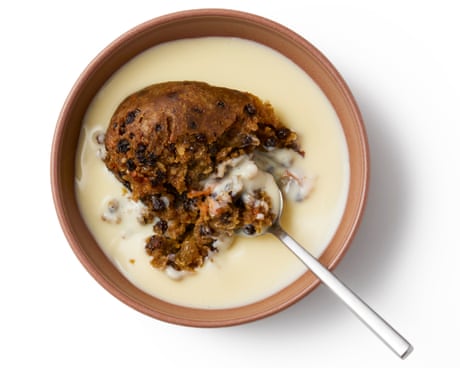
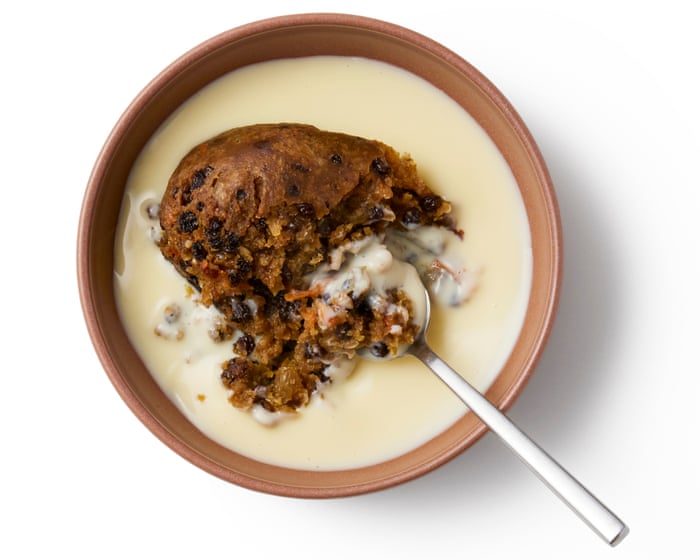
How to make a clootie dumpling – recipe | Felicity Cloake's Masterclass

Your famous Scottish suet pud, not unlike spotted dick – wonderful for Burns Night and beyond, with a spot of ice-cream or fried up in butter the next day

Clootie dumpling is, let’s face it, a much better name than spotted dick, but if you were fond of the latter at school, you’ll probably enjoy this very similar, classic Scottish steamed pudding. Not too sweet and, thanks to the apple and carrot, lighter than it sounds, this is a proper winter dessert and the perfect end to a Burns supper, especially when served with custard or ice-cream.

Prep 20 min
Cook 3 hr 15 min
Serves 8-10

Continue reading...

© Photograph: Kate Anglestein/The Guardian. Food styling: Lucy-Ruth Hathaway

© Photograph: Kate Anglestein/The Guardian. Food styling: Lucy-Ruth Hathaway

© Photograph: Kate Anglestein/The Guardian. Food styling: Lucy-Ruth Hathaway

  •  
❌