 Anmelden

Anthropologie: Lernten die Vorfahren des Menschen in Europa das Laufen?

Fossilien eines Primaten aus Bulgarien deuten darauf hin, dass dieser bereits aufrecht auf zwei Beinen ging. Nahm die menschliche Linie doch nicht in Afrika ihren Anfang?

Fossilien eines Primaten aus Bulgarien deuten darauf hin, dass dieser bereits aufrecht auf zwei Beinen ging. Nahm die menschliche Linie doch nicht in Afrika ihren Anfang?
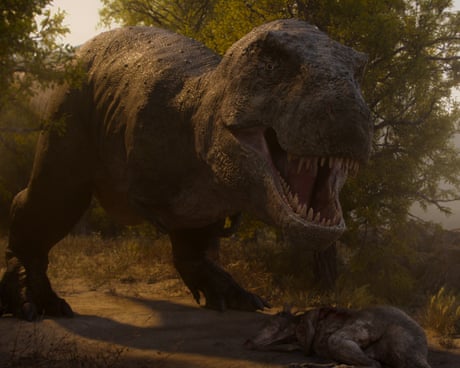
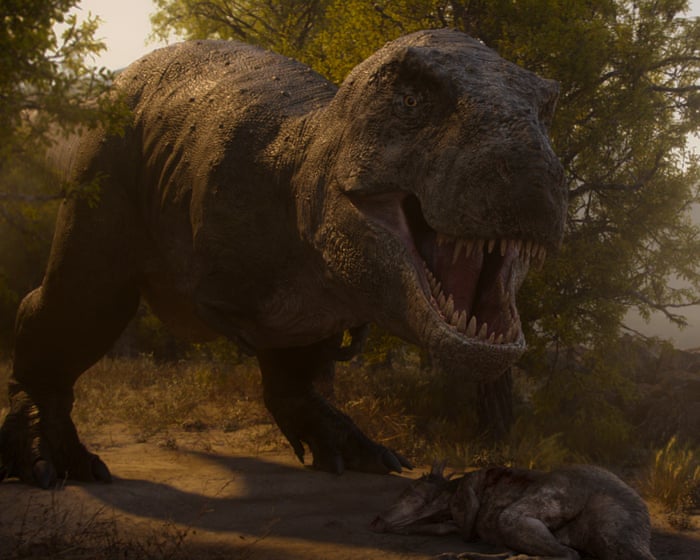
Yes, there are plenty of big-budget visual effects of prehistoric creatures in Steven Spielberg’s natural history show. But the voiceover is the real draw
It’s difficult these days to make a nature documentary that isn’t like all the others. Spectacular landscapes, crisp closeup photography, tales of predation and survival, birth and death: whether you go for Pixar cuteness, crimson claws or environmental crisis, it’s been done 100 times before. Watching The Dinosaurs, it’s hard not to sense the same problem starting to affect factual shows about the animal kingdom as it was millions of years ago. Impressive as it is that big-money dino documentaries boast visual effects that look similar to footage of Earth today, we are getting used to it.
Before the opening titles roll, cliches from two genres have been cross-bred. From regular animal shows, there’s the one where a lone male tries to muscle in on a family unit, forcing the existing patriarch to fight for his status against a younger, stronger rival. Our friend who looks as if he’s about to be fatally pushed aside is a pachycephalosaurus, but the dynamic is the same. Then the two males’ head-smashing battle is interrupted by a familiar sight from dinosaur documentaries: the animal posing a threat is suddenly bitten in two by a Tyrannosaurus rex, leaping unbidden through the undergrowth with a camp flourish. The pachycephalosaurus clan, led by their relieved dad, scurry happily away to the sound of the interloper’s cracking skull.
Continue reading...
© Photograph: Courtesy of Netflix
© Photograph: Courtesy of Netflix
© Photograph: Courtesy of Netflix
Scientists say DNA evidence indicates male Neanderthals and human females interbred more often than opposite
Tens of thousands of years ago, as modern humans migrated into northerly territories inhabited by our ancient cousins, the Neanderthals, the two species met – and sometimes mated.
Now, genetic evidence has revealed a striking imbalance in these prehistoric trysts, suggesting that interbreeding was mostly between male Neanderthals and female humans.
Continue reading...
© Photograph: Anthony Lynn/Alamy

© Photograph: Anthony Lynn/Alamy

© Photograph: Anthony Lynn/Alamy
Masoud Pezeshkian tries to convey message of national unity as negotiations with US hang in balance
Iran’s president insisted his country was not seeking a nuclear weapon as he acknowledged “great sorrow” after the authorities’ recent crackdown on protesters.
Speaking to crowds gathered across Iran to mark the anniversary of the 1979 revolution, Masoud Pezeshkian sought to claim a message of national unity after demonstrations that roiled the country and triggered an unprecedented crisis for the regime.
Continue reading...
© Photograph: AFP/Getty Images

© Photograph: AFP/Getty Images

© Photograph: AFP/Getty Images
As fewer people choose to pair up, let alone marry, it could be that our species’ mating patterns are moving closer to the natural order
Monogamy, you may have heard, is in crisis. Fewer people are in relationships, let alone opting to be in one ’til death. And even those who have already exchanged vows seem to be increasingly looking for wiggle room. “Quiet divorce” – mentally checking out of your union, rather than going through the rigmarole of formally dissolving it – is reportedly on the rise, as is “ethical non-monogamy” (ENM) and opening up a relationship to include other partners.
This is borne out by my experience on mainstream dating apps. About one profile in every 10 I come across seems to express a preference for “ENM” or polyamory, or mentions an existing wife or girlfriend. The best you can hope for, if you’re prepared to accept those terms, is that the “primary partner” really is across the arrangement as described.
Elle Hunt is a freelance journalist
Continue reading...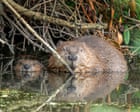
© Photograph: Barry Edwards/PA
© Photograph: Barry Edwards/PA
© Photograph: Barry Edwards/PA

© Illustration: Madeline Horwath/The Guardian

© Illustration: Madeline Horwath/The Guardian

© Illustration: Madeline Horwath/The Guardian

Trotzdem haben sie eine Sonderstellung. Auch wenn sich eine Kuh in Kärnten mit einem Besen kratzt.

Zwei Forscher räumen in der Evolution der Pferde auf: Der vermeintliche Urahn Hyracotherium war demnach nicht näher mit Pferden verwandt als mit Nashörnern.

Fossilien aus Marokko legen nahe, dass Neandertaler und Denisovaner sowie Homo sapiens früher als gedacht eigene evolutionäre Wege gingen. Wann und wo trennten sich die Linien?
Anas Sarwar says prime minister’s missteps have left party clear underdogs in run-up to May election
Keir Starmer and senior ministers have been urged by Scottish Labour to “stay behind their doors” in Whitehall to avoid turning the next Holyrood election into a referendum on UK government failures.
Anas Sarwar, the leader of Scottish Labour, said the prime minister’s policy failures and missteps had left voters “angry, frustrated and impatient”, leaving his party clear underdogs before May’s election.
Continue reading...
© Photograph: Murdo MacLeod/The Guardian

© Photograph: Murdo MacLeod/The Guardian

© Photograph: Murdo MacLeod/The Guardian
Scientists argue ape-like Sahelanthropus tchadensis that lived in Africa 7m years ago is best contender but more fossils are needed
In the murky first chapters of the human story is an unknown ancestor that made the profound transition from walking on all fours to standing up tall, an act that came to define us.
The odds of stumbling on the fossilised evidence of such an evolutionary prize are slim, but in new research, scientists argue that an ape-like animal that lived in Africa 7m years ago is the best contender yet.
Continue reading...
© Photograph: Didier Descouens

© Photograph: Didier Descouens

© Photograph: Didier Descouens
Over the holiday period, the Guardian leader column is looking ahead at the themes of 2026. Today we look at the impact of devolution on growing volatility of party political allegiance
Next year will be pivotal in British politics, and 7 May will be the point around which things pivot. Elections to local councils, the Scottish parliament and the Welsh Senedd will give millions of voters across the UK a chance to express party preferences. Their verdicts could imperil Labour and Conservative leaders. In Wales, Labour might be sent into opposition for the first time since devolution. Plaid Cymru and Reform UK are set to make substantial gains. At Holyrood, the Scottish National party (SNP) is on course for a majority. That would be an extraordinary defiance of political gravity for a party weighed down by nearly two decades of incumbency.
In England, both Labour and the Tories risk losing scores of councillors as their vote shares are gobbled up by the Liberal Democrats, Reform UK and the Greens. Those results will be taken as evidence that Sir Keir Starmer and Kemi Badenoch are failing as leaders. But it would be a mistake to filter the results only through that lens. The fragmentation of national allegiances began much longer ago.
Do you have an opinion on the issues raised in this article? If you would like to submit a response of up to 300 words by email to be considered for publication in our letters section, please click here.
Continue reading...
© Photograph: Temilade Adelaja/Reuters

© Photograph: Temilade Adelaja/Reuters

© Photograph: Temilade Adelaja/Reuters
Our 20 favourite pieces of in-depth reporting, essays and profiles from the year
Victor Pelevin made his name in 90s Russia with scathing satires of authoritarianism. But while his literary peers have faced censorship and fled the country, he still sells millions. Has he become a Kremlin apologist?
Continue reading...
© Composite: Guardian Design/Pamela Gordon/ Simon Dack / Alamy Stock Photo/Didier Descouens/REX/Shutterstock/PA/Mr Beast/Claudine O'Sullivan

© Composite: Guardian Design/Pamela Gordon/ Simon Dack / Alamy Stock Photo/Didier Descouens/REX/Shutterstock/PA/Mr Beast/Claudine O'Sullivan

© Composite: Guardian Design/Pamela Gordon/ Simon Dack / Alamy Stock Photo/Didier Descouens/REX/Shutterstock/PA/Mr Beast/Claudine O'Sullivan
Australian researchers think the skeleton found in South Africa is not the same species as two found in the same South Africa cave system
Little Foot, one of the world’s most complete hominin fossils, may be a new species of human ancestor, according to research that raises questions about our evolutionary past.
Publicly unveiled in 2017, Little Foot is the most complete Australopithecus skeleton ever found. The foot bones that lend the fossil its name were first discovered in South Africa 1994, leading to a painstaking excavation over 20 years in the Sterkfontein cave system.
Continue reading...
© Photograph: La Trobe University

© Photograph: La Trobe University

© Photograph: La Trobe University
Groundbreaking find makes compelling case that humans were lighting fires much earlier than originally believed
Humans mastered the art of creating fire 400,000 years ago, almost 350,000 years earlier than previously known, according to a groundbreaking discovery in a field in Suffolk.
It is known that humans used natural fire more than 1m years ago, but until now the earliest unambiguous example of humans lighting fires came from a site in northern France dating from 50,000 years ago.
Continue reading...
© Photograph: Aleksei Gorodenkov/Alamy

© Photograph: Aleksei Gorodenkov/Alamy
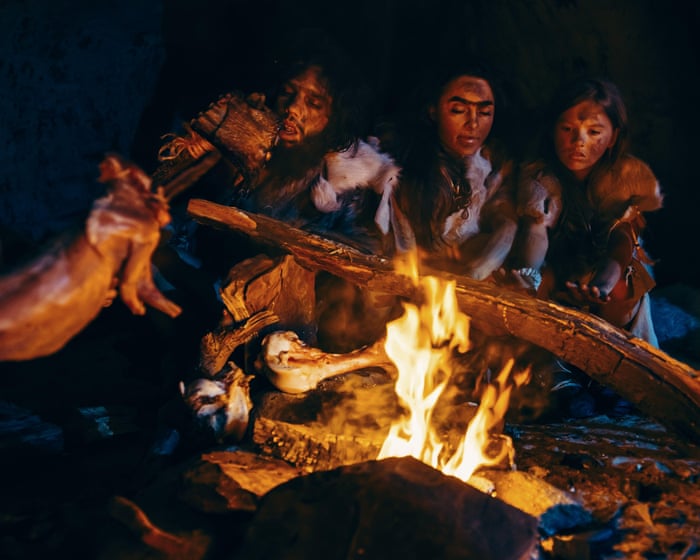
© Photograph: Aleksei Gorodenkov/Alamy
A fin whale washed ashore in Anchorage and was left there for months. Then a self-described ‘wacko’ museum director made a plan
When a whale dies, its body descends to the bottom of the deep sea in a transformative phenomenon called a whale fall. A whale’s death jump-starts an explosion of life, enough to feed and sustain a deep-ocean ecosystem for decades.
There are a lot of ways whales can die. Migrating whales lose their way and, unable to find their way back from unfamiliar waters, are stranded. They can starve when prey disappears or fall to predators such as orcas. They become bycatch, tangled in fishing lines and nets. Mass whale deaths have been linked to marine heatwaves and the toxic algae blooms that follow.
Continue reading...
© Photograph: Hasan Akbas/Anadolu via Getty Images

© Photograph: Hasan Akbas/Anadolu via Getty Images

© Photograph: Hasan Akbas/Anadolu via Getty Images
