❌

Lese-Ansicht

If plant-based foods must be more honest, let’s do the same for meat – fancy some ‘cow muscle’? | Deirdra Barr

EU rules banning terms such as ‘bacon’ for veggie products are problematic, btw cow muscle = steak

Last week, European policymakers decided that plant-based foods should no longer be marketed with terms such as “chicken”, “bacon” or “steak”. The fear seems to be that shoppers might accidentally buy veggie bacon thinking it came from an actual pig. The change applies to the UK too, because of our trade agreement with Europe.

After considerable pushback from organisations including the one I work with, the Vegetarian Society, and many food brands, words such as “burger”, “nuggets” and “sausage” – as in, vegan sausage rolls – are still permitted, provided the packaging makes clear they are plant-based. But even those allowances could yet be revisited.

Deirdra Barr is director of marketing and communications at the Vegetarian Society

Continue reading...

© Photograph: Philip Reeve/Alamy

© Photograph: Philip Reeve/Alamy

© Photograph: Philip Reeve/Alamy

  •  

Chicken wings and soup: Helen Graves’ spring onion recipes

A springy riff on leek-and-potato soup and a flavour-fuelled batch of finger-licking wings

March is a tricky pin in the seasonal calendar, with energising winter citrus fading and spring’s stars yet to emerge. It’s a time when I find pleasure in reappraising ingredients that are routinely overlooked. Spring onions, say, which are often considered a garnish, but which are good for so much more. Their contrasting colourway is a clue to their varying intensity, with the white roots holding pungency and the greens more akin to especially bolshie chives. Today’s recipes harness the properties of both, bridging the gap between the current need for comfort and the warmer weather ahead.

Continue reading...

© Photograph: Ola O Smit/The Guardian. Food styling: El Kemp. Prop styling: Hannah Wilkinson. Food styling assistant: Georgia Rudd.

© Photograph: Ola O Smit/The Guardian. Food styling: El Kemp. Prop styling: Hannah Wilkinson. Food styling assistant: Georgia Rudd.

© Photograph: Ola O Smit/The Guardian. Food styling: El Kemp. Prop styling: Hannah Wilkinson. Food styling assistant: Georgia Rudd.

  •  

Chefs the world over strive for a perfect score from Rate My Chives. Could I achieve one at home?

My goal: a perfect 10 from Rate My Chives, the ‘number one authority on chives worldwide’. Why is this so hard?

Chopping chives, I notice my weak wrists for the first time. My knife is connected to my hand which is connected to my wrist, which is flopping about like an overcooked piece of asparagus.

“You’ve got to keep them more sturdy,” says chef Trisha Greentree. “Lock in that line.”

Continue reading...

© Photograph: Blake Sharp-Wiggins/The Guardian

© Photograph: Blake Sharp-Wiggins/The Guardian

© Photograph: Blake Sharp-Wiggins/The Guardian

  •  

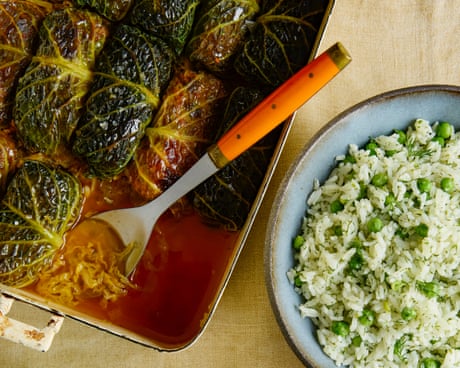
Thomasina Miers’ recipe for stuffed cabbage in white wine and escabeche, with buttered dill and pea rice | Sunday best

I can’t get enough of cabbage right now, and it’s the perfect wrap for this warmly spiced picadillo filling

I love stuffed vegetables. When I was young, I came across a recipe for stuffed aubergines in an old book of my mother’s and must have cooked it a score of times. Later, in the early 1990s and to the echoes of nouvelle cuisine, Delia Smith showed us how we could work similar magic with peppers and tomatoes. Then the technique went deeply out of fashion, but I stayed loyal, and continued quietly stuffing tomatoes, pumpkins and courgettes, all no doubt influenced by my travels in Mexico. Thoday’s stuffed cabbage is inspired by the most delicious tongue in a tantalisingly light escabeche that I once had at Nicos in Mexico City, and also because I can’t get enough of cabbage at the moment.

Continue reading...

© Photograph: Kim Lightbody/The Guardian. Food and prop styling: Lucy Turnbull. Food styling assistant: Thea Hudson.

© Photograph: Kim Lightbody/The Guardian. Food and prop styling: Lucy Turnbull. Food styling assistant: Thea Hudson.

© Photograph: Kim Lightbody/The Guardian. Food and prop styling: Lucy Turnbull. Food styling assistant: Thea Hudson.

  •  

Beetroot and goats’ cheese salad and hake with blood oranges: Rosie Healey’s recipes for early spring

A simple beetroot salad much like one you might be served in a Paris bistro, and a succulent fish fillet with a knockout, tangy dressing

The trio of fennel, blood orange and potato is one of my all-time favourites. It’s clean and fresh, with all the ingredients working in harmony. I often serve it with a piece of fish, which is a beautiful combination. But, first, a simple beetroot salad that reminds me of the ones served in Paris bistros – it’s no fuss and very satisfying.

Continue reading...

© Photograph: Ola O Smit/The Guardian. Food styling: El Kemp. Prop styling: Hannah Wilkinson. Food styling assistant: Georgia Rudd.

© Photograph: Ola O Smit/The Guardian. Food styling: El Kemp. Prop styling: Hannah Wilkinson. Food styling assistant: Georgia Rudd.

© Photograph: Ola O Smit/The Guardian. Food styling: El Kemp. Prop styling: Hannah Wilkinson. Food styling assistant: Georgia Rudd.

  •  

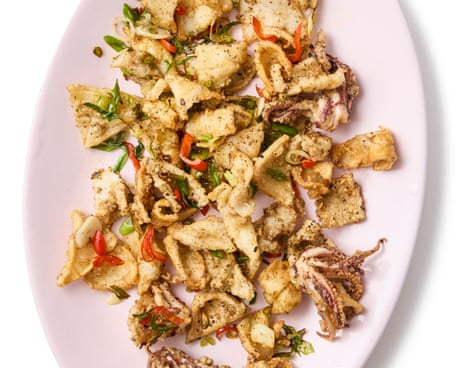
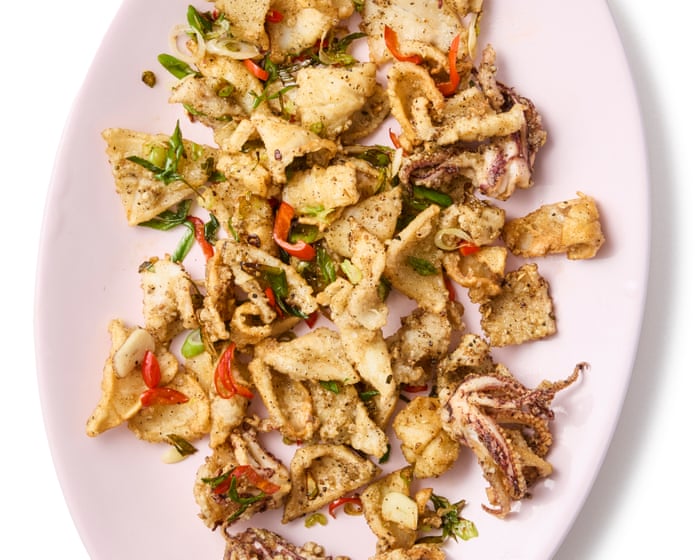
How to make salt and pepper squid – recipe | Felicity Cloake's Masterclass

A real seafood treat – crisp, savoury, aromatic – ready in less than half an hour and in just a few simple steps

This crisp, salty, pungently aromatic dish is a strong contender to kick off my fantasy final meal – it wouldn’t really go with the steak frites and trifle to follow, but I find the combination of hot, crunchy batter and soft, creamy squid utterly irresistible. Happily, there’s no need to save it for the end times when it’s so easy to make for dinner tonight.

Prep 10 min
Cook 15 min
Serves 2

Continue reading...

© Photograph: Robert Billington/The Guardian. Food styling: Loïc Parisot.

© Photograph: Robert Billington/The Guardian. Food styling: Loïc Parisot.

© Photograph: Robert Billington/The Guardian. Food styling: Loïc Parisot.

  •  

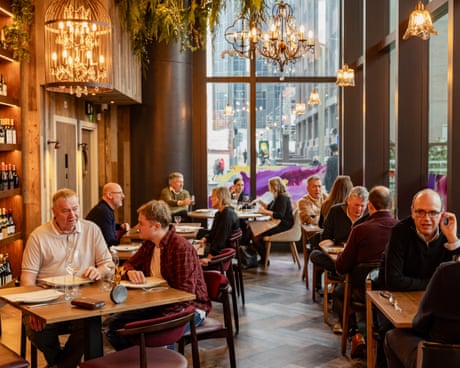
Trillium, Birmingham B4: ‘There’s a general feeling of people – gasp! – actually enjoying life’ – restaurant review | Grace Dent on restaurants

I’m somewhat in love with this weird, bold, silly restaurant

Trillium, the latest Birmingham restaurant by Glyn Purnell, is absolutely not one of those po-faced, sedate, mumbly kind of places where some Ludovico Einaudi is piped plinky-plonkily throughout the dining room while guests stiffly eat six teensy courses. In fact, it’s quite the opposite, even if Purnell, via the likes of Purnell’s and Plates, is pretty much synonymous throughout the Midlands with fancy, special-occasion, Michelin star-winning refinement. Yet on a recent Saturday night, in this brand new, glass-fronted, multicoloured mock birdcage, the talk is loud, the music is roaring and the plates of battered potato scallop with soured cream are appearing thick and fast.

Trillium is a genuine attempt by a Michelin-starred restaurateur to translate some of their best bits into a semi-rowdier yet still upmarket stage. It’s been attempted many times by other chefs (see Corenucopia and Bar Valette for details), but, miraculously, Purnell seems to have pulled it off. There’s a general feeling of people – gasp! – actually enjoying life. Naturally, you can, if you feel like splashing out, add some Sturia oscietra caviar to that spud scallop for an extra £25, but, as with most plates at Trillium and as I quickly find out, that potato is designed to feel luxuriously hedonistic anyway.

Continue reading...

© Photograph: Jack Spicer Adams/The Guardian

© Photograph: Jack Spicer Adams/The Guardian

© Photograph: Jack Spicer Adams/The Guardian

  •  

Meera Sodha’s vegan recipe for Arya’s birthday udon | The new vegan

A classic fried tofu stir-fry that’s bang-full of flavour

My funny, curious, panda-loving daughter, Arya, is turning nine this week. So I wanted to write a recipe to celebrate her and some of her favourite things to eat. Arya adores the chewiness of udon, the bounciness of tofu, the sweet, sour saltiness of sweet soy and tamarind, the crunch of cabbage and she’d put chilli (in any form) over her breakfast cereal if she could (although it’s optional in this recipe). Happy birthday, Arya.

Continue reading...

© Photograph: Louise Hagger/The Guardian. Food styling: Emily Kydd. Prop styling: Jennifer Kay. Food styling assistant: Eden Owen-Jones.

© Photograph: Louise Hagger/The Guardian. Food styling: Emily Kydd. Prop styling: Jennifer Kay. Food styling assistant: Eden Owen-Jones.

© Photograph: Louise Hagger/The Guardian. Food styling: Emily Kydd. Prop styling: Jennifer Kay. Food styling assistant: Eden Owen-Jones.

  •  

From late-night shots to sipping with soda: how tequila took over

Forget sombrero lids and student nights, the agave-derived Mexican spirit has become the sophisticated drink choice. Here’s why – plus five of the best tequila cocktails

Cracking open the tequila at the end of a long night rarely leads to good decisions. But for Tom Bishop, reaching for a bottle that had been gathering dust on his shelf proved life-changing. Having run out of beers while drinking with friends in 2017, Bishop dug out a bottle of premium Añejo tequila that his brother had given him after a business trip to Mexico. His expectations were low, informed by the throat-burning experiences of his youth. “But it completely blew me away,” Bishop remembers. “I just hadn’t associated tequila with that level of quality or flavour.”

Having stumbled upon the spirit as it was meant to be enjoyed “by accident”, Bishop saw an opportunity. Two years later, he and Jack Vereker, a friend with whom he had been drinking in south-east London that night, sold their first bottle of their brand El Rayo, now stocked across the UK and part of tequila’s new wave.

Continue reading...

© Illustration: Lisa Sheehan/The Guardian

© Illustration: Lisa Sheehan/The Guardian

© Illustration: Lisa Sheehan/The Guardian

  •  

Cocktail of the week: Chet’s bloody caesar – recipe

Let’s ratchet up the spice in your Saturday brunch …

I love a bloody mary as much as the next person, but sometimes Saturday brunch needs spicing up just that little bit more.

Ash Anand, bar manager, Chet’s at the Hoxton, London W12

Continue reading...

© Photograph: Rob Lawson/The Guardian. Drink styling: Seb Davis.

© Photograph: Rob Lawson/The Guardian. Drink styling: Seb Davis.

© Photograph: Rob Lawson/The Guardian. Drink styling: Seb Davis.

  •  

EU agrees to chop meaty names from vegetarian and vegan food products

Lawmakers will outlaw use of 31 meat-related names as part of efforts to help livestock farmers in food supply markets

EU lawmakers have agreed to ban meaty names such as steak and bacon for vegetarian and vegan foods, but “veggie burgers” and “meat-free sausages” will remain on the table.

Negotiators from the European parliament and EU council of ministers found a recipe for compromise on rules for food names on Thursday, although critics said they were creating needless complexity.

Continue reading...

© Photograph: Francisco Seco/AP

© Photograph: Francisco Seco/AP

© Photograph: Francisco Seco/AP

  •  

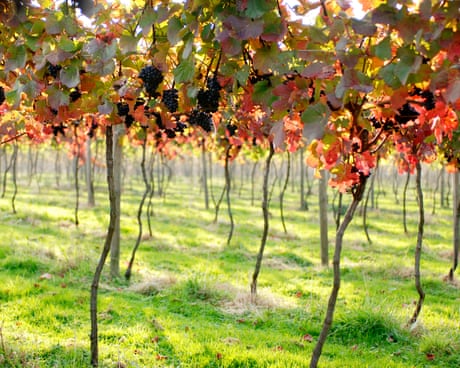
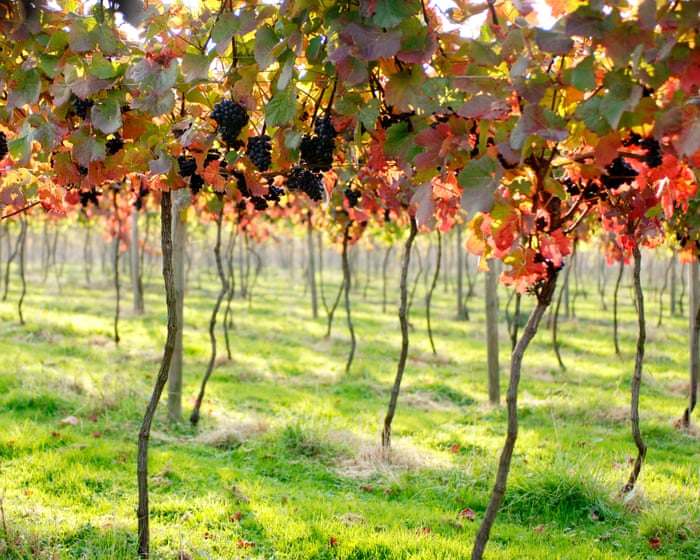
The future is rosy for English red wines

England now produces light, fruity reds that are much less heady than their Mediterranean counterparts

When did you last buy a bottle of English red wine? Chances are, you never have. Though increasingly available on the high street – Ocado and Waitrose Cellar both stock a couple – reds grown in Blighty have struggled to shift a reputation for being overpriced: the vast majority still cost £15-25 a bottle, which is well outside what most people might consider “everyday drinking”.

According to WineGB, the national trade organisation for British winemakers, red probably accounts for less than 5% of all English wine. The cost issue, however, transcends red wine alone; winemaking in England might be one of our fastest-growing agricultural sectors, but it still operates on a relatively small scale, which naturally bumps up that price tag. Our cooler climate isn’t associated with reds, either, particularly those big, juicy numbers available so affordably from hotter countries. So, yes, you could be forgiven for thinking English reds are expensive novelties.

Continue reading...

© Photograph: David Levene/The Guardian

© Photograph: David Levene/The Guardian

© Photograph: David Levene/The Guardian

  •  

Rachel Roddy’s recipe for apple, honey and poppy seed cake | A kitchen in Rome

The chemistry and alchemy of honey’s special kind of sweetness, and how it complements just the right kind of apples in a humble yet delicious cake

Honey is, among other things, a successful embalming agent. It is also a humectant, which isn’t an eager cyborg, but one of many short-chained organic compounds that are hygroscopic, meaning they attract and hold water, which in turn prevents hardening and encourages softness. Other hardworking humectants are glycerine, which is what keeps face creams creamy and hydrating, and sorbitol, which ensures toothpaste can be squeezed and smeared all over the sink and on the mirror. Honey, though, is the humectant that’s most suitable for this week’s recipe: a one-bowl, everyday cake inspired by my neighbour’s Polish honey cake, miodownik, combined with the tortino di mele e papavero (apple and poppy seed cake) enjoyed at a station bar in Bolzano.

Not only does honey keep the cake moist, its sweetness comes largely from fructose, which is naturally sweeter than refined sugar, so the perception of sweetness is much greater even when less is added. I have suggested 160g, but adjust as you see fit. The small amounts of amino acids in honey also mean that the chemical Maillard reaction is more pronounced as the cake bakes, resulting in caramelisation and a crust the colour of chestnut, as well as a deep, nutty flavour. While I am sure all varieties of honey will work well, I can particularly recommend chestnut honey and Greek pine honey, both of which have complicated, almost malty notes that pair well with the apple and the pleasing, slightly bitter but also soil-like taste of poppy seeds.

Continue reading...

© Photograph: Rachel Roddy/The Guardian

© Photograph: Rachel Roddy/The Guardian

© Photograph: Rachel Roddy/The Guardian

  •  

Stuffed peppers and aubergine dip: Sami Tamimi’s recipes for savoury Palestinian snacks

Peppers stuffed with freekeh, lamb and spicy tomato sauce, and a classic Levantine aubergine dip with preserved lemon and dill

I still remember, when I was a kid, the end of spring and early summer when markets in Jerusalem and across Palestine overflowed with freshly harvested freekeh. As you approached, the air carried a smoky, earthy aroma. Freekeh is an ancient grain, a staple across the Middle East and Turkey, made from green wheat roasted over open fires to burn off the husks, which gives it the characteristic nutty flavour. The name comes from the Arabic freek, meaning “to rub”, which describes how the grains are cleaned, dried, cracked and stored for the year.

Continue reading...

© Photograph: Kim Lightbody/The Guardian. Food and prop styling: Florence Blair. Food styling assistant: Phoebe Altman.

© Photograph: Kim Lightbody/The Guardian. Food and prop styling: Florence Blair. Food styling assistant: Phoebe Altman.

© Photograph: Kim Lightbody/The Guardian. Food and prop styling: Florence Blair. Food styling assistant: Phoebe Altman.

  •  

Rukmini Iyer’s quick and easy recipe for chard borani soup with yoghurt, crispy garlic and beans | Quick and easy

A soupy, substantial version of a classic Persian chard and yoghurt dip, bulked up with beans and crowned with a crisp garlic and brown butter topping

I am emphatically not a dip person (see also: salad), but the first time I tried chard borani, a Persian dip made with chard and yoghurt, I became so obsessed that we’ve been having it on repeat at home ever since. Today, I’m sharing my soup version, thickened with beans and topped with crisp garlic and brown butter. It’s perfect served with flatbreads, and takes just minutes to put together: a homage to the excellent original.

Continue reading...

© Photograph: Kim Lightbody/The Guardian. Food and prop styling: Florence Blair. Food styling assistant: Phoebe Altman.

© Photograph: Kim Lightbody/The Guardian. Food and prop styling: Florence Blair. Food styling assistant: Phoebe Altman.

© Photograph: Kim Lightbody/The Guardian. Food and prop styling: Florence Blair. Food styling assistant: Phoebe Altman.

  •  

My search for the perfect brown bar in Amsterdam

I swerved the tourist traps and went on a bar crawl of the city’s bruine kroegen, the cosy, dimly lit pubs that are the Netherlands’ ‘surrogate living rooms’

Is there anything better than a good old British pub? Well, a Dutch person may prefer a bruine kroeg (brown bar). Often nondescript from the outside and thus easy to miss, these cosy, homely, rustic cafe-style bars typically have plain dark-wood furniture, candles on the tables, aged knick-knacks and faded pictures. There will be dim lighting, usually from antique-style lamps, and they make ideal hubs – they are often referred to as a “surrogate living room”.

The name comes from the venues’ tobacco-stained walls and ceilings, which since the smoking ban started in 2008 have been topped up by dark brown paint. Beers and jenevers (Dutch gins) are the most popular drinks, and snacks such as bitterballen (meat ragout croquettes), boiled eggs and borrelnootjes (nuts with a crispy coating) are often available too. The choice of background music is a vital component; soft vintage jazz is ideal, so when I visited Cafe ’t Hooischip the Michael Jackson and Culture Club soundtrack jarred somewhat with the cosy, historic setting.

Continue reading...

© Photograph: robertharding/Alamy

© Photograph: robertharding/Alamy

© Photograph: robertharding/Alamy

  •  

Ping Coombes’ recipe for baked honey and soy chicken rice

A wholesome, one-pot chicken-and-rice dish that’s rammed with flavour thanks to a zingy marinade

Welcome to your new favourite one-pot rice dish! I have been looking at ways to introduce more fibre to my rice dishes, to make them more balanced, and what I’ve ended up with is a recipe that has extra flavour, texture and fibre from the lentils and sweetcorn. Serve with a vibrant, zingy green salad topped with toasted sesame seeds.

This recipe is an edited extract from Rice: Make Rice the Heart of Your Table with Recipes from Malaysia and Beyond, by Ping Coombes, published by Murdoch Books at £26. To order a copy for 23.40, go to guardianbookshop.com. Delivery charges may apply

Continue reading...

© Photograph: Rita Platts/The Guardian. Food styling: Hanna Miller. Prop styling: Louie Waller. Food styling assistant: Isobel Clarke.

© Photograph: Rita Platts/The Guardian. Food styling: Hanna Miller. Prop styling: Louie Waller. Food styling assistant: Isobel Clarke.

© Photograph: Rita Platts/The Guardian. Food styling: Hanna Miller. Prop styling: Louie Waller. Food styling assistant: Isobel Clarke.

  •  

How to make the perfect bara brith – recipe | Felicity Cloake's How to make the perfect …

This Welsh fruit loaf is tricky to get right, and even trickier to perfect, but it’s squidgy heaven if you do

Bara brith, the traditional Welsh fruit loaf whose name means speckled bread, is, as Ben Mervis notes, not dissimilar to Yorkshire brack, Irish barmbrack and Scottish “kerrie loaf” – the last is a new one on me, though, of course, I’m more than familiar with how well they all pair with strong tea and cold salty butter. According to food writers Laura Mason and Catherine Brown, they were originally known as teisen dorth in south Wales, and they date the recipe to no earlier than the beginning of the 20th century. However, the digitising of records since their book Food of Britain was published in 1999 allowed me to find a reference to it being eaten before school examinations in Bala, Gwynedd, in Seren Cymru from 1857. (Pen Vogler notes that “anything made with flour, however, is likely to be relatively modern, as wheat was too unreliable to be a staple in wet, upland Wales.”) There’s no reason to doubt the pair’s claim that bara brith was originally made from excess bread dough, but I think it’s good enough to need no such excuse.

Continue reading...

© Photograph: Robert Billington/The Guardian. Food styling: Loïc Parisot.

© Photograph: Robert Billington/The Guardian. Food styling: Loïc Parisot.

© Photograph: Robert Billington/The Guardian. Food styling: Loïc Parisot.

  •  

Breakfast at Pavyllon, London W1: ‘Does fine dining strictly have to wait until lunchtime?’ - restaurant review | Grace Dent on restaurants

Now that gen Z is eschewing booze and all-night raves, are we moving into a hospitality era when the big posh breakfast might well be the main event?

For 5am Club people such as myself, who love to be up, caffeinated and scribbling on Post-it notes pre-dawn, the Four Seasons’ recent launch of London’s first Michelin-starred breakfast is perfect. Now we can do all that over a £70, five-course tasting menu served at a counter in a genteel, pastel-shaded dining room. If, that is, you can get a booking, in which case well done; otherwise, you could simply sit a little farther from the counter and order almost the same food off the normal breakfast menu, only without all the explanations.

Regardless, chef Yannick Alléno is clearly doing the world a favour by luring all of us early risers to one room and distracting us with lobster flatbread and a bespoke “amuse juice”, because we are clearly some of the most annoying people on Earth. Have you ever heard one of my bumptious 5.46am WhatsApp admin voice notes? Or woken, blearily, to the sound of me rearranging furniture or stomping at a walking desk? People like me are a menace. We need to be contained so the polite world can sleep. Not only that, but, from a business point of view, the idea of offering snooze-averse diners pricey, Michelin-starred chia puddings is rather genius. We can now all meet and entertain equally up-and-at-’em colleagues over salted maple pancakes and fancy french toast. After all, does fine dining strictly have to wait until lunchtime? Perhaps now that gen Z is eschewing booze and all-night raves, we’re moving into a hospitality era when the big, posh breakfast may well be the main event.

Continue reading...

© Photograph: Amy Heycock/The Guardian

© Photograph: Amy Heycock/The Guardian

© Photograph: Amy Heycock/The Guardian

  •  

Spain’s very own sakura: cherry blossom season in the Jerte valley

You don’t have to travel to Japan to see a stunning floral display. Every spring, this corner of Extremadura is transformed as two million trees come into bloom

It’s late March and the villagers of the Jerte valley in Extremadura, Spain’s wild west, are twitchy – as if they’re hosting a party and wondering if all the guests will show up. The event they’re waiting for is the flowering of the valley’s cherry trees, which number about two million. So far, only a handful – a variety called Royal Tioga – have dared to don their frilly spring frocks. The rest are still clutching their drab grey winter garb.

Predicting the arrival of blossom is always tricky, but thanks to an unseasonably wet March the trees are three weeks late when I visit. With snow still cloaking the surrounding sierras, the tourist office in Cabezuela del Valle, halfway up the valley, is hastily finding alternative activities for the coachloads of blossom-seekers from Madrid. As with any nature-reliant activity, such as whale watching or aurora hunting, timing is challenging. But unlike hit-and-miss spectacles involving wild animals, at least I know the blossoming will happen eventually. (Sadly wildfires later affected parts of the Jerte valley last summer, but thankfully few cherry trees were affected.)

Continue reading...

© Photograph: CHECK CAPTION

© Photograph: CHECK CAPTION

© Photograph: CHECK CAPTION

  •  
❌