❌

Lese-Ansicht

‘Get your own oil’: Trump launches tirade against Europe for not joining Iran war

Many countries in Europe have called the conflict illegal, with some blocking Israeli and US planes from moving weapons through their airspace

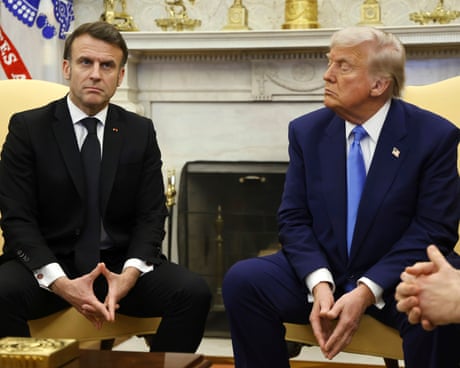
Donald Trump has launched a tirade against European countries that refused to join his war against Iran, calling out the UK and France, as transatlantic relations soured from the spiralling conflict that has wreaked havoc on the global economy.

On his Truth Social website, the US president told governments worried about fuel prices to “go get your own oil” by force from the Gulf, comments that sent oil prices even higher.

Continue reading...

© Photograph: Ludovic Marin/AP
© Photograph: Ludovic Marin/AP

© Photograph: Ludovic Marin/AP

  •  

Can Europe’s public service media survive attacks by the far right?

From Italy to France, Germany to Hungary, far-right governments and politicians are targeting media with the same playbook

Barely six months after Giorgia Meloni’s government was sworn in, the chief executive of Italy’s public broadcaster Rai resigned. Carlo Fuortes cited “a political conflict” as the reason for his departure in May 2023, a year before the end of his term.

The top posts quickly went to nominees with ties to Meloni’s Brothers of Italy, a party with neofascist roots. Rai’s CEO is now Giampaolo Rossi, a former Rai board member who has in the past voiced support for Vladimir Putin, Viktor Orbán and Donald Trump.

Continue reading...

© Photograph: Alex Mellon/The Guardian

© Photograph: Alex Mellon/The Guardian

© Photograph: Alex Mellon/The Guardian

  •  

‘Assault on justice’: how far-right attacks are threatening rule of law in Europe

Judicial independence is under threat as populist politicians target judges and authoritarian governments attempt constitutional reforms

In March last year, a Paris court found Marine Le Pen guilty of embezzlement and barred her from running in next year’s presidential race in France. The far-right figurehead took to the airwaves to slam a “political decision” and “denial of democracy”.

Le Pen, who has appealed, said she had been subjected to a “tyranny of judges” and a “political assassination”. The “system” had dropped “a nuclear bomb” on her. The presiding judge was then threatened by others on social media and her home address shared.

Continue reading...

© Photograph: Alex Mellon/The Guardian

© Photograph: Alex Mellon/The Guardian

© Photograph: Alex Mellon/The Guardian

  •  

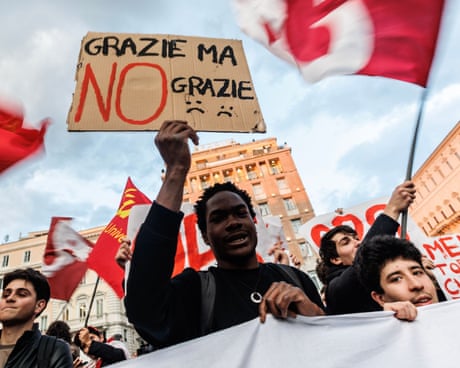
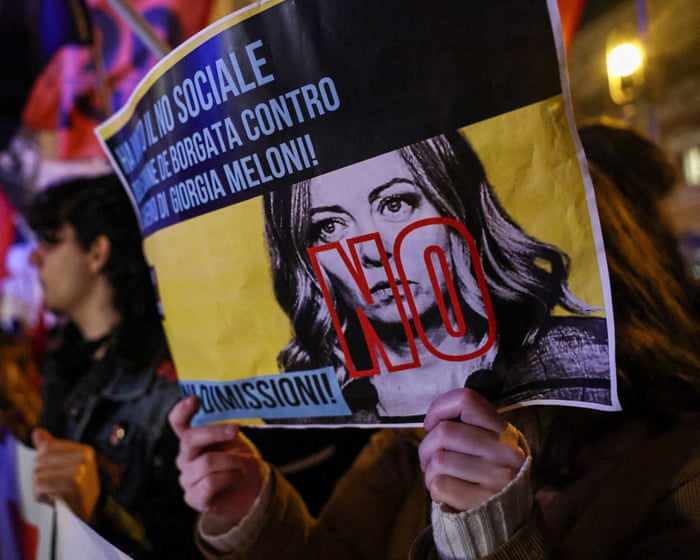
Young voters shake Italy’s political calm as referendum exposes tensions for Giorgia Meloni

Prime minister is scrambling to clean up her government after youth vote powered a damaging referendum defeat

Filippo Michelini was having a drink at San Calisto, a popular bar in Rome’s Trastevere neighbourhood on Wednesday night. As he chatted to his friends, Giorgia Meloni’s far-right government was reeling from a failed referendum, and her beleaguered tourism minister, Daniela Santanchè, had just resigned.

Michelini, a 29-year-old computer scientist who lives in Brussels, was spending a few days in the Italian capital after returning home last weekend to cast his ballot in the plebiscite on judicial changes.

Continue reading...

© Photograph: Francesco Fotia/AGF/Shutterstock

© Photograph: Francesco Fotia/AGF/Shutterstock

© Photograph: Francesco Fotia/AGF/Shutterstock

  •  

Meloni’s referendum defeat shows the cost of the Trump factor | Riccardo Alcaro

The Italian PM has won plaudits for her tightrope-walking pragmatism. But have voters now had enough?

Giorgia Meloni has a long history of defying expectations. She holds the record as Italy’s youngest cabinet member, at 31, and is its first female prime minister, thus overcoming two of Italian politics’ most formidable obstacles, gerontocracy and machismo. After she took office in autumn 2022, she quickly put to rest concerns that her post-fascist background would make her a foreign policy radical. Staunch support for Ukraine and a pragmatic relationship with EU leaders won her international credibility.

Against this backdrop, the defeat she suffered in this week’s referendum – where Italians rejected the government’s proposed constitutional reform of the judiciary by 53.2% to 46.8% – appears all the more significant.

Riccardo Alcaro is head of research at IAI, Istituto Affari Internazionali in Rome

Continue reading...

© Photograph: Matteo Minnella/Reuters

© Photograph: Matteo Minnella/Reuters

© Photograph: Matteo Minnella/Reuters

  •  

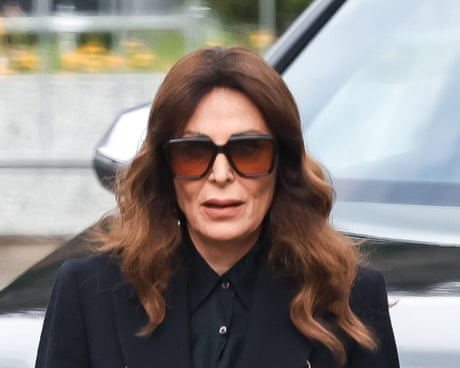
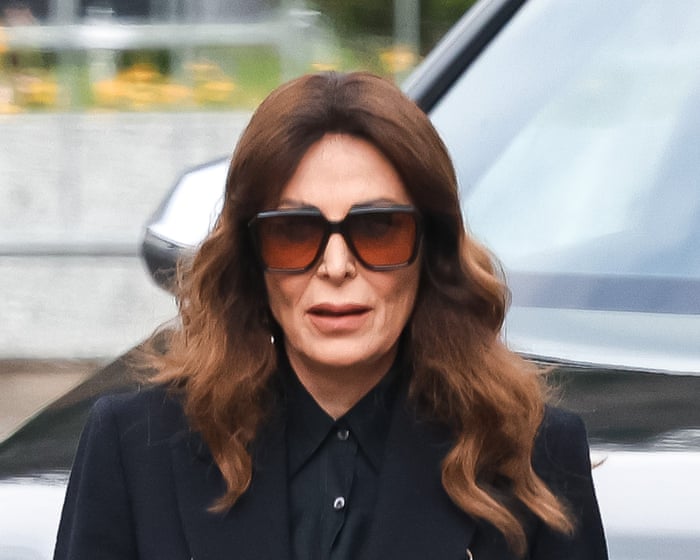
Italy’s tourism minister resigns amid turmoil from referendum failure

Giorgia Meloni made public request for Daniela Santanchè to quit in effort to restore credibility after voters rejected judicial reform

Italy’s embattled tourism minister has resigned, heeding a call to step down as the prime minister, Giorgia Meloni, strives to restore credibility after a bruising defeat in a referendum that has thrown her far-right government into turmoil.

The resignation on Wednesday of Daniela Santanchè, a prominent and brash member of Meloni’s Brothers of Italy party, came after the prime minister took the unusual step of calling in a public statement for her to go.

Continue reading...

© Photograph: Alessandro Bremec/ipa-agency.net/Shutterstock

© Photograph: Alessandro Bremec/ipa-agency.net/Shutterstock

© Photograph: Alessandro Bremec/ipa-agency.net/Shutterstock

  •  

The Guardian view on a significant week for European politics: progressives have some reasons to be cheerful | Editorial

Events in Denmark and Italy show geopolitical instability is creating opportunities for a centre-left response to the far right

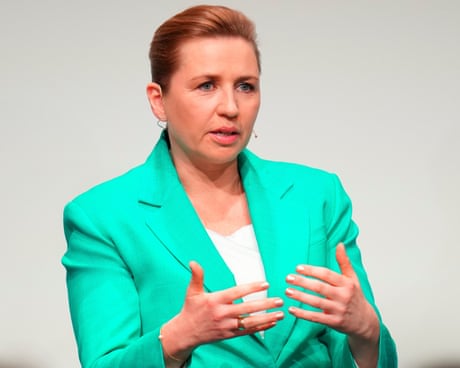
In the lead-up to Denmark’s snap election on Tuesday, it was revealed that blood supplies were flown into Greenland in January in order to treat Danish military casualties in the event of a US invasion. Against that surreal backdrop, the country’s Social Democrat prime minister, Mette Frederiksen, did not need to work too hard to justify a “stick to what you know” message in uncertain times.

Ms Frederiksen’s surprise gamble in calling an early poll duly paid off, but only just. Donald Trump’s threats to annex territory belonging to a Nato ally handed her party a patriotic lifeline, after it had endured a historic humiliation in local contests last November. But in a campaign dominated by domestic issues, the hoped-for Trump bump was modest, meaning that any Frederiksen-led coalition will depend on centrist support. The Social Democratic party remains comfortably the biggest political force, but its vote share dropped markedly compared to the last general election, while rivals to the left and on the far right made notable gains.

Do you have an opinion on the issues raised in this article? If you would like to submit a response of up to 300 words by email to be considered for publication in our letters section, please click here.

Continue reading...

© Photograph: Liselotte Sabroe/AP
© Photograph: Liselotte Sabroe/AP

© Photograph: Liselotte Sabroe/AP

  •  

Could the continent’s far right be suffering from a Trumplash?

France’s National Rally missed key targets in local elections ahead of next year’s seismic presidential vote – and the mainstream is doing OK elsewhere, too

• Don’t get This Is Europe delivered to your inbox? Sign up here

The Rassemblement National is not invincible. A year out from a make-or-break presidential vote, that might be the main lesson (though there are others, which may prove more significant) from last weekend’s local elections in France. What’s more, news elsewhere – Giorgia Meloni’s referendum defeat in Italy, Janez Janša beaten in Slovenia, Hungary’s Viktor Orbán in trouble, the left bloc largest in Denmark – might suggest the rest of Europe’s far right are not having it all their own way, either.

But let’s focus first on France – if only because while local elections are rarely a wholly accurate guide to future national outcomes, these ones seem to provide some pointers – and the stakes in the country’s next major election are vertiginously high.

Continue reading...

© Photograph: Geoffroy van der Hasselt/AFP/Getty Images

© Photograph: Geoffroy van der Hasselt/AFP/Getty Images

© Photograph: Geoffroy van der Hasselt/AFP/Getty Images

  •  

Italian voters reject Giorgia Meloni’s plan to overhaul judiciary

Referendum result could tarnish PM’s reputation and make winning next year’s general election more challenging

Italian voters have rejected an overhaul of the country’s judiciary pushed by the prime minister, Giorgia Meloni, an outcome that is expected to tarnish her reputation and make winning next year’s general election more challenging.

In a two-day referendum, almost 54% of voters said no to the plans to reorganise the judiciary, compared with about 46% for the yes camp.

Continue reading...

© Photograph: Pier Marco Tacca/Getty Images

© Photograph: Pier Marco Tacca/Getty Images

© Photograph: Pier Marco Tacca/Getty Images

  •  

Meloni v the judges: high stakes for Italian PM in vote on judiciary overhaul

National referendum is being seen as a de facto confidence vote on the government – and the polls are neck and neck

In the run-up to a referendum in Italy on a government quest to overhaul the judiciary, a campaign flyer circulated online quoting Giorgia Meloni, the prime minister, taking aim at judges and feminists. “Judges block the deportations of rapists. Where are the feminists? Vote yes – there will not be another opportunity,” it read.

The flyer, posted on the Facebook page of Meloni’s Brothers of Italy, a party with neofascist roots, was subsequently removed. But its tone has defined a campaign dominated by inflammatory rhetoric rather than meaningful debate.

Continue reading...

© Photograph: Francesco Fotia/Reuters

© Photograph: Francesco Fotia/Reuters

© Photograph: Francesco Fotia/Reuters

  •  
  •  

Vor Referendum in Italien: Melonis Generalangriff auf die Justiz

Die italienische Regierungschefin plant eine Justizreform. Sie will die Macht der Staatsanwälte und Richter beschneiden. Manche Kritiker sehen die Gewaltteilung in Italien in Gefahr.

  •  

Italian activists and journalist targeted by spyware in 2024, prosecutors confirm

Investigation finds three were hacked by Paragon spyware at same time, potentially fuelling questions for government

Italian prosecutors investigating a domestic spying scandal say they have independently confirmed that two immigration activists and a journalist were hacked at the same time in late 2024, suggesting all three were part of the same “infection campaign”.

The development could bring more questions for the far-right government of Giorgia Meloni, who has denied any involvement in the hacking of the journalist, the Fanpage editor-in-chief, Francesco Cancellato.

Continue reading...

© Photograph: Martin Meissner/AP

© Photograph: Martin Meissner/AP

© Photograph: Martin Meissner/AP

  •  

A lone battle: Why is Pedro Sánchez the only European leader to take on Trump?

As the Spanish PM decries the war in Iran, other politicians are unable – or unwilling – to speak against the US president

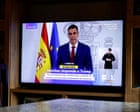
On Wednesday morning, Pedro Sánchez delivered a 10-minute televised address with the rather bland title: “An institutional declaration by the prime minister to assess recent international events.”

The speech’s words, however, were anything but beige. Hours after Donald Trump had threatened to cut off trade with Spain over its government’s refusal to allow two jointly operated bases in Andalucía to be used to strike Iran, Sánchez set out his thinking.

Continue reading...

© Photograph: Jon Nazca/Reuters

© Photograph: Jon Nazca/Reuters

© Photograph: Jon Nazca/Reuters

  •  

Look to Italy to see how the dangerous idea of ‘remigration’ is taking root in Europe | David Broder

To even be talking about this drastic deportation policy is a sign the far right is winning. In Italy, it’s more than just talk

Meeting Tommy Robinson earlier this month, the French anti-immigration politician Éric Zemmour bluntly summed up his mission: “Politics needs to defeat demographics.” Given rising numbers of Muslims, he said, there was perhaps “10 to 20 years” left to save Europe from “disappearing”. Both men placed their hopes in one policy to reverse the “invasion”: remigration.

At root, remigration means using mass deportations in order to curtail minority – especially Muslim – populations. In France’s 2022 presidential election, Zemmour pledged the creation of a “ministry of remigration” meant to remove “1 million” people, targeting undocumented and dual-national criminals. In practice, supporters of the idea often blur distinctions between criminals and non-criminals, longer-standing citizens and recent migrants, the undocumented and those with settled status.

Continue reading...

© Photograph: Remo Casilli/Reuters

© Photograph: Remo Casilli/Reuters

© Photograph: Remo Casilli/Reuters

  •  
❌