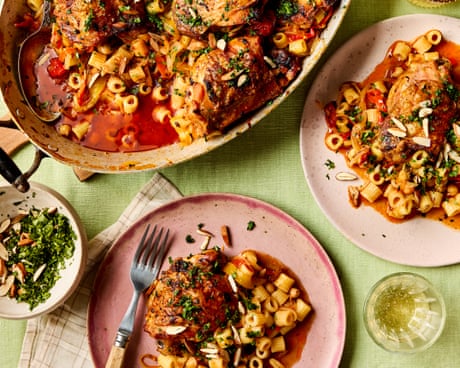
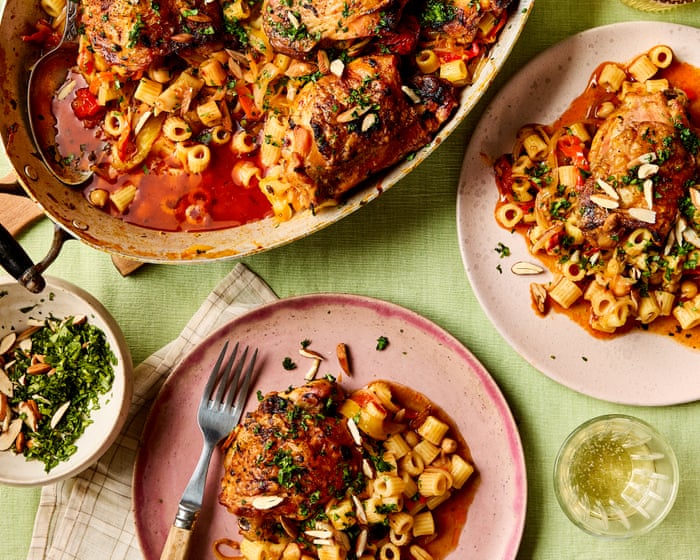
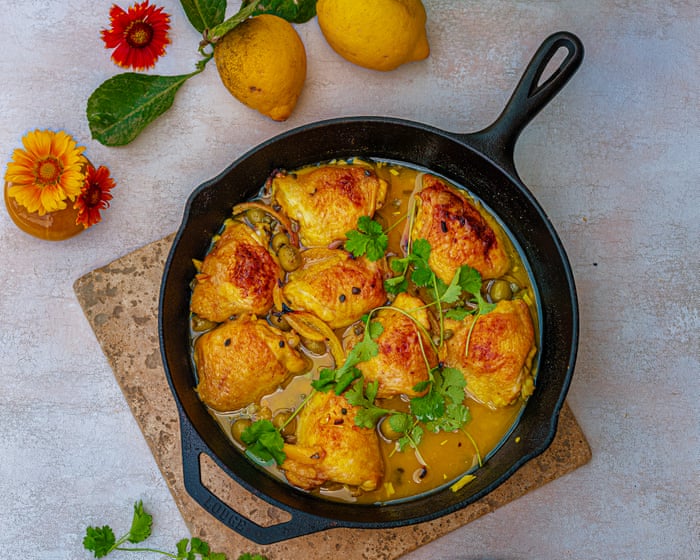
A pasta bake combining tender chicken and hearty chickpeas, and a Middle Eastern spring salad layered with spices, refreshing herbs and sweet peas
My ideal way of entertaining is completely fuss-free, with everything prepared ahead of time so I can enjoy being with my guests rather than worrying about cooking. I like to put big, generous dishes in the middle of the table, such as this one-tray chicken, pasta and chickpea bake, alongside a fresh salad, so everyone can serve themselves and share a simple, delicious meal.
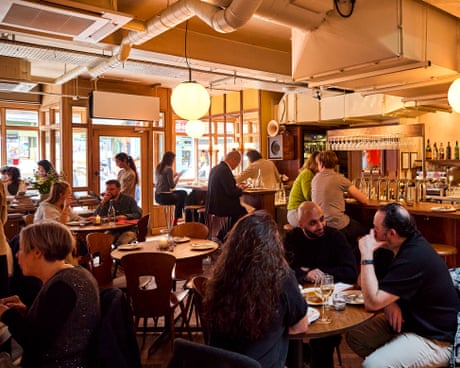
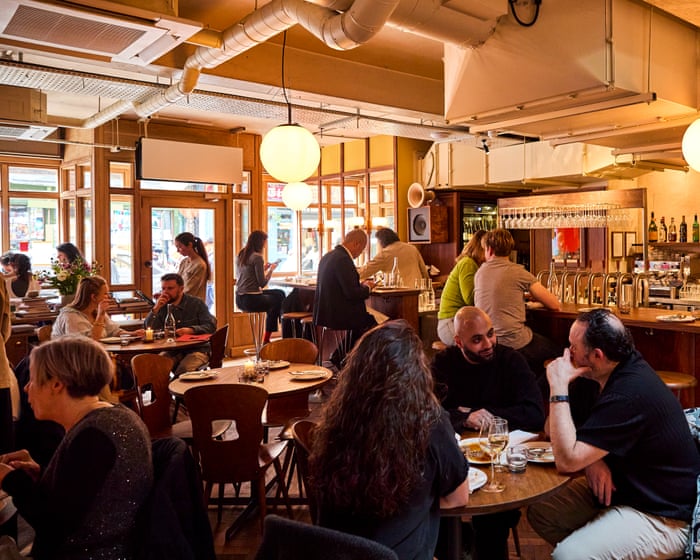
Impala is like no restaurant I’ve ever been to, yet it somehow has echoes of almost all of them
Late last month, Impala drove into Soho already flaming hot in the hype stakes: this was a sizzling booking to brag about even before executive chef and co-founder Meedu Saad had turned on the stoves. Impala, after all, is a Super 8 restaurant, the group that has, among others, Tomos Parry’s Brat in Shoreditch, which has been constantly, unfalteringly brilliant since 2018. It also runs Parry’s second baby, Mountain, which is likewise wonderful; sometimes weird, yes, but always wonderful. Long before that, back in 2016, they opened Kiln, the famed live-fire Thai counter hangout that cheffy boys in beanies have tried and failed to emulate all over Britain, while Super 8’s beginnings were with the boundary-pushing and much-loved Smoking Goat. That is nothing less than a litany of solid-gold bangers, and now they’ve unleashed Impala by Saad, the former head chef at Kiln.
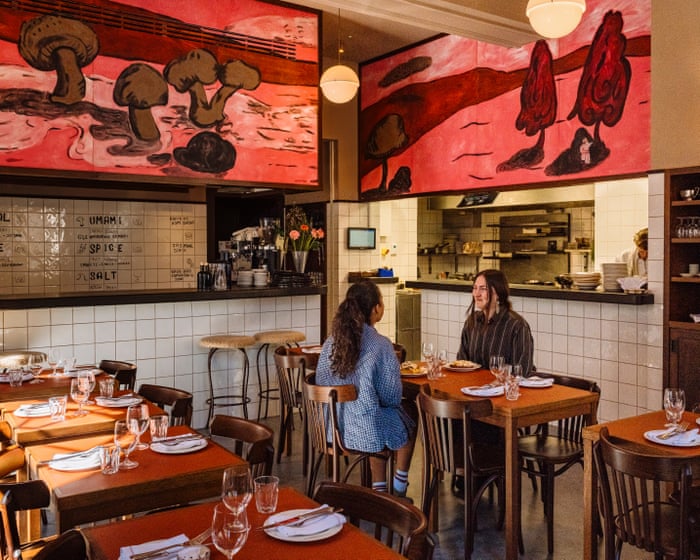
In any normal restaurant review, it would have been common to have by now established what type of food Impala actually cooks – north African? Middle Eastern? Mediterranean? British?, etc – but in this odd, dreamy and defiantly dark nook in Soho (every single one of us in the room, even those with perfect vision, had our iPhone torches on just to read the menu), narrowing down its origin story is not quite that simple. “Bird’s tongue pasta braised with spiced oxtail?” someone asked over the loud jazz. “Molokhia, braised jute leaf and shoulder of cull yaw sheep?” queried someone else. It went on: aish baladi? Ftira? “Bird’s tongue pasta is the Egyptian name for orzo,” I ventured, adding that I thought molokhia might be a bit like spinach, but never have I been more ready for a server to turn up and ask: “Guys, may I explain the menu?”
We choose a beef tartare with a smoky, sweet Tunisian harissa and crunchy chunks of deep-fried bread as brittle as pork crackling. We scoop honey bread through an insanely good mush of pounded white beans topped with chunks of pungent bottarga. There are rustic pillows of that aish baladi, an Egyptian wholegrain bread that here comes with a fresh, rich harissa paste, and langoustine kibbeh and sun-dried wheat all wrapped in a neat perilla leaf cone.
Boozy, tomato pasta dish is enjoying a resurgence – with Gigi Hadid posting her own take on it
Despite most traditional Italians considering it sacrilegious, penne alla vodka is quickly becoming one of the most in-demand Italian dishes.
Previously popular in suburban Italo-American restaurants during the 80s, the dish is now enjoying a widespread resurgence that is being driven by several factors including nostalgia and social media.
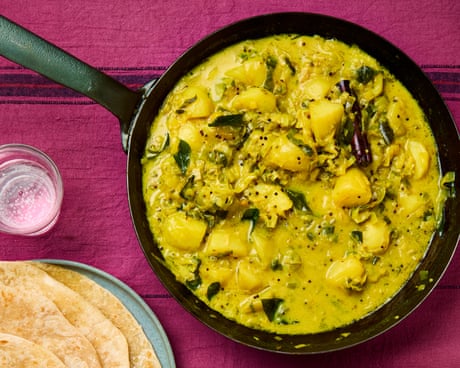
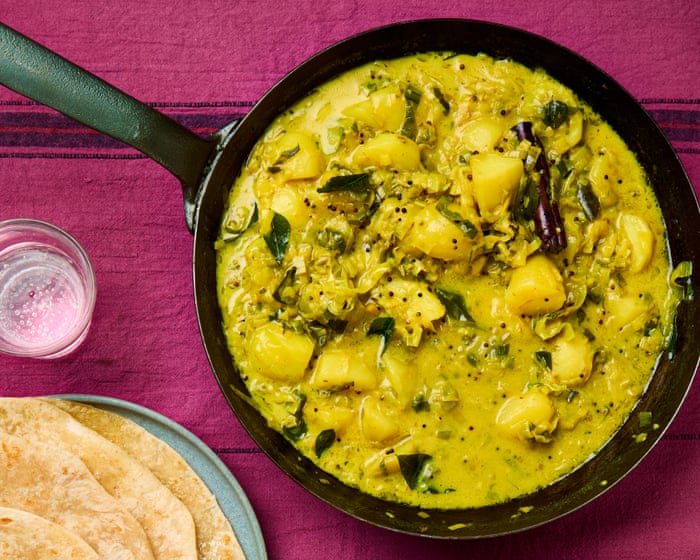
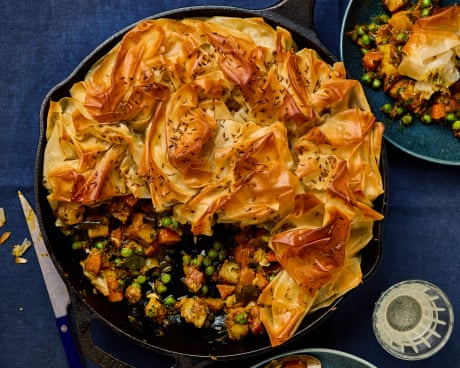
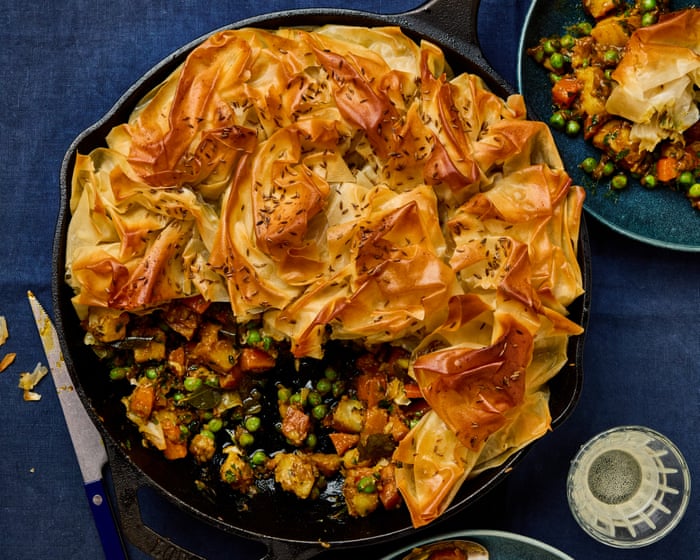
There is plenty of sunshine in this seductive, Sri Lankan-style potato curry that’s chock-full of evocative smells and flavours
I stitch myself up sometimes by planning on cooking something that’s native to a country – a Sri Lankan potato curry, say – then embellish it with my own desires (lemongrass, leeks, ginger) to such an extent that it can no longer really be called as such. But taste and memory work in mysterious ways. This recipe still evokes Sri Lanka for me: sunshine, spiced earth, the smell of cinnamon bundles and dense forest, and also the sound of the bread vans (playing Beethoven, curiously) and the distinctive squawk of the myna bird. I hope, if you cook it, it might evoke a little Sri Lankan sunshine for you, too.
A delicate, elegant and aromatic sour that’s a bit like a floral white lady
A delicate, elegant and aromatic sour with notes of floral jasmine tea balanced by bright citrus, making it fresh and perfect for spring. By all means make double or triple the infused gin, if you like, because it also works beautifully in an elevated jasmine gin and tonic (plenty of ice, quality tonic and a lemon twist), or stirred into a simple floral martini with a splash of dry vermouth, or lengthened into a light spring spritz topped with sparkling wine and a dash of soda.
Nearly every European country has its own fruit brandy. Some are a bit agricultural so here’s a taste of the best
“I’ve had people burst into tears tasting these – it takes them straight back to a moment in their past.” I have come to visit Barney Wilczak, an unusually soulful spirits producer, at Capreolus Distillery near Cirencester. We are surrounded by stainless-steel vats of his eau-de-vie, the clear, fragrant brandy that he distills from apples, gooseberries, cherries, pears, plums, raspberries, grapes, quince and various other fruits grown within a 35-mile radius of this sunny English hilltop.
I say “distillery”, which might make you imagine something vaguely industrial, but we are in fact in his dad’s garage, while the still itself is in the shed. But the liquids? My goodness. Each 60-litre container represents around 4,000kg of fruit, all picked within a day of ripeness, wild-fermented over months into fruit wine, then triple-distilled to exacting specifications that vary fruit by fruit and batch by batch. Obsessive doesn’t cover it. When Wilczak made his first batch of raspberry eau-de-vie, he reckons he hand-graded 2m raspberries, rejecting any with even the slightest imperfection.
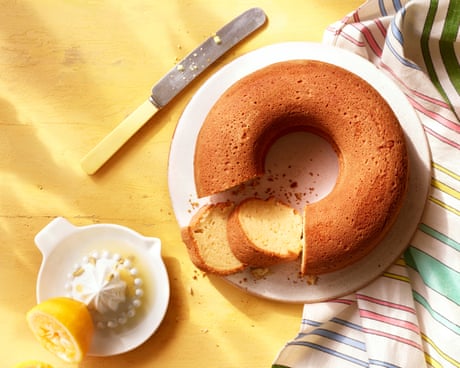
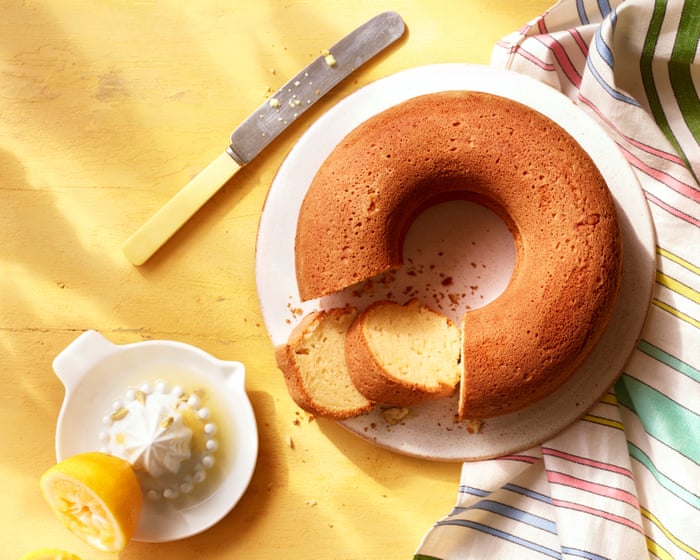
My record for making ricotta and lemon ring cake is three minutes and 42 seconds. That doesn’t include heating the oven or baking, or finding a recipe, which is in my head. It does include getting out the utensils (bowl, spatula, grater, scale, ring tin) and the ingredients (ricotta, olive oil, flour, sugar, baking powder, eggs, lemons), then speed-mixing everything in one bowl, scraping the batter into the tin and getting the tin in the oven via a discus throw. The timer is stopped as the oven door is closed. This is not relaxing cooking, it is entertaining cooking. And it is gratifying, having proved my partner wrong when he said it would take me at least five minutes.
I was disappointed, then, to find myself on terrible form the other day, when a chocolate-chip version of the same ring cake took me five minutes and 19 seconds. In my defence, I had difficulty getting the glass bowl out of an impractical stack, and we had run out of chocolate chips, which meant I had to find a knife and chop up a bar instead. Even so, it was an absymal performance. There was some consolation in the cake itself, which is not only the quickest, but one of the best cakes I know. The ricotta adds creamy depth and the olive oil provides fat, and together they make for a tender, moist, everyday cake that is best eaten warm, when the bits of chocolate are still hot enough to be little pools.
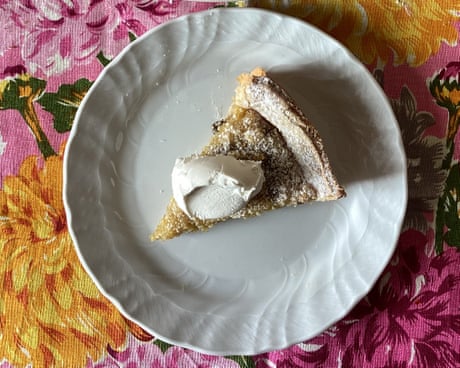
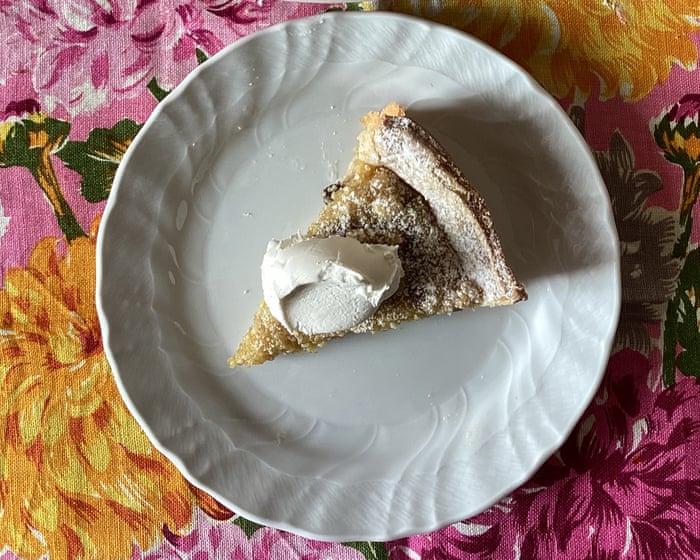
Some desserts never go out of fashion – even medieval ones – and, with its nutty, spiced almond and dried fruit filling, this treacle tart-alike is one of them
It wasn’t that dessert trolleys were banned in Italy during Covid, but guidelines from the Instituto Superiore di Sanità (national institute of health) were so (necessarily) rigorous around these “potential vehicles of the virus” that most places banished them to storerooms. Happily, many restaurants have since retrieved them from their long stay, so they glide or rattle between tables once more, or sit parked in an admirable position. This isn’t my first time mentioning the dessert trolley at La Torricella here in Testaccio, having written about its fabulous puff pastry and cream millefoglie in the past. But another dessert that might catch your eye as you enter the restaurant and look right at the cloth-covered trolley parked under the bar is what owner Augusto refers to as torta medievale, because of its spiced almond and dried fruit filling. It’s an unassuming but extremely good thing.
The torta medievale also reminds me of a favourite among favourites: treacle tart, which is, of course, made with golden syrup, whose story began in 1881 when the Scottish businessman Abram Lyle set up a sugar refinery in London. The process involved extracting juice from sugar cane, then boiling down this juice and moulding it into sugar loaves, which could then be grated as required. One of the byproducts of this process was a bitter, molasses-brown treacle, which was initially sold as animal feed, but later, thanks to the work of the chemist, further refined into a viscous, sweet syrup nicknamed “Goldie”, which was stored in barrels and distributed to staff and friends. Over time, though, seeing its popularity, the partially inverted refined syrup was given the name golden syrup and packaged in tins that remain so familiar: dark green with a dead gold lion swarmed by bees. It’s an image from Samson’s Riddle in the book of Judges, in which Samson, returning to the lion he has killed, finds that bees have created a honeycomb in the carcass, which also gives rise to the words on the tin, “out of the strong came forth sweetness”, and reminds one of Lyle’s strong faith.
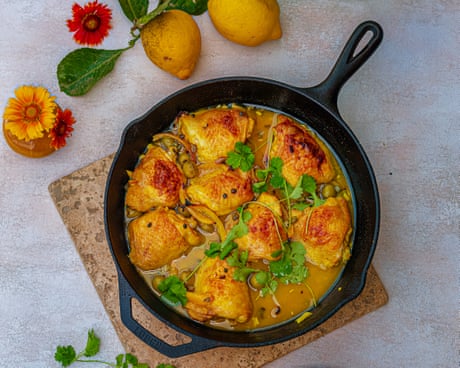
A combination of the warmer weather, dusting off my sunglasses and the impending release of my new book, MEDesque (out on Thursday!), has got me fully focused on sunshine food and Mediterranean flavours. OK, so I’m not quite in rosé-in-the-garden territory just yet, but it’s close. And I am counting down the days. At home, I am leaning heavily on recipes from the queen of all things Med, Claudia Roden, to get my fix. Big hitters such as her bean stew with chorizo and bacon and chicken traybake with olives and boiled lemon deliver on all fronts, and immediately transport me to my favourite region. And gone are cold, slow days spent labouring over a lasagne. Instead, I am gravitating towards lighter pasta dishes such as Georgia Levy’s broccoli and anchovy farfalle, Giorgio Locatelli’s pasta con le sarde (with sardines, anchovies, fennel, raisins and pine nuts) and Yotam Ottolenghi’s straccetti with red mullet, harissa and black olives – all effortless yet flavoursome. If you’re not quite ready to give up on wintry ragu and bolognese just yet, then Anna Tobias’s lamb shanks and orzo are a joy – it’s how many pasta dishes are cooked in the eastern Mediterranean and north Africa, where the pasta is stirred through the meat and absorbs all those juices and flavours. It’s my favourite way to eat pasta.
While I’m not quite ready to eat outdoors, I have started cooking outdoors, and last week I reawakened our wood oven. It was heated out of its winter slumber especially for Greek Orthodox Easter, because my yiayia (grandma) had requested kleftiko for Sunday lunch. Nothing screams summer and Med cooking as much as when I get that wood oven going, and not just for pizzas (although they do taste pretty elite when cooked outdoors). Nigel Slater’s pizette recipes are a great place to start if you are giving homemade pizza a go, and The Ultimate Wood-Fired Oven Cookbook, by Genevieve Taylor, was a bible when we first got acquainted with our new toy. I’m yet to dust off the barbecue, but that will undoubtedly be the next step, and I cannot wait for the smell of perfect pork souvlaki and charred, spiced adana kebabs to waft through the garden.
Malaysian home cooking is all about balance, and you will find that in abundance in a curried potato karipap pieand homely noodles in a punchy sambal
My late grandmother was a wedding cook in Malaysia. From her, I learned that Malay cooking is about kindness and balance; no single taste should dominate – it should never be too spicy or too sweet. She believed in celebrating rezeki, the blessing of being able to share food with others, and cooking her dishes has helped me to grieve her passing and shaped a branch of my identity rooted in hosting and sharing.
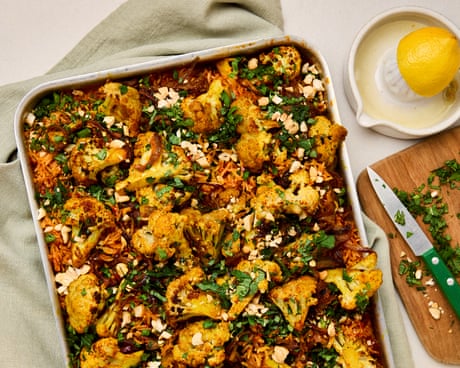
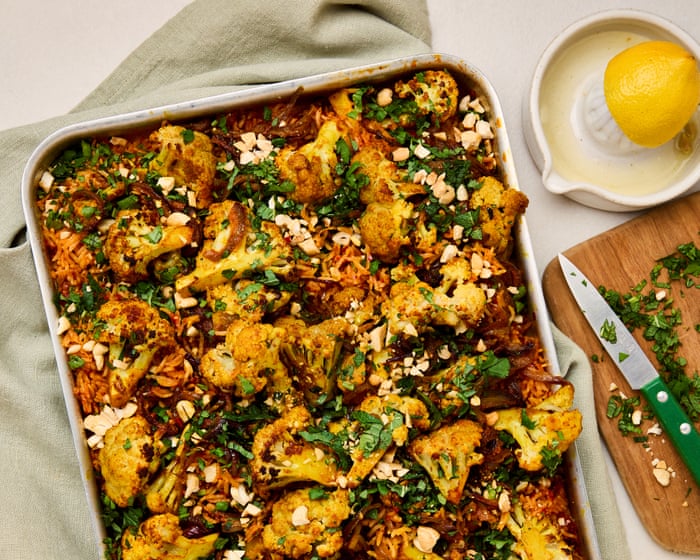
Cauliflower looks like the ghost of broccoli, or a human brain that has been drained of blood. As is the case with many overlooked vegetables, boiling is the absolutely second-worst way to cook it (we do not talk about cauliflower rice), while roasting is best, to coax out its sweet and nutty flavours. A whole head is very good and affordable in Australia at the moment and can easily feed a whole family.
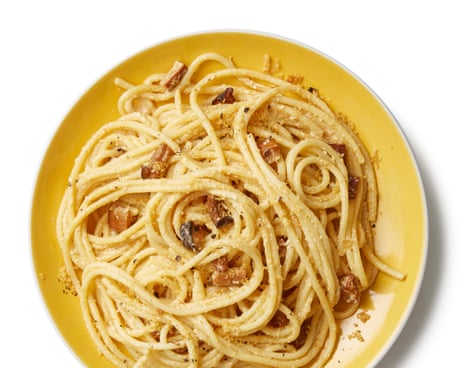
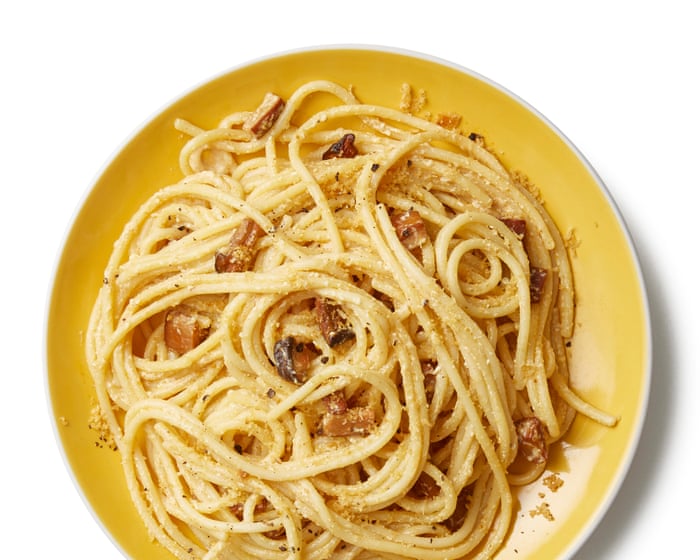
Smoky peppers, spices, soy and oil all help with that fatty, salty, deeply savoury flavour, breadcrumbs and mushrooms add texture
I’ve recently given up eating pork, but I’m struggling to compensate for its umami. How can I recreate the taste and texture in, say, carbonara or my beloved chorizo dishes? James, by email For Joe Woodhouse, author of Weeknight Vegetarian, there’s just something about white beans: “Whether cooked from dried, then dropping chopped onion, garlic, sage and thyme into the broth, or just dumping a jar or tin into a pan with fried garlic and sage, the smell that fills the kitchen is like that of sausagemeat,” he says. “It tastes a bit like it, too – or at least the memory of it, bearing in mind I haven’t eaten the stuff for 30 years.”
The quest for that umami savouriness could start with soy sauce, Woodhouse says (“or Slow Sauce’s oat shoyu”), while chef Mike Davies’ first port of call would be Totole’s Chinese mushroom seasoning powder: “It’s super-effective in replacing the richness and fattiness that comes from cooking with any meat, and especially pork,” says the chef-director of the Camberwell Arms, south London. “Honestly, it’s such a cheat-code ingredient.”
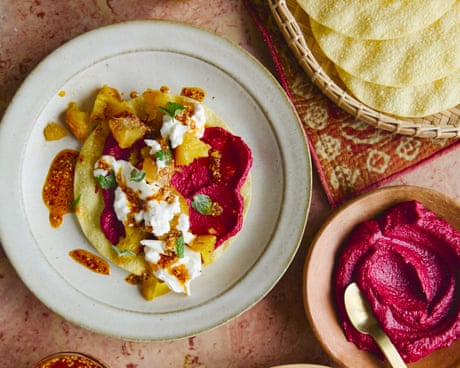
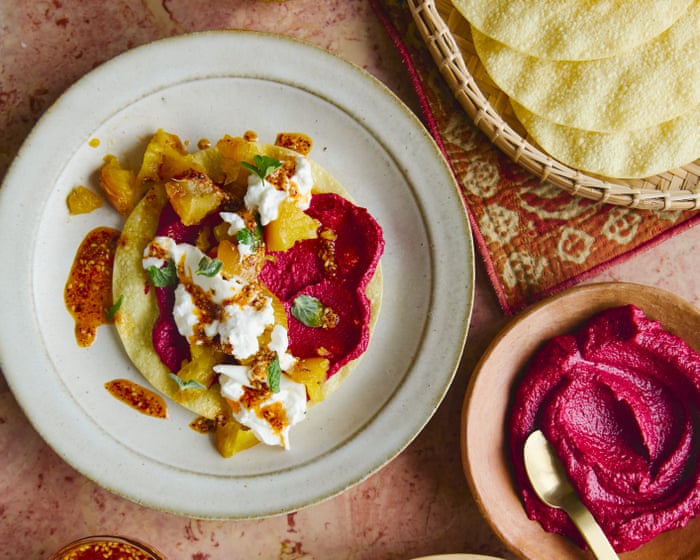
Poppadoms masquerade as tortillas in these tostadas topped with a striking pink mole, and grilled mushroom tortillas smothered in melty cheese and a sharp salsa
Costra, meaning ‘crust’ in Spanish, is a classic dish from the north and centre of Mexico that’s traditionally made with tender cuts of beef and finished with a melted crust of semi-hard cheese (usually Chihuahua or manchego mixed with Oaxaca cheese for texture). The cheese is grated on a plancha grill and allowed to melt and crisp up, and is then draped over the meat. Here, though, I have substituted the steak for mushrooms. Then, tostadas are traditionally made with crisp corn tortillas that are either baked or deep-fried, a technique that was first invented to preserve the tortillas for longer. They’re commonly used to serve lean, light preparations, like ceviches, aguachiles and salsas. Here, I’ve used poppadoms to achieve a similar texture and starchiness; use ready-cooked ones to make this even quicker.
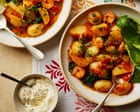
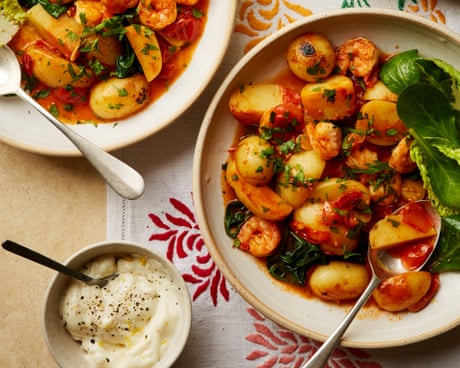
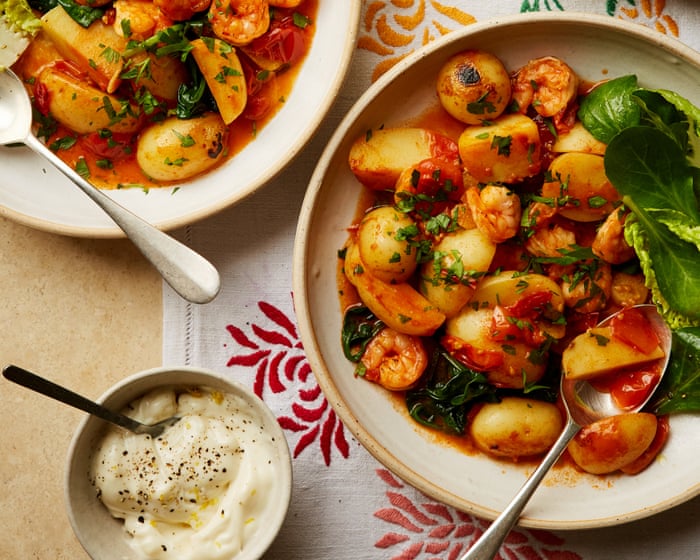
This Spanish-style stew is a superb midweek dinner – it’s effortless but looks special
This Spanish-inspired stew is a great weeknight dinner, particularly if you are having a few friends over, because it feels a bit special while actually being effortless and easy. If you want to take that effortlessness to the next level, make the potato base in advance, then finish off with the spinach and prawns just before serving (I like to do as little cooking as possible in front of guests, leaving me free to chat and pour drinks). Serve with a peppery, lemon-dressed salad on the side and hunks of crusty bread to mop up the juices.
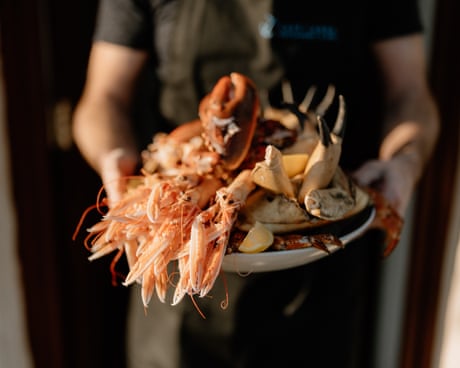
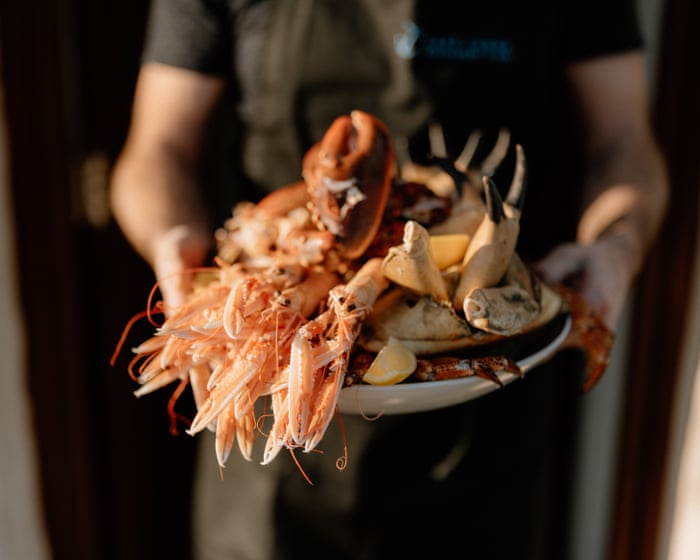
The Highlands and Islands are rightly lauded for their superb seafood – but these days it’s not reserved for fine dining and can be found at the simplest waterside shacks and inns
The best oysters of my life arrive on a polystyrene tray, eaten elbow-to-elbow with strangers at a table littered with empty shells and damp paper napkins. We huddle beneath a tarpaulin, sheltering from the fine spray of rain rattling on the roof, the wind whipping around the hulking CalMac ferry moored metres away, and the beady-eyed scavenging gulls.
“Have you tried this? You have to,” says a woman who has driven from Glasgow just to eat here, pressing a rollmop herring into my hand. I take a bite, the thick skin giving way to sweet and salty flesh, juices running down my chin. Elegant dining this is not, but all the better for it. This is Oban Seafood Hut, tucked beside the ferry terminal for boats heading into the Sound of Mull. Diners shuffle around a shared table, listening for order numbers, with plates piled high with langoustines, crab and oysters. It’s cash only. In the back room, a team of women butter thick slices of soft white bread for crab sandwiches, wrapping them in clingfilm without ceremony, to be sold within minutes.
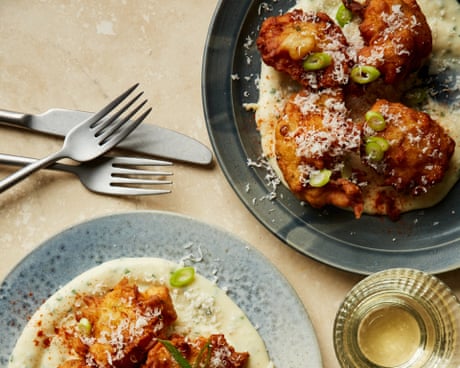
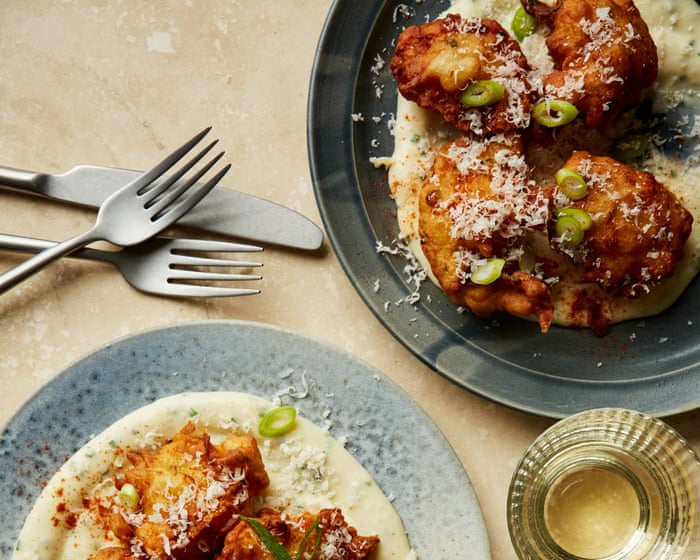
Haddock three ways: grilled with braised leeks in a warm mayo sauce; poached and served in roast mushroom rarebit; and smoked haddock fritters with cheese sauce
Haddock is a fish that deserves a bit more love. It’s a member of the cod family that, like cod itself, is one of those unfortunate fish that’s been in such high demand that it’s been overfished for decades. That said, the fisheries in the Nordic region are notably well managed, so fish from there is a really good option. Haddock grows quickly, too, so hopefully in future we’ll see an increase in the catch, so long as quotas are obeyed and the industry works hard on the way it’s fished.
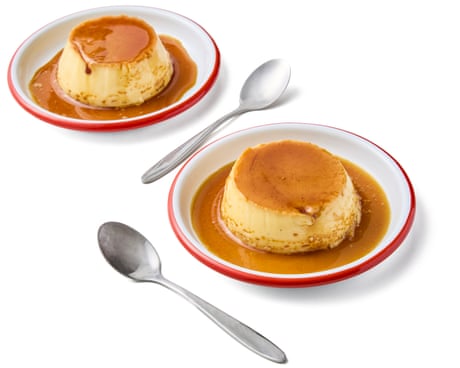
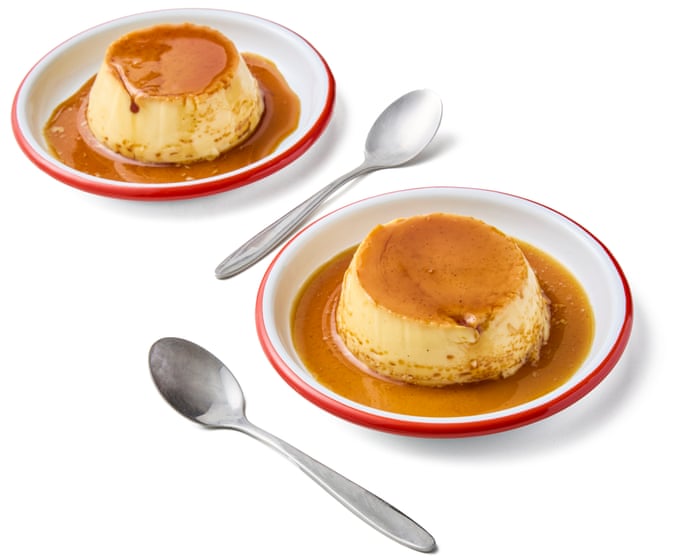
The slightly retro French dessert of gently set baked custard in a caramel sauce, and all in a few simple steps
I don’t know why this classic French dessert isn’t more popular online, given how pleasant it is to watch a softly set custard jiggling seductively on screen, or to admire the way the light bounces off its glossy, caramel top. Worse still, it’s also increasingly hard to find on menus, too. Well, you know what they say: if you want something done well, do it yourself.
This place is about so much more than just a portobello mushroom in a white bap masquerading as dinner
Holy Carrot has, cough, taken root in Spitalfields, east London. It’s the second sprouting from this plant-based restaurant with a name that’s especially hard to sell to meat-loving friends. “Please come with me to a vegan restaurant,” one might say. “It’s not one of those pious places, honest! Oh, um, the name? Holy Carrot.” In fairness, though, it’s generally tricky to cajole meaty people to venture anywhere vegan or even vegetarian, because there’s always a sense that your steak addict acquaintance is enduring their meal “as an experiment”, and despite quite charitably being “willing to be convinced”. Sigh … it’s exhausting.
Still, chef Daniel Watkins’ first Holy Carrot restaurant over in Notting Hill has made its name over the past couple of years as a place where you can take a mixed group without someone throwing a tantrum about the dearth of pork chops. Watkins’ preference for live-fire cooking and fermentation led to the likes of roast aubergine with koji mole, smoked tofu stracciatella with rhubarb nam jim, artichoke schnitzel with pickles and curry sauce and sweet potato with corn miso butter. Take your miso-Marmite koji bread, scoop it though some smoked mushroom chilli ragu, then take a sip of your black walnut gimlet to put a sparkle in your eye, or even just a Holy Carrot 0% spritz with no-waste carrot molasses.
From wood pulp in ice-cream to peat in portobellos, science has transformed how we dine. Do you know exactly what’s lurking in the grub we eat?
Microbial slime and a side helping of sand doesn’t sound like much of a meal, but a startling amount of the food we eat today contains ingredients that are, at the very least, unexpected – and, at worst, dangerous, such as heavy metals from polluted soils.
Then there is the thorny question of what ultra‑processed foods in our diets might be doing to us. “While each food additive, so‑called processing aid, fortificant and unrecognisably modified ingredient has been tested individually and declared safe, are they really?” asks Chris Young, who runs the Real Bread Campaign for Sustain, the alliance for better food and farming, and was named joint winner of Slow Food In The UK’s 2025 person of the year award. “The studies are relatively small and short, leaving history littered with additives that we were once promised would not harm us but were later withdrawn or banned on health grounds. What might the long-term effect be of eating such substances, individually or in the cocktails created for each product and across our shopping baskets?”
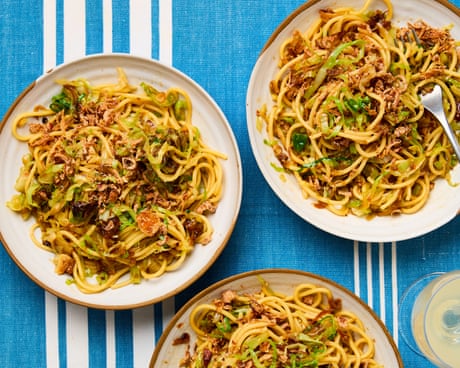
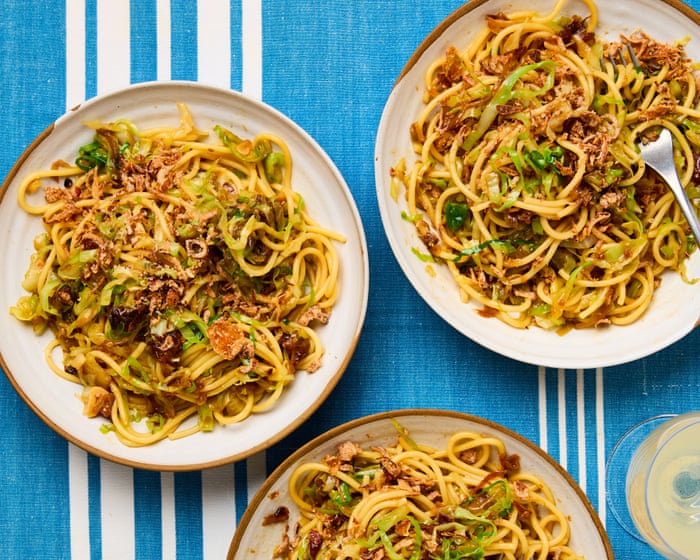
An intriguing, punchy fusion of Taiwanese and Italian noodle dishes
Last year, the comedian Nish Kumar accused me of being in the pocket of “big cabbage”, because I was waxing lyrical about it. But look here, Nish, everyone is cabbage obsessed. It’s not just the Guardian; the internet is awash with “best cabbage” recipes and there’s a lot to love: it’s cheap, generous and genuinely delicious cooked and wilted down with onions (or shallots), as in this spaghetti. The inspiration behind the dish was a jar of Taiwanese Bullshead shallot sauce, a sweet, smoky and savoury sauce that I love to dollop into and on to all things eggs, noodles, vegetables and rice, but that I ran out of recently, prompting me to make a simple, store-cupboard alternative.

 Anmelden