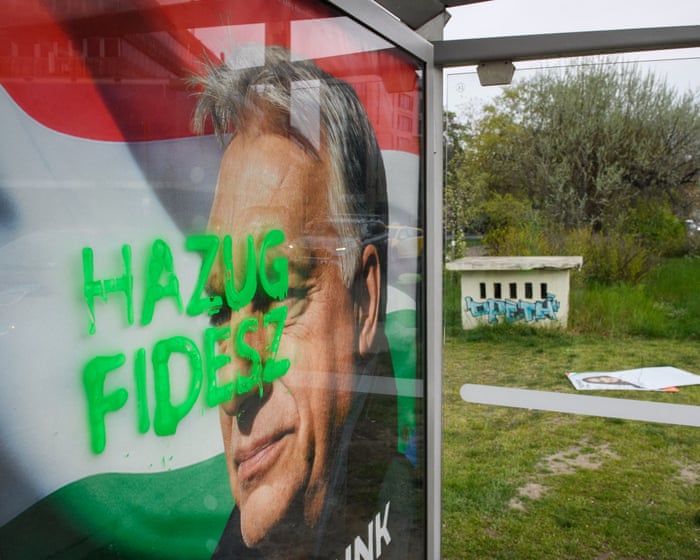
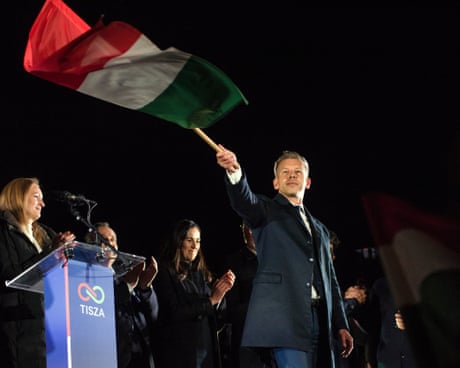
Journalists brace for sweeping reforms after years of pro-government control under Viktor Orbán
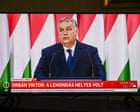
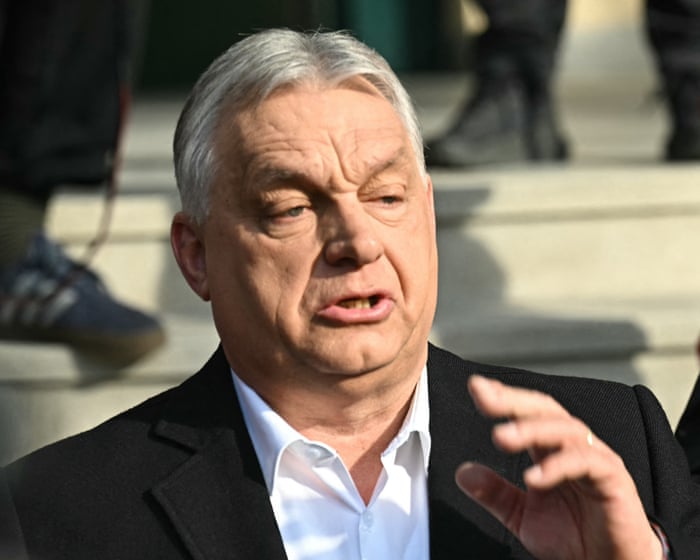
For years they operated as government mouthpieces, using their sprawling reach into homes across Hungary to bolster Viktor Orbán and vilify those he cast as enemies, from the philanthropist George Soros to Ukraine’s Volodymyr Zelenskyy.
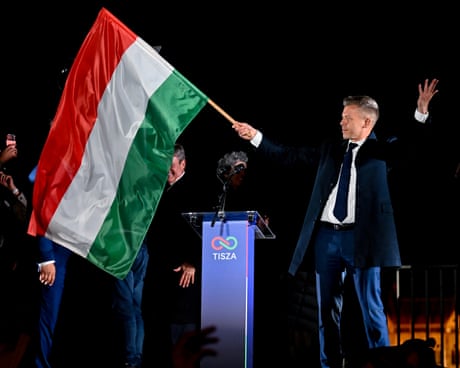
But on Saturday, as Péter Magyar’s swearing-in officially ends Orbán’s 16 years in power, the country’s once powerful state media are facing the prospect of going dark.
Der scheidende ungarische Premier verkündet überraschend seinen Rückzug aus dem Parlament. Wie wird er seine Partei aufstellen? Und zieht es ihn nun womöglich ins Ausland wie schon andere, die vom bisherigen System profitierten?
Ungarns designierter Premier Magyar will mit dem System der Orbán-Ära brechen und in Brüssel Vertrauen schaffen. Der designierte Europäische Generalstaatsanwalt mahnt zur Eile. Andernfalls werde es schwer, an veruntreutes Vermögen zu gelangen.
Social democratic parties are suffering an almost total wipeout, as rightwing nationalism flourishes on the EU’s eastern flank
Péter Magyar’s historic defeat of Viktor Orbán in Hungary’s recent election was rightly celebrated in progressive circles and beyond. For the global far right, which has been steadily gaining power and influence for over a decade, this was a significant reverse. But it was no victory for the left. A former member of Mr Orbán’s Fidesz party, Mr Magyar will lead a centre‑right conservative government in a parliament where the only opposition will come from Fidesz and a small party with neo-Nazi roots.
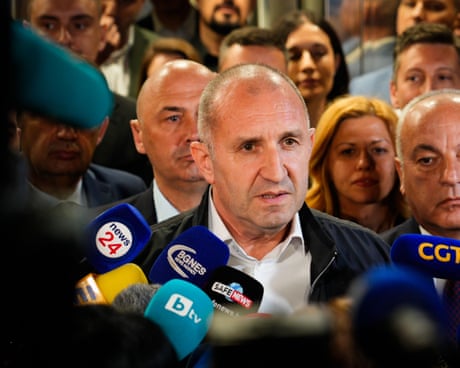
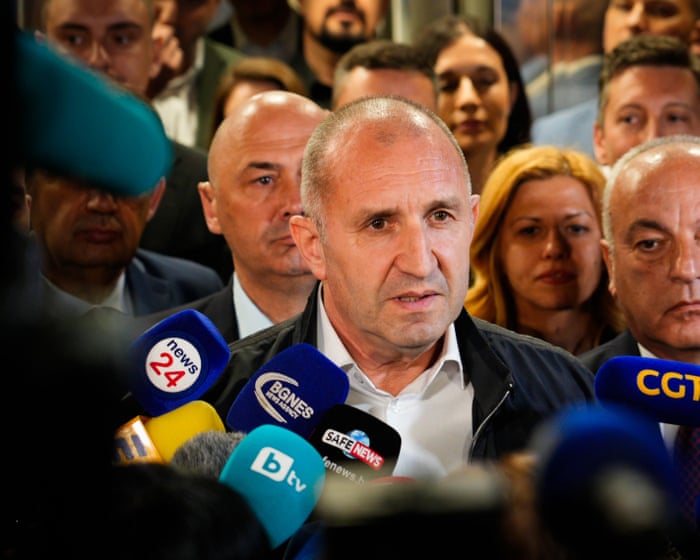
Across the rest of central Europe, it is much the same story. Bulgaria last week elected a nationalist, Moscow‑friendly prime minister, Rumen Radev, who will take a draconian line on migration and is a fierce critic of the European Union’s green deal. The country’s Socialist party, a presence in parliament since 1989, failed to win a single seat.
Do you have an opinion on the issues raised in this article? If you would like to submit a response of up to 300 words by email to be considered for publication in our letters section, please click here.
Incoming PM Péter Magyar accuses Fidesz-linked figures of trying to shield their wealth from accountability
Along the banks of the Danube, news that the Viktor Orbán era had come to an end set off an hours-long party. The joy echoed across Hungary as people traded hugs and high-fives. For some, however, the landslide loss set off a frantic scramble.
Private jets allegedly laden with the spoils of those whose wealth swelled during Orbán’s 16 years in power have steadily been taking off from Vienna, while other individuals are racing to invest their assets abroad, sources have told the Guardian. Meanwhile, high-level figures close to Orbán have been looking into US visa options, hoping to find work at Maga-linked institutions.
Nach seiner Wahlniederlage kündigt der langjährige Regierungschef an, sein Abgeordnetenmandat niederzulegen. Er werde „derzeit“ nicht im Parlament gebraucht, erklärt er.
European Union formal procedures expected to conclude on Thursday as Druzhba pipeline reopens
During his press conference, Fico also doubles down on his criticism of the incoming Hungarian government led by Péter Magyar, in a further sign that the relations between Bratislava and Budapest could change dramatically in the next few months.
Fico has been close friends with Orbán, often teaming up with him on energy issues, but it doesn’t look like this Slovak-Hungarian partnership will continue under the new management in Budapest.
Am Ende von 16 Jahren Orbán weiß man: Geldentzug funktioniert als Druckmittel. Es ist jedoch nicht sicher, dass die EU es auch in Zukunft effektiv nutzt. Denn manche Regierungen könnten versuchen, einander zu schonen.
ECJ says law passed in 2021 is discriminatory and ‘contrary to the identity of the union’, in early test for new PM
The EU’s highest court has found Hungary’s anti-LGBTQ+ law to be discriminatory, stigmatising and in breach of basic democratic values, setting up an early test for the incoming government when it takes power next month.
In a wide-ranging judgment, the European court of justice said the 2021 law that bans content about LGBTQ+ people from schools and primetime TV was at odds with a society based on pluralism and fundamental rights, such as prohibition of discrimination and freedom of expression.
Der ungarische Wahlsieger Péter Magyar sendet auch in die Länder des westlichen Balkans selbstbewusste Signale. Vor allem ein prominenter Schützling von Viktor Orbán muss sich Sorgen machen.
He is no progressive but unlike the old opposition, the Tisza leader listened to Orbán’s rural base
The international audience observing the Hungarian election result is likely to settle on a view that feels familiar. That this election was about east v west or that it was a “youthquake”, a win secured by the unprecedented participation of young voters. These narratives have some truth to them, of course, but, especially for those interested in fighting back against regimes such as Viktor Orbán’s, it’s worth taking a closer look at this campaign. Understanding Péter Magyar’s success will require progressives to rethink their strategies in similar political scenarios.
Orbán’s defeat was against all odds. The Hungarian electoral system was designed by his government after 2010 with only one thing in mind: the interests of his party, Fidesz. His cronies control vast sections of Hungarian society and economy, including most offline media. Orbán had been effective in perpetuating the myth that he could not be removed from power democratically, which limited the political imagination of many Hungarians.
Nóra Schultz is a Hungarian political theorist and podcaster
Departing PM Viktor Orbán admits ‘political era has ended’ as EU says ‘clock is ticking’ to resolve important issues
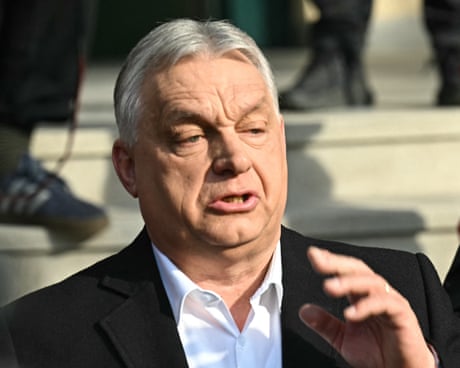
EU officials have arrived in Budapest for high-stakes talks aimed at reshaping the bloc’s strained relationship with Hungary, weeks before the new government takes office, as the country’s departing prime minister, Viktor Orbán, admitted a “political era has ended” and suggested he would stay on as leader of his party in his first interview since the election.
Speaking to the pro-government outlet Patrióta, Orbán described Sunday’s election as an “emotional rollercoaster” after the opposition Tisza party won a landslide victory, bringing an end to his 16 years in power.
Nach 16 Jahren Orbán steht Ungarn vor einem Neuanfang. Leicht wird es nicht. In Polen etwa wirkt die achtjährige PiS-Ära noch immer nach, in Brasilien die vier Jahre unter Bolsonaro. Was lässt sich daraus lernen?
The last 16 years of Viktor Orbán’s rule have been kind to a number of British political figures – from the Tory peer David Frost to Reform UK’s Matt Goodwin and James Orr.
All benefited from largesse extended by the self-styled “illiberal democracy” established by the Hungarian leader’s ruling Fidesz party, which took a particular liking for those on the harder right of British conservatism.
Der designierte ungarische Ministerpräsident kündigt an, scharf gegen die staatsnahen Medien der Orbán-Ära vorzugehen. Welche Umwälzungen er noch plant.
Premier Orbán hat Bildungseinrichtungen der neuen Rechten mit Steuergeldern aufgepumpt – sein designierter Nachfolger sieht darin ein Verbrechen. Auf seine Pläne wollen die Betroffenen „kreativ“ reagieren.
Péter Magyar compares media coverage to Nazi-era Germany and aims to ‘restore its public service character’
Hungary’s prime minister-elect has vowed to suspend state media news coverage, describing it as a “propaganda machine,” when his government takes office around mid-May.
Péter Magyar, whose landslide election victory on Sunday brought an end to Viktor Orbán’s 16 years in power, detailed his plans for the suspension as he gave two tense interviews to public radio and television on Wednesday.
Leaders of Poland and Germany hail Péter Magyar’s majority as a turning of the tide – but analysts say there were other reasons for defeat of prime minister
For Poland’s Donald Tusk, the crushing defeat of Hungary’s illiberal prime minister, Viktor Orbán, after 16 years in office was evidence that the world was no longer “condemned to authoritarian and corrupt governments”.
Germany’s chancellor, Friedrich Merz, also believes the two-thirds majority secured by Orbán’s centre-right challenger, Péter Magyar, in Sunday’s elections was “a clear signal against rightwing populism” that showed “the pendulum is swinging back”.
Péter Magyar did not need to dismantle the system – but he understood that Hungarians care more about the cost of living than conspiracies
Hungary’s election delivered an unprecedented victory for Viktor Orbán’s challenger. With a record turnout of nearly 80% and a supermajority for the Tisza party of almost 70% of the seats, this was not merely a change of government: it was a change of regime, compressed into a single election night.
After 16 years in power, Orbán became the victim of his own creation. Hungary’s electoral machinery, carefully engineered to convert a relative majority into overwhelming parliamentary dominance, worked perfectly – just not for him. In the end, the opposition leader, Péter Magyar, did not need to dismantle the system; he simply recognised the rules of the game and played to win. Orbán’s 2011 electoral laws, designed to punish a fragmented opposition, ultimately proved fatal to their creator, when he was faced with a challenger who could turn those winner-takes-all mechanics to his advantage.
Tibor Dessewffy is director of the digital sociology research centre at Eötvös Loránd University, Budapest, and a member of the European Council on Foreign Relations
Do you have an opinion on the issues raised in this article? If you would like to submit a response of up to 300 words by email to be considered for publication in our letters section, please click here.

 Anmelden