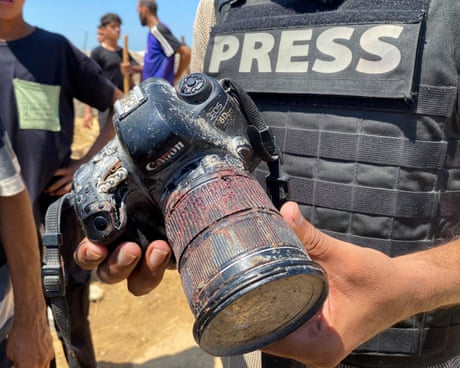
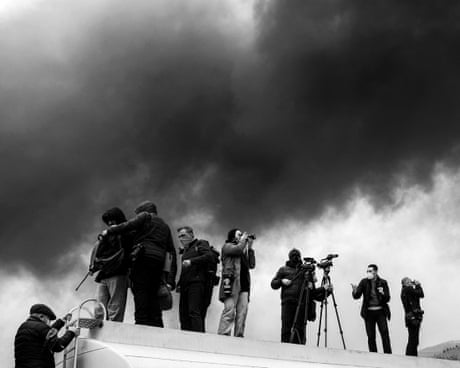
Facts can be expensive in a dangerous world. I have covered some brutal wars during my three decades at the Guardian, but journalists are now actively targeted in a way I have never seen
It has never been so dangerous to be a journalist than now, and the threat keeps growing. The Committee to Protect Journalists (CPJ) recorded 129 deaths of reporters and other media workers in 2025, the most it has ever recorded, and five more than the previous record, which was last year.
I have worked for the Guardian for more than three decades and covered some brutal wars, but journalists are now in the crosshairs, actively targeted, in a way I have never seen before.
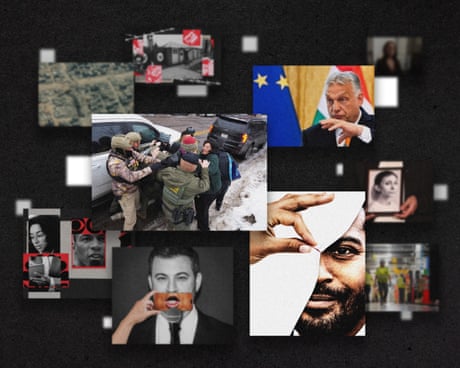
What does defending press freedom mean in practice? We asked people across the Guardian to tell us something they have done to protect it this past year. The range of responses will likely surprise you
It sounds like a fundamental principle. A tenet. But, in reality, press freedom is more of a practical and relentless daily struggle.
I’ve been asking colleagues from across the Guardian to tell me about one of the things they have done to protect press freedom this past year – from our international correspondents and investigative reporters to our visual journalists and commercial and technology departments.
After months of protest, crackdown and war, on-the-ground reporting is more impossible than it has ever been. These challenges shape every aspect of how we report on what is happening in the country
Iran is among the world’s most repressive countries for press freedom. But in recent months, I have seen first-hand how the work of telling the truth has grown more fragile, more improvised, and more dangerous than ever.
We have been cut off from our sources. After the authorities imposed a nationwide communications blackout, the already fragile infrastructure of reporting has all but collapsed. Even when we can make contact, we are careful; a phone search at a checkpoint could put them in danger. We cannot cross-check events through local coverage or rely on familiar verification channels. Instead, we wait for the rare, precious moments when a reliable contact inside Iran manages to get online, navigating VPNs or risking Starlink, which the authorities have criminalised.
The Guardian is committed to helping journalists inside repressive regimes across the world to share their stories. As part of our annual support campaign promoting the defence of the free press please consider backing our work today – or consider backing another independent outlet whose work you value. We’re hoping to get 60,000 new supporters, or acts of support by 21 May.
The latest World Press Freedom Index highlights Serbia and Turkey as countries where journalists are particularly at risk of physical attack, or subject to political pressure.
Coalition Against SLAPPs in Europe bestows its top 'award' on Croatian judge Ivan Markovic for issuing over 20 lawsuits against journalists – the third 'winner' from Croatia in five years.
The latest World Press Freedom Index highlights Serbia and Turkey as countries where journalists are particularly at risk of physical attack, or subject to political pressure.
Journalists brace for sweeping reforms after years of pro-government control under Viktor Orbán
For years they operated as government mouthpieces, using their sprawling reach into homes across Hungary to bolster Viktor Orbán and vilify those he cast as enemies, from the philanthropist George Soros to Ukraine’s Volodymyr Zelenskyy.
But on Saturday, as Péter Magyar’s swearing-in officially ends Orbán’s 16 years in power, the country’s once powerful state media are facing the prospect of going dark.
Editor-in-chief of Wall Street Journal says those with deep pockets are launching legal challenges as a PR strategy
Powerful figures are increasingly threatening to sue media outlets before they have even published a story, the editor of the Wall Street Journal has said.
Emma Tucker, whose title is being sued by Donald Trump over its reporting of his relationship with the late child sex offender Jeffrey Epstein, said the act of reporting itself was now under threat from the use of lawfare.
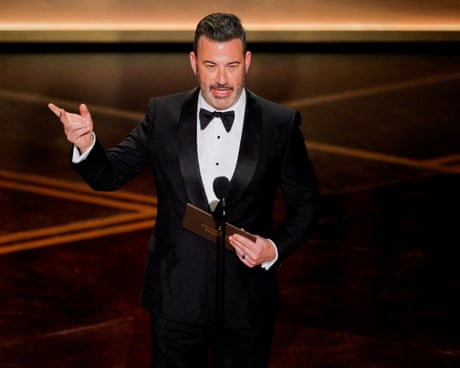
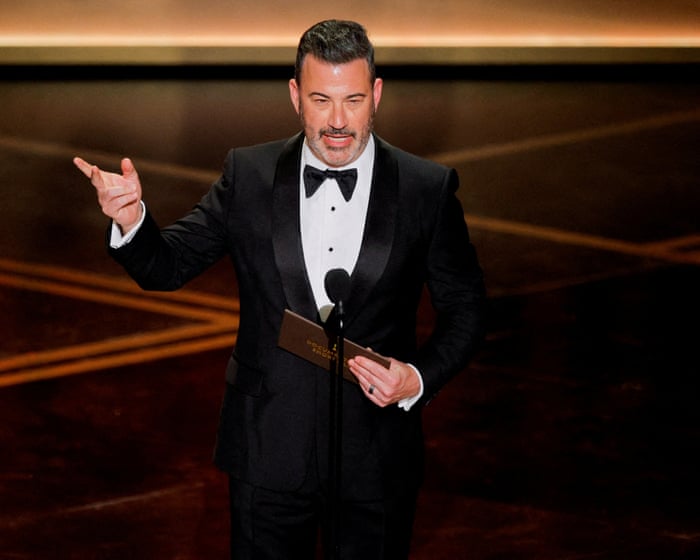
Taking a jab at the hefty age gap between Donald and Melania Trump, ABC’s Jimmy Kimmel – playing the role of guest comic at a mock White House correspondents’ dinner – described the first lady as having “a glow like an expectant widow”.
The World Press Freedom Index, which assessed 180 countries, finds established journalism is ‘being asphyxiated’
Press freedom around the world is at its lowest ebb in a generation, according to an influential annual index that highlights growing authoritarian pressure on the media.
The average score for the 180 countries assessed by the World Press Freedom Index, compiled by Reporters Without Borders (RSF), was the lowest in the index’s 25-year history.
To do our job, investigative journalists are learning to work across borders. This isn’t just about the truth, it’s about staying alive
Laurent Richard is a journalist and the director of the Forbidden Stories consortium
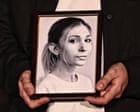
InFebruary 2025, the body of journalist Viktoriia Roshchyna was finally returned to Ukraine after months of uncertainty. She was one of 757 Ukrainian casualties handed over by Russian authorities as part of an exchange of prisoners and the dead.
Roshchyna had disappeared in the summer of 2023 while reporting from the Russian-occupied territories in Ukraine. When her body was examined, parts were missing: her eyeballs, her brain, her larynx – possibly removed to conceal the signs of how she died. Preliminary forensics suggest “numerous signs of torture”, according to the Ukrainian prosecutor.
Laurent Richard is a journalist and the director of the Forbidden Stories consortium
Do you have an opinion on the issues raised in this article? If you would like to submit a response of up to 300 words by email to be considered for publication in our letters section, please click here.
Sakharov prize winner was given eight-year sentence after process widely condemned as politically motivated
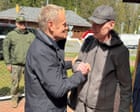
The Polish-Belarusian journalist Andrzej Poczobut, the 2025 Sakharov prize winner, has been freed after five years in a Belarusian penal colony as part of a US-brokered multi-country swap deal.
His release has been confirmed by Poland’s prime minister, Donald Tusk, who posted a picture of him on social media, saying: “Andrzej Poczobut is free! Welcome to your Polish home, my friend.”
I suspect the main reason they avoid criticizing Israel is that they believe that would be antisemitic. But this is both dangerous and wrong
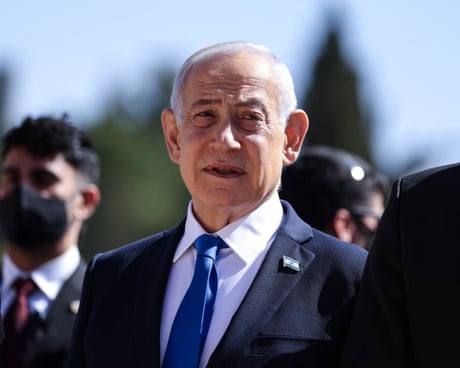
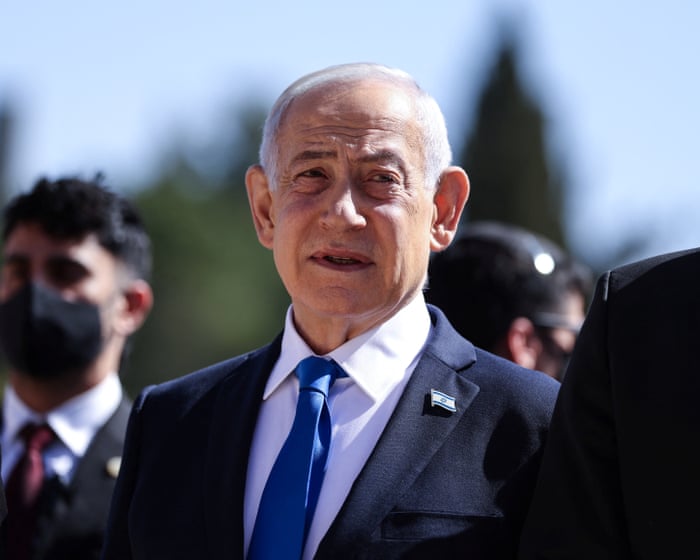
In an extraordinary article published on 7 April, the New York Times described how Donald Trump decided to go to war with Iran. It is highly unusual for the White House Situation Room to be used for in-person meetings with foreign leaders. But this time, the Situation Room was not just used for a meeting with a foreign leader. Israel’s prime minister, Benjamin, Netanyahu took over the presentation space, backed on a screen by the leader of the Mossad as well as Israeli military officials.
As the New York Times describes the scene, “Arrayed visually behind Mr. Netanyahu, they created the image of a wartime leader surrounded by his team.” The article makes it clear that Netanyahu’s “hard sell” of a quick war was pivotal to the US president’s decision to partner with Israel in attacking Iran.
A Kuwaiti-American journalist, who had been detained in Kuwait, has been acquitted, according to the Committee to Protect Journalists (CPJ).
Ahmed Shihab-Eldin, who has previously worked for PBS, HuffPost, the New York Times, the BBC and Al Jazeera, was arrested on 3 March during a brief visit to Kuwait.
Hungary’s prime minister has conducted a systematic attack on independent media. The parallels with the US are chilling
During his state of the nation address earlier this year, Hungary’s prime minister, Viktor Orbán, outlined a chilling vision of the country’s future. Signalling a new level of aggression in his campaign against the truth if he is returned to power in elections on 12 April, Orbán vowed to purge the country of “bought journalists” and “fake civil society organisations”.
Media repression isn’t just a Hungarian problem. According to the V-Dem Institute in Sweden, a leading democracy monitor, it is the most commonly used weapon in the authoritarian arsenal. Strikingly, its latest report finds that US democracy is now at its worst level since the 1960s, marked by a sharp decline in media freedom.
Amrit Singh is professor of practice and founding faculty director of the Rule of Law Lab at NYU School of Law
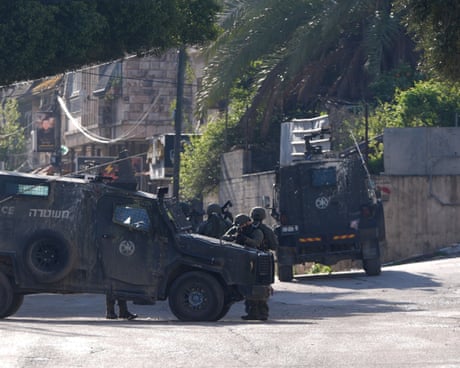
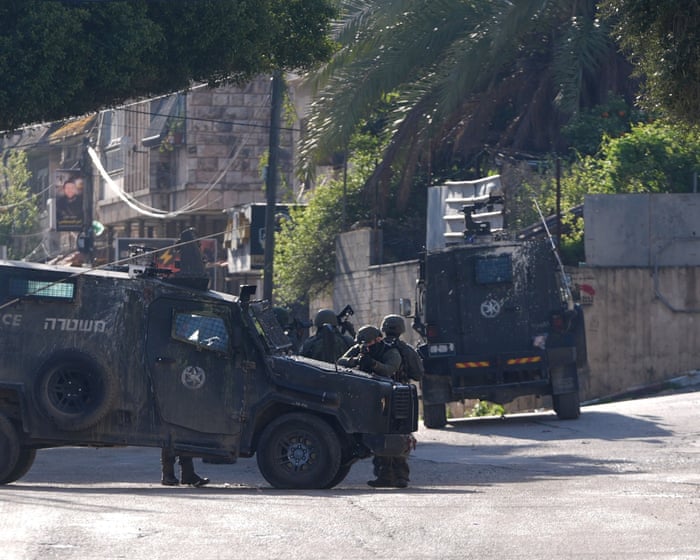
An international media association has condemned what it described as a “violent assault” by Israeli soldiers who detained a CNN crew in the occupied West Bank this week.
A CNN team was reporting on the aftermath of an assault by Israeli settlers and the establishment of an illegal outpost near the Palestinian village of Tayasir on Thursday when it was detained by Israeli soldiers, the Foreign Press Association said on Saturday.
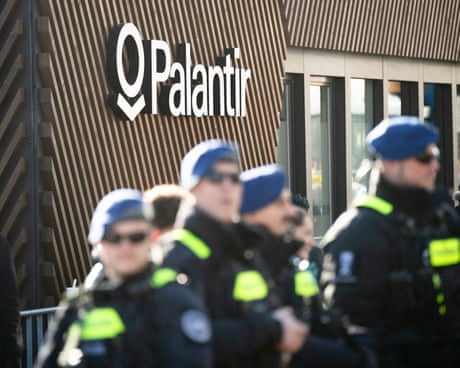
An investigation by journalists working with Republik magazine may have struck a nerve by suggesting the company has failed in Switzerland
It was over beers on an autumn evening in Zurich in 2024 that a group of journalists with an independent Swiss research collective began to discuss investigating Palantir, one of the world’s biggest tech companies.
Three years earlier, Palantir had advertised that it was setting up a “European hub” in the Swiss municipality of Altendorf, a sleepy town of roughly 7,000 people on the shores of Lake Zurich.
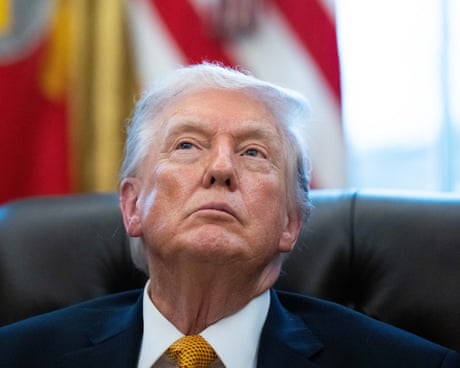
The US president is using the language and the strategy of authoritarians once again
There’s nothing completely new in Donald Trump’s latest attacks on reporters.
But they’re more extreme now and ever more indicative of what he wants: a docile press that provides propaganda – not factual journalism – for everything he does, including for his misguided war in Iran.
 Anmelden