This one-pan. 30-minute stir-fry will be just as delightful if you swap out the cheese for tofu
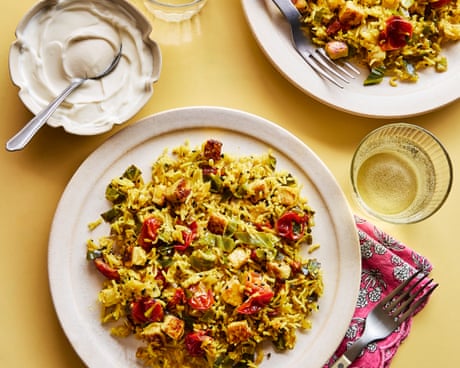
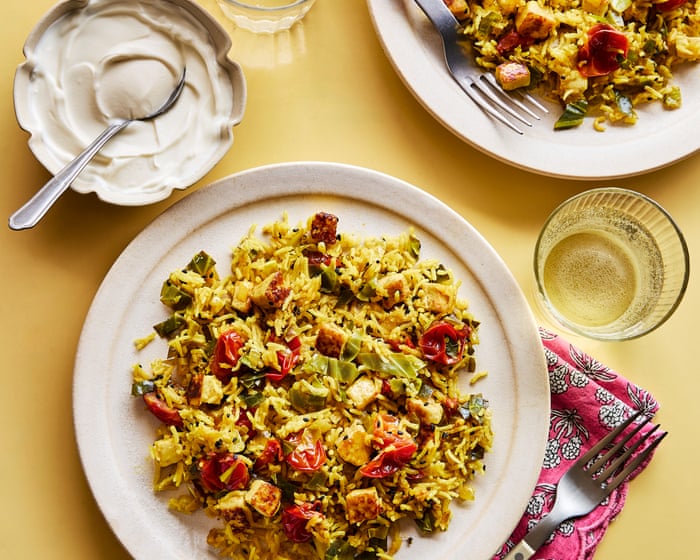
This is such a gorgeous one-pot rice dish, though it deviates from my usual microwave method and goes back to cooking rice the good old-fashioned, stove-top absorption way. If you’re vegan, you can easily substitute tofu for the paneer cubes. In fact, I told my tofu-mad children that the paneer was tofu, and they were none the wiser.
Cooking for kids doesn’t have to be a chore: these three meals are quick, full of flavour and, crucially, fun both to make and to eat
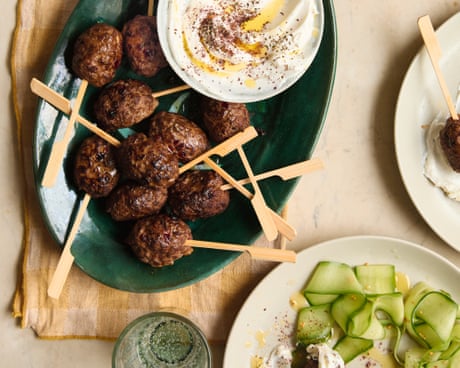
Family meals don’t need to mean hours in the kitchen or a mountain of washing-up. These crisp chicken nuggets are a healthier homemade favourite that kids absolutely love, while the lamb lollipops are fun and surprisingly simple; the stuffed pitta pockets, meanwhile, are perfect for lunches, after-school dinners or eating on the go. Above all, all three dishes are built for real family life: quick, full of flavour and designed to make mealtimes a little easier and a lot more enjoyable.
If you’re craving a carby heap of fried spuds, these aren’t for you, but if you’re after crisp, juicy veg, they make the perfect snack alongside a punchy dip
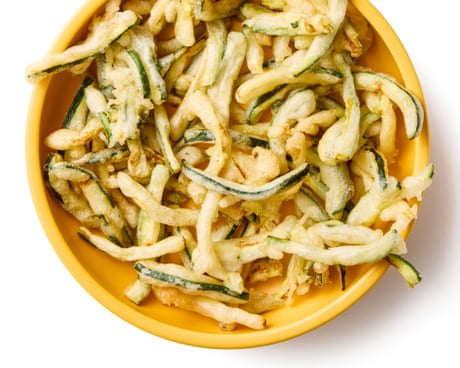
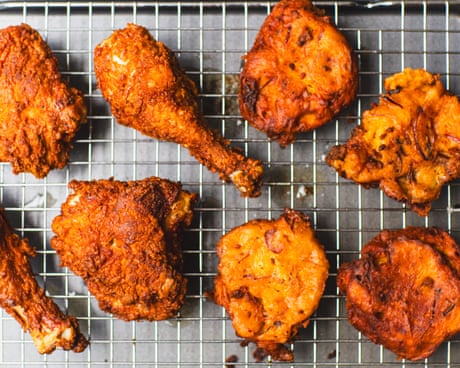
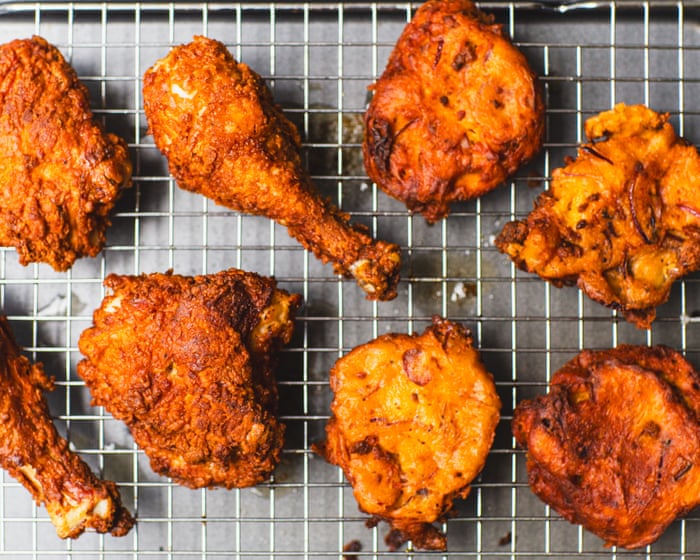
These are not chips. If you’re hankering after a fluffy, carby heap of fried potato, I’ll be honest, these courgette numbers probably won’t cut the mustard. If, however, you like the idea of hot, crisp, juicy veg, then you’re in luck. As well as a vegetable side, these make a fantastic snack with drinks, particularly when paired with a hot sauce or punchy dip.
Prep 15 min
Salt 30 min+ Cook 15 min
Serves 8 as a side
This cool summer dish can be easily enhanced with a range of store-cupboard staples
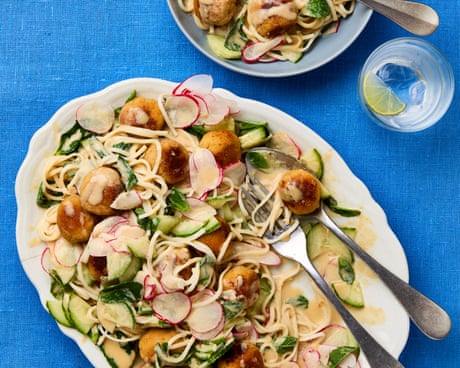
What’s your favourite hot weather food? Mine’s gazpacho. I’m joking – gazpacho’s lovely, but cold noodles are my top pick because, in the summer, they meet me exactly where I am in both the cooking and the eating. They don’t need much by way of cooking, and they can be dressed and paired with many a store-cupboard ingredient – in today’s case, tahini, miso and sesame oil. Best of all, cooling the noodles shocks the starches, which makes them firmer and gorgeously “QQ”, a Taiwanese term used to describe food that’s delightfully bouncy and springy. Which personally, is how I’d like to feel all summer long.
Whether making a last-minute panic buy or you simply can’t be bothered to stray far from home, the dusty shelves of your local store often boast their share of trusted, dependable bottles
There was a time in my life when Campo Viejo Tempranillo was as essential as milk or bread; my flatmates and I designated it our “house wine”’. The year was 2011, we wore a lot of elasticated statement belts and lived opposite a corner shop by Brixton prison. Like us, the wine was young, fruity and there for a good time.
Campo Viejo remains one of the more obvious choices for a last-minute bottle of red. Even better is Muriel Tempranillo Rioja at the Co-op, which has all the dark red fruit and vanilla you might expect from young rioja. These days, I’d freshen up either of them with a blast in the fridge, or mix with lemonade for that emblematic Spanish summer cocktail, tinto de verano.
A family favourite transforms TV dinners into a summery event
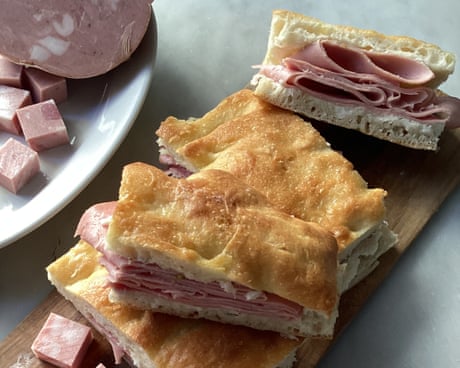
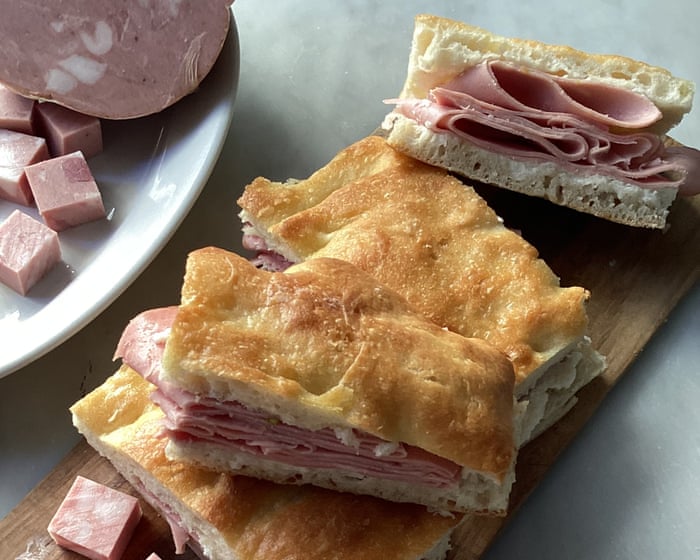
It’s the time of year when the TV, balanced on the Ikea unit with castors, its feet supported by wooden splints, is wheeled between the kitchen doors so it faces out on to the terrace (flat roof). In the absence of a barbecue or outside shower, the TV is our seasonal shift; an inside object moved outside and, in the process, made (slightly) more exciting. As a result, TV dinners are also altered, as well as given another layer of soundtrack – birds shouting, people chatting in the bar below, the held-down horn of the articulated lorry that can’t reach the supermarket because a car is double parked – to the one coming out of the TV speakers. We also have a table outside, but that changes the nature of a TV dinner too much: the table is moved aside for wooden chairs, tea towels and plates on laps, with focaccia sandwiches with mortadella and parmesan cream for the meat eaters, and parmesan cream, tomato and a handful of green leaves for those who don’t.
Mortadella is considered an insaccati parzialmente cotti, or partly cooked sausage. Its origin is debated, with some suggesting it derives from the object it was pounded in, il mortaio (the mortar); others say the name can be linked back, as is so often the case, to the Romans, and a sausage flavoured with myrtle berries called farcimen murtatum. The dates around when it was first made are also debated, because of a mention of something called mortadella in 12th-century cookbooks, though that was likely made of veal or donkey. The 1600s are a better place to start, when a nobleman and agronomist called Vincenzo Tanara described meat: two-thirds lean from the pork shoulder and leg, cut into large cubes, then transformed through “sharp pounding”, stuffed and cooked at a moderate temperature. Alongside instructions for production, there were strict edicts regulating the labour-intensive processes involved in making luxury products for those who could afford them.
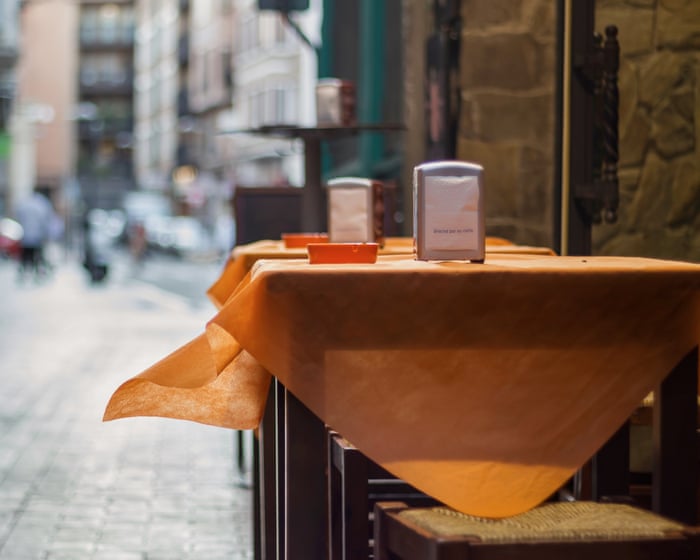
Forever flimsy and ineffective at cleaning greasy fingers, the servilletas of the Iberian peninsula resist the relentless ‘optimisation’ of our age. A new photo book recognises them as cultural treasures in miniature
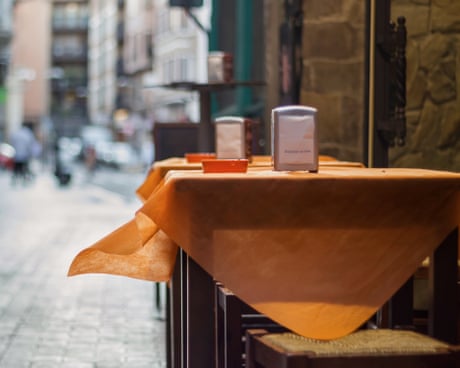
If you have ever eaten a meal in a bar, cafe or restaurant in Spain and grabbed a napkin from the ubiquitous small metal dispensers, you will be familiar with the most intriguing feature of the wafer-thin servilletas: how utterly functionally useless they are.
Don’t bother using them to mop up spilled liquid, as they are less likely to soak up the spillage than protect it with an impermeable barrier. Never make the mistake of blowing your nose in them when you have a cold or a hay fever attack: they’ll just spread the mess to your hands. Their papery texture – originally meant to keep your hands clean while picking up oily snacks – has somehow endured despite their most common purpose being to clean your fingers and lips. For this, they are far from effective, and you end up flying through half a dozen for every croqueta.
An almost-empty container can be a vessel for food alchemy
Using an almost-empty yoghurt pot to marinate meat and vegetables is one of my favourite ways to prepare dinner. It’s a really simple and tidy way to marinate food that not only saves on the washing-up, it also turns a few yoghurt scrapings that might otherwise be destined for the drain into a flavour-enhancing, tenderising, waste-saving hack.
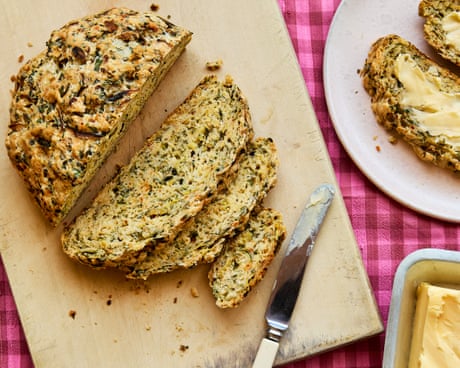
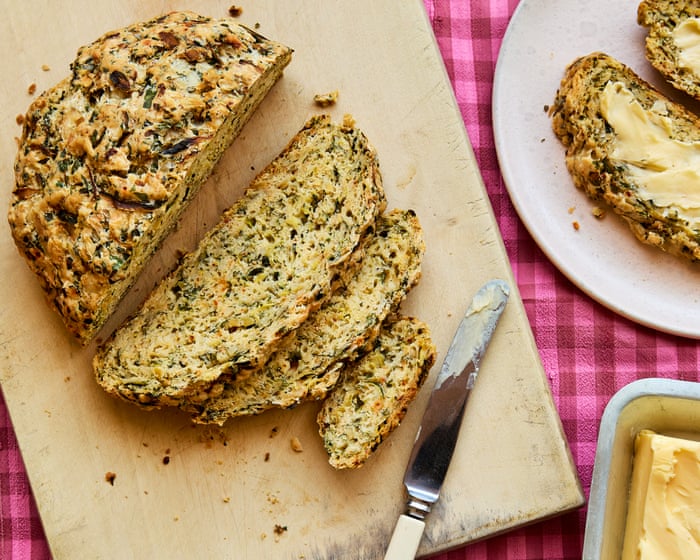
Three ways with summer’s versatile vegetable: as a simple meal, a deliciously moist loaf and a South Asian achaar to spice up any cheese sandwich
Courgettes don’t have to be boring, thanks to their shapeshifting magic. Shave with a vegetable peeler, douse in olive oil and lemon juice and eat raw, or spiralise for noodles. Alternatively, grill until blackened, scoop out the creamy innards, and fold into tahini for a smoky dip. Courgettes are irresistible grated and turned into fritters, deep-fried or cut into thick rounds and roasted on a high heat so they caramelise, but don’t turn to mush. Finally, you can pickle them to enjoy their sunny flavour in the gloomier months.
It’s all about ‘easy bowl food’, and grub you can shovel in on the sofa without having to cut anything up
What are the best summer TV dinners? Mel, by email Few are as committed to teas on knees as Ella Risbridger: “It appals my parents, but I eat on the sofa just about every day,” says the author of The Kitchen Book. The key, she says, is not having to cut anything up: “One-handed cooking is a good way of thinking about it,” which is to say that Mel should be looking for meals that require only a fork, a spoon or chopsticks. “That’s easier to do in winter, because then you’ve got the likes of casseroles, soups and stews, whereas a lot of summer food is based on big sharing platters, which are not ideal, because, while you can put them on the coffee table, there’s lunging involved.” Said movement not only upsets the balance, but often also results in spillages: “I’m currently looking at a lump of bicarb sopping up a turmeric stain on my sofa,” Risbridger adds by way of confirmation.
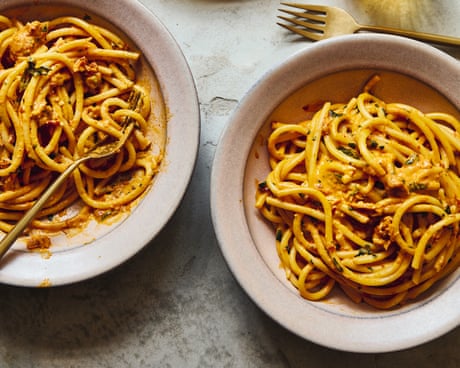
Other considerations of the sofa supper include getting as many textures and flavours as possible into every mouthful. “Wherever you dig, you want to be getting something good,” says Zena Kamgaing, author of Dinner Time. That’s why pasta is a regular go-to: “It’s easy bowl food. On a hot day, say, I’ll do a no-cook sauce by blitzing mascarpone with sun-dried tomatoes, a little harissa and fresh basil.” Risbridger, meanwhile, is partial to US-style chopped salads, although Vietnamese-inspired numbers also feature regularly: “Invest in a julienne peeler, because that can make salad feel fancy, and put any kind of protein in it: salmon, sliced steak.” Add rice – “Cold salad and warm rice is a delight” – or deploy twirlable cold noodles. “If you’re watching telly, curtains drawn, you’re not looking for a beautiful plate,” Risbridger says. “You want the focus to be on the deliciousness, and I cannot stress enough that a Vietnamese salad is the optimum, because it’s beautiful, but not in a way that means you have to concentrate on its beauty.”
This crunchy, spicy wonder has made a fortune for its Chinese creator – and inspired hundreds of British-Asian versions. Time to get tasting …
Walk down the specialist aisle in most British supermarkets and you will find a red jar with the kindly face of a middle-aged Chinese woman staring back at you. Branded Lao Gan Ma, meaning “old godmother”, these jars contain chilli crisp – a spicy, crunchy and moreish umami condiment that has made made hundreds of millions for Tao Huabi, the woman on the label. Doused over steaming dumplings, fried eggs, noodles and even ice-cream, Lao Gan Ma’s chilli crisp has become a social media sensation in recent years and has spawned a thriving cottage industry of independent chilli crisp producers in the UK.
“It’s such a convenient shortcut to flavour when you use it as a condiment,” says Fuchsia Dunlop, an expert in Chinese cuisine. “Every Asian cuisine has a form of chilli oil, but China and Lao Gan Ma invented chilli crisp and now the western world is more interested in authentic flavours, thanks partly to social media.” People, she says, want to have their own taste of that authenticity. “It’s far more exciting than a bottle of ketchup!”
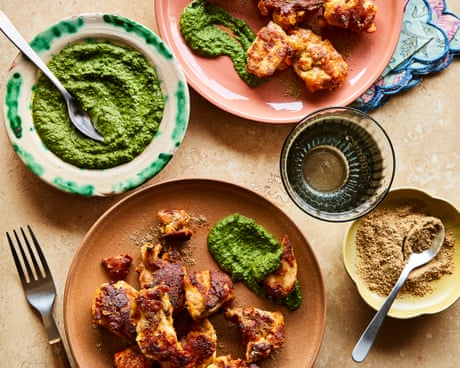
An Indian feast that doesn’t require an overwhelming list of spices, from snackable chicken bites to a punchy crab curry and a fragrant way to use up leftover rice
These are my absolute favourite little chicken bites to eat with some coriander chutney: they make a perfect snack, enjoyed hot on their own, but they’re also great with some paratha, plain roti or even a simple pulao. The crab curry, meanwhile, is something I make especially for me, because my family are not big on crab yet (maybe one day?): the spices work perfectly with the intense flavour of the crab meat, and the spinach adds bite and colour – this goes beautifully with plain white rice. And, finally, a must-try rice dish: being a fan of cauliflower, this recipe is really special to me, not least because the combination of the cauliflower, podi masala and peanuts is just so delicious; it’s also a great way to jazz up leftover rice.
Master the ultimate (and gloriously messy) finger food, in nine simple steps
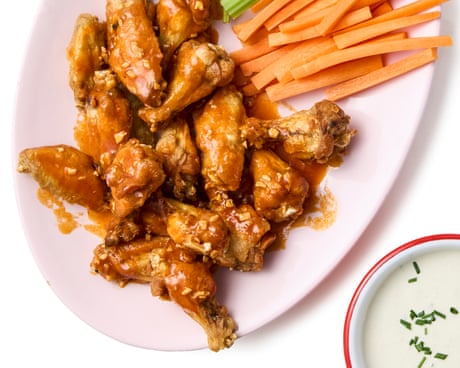
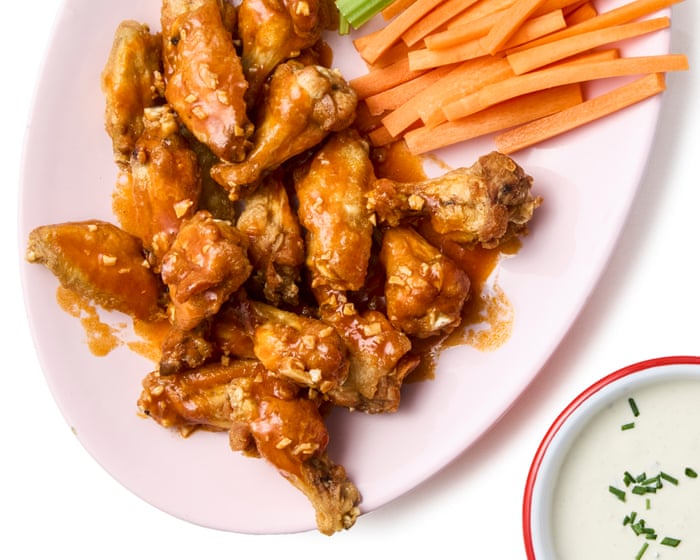
When I first made these back in 2015, I noted that the British are “not enthusiastic” consumers of chicken wings. The fried chicken boom has changed all that, but these tangy, spicy versions, named after the American city rather than the beast, still aren’t as well known as they deserve to be, given what perfect finger food they make while watching (or pretending to watch) sport.
Prep 15 min
Dry 1 hr+ Cook 20 min
Serves 4 (with sides)
Ever since Stanley Tucci got me into fried courgettes, I’ve been obsessed. And, of all the ways I’ve used them since, this is by far my favourite
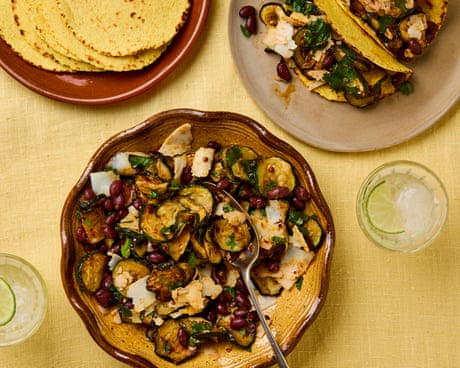
I had my head turned by fried courgettes while watching Stanley Tucci eat spaghetti alla Nerano(on Searching for Italy). So much so, in fact, that I went so far as to book a table at Lo Scoglio da Tommaso in Nerano while I was in Italy last year, only to be thwarted by a broken-down car. Still in search of the pleasure, my husband, Hugh, made that pasta when we got back home, and we slapped our thighs in amazement that so much flavour and pleasure could be achieved by frying courgettes until bronzed. I’ve been using them in all sorts of ways ever since and this is hands down my favourite.
These singular wines from France’s gastronomic heartland are expensive to make and to buy, but if you know where to look, they don’t have to break the bank
Everyone loves white burgundy. Made from chardonnay grapes, these wines from France’s gastronomic heartland, stretching from just south of Champagne to just north of Lyon, are singular: graceful, textured and full of joy. But prices tend to be less friendly; Doug Wregg from organic wine importer Les Caves de Pyrene says “affordable burgundy” is “almost an oxymoron” due to limited supply, labour-intensive production techniques and historic prestige. The recent slew of poor vintages has made those low yields even lower, and prices higher. But good examples do exist at under £25 a pop, which is where I’ve set my budget benchmark today.
That sum won’t get you premier cru meursault, or anything from the Côte d’Or, a narrow hillside of celebrated limestone slopes south of Dijon, but there is still plenty within reach. Not least aligoté, the region’s second white grape, which can reliably be found for less than £25 (try Majestic’s Famille Gueguen number at £15.50 a bottle on the “mix six” offer), but “white burgundy” always means chardonnay, which is my focus today. A sensible start is in the Mâconnais, the southernmost point of Burgundy’s wine-producing area, where warmer temperatures and clay-limestone soil make for a rounder style of wine. Almost every supermarket has an own-label Mâcon Villages – I spent many a tidy Friday night in my twenties in a south London park with the Sainsbury’s Taste the Difference iteration (now £12.50 – inflation!) and a large bag of Doritos Cool Original (a good pairing, incidentally) – and they tend to be easy, fruity table wines. Usually, they’re unoaked, too, removing a layer of process that helps keep the price down. That said, oak doesn’t necessarily mean better; rather, its absence arguably lets the terroirs sing louder. Wregg’s Domaine des Cadoles 2022 Mâcon Chardonnay in today’s pick is a lovely example, at once mineral and creamy.
Savour the glorious sound of mussels popping open and finish cooking the pasta in the shellfish liquor really to ramp up the flavour
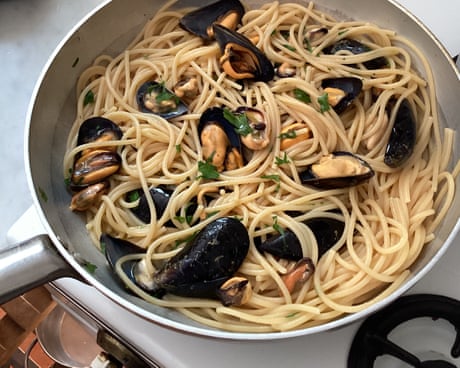
If you put your ear close (but not too close) to a covered pan full of mussels, olive oil, garlic and a bit of white wine (not too much) over a lively heat, you will hear the sound – a cross between a crack, or that of a rip and an unzipping – of the mussels opening. To begin with, it’s intermittent, so you lift and look under the lid to reassure yourself that they are indeed starting to open … But there are only a few, so the lid goes back on. You shake the pan until, like popcorn, the mussels are off – crack, rip, unzip – at which point, get the lid off and the mussels out, so you can admire the liquor. Taste to see how salty it is and measure how much you have: you want about 200ml, so take some out, reduce or add water to get the proportions and taste to your liking.
Spaghetti (or linguine) with mussels is a recipe that benefits from finishing the cooking of the pasta in the sauce, which is also a great technique to know generally, because it can be applied to countless pasta recipes. The benefits of finishing the cooking in the sauce (or broth) are: deep flavour (because the pasta absorbs and gets completely coated in the sauce), shine and a slightly thickened sauce, thanks to the starch that seeps from the pasta and combines with the fat.
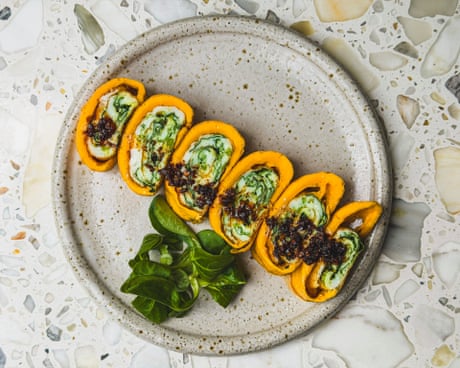
A viral trend based on an eastern classic, this rolled, multilayered dish is a fun way to use up wilting leaves that also looks impressive on the table
When I started looking into the idea of a lettuce omelette, mainly to use up leftover dressed salad, I soon found out that it’s something of a social media trend, as well as a classic Japanese, Chinese and Taiwanese dish. In the trending recipe, the egg whites and yolks are often separated, then the whites are mixed with lettuce and cooked first. This is rolled, then the yolks go into the same pan and, once they’re set, they’re rolled around the whites to make a beautiful, multilayered omelette with a white-green interior and a golden outside. It’s a great way to use up dressed salad, but fresh or wilted leaves will work, too, if those are all you have. I prefer bitter and spicy leaves such as mustard, mizuna and rocket, but everything works. Iceberg, for instance, is often used in modern Chinese recipes. Serve this plain, or with crispy chilli oil, soy sauce flavoured with minced garlic and ginger, miso mayo, or all three. To make miso mayo, mix 60g mayonnaise with a tablespoon of white miso paste, then stir in an optional teaspoon of sesame oil, some finely grated garlic and ginger, and a squeeze of lemon.
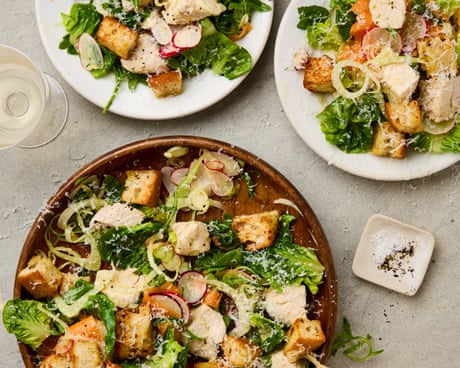
An unusual frittata with a risotto base, and a simple but delicious salad combination that’s sure to be a big hit
I love this salad – the combination of soft, juicy chicken, crisp leaves and anchovy croutons is so delicious. We serve it on the terrace at my restaurant and, when the sun is shining, it is the biggest seller by a country mile. But, first, an unusual frittata, which is essentially a risotto base with asparagus: it’s not difficult to make and is perfect for lunch, and even better as part of a picnic.

 Anmelden