❌

Lese-Ansicht

You can’t argue with 118 Brummies in their swimsuits: Attilio Fiumarella’s best photograph

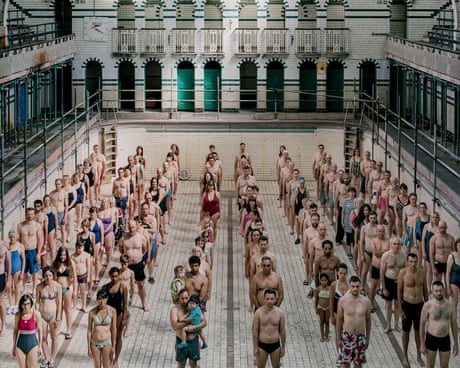
‘I was thinking about the Terracotta Army when I took this shot of Birmingham swimmers in their local pool, which faced closure. They had to stand there for an hour, waiting for the sun to come out’

I took this image in Birmingham on 20 July 2014 – part of my first professional photography project. I had moved to the city in 2013 and I would pass this building every day on the bus on my way to the city centre. I remember looking at the facades and being impressed and intrigued by the three different entrances – what were once the first class, second class and women’s entrances.

One day I decided to get off the bus and find out what the building was. The door was open, and a nice lady welcomed me in and started to explain its history. It is the Moseley Road Baths, an Edwardian-era community building. In 2014 the second pool was still operating but the gala pool, where I took this image, was already empty. The building was in need of restoration and, without funding, the council planned to shut it down for good. The woman I met there told me lots of stories about the place – people who had come to learn to swim, how it had served as a casualty station during the second world war, and how it had even been used as a dance hall. It was a very charming place with an incredible history: as soon as I saw the gala pool, I knew I had to fill the majestic empty space.

Continue reading...

© Photograph: © Attilio Fiumarella. Courtesy of The Royal Photographic Society
© Photograph: © Attilio Fiumarella. Courtesy of The Royal Photographic Society

© Photograph: © Attilio Fiumarella. Courtesy of The Royal Photographic Society

  •  

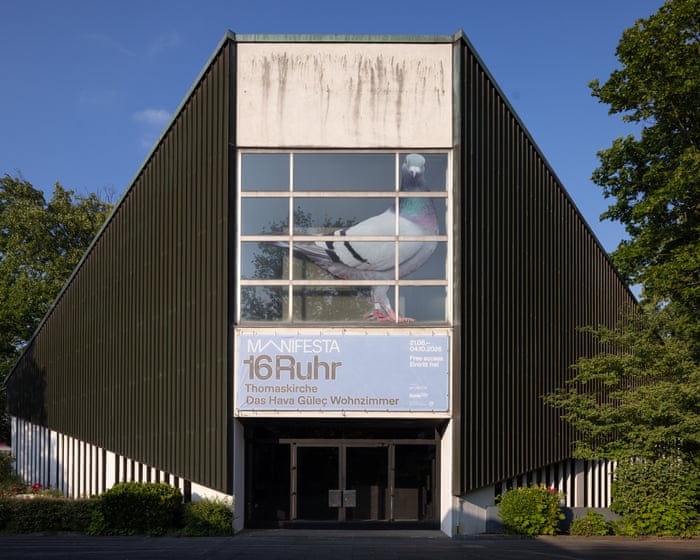
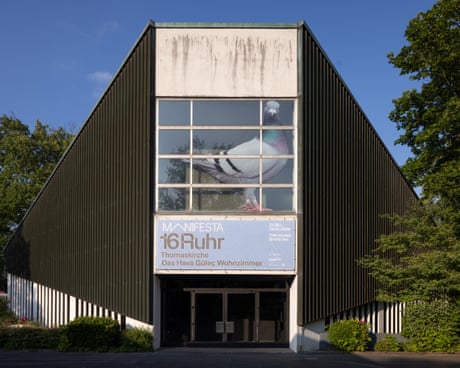
A Ruhr treat: can a giant pigeon and a pink basketball revive Germany’s depressed industrial heartland?

The Manifesta biennale is taking over a dozen tiny churches in German towns ravaged by division and decline – and filling them with ball games, bouncy castles and a radical community spirit

After Germany’s Ruhr conurbation – the third-largest urban area in western Europe – was pummelled during the second world war, planners came up with an ingenious idea. About 80% of the sprawl – which incorporates big cities such as Essen and Duisburg, and dozens of smaller towns like Bochum and Gelsenkirchen – had been destroyed. And so, for the reconstruction, a newly formed Diocese of the Ruhr built literally hundreds of closely packed Pantoffelkirchen or “slipper churches”, so named because they were close enough to housing developments for churchgoers to walk to mass in their slippers.

Today, Pantoffelkirchen are declining sharply. Estimates of the amount of disused or derelict churches are as high as 300, and 100 have been sold off in the last year alone. Until October, 12 of them are home to Manifesta, the travelling art biennale. They stand as centrepieces of communities that have been ravaged this time not by war, but by deindustrialisation, mass unemployment and environmental decline.

Continue reading...

© Photograph: Ivan Erofeev

© Photograph: Ivan Erofeev

© Photograph: Ivan Erofeev

  •  

Sphinxes, movie stars and 3m books: inside Los Angeles’s beloved art deco library

The showcase library’s centenary was celebrated by thousands who filled the still-relevant public institution

The central library in downtown Los Angeles has seen its fair share of colorful moments.

The architectural gem, which turned 100 this week, has been the backdrop to the epic street battle between Pacino, De Niro et al in Heat, and was where the original Ghostbusters came across their first ghost, a friendly older lady librarian who was anything but. Television shows such as Moonlighting; Murder, She Wrote; and LA Law filmed there too, when characters were researching or investigating a case.

Continue reading...

© Photograph: Damian Dovarganes/AP

© Photograph: Damian Dovarganes/AP

© Photograph: Damian Dovarganes/AP

  •  

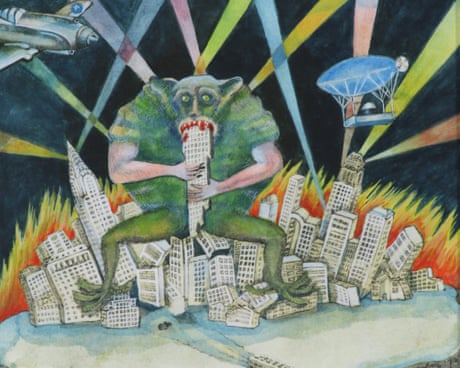
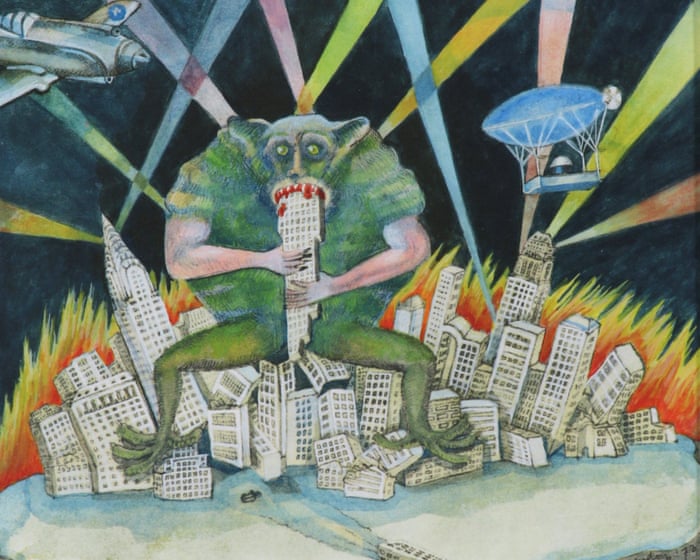
Madelon Vriesendorp review – sex-crazed visions of skyscrapers copulating

Sir John Soane’s Museum, London
The Empire State building is caught in bed with the Chrysler Building and a milk bottle turns into a dragon in the raunchy and cheekily provocative work of the Dutch artist and architect

In a high-rise New York apartment with a wide window that surveys the Manhattan grid below, the Empire State and Chrysler Buildings are in bed together. The Chrysler melts in a silvery swoon, shagged out, while the beacon atop the Empire State Building still glows fiery red and on the bedside table the Statue of Liberty’s arm holds up a torch suggesting more passion to come. But oh no! The lovers have been caught at it. At the door is the forbidding RCA Building, which has left its usual station at 30 Rockefeller Plaza to see this!

Madelon Vriesendorp’s 1975 skyscraper sex romp drawing Flagrant Délit – “caught in the act” – can be seen twice in her exhibition Mind Games: as a standalone print and as the cover of Delirious New York, the 1978 book by her ex-husband Rem Koolhaas that is both a surreal history of the city and a subversive manifesto for a new kind of modern architecture. Vriesendorp is what exactly? An architectural cartoonist? A cartoonist architect? She is certainly more than just a graphic prankster, and won the 2025 Soane Medal given to visionaries who have “furthered and enriched the public understanding of architecture”. Hence this show. And it all started with skyscrapers copulating.

Continue reading...

© Photograph: courtesy of the artist

© Photograph: courtesy of the artist

© Photograph: courtesy of the artist

  •  

Repaint, curate trinkets and go ‘curtain crazy’: how to give personality to a boxy, bland apartment

As construction costs rise, soulless white-cube housing is becoming the norm in many cities. Here, new-build residents share how they’ve added character to their homes

You’ll recognise the hallmarks. Banners with renders of utopian urban dwellings – a marriage of contemporary lines, streamlined surfaces, open-plan living spaces and floor-to-ceiling glass, alongside manicured green spaces and lifestyle imagery of young professionals and families. Not necessarily the vision of a quarter-acre block with a white picket fence but in urban centres the Australian dream of home ownership is being recast in the form of white-cube, new-build apartments.

In the US, “5-over-1” buildings are fast becoming ubiquitous, while in Europe, where apartments have always been smaller, there’s a rise in shared-space models with communal kitchens and amenities. Shanaka Herath, a senior lecturer at the school of built environment at the University of Technology Sydney, says: “We know that land costs have been rising, construction costs have been rising, so what the builders do is that they build smaller and more affordable units.”

Continue reading...

© Photograph: Blake Sharp-Wiggins/The Guardian

© Photograph: Blake Sharp-Wiggins/The Guardian

© Photograph: Blake Sharp-Wiggins/The Guardian

  •  

The Albanian Files: The Irregular Anatomy of an ‘Architectural Renaissance’

A new architecture book lifts the lid on Prime Minister Edi Rama’s personal role in bringing world-renowned architects to Albania, inadvertently fuelling discontent over what critics say is an informal form of governance that puts little stock in rules or transparency.

  •  

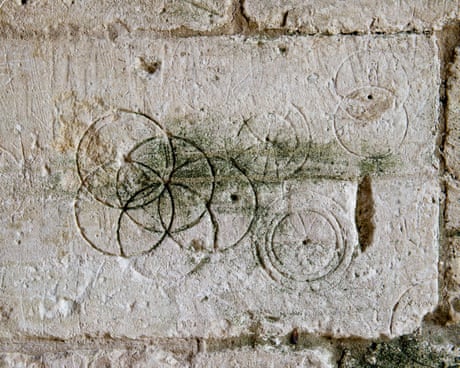
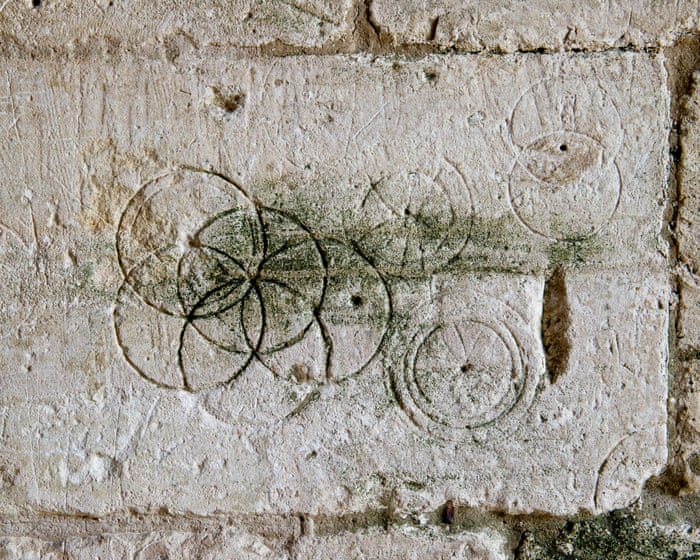
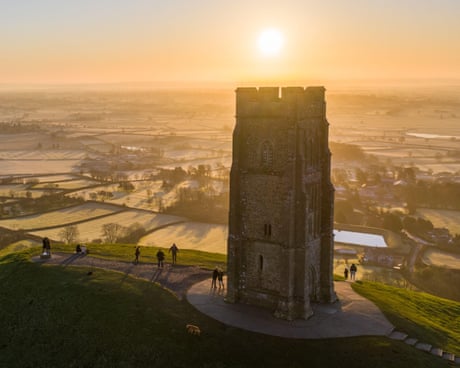
No evidence for ‘witches’ marks’ claims at old English buildings, historian says

Author argues symbols such as daisy wheels are no more than the working marks of stonemasons

Over the years, English Heritage and Historic England have claimed to have identified large numbers of “witches’ marks” or “ritual protection symbols” on the walls of historic buildings, including medieval churches and houses.

Now a leading architectural historian has said there is “absolutely no evidence” that these marks have anything to do with witches or any “mystical meanings”.

Continue reading...

© Photograph: Peter Williams/PA

© Photograph: Peter Williams/PA

© Photograph: Peter Williams/PA

  •  

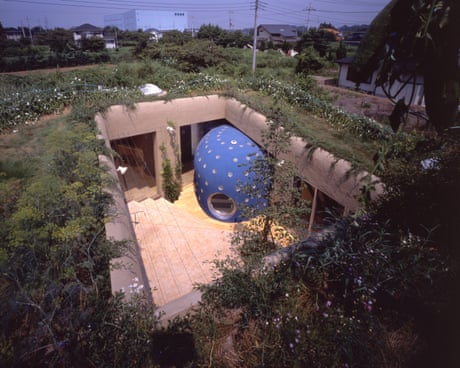
Ushida Findlay review: the mighty culture clash that gave us the dazzling Soft and Hairy House

V&A Dundee
When Kathryn Findlay and Eisaku Ushida joined forces, a sensual kind of architecture was born – resulting in a hairy blue pod in Tokyo and a starfish beach palace in Qatar

‘The future of architecture,” pronounced Salvador Dalí on meeting Le Corbusier in 1922, “will be soft and hairy.” Fast forward over 70 years to Tokyo, and his surrealist prophecy was the stimulus for the Soft and Hairy House, one of a series of startlingly expressive dwellings designed by the talented Scottish-Japanese architectural partnership of Kathryn Findlay and Eisaku Ushida. Melding diverse design cultures – Celtic coiling and Japanese “rawness” – overlaid by an interest in the natural world, as well as fractal geometries and chaos theory, the pair contrived a uniquely sensual and surreal architecture.

Completed in 1994, the Soft and Hairy House was based on a classic courtyard plan form, radically reworked for pre-millennial Tokyo, its softness accentuated by plumply rounded contours, its hairiness by a shaggy fringe of greenery embellishing the roof. A bright blue, porthole-percolated bathroom pod intruded into the courtyard like a giant fungal entity. The interior was suggestive of the glamorous dream space of a Hollywood star, with soft draperies and seductive lighting.

Continue reading...

© Photograph: Katsuhisa Kida

© Photograph: Katsuhisa Kida

© Photograph: Katsuhisa Kida

  •  

Never mind the Bayeux! Here’s some other great medieval art – and it’s free

Want to see some old wonders but don’t fancy forking out £33 for 40 minutes with a tapestry? Our critic celebrates the British treasures you can see all year round – from monstrous crypt carvings to the vaulting glory of our cathedrals

There’s a carved stone character grimacing furiously in the crypt of Canterbury Cathedral and you can see why – a man is sitting on his head, legs apart, holding a fish and bowl in outstretched arms. Other figures perched atop slender stone columns include a creature with a serpent’s tail wrestling a dog-like monstrosity, a gryphon eating a siren, and a (now-detached) carving of a horned devil. All this nefariousness in the depths of England’s holiest shrine.

But then medieval British art is full of wonder, mystery and humour. It is also so abundant that it gets taken for granted. But now, after almost 1,000 years, it is about to have a moment. This week, the rush will begin to get £33 tickets to spend 40 minutes in the company of a medieval British artwork. The Bayeux Tapestry, a 70-metre embroidery depicting the Norman conquest of England in 1066, was almost certainly embroidered by Kent women to a commission by Bishop Odo of Bayeux in the 1070s.

Continue reading...

© Photograph: Lee Thomas/Alamy

© Photograph: Lee Thomas/Alamy

© Photograph: Lee Thomas/Alamy

  •  

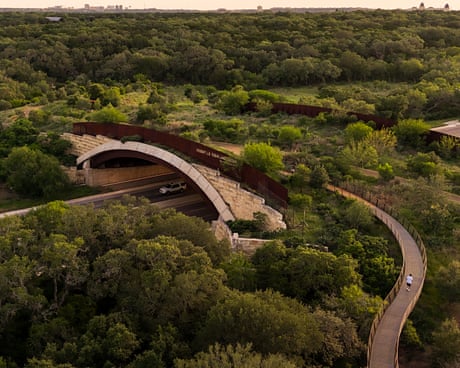
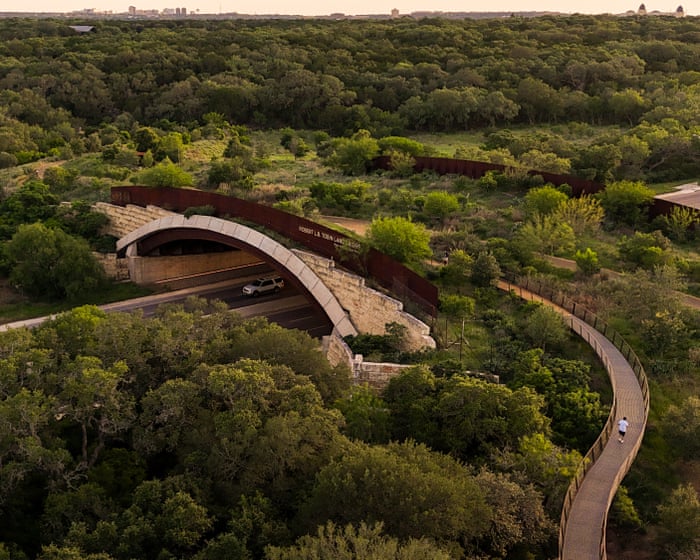
In pictures: a San Antonio land bridge designed for wildlife and people

Spanning a six-lane highway and located in a public park, this crossing is part of a larger restoration of endangered Texas prairie land

The Guardian receives support for visual climate coverage from the Outrider Foundation. The Guardian’s coverage is editorially independent

Continue reading...

© Photograph: Thalia Juarez/The Guardian

© Photograph: Thalia Juarez/The Guardian

© Photograph: Thalia Juarez/The Guardian

  •  

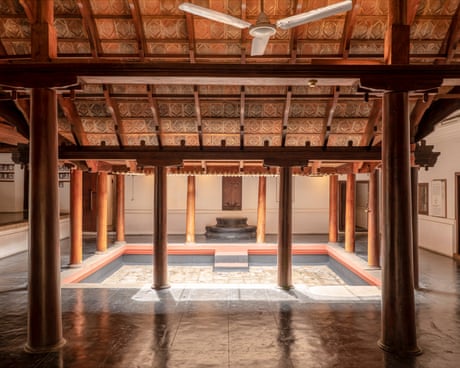
Childbirth room? It’s next to the period room … the astonishing Kerala homes designed for women’s bodies

The tharavad is a traditional style of housing designed for and run by women. Our writer went on a pilgrimage to find her own family’s – and uncovered a way of life fast disappearing

A chance conversation with a distant family member led me to Palayil, the name bestowed on my ancestral tharavad. The latter is the name given to a house designed around women. Ours had stood, in some form, since at least the 17th century. My great-grandmother, Palayil Sreedevi, was the last woman in my line to live in one. It was in the southern Indian village of Tholanur.

My great-grandmother belonged to the Nair community, a matrilineal caste with its origins in the state of Kerala. Historically, it was a martial nobility that served royal dynasties. For centuries, Nair boys left home at 12 to train as soldiers before being dispatched to serve the Travancore royal family. When men returned, they often slept in outhouses – satellites to the tharavad of women.

Continue reading...

© Photograph: Benny Kuriakose

© Photograph: Benny Kuriakose

© Photograph: Benny Kuriakose

  •  

Crowds turn out in Barcelona for pope blessing Sagrada Família’s final tower

As completion of 144-year basilica nears, questions swirl over resemblance of church to architect’s original plans

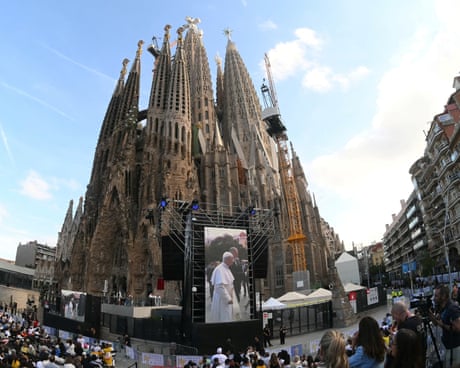
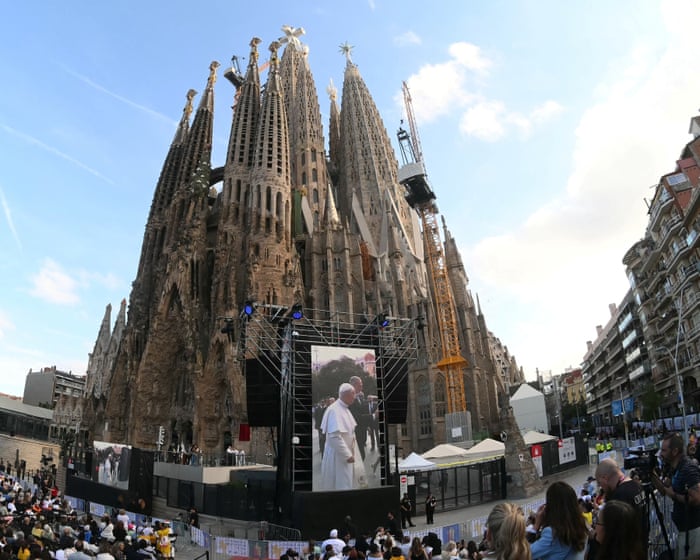
It has been a long wait but 144 years after work began, Pope Leo XIV has blessed the recently completed central tower of Antoni Gaudí’s Sagrada Família church in the presence of members of the Spanish royal family, the prime minister and hundreds of bishops.

With the completion of the Jesus Christ tower, the tallest of 18 in the temple, the basilica has reached its full height of 172.5 metres. It is now not only the world’s tallest church but Barcelona’s tallest building. It was consecrated in 2010 by Pope Benedict XVI.

Continue reading...

© Photograph: José Jordan/AFP/Getty Images

© Photograph: José Jordan/AFP/Getty Images

© Photograph: José Jordan/AFP/Getty Images

  •  

‘They are disturbing the dead’: reconstructing the site of the forgotten first genocide of the 20th century

At least 3,000 Herero and Nama people died in a German concentration camp at Shark Island, Namibia. A new forensic exhibition in Berlin is using digital technology to unearth how colonisers scarred a landscape, and a community

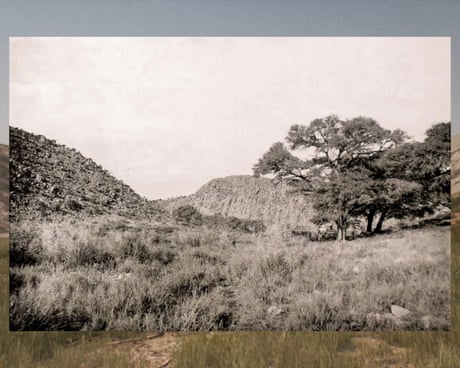
Visiting the Namibian port town of Lüderitz in late 2024, I came across a small museum run by descendants of German settlers. Alongside imperial German flags and memorabilia, it displayed artefacts of the Herero tribe that had been recovered from nearby Shark Island. What went unmentioned is that, from 1905 to 1907, Shark Island was the site of a concentration camp where Herero and Nama prisoners were subjected to forced labour, starvation and systematic abuse. At least 3,000 people are estimated to have died there.

Shark Island was used as a tourist campsite when I visited. Monuments on the island honoured Adolf Lüderitz and Heinrich Vogelsang, the German merchants who helped establish the colony known as German South West Africa. Today, it is widely reported that Namibia’s white minority – less than 2% of the population – owns roughly 70% of commercial farmland.

Continue reading...

© Photograph: Forensic Architecture/Forensis, 2025

© Photograph: Forensic Architecture/Forensis, 2025

© Photograph: Forensic Architecture/Forensis, 2025

  •  

Planning Commission Votes to Advance Trump’s Arch Project

The National Capital Planning Commission received nearly 1,700 comments about President Trump’s plans to build a 250-foot arch in the nation’s capital. Almost all opposed the idea.

© Doug Mills/The New York Times

President Trump with a model of his proposed arch at the White House last year.
  •  

Trump’s Arch Project to Face Questions and Criticism at Planning Meeting

The National Capital Planning Commission received nearly 1,700 comments about President Trump’s plans to build a 250-foot arch in the nation’s capital. Almost all opposed the idea.

© Doug Mills/The New York Times

President Trump with a model of his proposed arch at the White House last year.
  •  

‘Like a Klingon prison’: inside Barack Obama’s audacious, near-windowless, $850m presidential library

Towering over a low-income area of Chicago, and wrapped in a speech that’s hard to decipher, this controversial monolith feels like a menacing sci-fi HQ. Is it a monument – or a mausoleum?

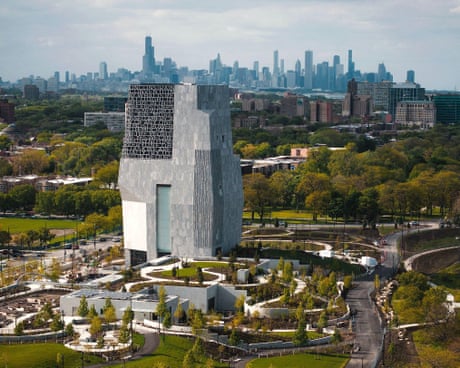
The Egyptians had their pyramids. The Anglo-Saxons had their barrows. And the Americans have their presidential libraries – the chief difference being that the leaders the US venerates are usually still alive at the opening.

Lacking a royal family or a state religion, the US presidency has swelled to fill the void, transforming over the decades into a national personality cult, complete with its own secular temples to these powerful men. The latest pharaonic edifice is about to open on Chicago’s south side, where it looms on the skyline as a towering totem to the 44th president, Barack Obama. He might have seemed humble in office, but in his post-presidential, Netflix-producing afterlife, Obama has erected the largest, costliest and most audacious complex of them all. Behold the $850m Obamalisk – or, as it sometimes feels morbidly like, the Obamausoleum.

Continue reading...

© Photograph: Sipa US/Alamy Stock Photo/Alamy Live News.

© Photograph: Sipa US/Alamy Stock Photo/Alamy Live News.

© Photograph: Sipa US/Alamy Stock Photo/Alamy Live News.

  •  

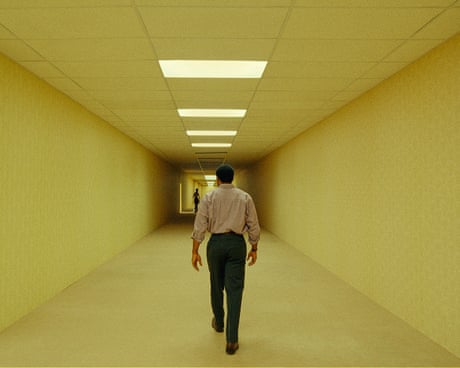
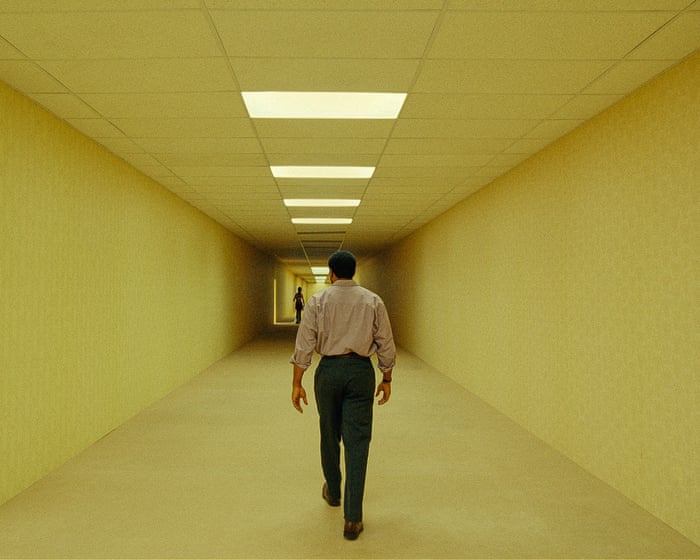
‘I found a place’: how Backrooms captures the horror of sinister architecture

Buzzy new thriller Backrooms takes us on an unknowable journey through liminal spaces, the latest film to turn a building into a horror villain

When architect turned furniture store owner Clark (Chiwetel Ejiofor) finds a portal to a mysterious realm of “backrooms” in the basement of his showroom, he struggles to explain it to his therapist, Dr Mary Kline (Renate Reinsve).

“I found a place …”

Continue reading...

© Photograph: A24/AP

© Photograph: A24/AP

© Photograph: A24/AP

  •  

Trump Tower in Georgia to be built on land part-owned by son of US sanctions-hit leader

Links between Trump Organization and Ivanishvili family for Tbilisi skyscraper raise new conflict of interest concerns

A Trump Tower planned for the Georgian capital, Tbilisi, is to be built on land currently part-owned by the son of the US-sanctioned leader of the country, according to official records.

The proposed skyscraper, a joint venture between a local consortium and the Trump Organization, which is managed by the US president’s sons, Donald Trump Jr and Eric Trump, will be on a plot whose current registered owner is the International Charity Fund Cartu.

Continue reading...

© Illustration: Deezen

© Illustration: Deezen

© Illustration: Deezen

  •  

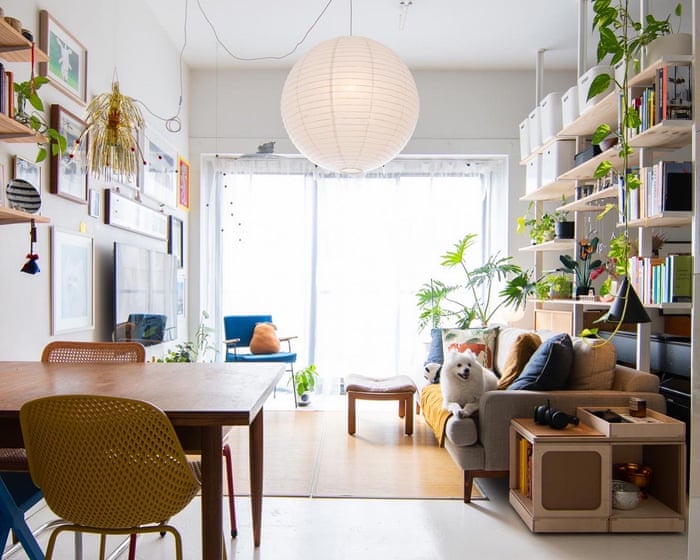
Open plan is not the answer: design professionals on the dos and don’ts of small space living

From furniture with ‘skinny legs’ to making sure spaces work for multiple purposes, three experts who live in tiny homes share their best lessons

In 2010 Colin Chee picked up the keys to his 37 square metre off-the-plan apartment in Melbourne’s city centre. “It was only then that I realised how shit it was.”

With no design experience and a limited budget, his quest to find inspiration eventually led to the birth of Never Too Small, a YouTube channel showcasing clever designs for small spaces from around the world. Launched in 2017, it now has more than 3 million subscribers.

Continue reading...

© Photograph: Colin Chee

© Photograph: Colin Chee

© Photograph: Colin Chee

  •  

Queer art, bowler hats and an Annie Hall script: inside Diane Keaton’s archive as treasures go on sale

New exhibition opens the ‘file cabinet’ of the late actor’s mind, spotlighting self-made collages and iconic men’s suits

On a recent Friday afternoon, I stood before “the wall”: a sprawling collage created by Diane Keaton. The late actor pinned objects of fascination to this collage – including snaps of herself in Parisian photo booths, a fake ear with acupuncture points, mugshots of Victorian women, bingo cards, a menu from a defunct California gambling den and a photograph she took of her friend Carol Kane – over many decades.

The piece is one of Keaton’s many personal effects on view at Bonhams in West Hollywood before showing in New York later this month. Anna Hicks, the head of private and iconic collections at the auction house, tells me that this sizable piece, covering nearly an entire wall, constitutes a mere slice of the 8x30ft collage Keaton kept inside her Sullivan Canyon home. Bonhams specialists found even more ephemera, such as signed photos of her The Godfather co-star Al Pacino, tucked underneath this towering assemblage. “I think it tells you a lot about her,” Hicks says. “All her thoughts and different things that she found important or interesting, she just pinned up here.”

Continue reading...

© Photograph: Ruvén Afanador/Courtesy of Bonhams

© Photograph: Ruvén Afanador/Courtesy of Bonhams

© Photograph: Ruvén Afanador/Courtesy of Bonhams

  •  
❌