❌

Lese-Ansicht

‘I left shellshocked’: writers on their scariest non-horror movies

For Halloween, Guardian writers have picked the most efficiently terrifying films outside of the horror genre from How to Have Sex to The Hunchback of Notre Dame

Minor spoilers ahead

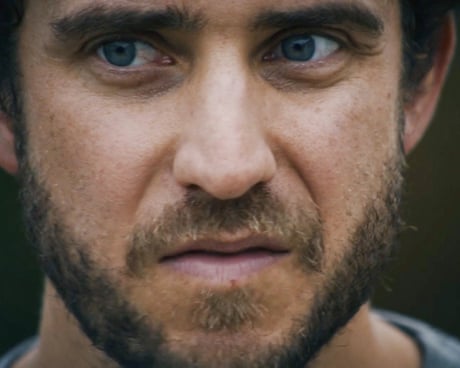
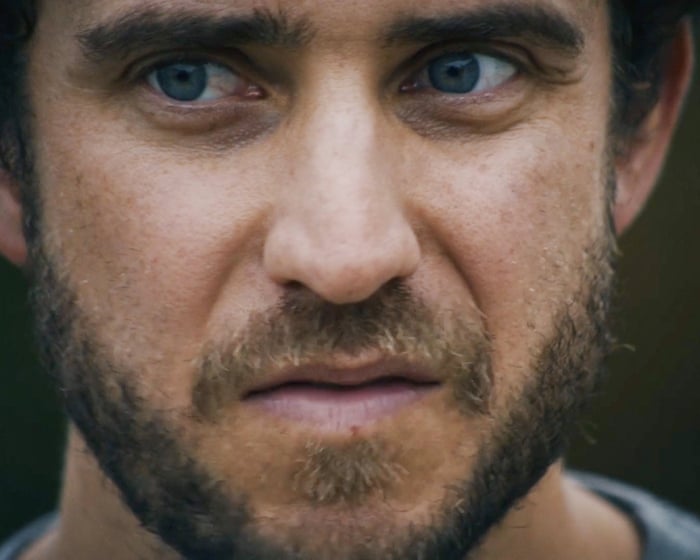
Hiding in plain sight throughout Lee Chang-dong’s deliciously enigmatic Burning, in which a spirited young woman (Jeon Jong-seo) disappears, and a wealthy playboy (Steven Yeun) gives serial killer vibes, is a disaffected male rage. That’s perhaps the most commonplace horror of our times, whether on the internet or politics, and you feel the tremors of it steadily breaking the surface in Yoo Ah-in’s performance. He plays Jong-su, an aspiring writer, quietly frustrated with his lot in life. Jong-su works odd jobs and tends to his incarcerated father’s dilapidated farm, growing more desperate to grasp some sense of control over the world around him, which is where the scary part comes in. Lee is the master dramatist who with Burning tilts violently into thriller territory, navigating elements from Taxi Driver, The Vanishing and Michael Haneke’s Caché, using the language of horror movies to conjure up a creeping anxiety and dread that erupts into pure existential fear. Radheyan Simonpillai

Continue reading...

© Photograph: Landmark Media/Alamy

© Photograph: Landmark Media/Alamy

© Photograph: Landmark Media/Alamy

  •  

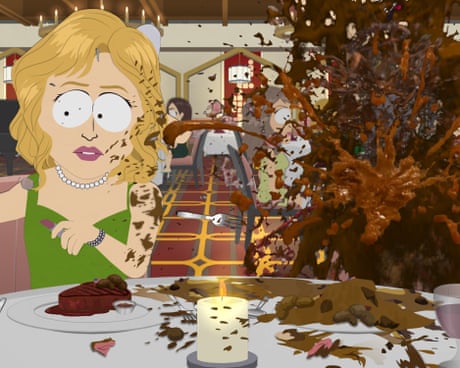
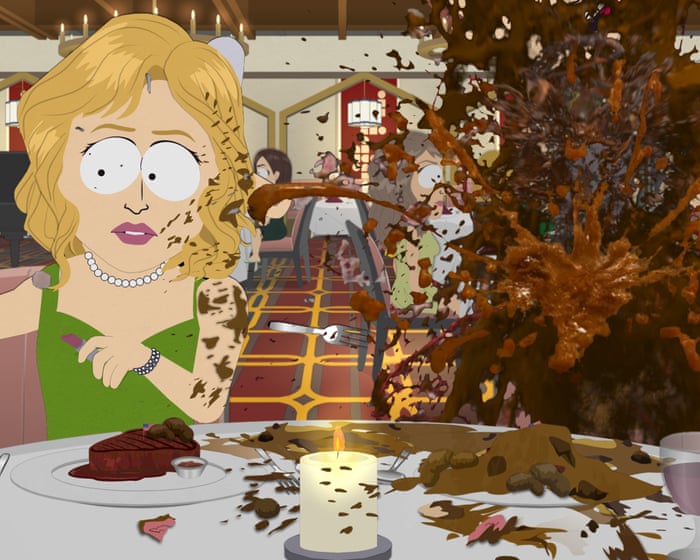
South Park turns to America’s beef shortage – and explodes in diarrhea

The 29th season has begun to slightly spin its wheels, but this poo-splattered episode suggests an imminent story arc: the release of Grand Theft Auto VI

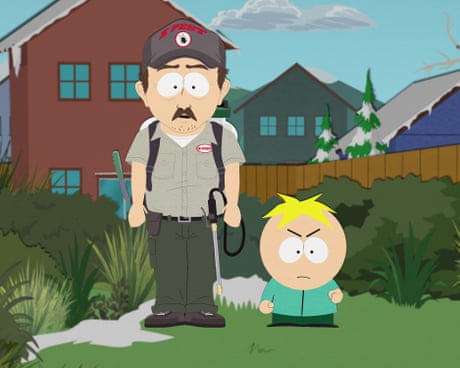
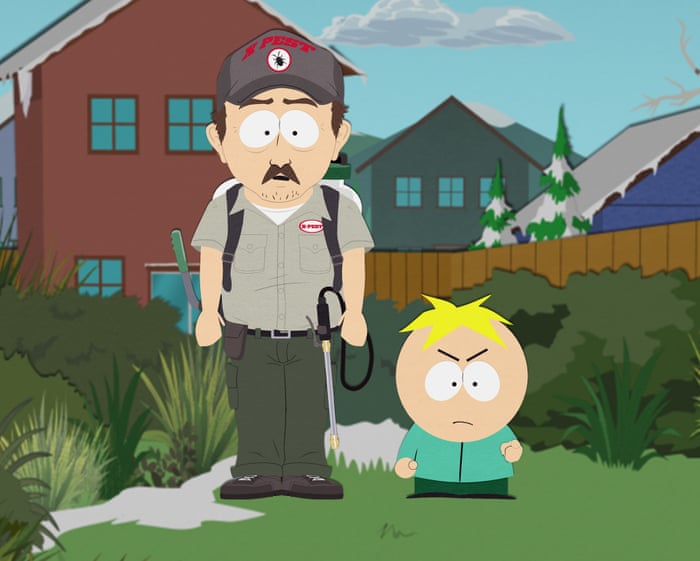
Are record beef shortages simply not that rich a topic for South Park to riff off? The show’s 29th season had its first outright middling episode this week with a zigzaggy outing that gestured vaguely toward the performative eating of particular foods, nodded slightly at a father-son story development, and wound it all up by repeating and amplifying a funny season-long running gag that increasingly seems like it will actually serve as a makeshift story arc.

But let’s jump back to the beginning, perhaps the most laugh-out-loud moment of the episode: Cartman in a fugue of delight over the impending meal of sloppy joes at the school cafeteria, to which he forms a tribute in the form of a sloppy-joe-themed version of Gary Glitter’s Rock and Roll Part Two – a music clearance reaffirming that Trey Parker and Matt Stone don’t care if a song choice might make people tut-tut (because the singer is a serial sex offender) or just annoyed (because that song sucks). Cartman’s infectious glee is short-lived, however, when he’s informed that the lunch special for the day isn’t a sloppy joe after all, or anything beef-related, but cuy – Guinea Pig on a stick.

Continue reading...

© Photograph: Paramount

© Photograph: Paramount

© Photograph: Paramount

  •  

In You Can See Everything, it’s Elizabeth Holmes’s partner who makes for 2026’s timeliest villain

Nathan Fielder’s conversation-igniting film on the Theranos founder finds its darkest moments in her deceptive, Charlie Kirk-loving fiance Billy Evans

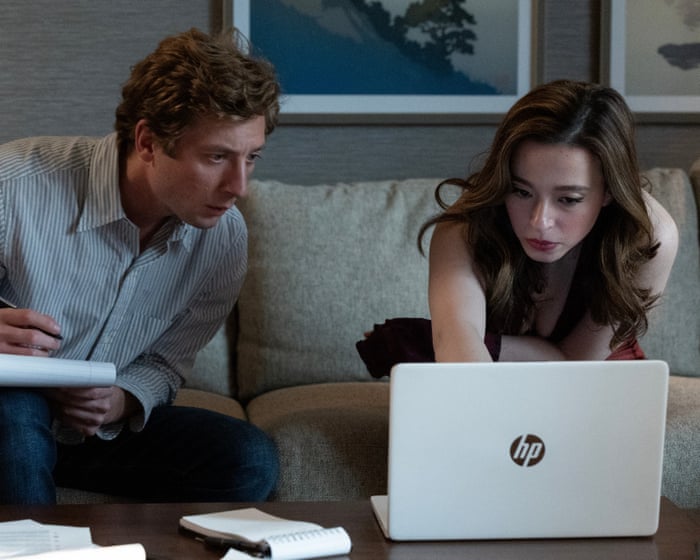
It’s likely that most audiences going into the surprise documentary smash You Can See Everything are familiar with either its nominal subject (and literal poster gal with an intense stare) Elizabeth Holmes, the tech founder serving a prison sentence for defrauding investors; or the film’s on-camera co-director Nathan Fielder. Holmes, as the movie points out, was all over the media as her company Theranos was hyped to the moon and then spectacularly imploded; she was also played by Amanda Seyfried in the well-regarded Hulu miniseries The Dropout. Fielder, meanwhile, may not have graced as many magazine covers, but is similarly familiar to prestige-TV acolytes from his comedy-reality series Nathan for You and its successor, the more reality-bending series The Rehearsal. A third figure not included in the film’s ad campaign becomes a key part of the film in the second half, and will also be familiar to many viewers.

This should leave Billy Evans as the odd man out. Evans, Elizabeth Holmes’s partner (she has said they’re not legally married, though they did get engaged in 2018, have two children and seem to treat each other as spouses), is a not-particularly-famous guy whose screen time competes with the other three well-known faces in what is essentially a four-character drama. But while Evans isn’t boxed out in terms of screen time or memorability, he does remain the odd man out in the sense that in all the discussion You Can See Everything has prompted about manipulation, shifting sympathies and who can or cannot be trusted, everyone seems to agree on one crucial point: Billy Evans sucks.

Continue reading...

© Photograph: A24

© Photograph: A24

© Photograph: A24

  •  

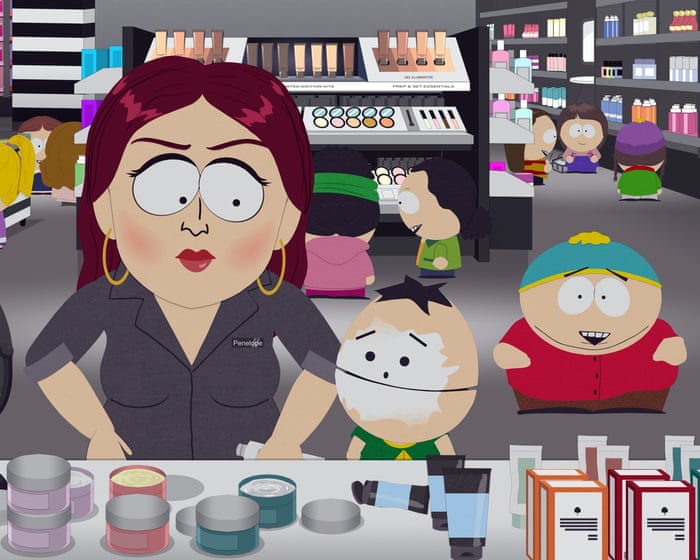
South Park takes on looksmaxxing, aura-farming and influencer nonsense with grotesque glee

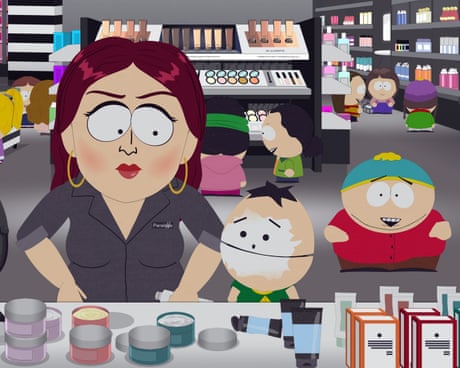
In the third episode of the latest season, the boys head into Sephora and eventually the Backrooms in a story that makes fun of app-mutated self-care

Trey Parker and Matt Stone have always been pretty upfront about how South Park, like all animated sitcoms from the past 35 years, lives in the shadow of The Simpsons. There are plenty of ways that The Simpsons, even in its more uneven recent seasons, still outshines South Park: greater depth of ensemble, stronger emotional moments, even in the sheer number of episodes.

Something that South Park often does better, though, is react to contemporary social trends. Kyle, Stan, Cartman, Kenny and the rest are more or less the same age as Bart (and have been for decades); but The Simpsons has never been as adept at riffing on trends, tech and social issues as South Park, which has always been more immediate and responsive. Perhaps this is why it doesn’t feel like a betrayal to see the boys dealing with, say, looksmaxxing and aura farming, which is exactly what the third episode of South Park’s 29th season addresses.

South Park is streaming on Paramount+ in the US, UK and Australia.

Continue reading...

© Photograph: Paramount

© Photograph: Paramount

© Photograph: Paramount

  •  

The Social Reckoning isn’t as angry or as potent as a Facebook drama should be

Aaron Sorkin’s attempt to return to the success of The Social Network is a strangely dated and incomplete look at a world that needs a sharper eye

In retrospect, David Fincher’s 2010 film The Social Network was a landmark for a quiet, even counterintuitive reason. Before the film was released, some questioned whether Aaron Sorkin, a writer not exactly known for his mastery of, nevermind obsession with, the technical sphere, was the right man to tell the origin story of Facebook. And while Sorkin may well have converted Mark Zuckerberg into terms he could better understand – namely, a motormouthed wiseass who deep down wants to impress a smart, serious-minded girl – he and Fincher also made one of the first internet-centric movies to treat online life as a natural extension of IRL dynamics, rather than the otherworldly tech portal seen in so many 90s internet movies.

Granted, that’s the whole deal with Facebook: its viral spread of social networking, something so simple and addictive that aunts, grandpas and co-workers everywhere could understand it. Yet understanding its simultaneous extension and distortion of the real world wasn’t a given; four years later, for example, 2014’s Men, Women and Children was widely derided for taking an alarmist approach to the internet as a haven for adults seeking an affair, teenagers nursing porn addictions and fame-hungry strivers of all ages. The Social Network, on the other hand, is remarkably nonjudgmental about the basic mechanics of Facebook, rooting its nascent flaws in the human weaknesses that birthed it. In retrospect, the movie only feels outdated to the extent that it underestimates Zuckerberg’s grasping for power and the potential for grim carelessness that his online kingdom was built on.

Continue reading...

© Photograph: Leah Gallo/Sony Pictures/AP

© Photograph: Leah Gallo/Sony Pictures/AP

© Photograph: Leah Gallo/Sony Pictures/AP

  •  

South Park has ​​AI datacentres​, sentient penises ​and a billionaire problem – in more ways than one

​M​att Parker and Trey Stone t​ake aim at the obscenely wealthy ​in the latest episode – but it feels harder now to forget how wealthy they are

A little over a year ago, South Park creators Trey Parker and Matt Stone renewed their deal with Paramount after a contentious negotiation that held up production of the 2025 season.

That $1.5bn agreement raised questions about whether Paramount, newly owned by David Ellison, would really offer the creators creative freedom – or was the billionaire class solidifying its hold over a comedy series as cover to meddle in other divisions, like CBS News?

Sign up for a weekly email featuring our best reads

Continue reading...

© Photograph: Paramount

© Photograph: Paramount

© Photograph: Paramount

  •  

Godzilla Minus Zero review – spectacular Japanese action continues franchise’s winning streak

New York film festival: The follow-up to 2023’s Oscar-winning Godzilla Minus One dazzles with smart social commentary and jaw-dropping effects

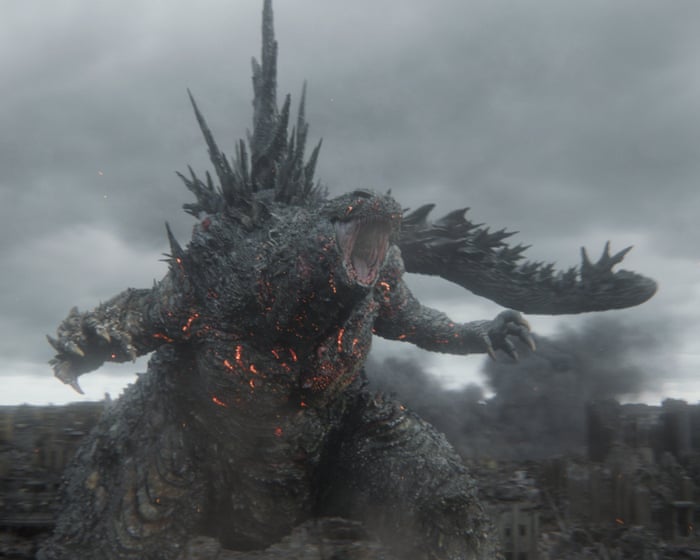
Even by the standards of older movie stars catching a major second wind later in their careers, Godzilla pulled off an impressive reclamation of the spotlight three years ago. Godzilla Minus One, the most recent reboot featuring the 70-year-old kaiju – the version(s) from his native Japan, mind, not the Americanized one concurrently starring in a series of Warner Bros blockbusters opposite King Kong – wasn’t just another monster-movie success. It fully crossed over, becoming the highest-grossing Japanese-language movie ever released in North America, and won an Academy Award to boot for its terrific visual effects. Now. Japanese Godzilla characters are mainstream enough to pop up in Happy Meals, and the Toho-made sequel Godzilla Minus Zero is world-premiering at the New York film festival. Arguably the artsiest, brainiest of the major fall fests is playing unexpected host to a truly spectacular monster battle royale, packaged alongside some of the same thoughtful historical context that informed the previous film.

Writer, director and VFX maestro Takashi Yamazaki returns for the sequel, bringing his lead characters back with him. In the previous film, former military pilot Kōichi Shikishima (Ryunosuke Kamiki) used his experience with Godzilla to overcome his guilt and shame over failing to complete a pointless kamikaze mission toward the end of the second world war – the devastation of which brought Japan back to “zero”, hence a newly emergent Godzilla bringing the country to “minus one”. Minus Zero catches up with Kōichi, his now-wife Noriko (Minami Hamabe), and their adopted daughter Akiko (Sae Nagatani) two years later, in 1949 (although Akiko somehow seems more or less the same age). Another monster threat looms over post-war Japan in the form of a dragon-like creature dubbed Ghidorah, whose menace will be familiar to kaiju fans. (Though he isn’t seen directly in trailers, this isn’t a spoiler; he’s featured from the very first scene of the film.)

Continue reading...

© Photograph: Courtesy of GKids

© Photograph: Courtesy of GKids

© Photograph: Courtesy of GKids

  •  

Price hikes, ads and lower quality: has ‘streamflation’ ruined the TV experience?

US consumers are starting to opt out of the streaming world as several services raise prices without offering many perks

It may not be quite as politically buzzy as the price of gasoline or eggs, but another household expense is going up for millions of people. Disney has brought the price-gouging experience of its theme park home again by raising the prices of most iterations and bundles of its Disney+ and Hulu streaming services. Whether you pay to watch them with or without ads, separately or bundled together, you’re probably getting a price hike of a couple of bucks per month. The few bundles that will remain the same price feature ad-supported versions of both services (plus ESPN). Don’t worry, though; paying extra to avoid the ad-supported versions of those services won’t mean that you’re missing out on some cross-promotional opportunities. Disney’s terms of service note that they reserve the right to insert ads before and after programming on whatever subscription tier they want, regardless of what you’re paying for. True magic!

This particular magic isn’t reserved for Disney, though. Price hikes among streaming services have become so common that The Verge has a dedicated page aggregating the news of them, which tends to arrive every few months. Apple, apparently high on Emmy fumes, has raised its prices four times in four years, keeping pace with many of its competitors despite a vastly smaller dedicated catalog. Depending on which version of Peacock subscribers use, they’ve seen their bills padded by five or six dollars a month just since the summer of 2025, including another increase last month. Netflix, meanwhile, hasn’t gone up since March 2026. That’s not a reprieve; that’s a sign another hike must be around the corner.

Continue reading...

© Photograph: Disney/PA

© Photograph: Disney/PA

© Photograph: Disney/PA

  •  

South Park – I mean, South America – is back, with no Donald Trump in sight (yet)

After adopting the president’s fondness for renaming things ‘America’, the season 29 premiere sees Trey Parker and Matt Stone use e-bikes to critique the ruination of the US

South Park has been renamed South America. That was the main news ahead of Trey Parker and Matt Stone’s animated series returning for its 29th season, which seemed like it could be a one-off promotional gag – or another Trump-related storyline after last year’s scorching imitation of the US president’s “renaming” of the Gulf of Mexico and Lake Ontario.

It turns out that neither is exactly the case, at least not so far. The season premiere doesn’t see the South Park sign scribbled over by the president’s dumb-guy sharpie pen. But it’s not just a passing sight gag, either. The six-episode season opens with the renaming already a fait accompli, not even commented on.

Continue reading...

© Photograph: Paramount

© Photograph: Paramount

© Photograph: Paramount

  •  

Resident Evil review – Zach Cregger’s rebooted action horror is a wild rollercoaster ride

The Weapons director delivers a seat-edge thriller with a standout lead performance from Austin Abrams as an everyman navigating chaos

Typically horror fans react to blatant on-screen stupidity with vocal derision. Don’t go in there! Girl, get out of the house! Guys, ignore that distress signal! But genre aficionados may find themselves falling a little bit in love with Bryan (Austin Abrams), the hapless de facto hero of the new horror film Resident Evil. It’s not that Bryan is traditionally hunky, or even a caricatured version of a square-jawed warrior, like Bruce Campbell in his later Evil Dead outings. But Abrams is in possession of a Campbell-ish charm, even in the face of his character’s repeated blundering, as well as an everyman relatability that makes this wild carnival-ride movie play a little closer to the ground.

Bryan is a courier – a glorified Postmates driver, in his own estimation – who postpones the end of his shift to take one last night-time run, driving an important item from one hospital to another in a snowstorm without the proper tires or four-wheel drive. After all, the distance and urgency means double pay. When he hits a mysterious woman who emerges suddenly on to a slick road, he’s drawn into a hellish outbreak that will look familiar to fans of the Resident Evil video game series (or maybe the previous six-movie Milla Jovovich franchise, which apparently drifted afield from the games’ storylines).

Continue reading...

© Photograph: Dušan Martinček/Dušan Martinček/2026 CTMG, Inc. All Rights Reserved.

© Photograph: Dušan Martinček/Dušan Martinček/2026 CTMG, Inc. All Rights Reserved.

© Photograph: Dušan Martinček/Dušan Martinček/2026 CTMG, Inc. All Rights Reserved.

  •  

Dolly Parton was a rare singer who proved herself to be an electric movie star

From 9 to 5 to Steel Magnolias to Joyful Noise, the late star had real big screen presence that was impossible to imitate

There are an awful lot of singers who take a shot at movie stardom. Most of them start out playing singing ingenues and trail off a few movies later, after their limitations become clear, the novelty wears off or their interests wander back to music. Dolly Parton, who died on 25 August at the age of 80, had the barest outline of such a film career: She had a big hit out of the gate with 9 to 5, endured a sizable flop about a decade later with 1992’s Straight Talk signaling the end of her movie phase, and had a couple of minor postscripts in the years that followed – more cameos-as-herself than fully fleshed-out roles. (Presumably she was busy releasing over a dozen albums, making countless TV appearances, sending books to children, and funding vaccine research, among other endeavors.) Yet within a modest filmography consisting of just half a dozen leading roles in theatrical releases (and more than one widely regarded as a minor disaster), she showed more genuine screen presence than countless other multihyphenates.

Maybe it helped that Parton introduced herself on screen in a non-musical role. Well, almost: 9 to 5, a 1980 workplace comedy where she starred alongside Lily Tomlin and Jane Fonda, did yield a number one charting theme song, the Oscar-nominated tune of the same name. (The titular theme from Fame won, but which one still gets played on the radio more often?) The movie itself, where Parton plays an office secretary whose piggish boss (Dabney Coleman) lusts after her and whose co-workers (initially including Tomlin and Fonda) suspect, incorrectly, that she has given in to his desires, is a far more relatable comedy, sort of a neo-screwball-meets-women’s-picture with an additional early-‘80s feminist spin.

Continue reading...

© Photograph: THA/Shutterstock

© Photograph: THA/Shutterstock

© Photograph: THA/Shutterstock

  •  

Hollywood continues to fail child stars and Hayden Panettiere is the latest casualty | Jesse Hassenger

The untimely death of the Heroes and Scream star was a tragic ending to a life filled with darkness in an industry that still lets its younger stars down

For a little while, it looked as if maybe former child actors had shed the stigma, long understandably held, that Hollywood success at a young age would lead to tragedy later in life. Child stars from the 1970s and 1980s seemed particularly mistreated and/or self-destructive, whether born into dysfunctional Hollywood families, like Tatum O’Neal, or the result of more sui generis success, like Brad Renfro, River Phoenix, or Corey Haim. But as these cases became more notorious, they seemed to act as cautionary tales for a generation of stars that seemed – broadly speaking – to be receiving better guidance, whether from family, friends, or themselves.

Look at the astonishingly well-adjusted core cast of Harry Potter kids, who worked for a full decade, from their pre-teen years to young adulthood: among Daniel Radcliffe, Emma Watson, and Rupert Grint, there are more awards, charity work and seemingly happy relationships than genuine scandals. (The biggest malfeasance of anyone in the trio? Some mild tax problems for Grint.) Other awards-show fixtures like Natalie Portman, Christian Bale, and Kieran Culkin have come out the other side of child stardom with terrific careers and strong reputations closer to the Jodie Foster model. Even Lindsay Lohan, whose behavior in the 2000s and into the 2010s seemed to signal impending tragedy, seems to be doing well: sober, happily married, and back on the big screen last year with the hit sequel Freakier Friday. In terms of more recent young stars, a pop singer like Olivia Rodrigo appears to have much more autonomy than Britney Spears did, even in her early-2000s heyday.

Continue reading...

© Photograph: TOUCHSTONE/Allstar

© Photograph: TOUCHSTONE/Allstar

© Photograph: TOUCHSTONE/Allstar

  •  

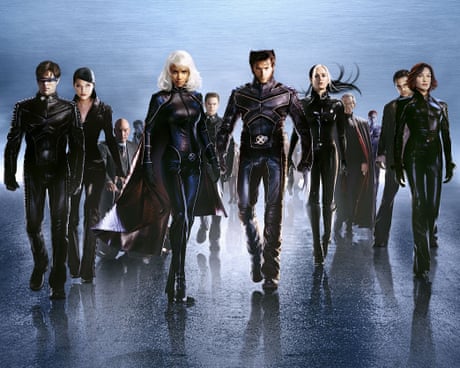
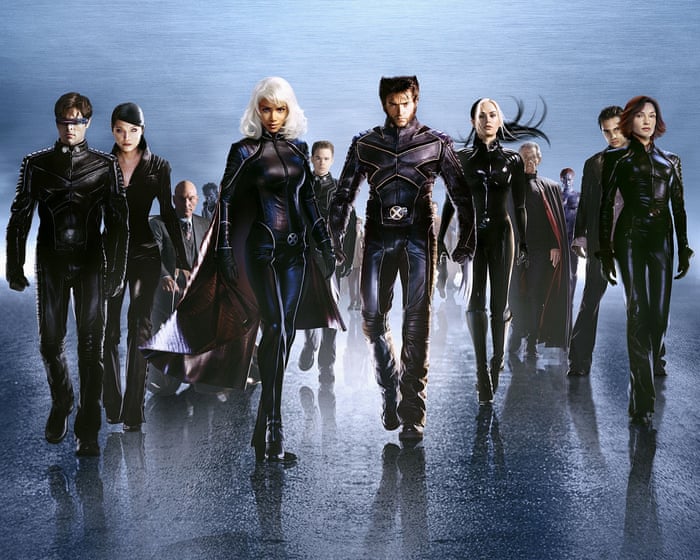
Mutants assemble: what does the future hold for the X-Men?

After the introduction of a key character in Spider-Man: Brand New Day, Marvel is bringing back one of its most beloved franchises – but the return comes at a precarious time

Later-period Marvel movies have resorted to more fantastical plot devices such as parallel universes and time travel in an attempt to raise stakes in an increasingly complicated, superhero-populated cinematic universe. After Spider-Man: Brand New Day, a Marvel/Sony co-production that’s making a run at biggest-movie-of-all-time status, it feels as if those devices are making incursions into the real world and messing with the sacred timeline of superhero movies. Brand New Day has spurred speculation about the upcoming MCU reboot of the X-Men, seeded with the introduction of powerful telepath mutant Jean Grey (Sadie Sink). It’s like a reversed version of the early-century superhero boom, when the first X-Men movie became an unexpected smash in the summer of 2000, priming audiences for the record-shattering debut of the first Spider-Man two years later.

The only teasing of Spider-Man in the 2000 X-Men movie hid in the DVD’s blooper reel, featuring an outtake where someone (not Tobey Maguire) runs into the frame in full Spidey regalia, as a prank. At the time, there was no Marvel Studios making in-house movies; the company’s superheroes were at the mercy of whatever studio happened to license them. Fox had the X-Men, and parlayed them into a 20-year, 13-movie franchise. Meanwhile, Sony had Spider-Man, and made five of those (three with Maguire, two with Andrew Garfield) before striking a deal for the ascendant Marvel Studios to produce further installments within their MCU, while Sony retains the actual movie rights.

Continue reading...

© Photograph: Marvel/Allstar

© Photograph: Marvel/Allstar

© Photograph: Marvel/Allstar

  •  

Web of billions: how Spider-Man became the most heroic franchise in Hollywood

Tom Holland’s fourth outing as Peter Parker broke box office records but how did the web-slinger avoid growing superhero fatigue?

A year ago, the superhero-industrial complex looked like it was on the wane. All three of Marvel’s big movies for 2025 underperformed to some degree or another, outgrossed by DC’s newest reboot of Superman – which itself made less than any number of previous-regime DC movies, and was followed up by this summer’s Supergirl, a costly bomb. It looked as if the age of heroes might be coming to an end, and only seemed fitting that the next big Avengers movie was subtitled Doomsday (and had resigned itself to sharing a release date with the Imax-grabbing release of a third Dune movie).

But look out, as the song goes: here comes Spider-Man.

Continue reading...

© Photograph: Sony Pictures/AP

© Photograph: Sony Pictures/AP

© Photograph: Sony Pictures/AP

  •  

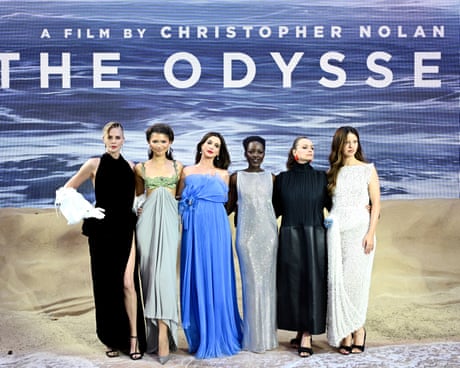
‘A towering piece of monoculture’: how The Odyssey discourse has dominated this summer

Christopher Nolan’s smash hit epic has continued to excite and enrage everyone from rightwingers to academics, an old-fashioned throwback to a uniting big-screen event

If a high-profile academic is reviewing a movie for the London Review of Books, that movie in question must be making some kind of mark on some kind of culture. And if people are actually reading a movie review in the London Review of Books, and writing thinkpieces in disagreement or favor of said movie or its review, that movie may actually be a cultural phenomenon.

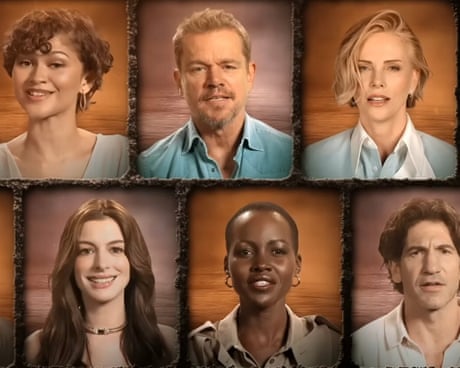
Normally, volume of discourse about a movie should not be mistaken for a sign that people are actually seeing it. Sometimes online factions just have a bored fixation not shared by the rest of the world. But Christopher Nolan’s The Odyssey has some major receipts at the box office, too: the movie has already outgrossed Oppenheimer, Nolan’s last movie, itself a shockingly popular movie for adults. Though The Odyssey’s audience skewed male in its first weekend, by its second its gender split was closer to 50/50, suggesting reach beyond the stereotypically male-driven action-adventures. It’s also reaching out to older moviegoers, an endangered demographic in a summer where under-25s have driven the success of Obsession and Backrooms. Three-quarters of The Odyssey’s audience has been over 25, while memes inspired by the movie (most popular: Matt Damon’s anguished face portraying Odysseus listening to the sirens’ song and Robert Pattinson’s slimy suitor demanding that “someone get these BEGGARS out of here!”) have indicated that younger people are paying attention too.

Continue reading...

© Photograph: Landmark Media/Alamy

© Photograph: Landmark Media/Alamy

© Photograph: Landmark Media/Alamy
  •  

Just when you thought it was safe … the shark movie is back for more

Shark Week arrives in an overstuffed period for the film genre even if nothing will ever rival the greatest of them all

Tracy Jordan, Tracy Morgan’s character on 30 Rock, once advised a friend to live every week like it’s Shark Week. In 2026, Hollywood has finally taken these sage words to heart.

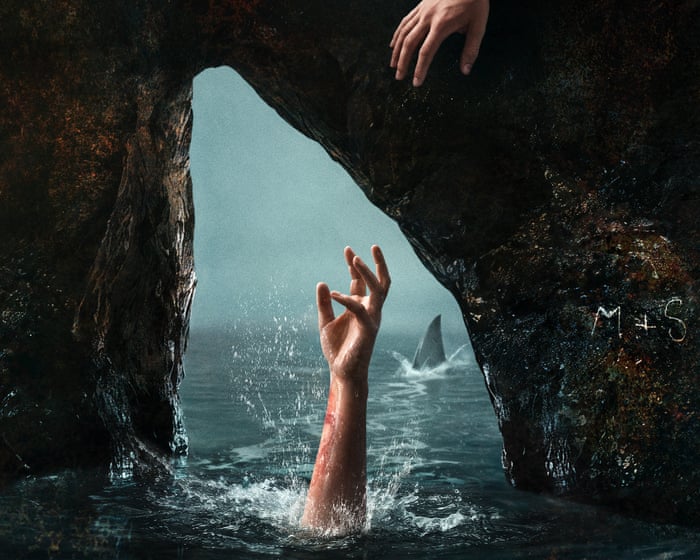
Though Discovery Channel is only observing its annual Shark Week of shark-themed programming for the customary seven days, shark movies have been enjoying a yearlong renaissance – in terms of volume, if not necessarily quality. Two shark thrillers – The Devil’s Mouth on Prime Video and Above & Below as a paid VOD rental – are releasing this week, presumably to complement nonfictional Shark Week programming, but they’re far from the only fish in the sea. Earlier this month, Clint Eastwood’s daughter starred in The Bay, another VOD title. In June, there was Chum, starring Alice Eve; in May, Deep Water, Renny Harlin’s return to the subgenre following his classic Deep Blue Sea. Before that, Thrash was a Netflix hit. That’s half a dozen shark movies so far this year. It’s a wonder no one has arranged a 10th-anniversary re-release of The Shallows.

Continue reading...

© Photograph: Amazon

© Photograph: Amazon

© Photograph: Amazon

  •  

Go woke, get rich: why rightwing hate campaigns don’t affect the box office

After a bigoted online backlash, led by Elon Musk, The Odyssey achieved a monster weekend – the latest example of a targeted takedown that didn’t work

Elon Musk was a man on a mission. Yes, he’s supposedly intent on colonizing Mars, or the moon, or maybe, if you give him some more time to move the goalposts, just a really, really tall mountain, but this spring, a more pressing task presented itself, a sequel to his early-2026 mission to post white supremacist rhetoric: take down Christopher Nolan’s The Odyssey, which he decided was the latest of “woke Hollywood’s” attempts to spread racial animus (towards white people, of course) and win Oscars while doing so. Nolan, Musk explained to the trade publication Variety, was “pissing on Homer’s grave”, referring to the author of the film’s epic-poem source material.

As the final phases of the movie’s promotional campaign ramped up, Musk posted dozens of times on his self-owned social media platform with grievances related to the casting of Lupita Nyong’o (a Black woman) and Elliot Page (a trans man) in the movie, often spreading false statements about this casting existing to satisfy new Oscar requirements. (As detailed here, those new Oscar diversity requirements are extremely flexible, and often satisfied by studio-wide programs that have nothing to do with casting. The Odyssey did not need to hire Oscar winner Nyong’o to be eligible for awards.) Musk may be a divisive-at-best figure who large swaths of the population do not take seriously, but he commands enough attention and adulation from a vocal minority that plenty of online accounts were soon parroting his willful misunderstanding of Hollywood and The Odyssey. Many of them abruptly and hilariously zeroed in on the 2004 movie Troy – which the right flank of social media suddenly decided was a beloved masterpiece, rather than its own, far greater distortion of Homer’s epic poem The Iliad.

Continue reading...

© Photograph: Gareth Cattermole/Getty Images

© Photograph: Gareth Cattermole/Getty Images

© Photograph: Gareth Cattermole/Getty Images

  •  

Avatar Aang: The Last Airbender review – engaging TV-to-movie adventure

A feature-length continuation of the much-loved animated series provides enough for fans as well as the uninitiated

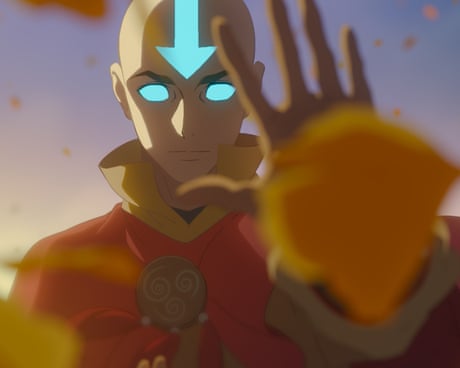
Avatar just can’t catch a break at the movies. Not the blue-cat-people franchise that makes at least a billion dollars each time, mind you – though that mega-successful series is part of what vexes big-screen versions of Avatar: The Last Airbender, a Nickelodeon animated series that predates the release of the similar-named, different-premised James Cameron film. Following the anime-inspired, fan-beloved show’s three-season run on cable, the material was adapted into a live-action feature, The Last Airbender, by no less than M Night Shyamalan, released six months after Cameron’s megahit. The Last Airbender was a decent-sized hit, but loathed by fans and critics alike – even today’s crop of Shyamalan boosters can’t find much positive to say about it – and failed to kickstart the hoped-for live-action film series. (Netflix has since made an unrelated live-action adaptation as a TV show.)

More recently, Paramount announced that an animated sequel film, Avatar Aang: The Last Airbender, following the characters years after the events of the series, would arrive in movie theaters – only to delay the release and eventually backtrack its theatrical status, turning it into a direct-to-streaming movie. The film was then leaked online, well ahead of its debut. Now it’s getting a token two-city theatrical release, simultaneously with its debut on Paramount+, to make sure it qualifies for this year’s Oscars. Given the franchise’s cinematic luck so far, the film-makers may not need to clear shelf space quite yet.

Continue reading...

© Photograph: Paramount+

© Photograph: Paramount+

© Photograph: Paramount+

  •  

Acting the fool: why have Hollywood press tours become so gimmicky?

From playing would you rather to ranking snacks, A-listers navigating the promo trail are now forced on a set schedule of silliness

This summer, we’ve been blessed with new movies from the legendary director Steven Spielberg and one of his biggest and most beloved successors, Christopher Nolan. In both cases, the movies have been heavily sold on the directors’ names, and, befitting two of the most famous film-makers to ever do it, Spielberg and Nolan have been making the press rounds. This has meant a wealth of interviews and insights – a bonus feature unfolding alongside the selling of the actual movies that will delight movie nerds the world over.

So at first, when I saw a 60-second video of Christopher Nolan answering a barrage of yes-or-no questions come across my social-media feed, of course I stopped and watched as a famously buttoned-up (if obviously still passionate) film-maker attempted some spontaneity with no danger of follow-up questions (or obligation to follow-up answers). From this, there is admittedly plenty of information to be gleaned: he has no designs on retiring, Tarantino-style. He will not make another superhero movie or a TV show. He’s fine with people watching movies on their phones or laptops. He will neither confirm nor deny that Interstellar is his favorite of his films. He will also neither confirm nor deny that he would like to make a Star Wars movie. (Perhaps the most intriguing, given that you’d rather expect that to be a firm “no”.)

Continue reading...

© Photograph: YouTube

© Photograph: YouTube

© Photograph: YouTube

  •  

‘Maybe the best pumped-up sequel ever made’: James Cameron’s Aliens hits 40

The director’s more-is-more approach to the 1986 sequel gave us seat-edge action and an indelible performance from a rule-breaking Sigourney Weaver

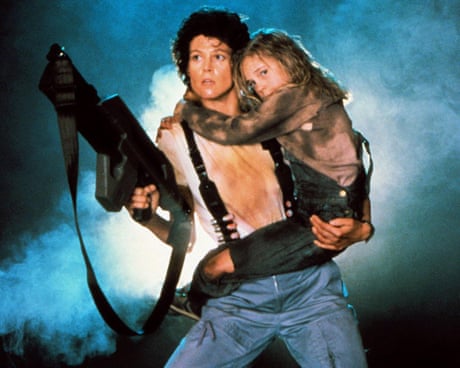
James Cameron loves tough female characters. That seems like a given now, after three Avatars and two particularly muscular arms belonging to Linda Hamilton in Terminator 2. Even the lushly romantic Titanic is about a supportive, sweet-natured boyfriend lending his love the extra smidge of strength she needs to live a rich and iconoclastic life without him, until she’s freely chucking diamonds into the sea at 100 years of age. But in Cameron’s 1984 de facto feature debut The Terminator (after a Piranha sequel that he attempted to disown), T2’s Hamilton is stalked and appropriately terrified by Arnold Schwarzenegger’s slasher-like killer robot. She’s a great character who gets majorly pumped up for the sequel in 1991. By then, Cameron had plenty of practice: he had already written and directed Aliens, maybe the best pumped-up sequel ever made, which turns 40 this week.

Ellen Ripley, introduced as the warrant officer onboard the ship Nostromo in Ridley Scott’s 1979 sci-fi horror picture Alien, is already a great character by the end of that film. But while the anecdote about James Cameron pitching a sequel by appending a dollar-sign to Alien’s title, concisely showing what a simple pluralization could do, has perhaps overtaken the buffing up of Ellen Ripley in the most-circulated lore about this movie, she’s really the first subject of Cameron’s great plussing. Without betraying the simplicity and resilience of her character in the first film, Cameron reintroduced Ripley as a survivor, landing on Earth almost 60 years after the events of the earlier film. (In a deleted scene restored in the film’s longer special edition, Ripley even learns that her daughter has died in the interim – as an adult, given that Ripley was in cryosleep for decades.)

Continue reading...

© Photograph: Allstar Picture Library Limited./Alamy
© Photograph: Allstar Picture Library Limited./Alamy
© Photograph: Allstar Picture Library Limited./Alamy
  •  
❌