Former United striker takes charge until March 2027
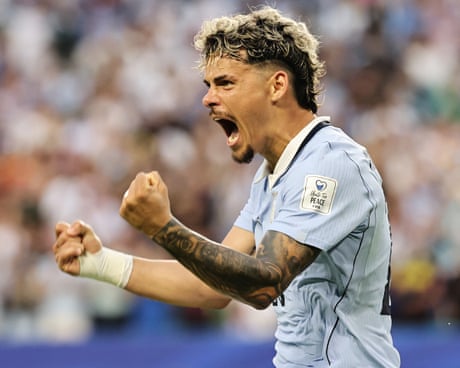
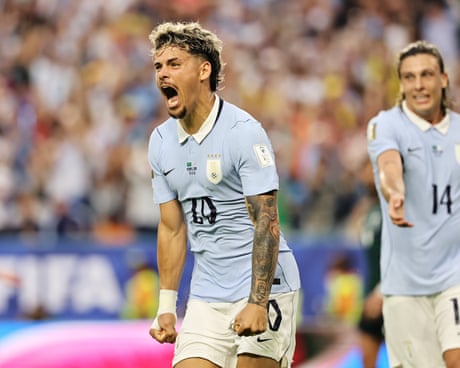
The former Manchester United striker Diego Forlán is poised to take over on a temporary basis as the new Uruguay manager after Marcelo Bielsa left the role following a sorry World Cup campaign.
Everyday life takes precedence over sensationalism in a galvanising portrait of union founder Karina Núñez and her community
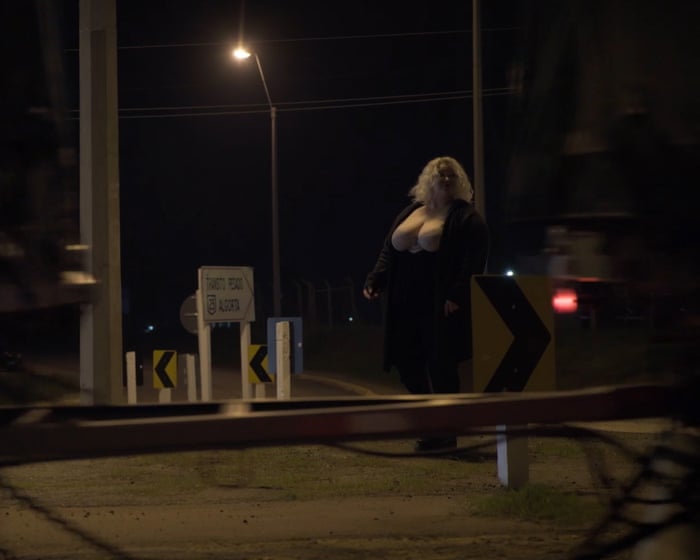
A sex worker and activist living in Uruguay, Karina Núñez is a force of nature. The charismatic subject of Marta García and Sol Infante’s galvanising documentary, she is introduced by way of a somewhat provocative image: a closeup of her chest, tucked behind a lacy brassiere. The shot, however, is far from objectifying: Núñez is fully in control, and her breasts are simply a tool of her trade. This opening scene expands to take in a road intersection at night, where she is hoping to find her next customer among the stream of cars that passes by.
Núñez might be standing by herself at a crossroads, in a framing that suggests the precariousness of her occupation, yet she is far from alone. As the founder and leader of Otras, a union for Uruguayan sex workers, she has rallied a dedicated community around the fight for social acceptance, better labour conditions and legal protection. Swerving sensationalism, García and Infante’s film does not focus on individual customers, foregrounding instead the everyday struggles faced by the sex workers themselves. In moving scenes, Núñez speaks of the dismissive treatment she receives at a health clinic, as well as her difficulty in transitioning to another line of work. In the eyes of the law and society, she and her fellow workers are merely as faceless statistics or cautionary tales, rather than human beings with rights and dignity.
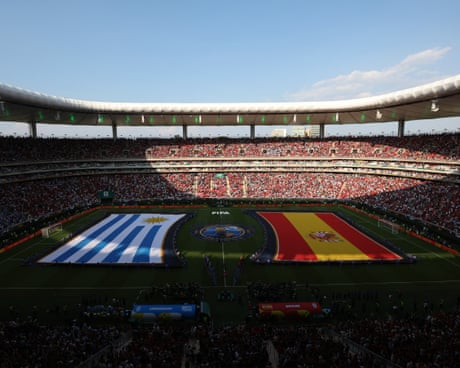
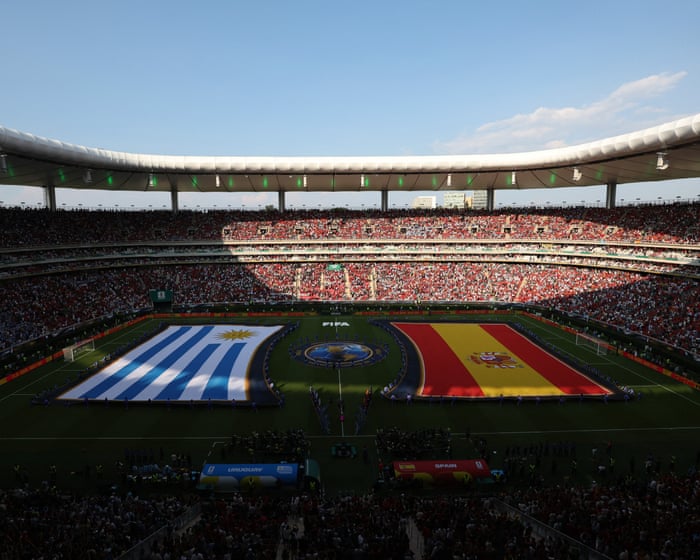
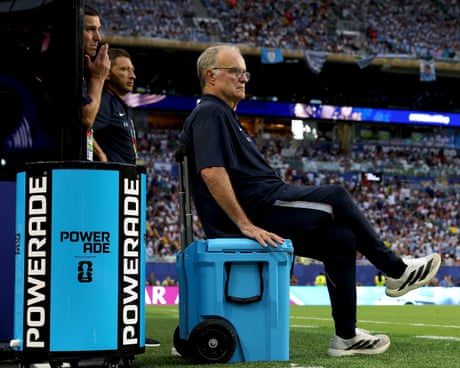
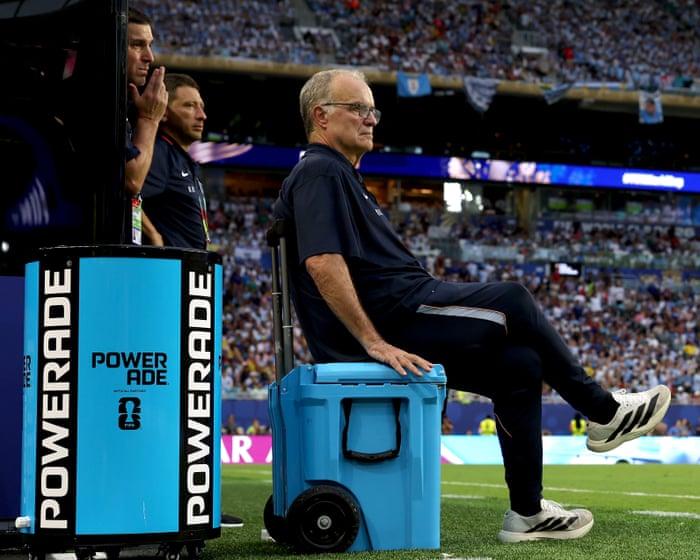
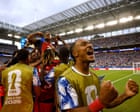
Uruguay are out of the World Cup again and for all that it ended in anger, a red card and a touchline row, it is nobody’s fault but their own. “3 million dreams,” the banner said high in the stands in Guadalajara but this was a recurring nightmare. Divided and dysfunctional, led by a man who barely even says buenos dias to his players, unable to get beyond a draw with Saudi Arabia and Cape Verde, on the night when it was all or nothing against Spain they could manage only one shot on target, which came in the 83rd minute and carried barely the slightest threat.
Spain, meanwhile, had only one, and that didn’t carry much of a threat either. But a dreadful mistake from the 40-year-old Fernando Muslera allowed Álex Baena’s shot to slip into the net just before the half-time break from which the goalkeeper did not return. Uruguay fought but didn’t play much football and so they fell. For the second World Cup running they failed to get through the group and if four years ago that was on goals scored and could be explained by the teams they faced – South Korea, Ghana and Portugal – this time the opponents only made it worse, demanding a far deeper analysis.
When Uruguay were beaten 5-1 by the USA in November, he described himself as “toxic”, admitting: “Those who have a relationship with me come out of it worse. There are toxic people who only see errors, who demand, who correct, who are never satisfied with anything, who only like to talk about work, who go to eat and take a newspaper with them because they don’t want to integrate with the rest. But do you know what that behaviour is based on? Fear. One doesn’t enjoy winning; he fears losing much more.”
Spain present a formidable obstacle for a Uruguay side needing a win to progress – and quell a rebellious dressing-room mood
In the summer of 2011, at about the time Marcelo Bielsa was arriving at Athletic Bilbao, Luis de la Fuente was leaving. Bielsa was the revolution. De la Fuente was a former left-back with long, curly locks who had come through the academy, played eight years in the first team and coached Athletic’s under-19s and B team but now he was joining Deportivo Alavés, 50 miles south and in the third tier. Eleven games later, he was back again.
Sacked from the first senior club job he had, and the last too, De la Fuente was sure that someone would call but time passed, no one did and he started to wonder whether they would until the Spanish federation got in touch a year and a half later and asked him to coach its under-19s. In the meantime, as the months passed and the concern grew, he returned to Athletic’s Lezama training ground, convinced he had much to learn and that he knew where to do so.
Wow. The continuation of Cape Verde’s fairytale may have serious repercussions for Marcelo Bielsa and Uruguay. The heroics of Cape Verde in holding Spain to a draw mean Uruguay should have been forewarned and forearmed in Florida. Instead, this tiny nation with a population equivalent to that of Bristol embarrassed World Cup aristocracy once more. What fun, what glorious fun.
Uruguay now head into Group H’s final game against Spain with their tournament involvement in serious jeopardy. Uruguay had already failed to beat Saudi Arabia. Cape Verde will hold high and legitimate hopes of seeing off the Saudis on Friday. They might not even need to, with an aggregate of three points from another draw potentially good enough for the last 32. The Blue Sharks, swimming in bigger waters than ever before, are the story of this World Cup. Uruguay have desperately underperformed thus far.
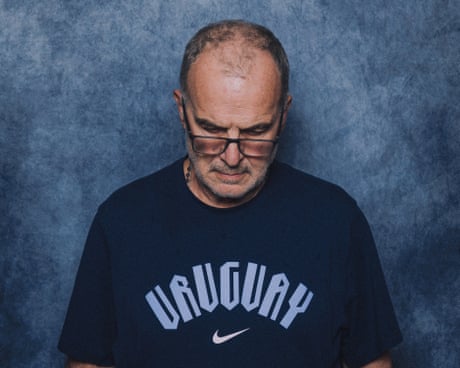
Head coach looked downwards in official Fifa photo
‘The picture was taken the way it was taken’
The Uruguay head coach, Marcelo Bielsa, has lived up to his maverick reputation by refusing to cooperate during a photoshoot for Fifa. Bielsa stared down at the floor, hands in pockets, statuesque, during the obligatory media duty last Wednesday and the 70-year-old hit back when asked about the incident after Uruguay’s 1-1 draw with Saudi Arabia on Monday.
“I’m not a model,” he said. “I don’t have to give any explanation, the picture was taken the way it was taken. Should I also explain why I don’t look to the people who are speaking to me at this moment?”
Fifa’s embrace of rapacious American capitalism may have found its limits in Miami, one of the entertainment capitals of the world.
Despite just seven tickets showing as available on their official website at kick-off there were thousands of empty seats – and empty concourses – throughout most of this game, a hard-fought draw which leaves Group H deadlocked following Cape Verde’s stunning draw with Spain earlier in the day.
Luis Vassy wurde mit dem Auftrag an die große Hochschule Sciences Po geschickt, die Kulturkämpfe dort über Israel und Gaza zu beenden. Nun werfen ihm viele Forscher eine „Eskalation der Repression“ vor.
Every World Cup, from Uruguay and Italy in 1930 and 1934, to Russia and Qatar in 2018 and 2022, has been to an extent about presenting an image to the world
This was originally published in the newsletter The World Behind the Cup. Sign up for it here.
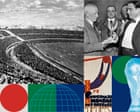
Football fans will be well aware that in 1930 Uruguay both hosted and won the first World Cup, but less well known is the diplomatic backstory of the country’s entry on to the international sporting stage. In the 1920s, Uruguay’s foreign minister, who led one of the country’s two rival football associations, coordinated with a diplomat serving in Switzerlandto give his federation legitimacy by joining Fifa. The diplomat also entered Uruguay into the 1924 Olympic football tournament in Paris – which was emerging as the premier venue for global football. That provoked panic back in Uruguay: nobody had expected him to do that and nobody quite knew how they would afford it; a federation official ended up having to use his own house as collateral on a loan to pay for the team’s passage across the Atlantic.
Once they got to Europe, Uruguay quickly won admiration. First in nine friendlies as they travelled through Spain and then at the Olympic Games itself, where they became by far the biggest draw. The great novelist Colette was even dispatched to the villa where Uruguay were staying to record her impressions for the newspaper Le Matin. Playing brilliant, coherent passing football, Uruguay took gold at the Games.
This was originally published in the newsletter The World Behind the Cup. Sign up for it here.
Fußball-Leibchen als Milliardengeschäft: Von falschen Schulternähten, umstrittenen Designs und von Sportartikelherstellern, die mit dem Enthusiasmus der Fans sehr viel Geld verdienen.
The sportswear giant says it’s aware of the strange seam on some of the new shirts, and is looking into how to address it
When Nike rolled out its collection of World Cup kits in late March, fans and pundits alike largely approved. The US men’s national team got arguably their most distinctive pair of shirts in decades, while other federations – France, England, Canada and Uruguay among them – earned strong reviews.
Over the last international break, when players took the field in the kits for the first time, many fans couldn’t help but become fixated on one singular detail of the new shirts: a somewhat unsightly bulge along the shoulder seam.
England were disjointed against Uruguay but no wonder – the head coach’s team selection was an act of self sabotage
Before this game Thomas Tuchel had said he would base his starting XI on what he saw on the training ground. Halfway through an evening at Wembley Stadium that felt like being stabbed very slowly through the eyes with a butter knife made entirely from death, ear wax and empty corporate leisure product, it was tempting to wonder about this.
What exactly had the players left out done in training to be deemed ineligible for this England team? Turn up naked? Vomit into a traffic cone? Attempt to stage a game of Cluedo during set-piece practice? Perhaps Adam Wharton had killed a crow and stapled its innards to the dressing‑room door.
Ben White arrived to a chorus of jeers from the England support when Thomas Tuchel introduced him as a 68th minute substitute. Of course he did. There ought to be no second chances for the Arsenal defender in the eyes of plenty of those present. He let the country down when he walked out on the England squad during the 2022 World Cup and made himself unavailable for the next two years.
The real surprise was what happened next. It was one of those paper aeroplane Wembley friendlies, the fans making their own entertainment in the absence of very much on the pitch. Tuchel was happy enough with the collective performance from his scratch lineup, drilling into the finer details, including the players’ work out of possession. There was next-to-no cutting edge, any drive.
Ben White was booed on, scored what looked like the winner, then gave away a stoppage-time penalty. Say what you will, but the man’s box-office
The teams are out! England in that aforementioned red, Uruguay in their sky blue. Time for the anthems. God Save the King we all know about; the Uruguayan one really gets the juices flowing, though. And while we’re on the subject of Jonathan Wilson, which we kind of were, he tells a wonderful anecdote about that anthem during today’s edition of Football Weekly Extra. Just before the 45-minute mark should get you there; enjoy, enjoy. We’ll be off in a couple of seconds.
Uruguay are not heading into this match in the finest of fettle. Jonathan Wilson reports on that 5-1 shellacking by the USA and some Luis Suárez-infused rancour.
Defender called up for first time since exiting 2022 World Cup
‘There are strong opinions but he deserves a second chance’
Thomas Tuchel has acknowledged that Ben White needs to clear the air with his teammates after returning to the England squad, but the head coach is confident the defender will not be booed by the Wembley crowd during tonight’s friendly against Uruguay.
White has not been part of the setup since exiting the 2022 World Cup in Qatar early for personal reasons and the decision to end his international exile has not gone down well with some people. The Arsenal player has never explained the reasons for his departure and subsequently making himself unavailable for selection for the rest of Gareth Southgate’s time in charge.

 Anmelden